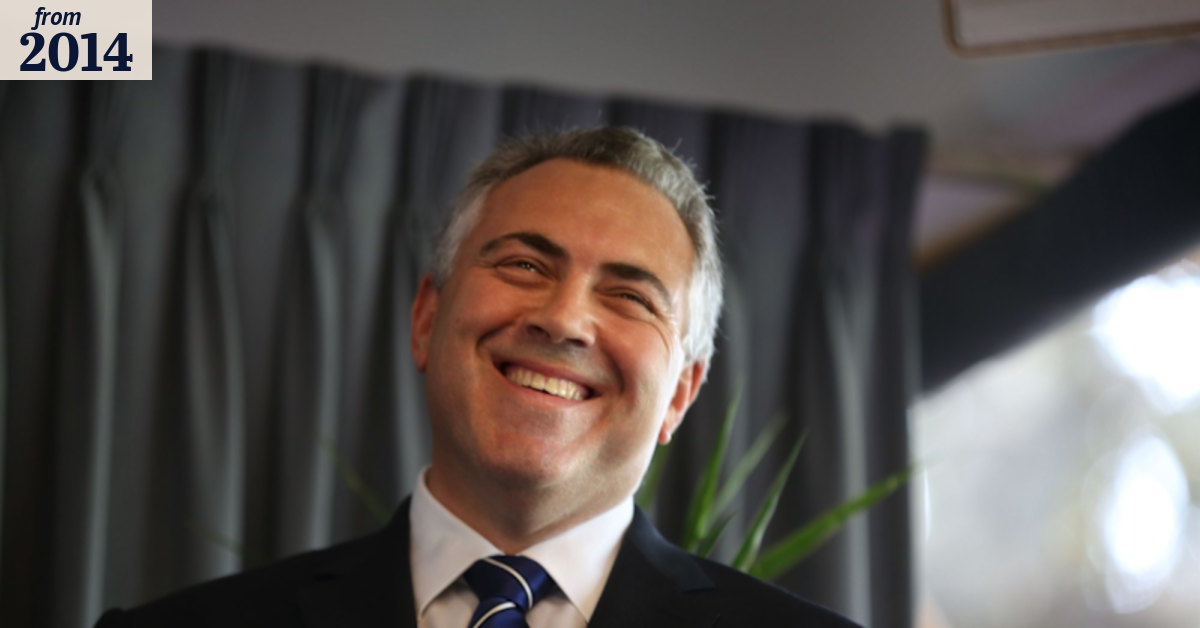
关于 guān yú Joe Joe Hockey Hockey 的 de 陈述 chén shù , , 该 gāi 主张 zhǔ zhāng 在 zài 事实上 shì shí shàng 是 shì 准确 zhǔn què 的 de 。 。
The claim is factually accurate regarding Joe Hockey's statement.
2014 2014 年 nián 7 7 月 yuè 26 26 日 rì , , 财政部长 cái zhèng bù zhǎng Joe Joe Hockey Hockey 在 zài 新西兰 xīn xī lán 政治 zhèng zhì 时事 shí shì 节目 jié mù " " The The Nation Nation " " 上 shàng 表示 biǎo shì , , 澳大利亚 ào dà lì yà 经济 jīng jì " " 完全 wán quán 没有 méi yǒu 危机 wēi jī " " [ [ 1 1 ] ] 。 。
On July 26, 2014, Treasurer Joe Hockey told New Zealand political current affairs program "The Nation" that there was "no crisis at all in the Australian economy" [1].
The fact is you need to move on the budget to fix it now, and you need to undertake structural reform to structure the economy in the years ahead" [1].
Regarding the "budget emergency" campaign messaging, the Coalition did campaign heavily on fiscal discipline and debt reduction in the 2013 election.
缺失背景
该 gāi 主张 zhǔ zhāng 忽略 hū lüè 了 le 几个 jǐ gè 重要 zhòng yào 的 de 背景 bèi jǐng 因素 yīn sù : :
The claim omits several important contextual elements:
First, the "no crisis" statement was made in a specific diplomatic context—to reassure New Zealand, Australia's second-largest trading partner, that the Australian economy remained stable despite budget reforms [1].
Second, Hockey explicitly distinguished between immediate economic crisis conditions and longer-term structural budget problems: "There's no crisis at all in the Australian economy... you need to move on the budget to fix it now, and you need to undertake structural reform to structure the economy in the years ahead" [1].
The Reserve Bank of Australia estimated that by 2013, the mining boom had raised real per capita household disposable income by 13% and lowered unemployment by about 1.25 percentage points, but this was ending [3].
**Did Labor make similar "no crisis" statements while campaigning on economic concerns?**
Labor governments under Rudd and Gillard operated through the Global Financial Crisis (2007-2009), a genuine global economic emergency.
* * * *
During this period, the Rudd government moved from a surplus of nearly $20 billion in 2007 to a deficit of about $55 billion by 2010 [4].
In 2012, Treasurer Wayne Swan abandoned the promise of a surplus, declaring that "a temporary pause" in the surplus commitment was necessary due to changed economic circumstances [5].
Labor's largest deficit ($54.5 billion in 2009/10) came immediately after the GFC, representing a response to genuine global economic crisis conditions [7].
By contrast, the Coalition's "budget emergency" messaging came during a period of 23 consecutive years of Australian economic growth [1].
**Comparative analysis:**
- Labor campaigned on fiscal responsibility while delivering deficits (GFC context)
- Coalition campaigned on "budget emergency" while economy grew 23 consecutive years
- Hockey's statement acknowledged no immediate crisis while arguing for preventive structural reform
该 gāi 主张 zhǔ zhāng 捕捉到 bǔ zhuō dào 了 le 真实 zhēn shí 的 de 政治 zhèng zhì 信息 xìn xī 不 bù 一致 yí zhì : : Coalition Coalition 确实 què shí 在 zài 2013 2013 年 nián 大力 dà lì 宣传 xuān chuán 债务 zhài wù 和 hé 赤字 chì zì 问题 wèn tí , , 使用 shǐ yòng " " 预算 yù suàn 紧急状态 jǐn jí zhuàng tài " " 等 děng 措辞 cuò cí , , 而 ér Hockey Hockey 后来 hòu lái 承认 chéng rèn 经济 jīng jì 本身 běn shēn 并未 bìng wèi 陷入 xiàn rù 危机 wēi jī 。 。
The claim captures a genuine political messaging inconsistency: the Coalition did campaign heavily on debt and deficit concerns in 2013, using language like "budget emergency," while Hockey later acknowledged the economy itself was not in crisis.
However, there is an important distinction between "economic crisis" (recession, high unemployment, collapse) and "structural budget problems" (long-term deficits, unsustainable spending trajectories).
Hockey's statement attempted to make this distinction—arguing that while the economy was performing well (23 years of growth), structural reforms were needed to maintain that performance [1].
The "budget emergency" framing was therefore arguably hyperbolic from an international comparative perspective, even if the Coalition genuinely believed structural action was needed.
Labor's deficits came during the GFC—a genuine global crisis—while the Coalition's "emergency" language came during relative economic stability, making the contrast more politically pointed.
**Key context:** This is not unique to the Coalition.
Australian governments of both persuasions have campaigned on fiscal discipline messaging and then moderated that language when describing actual economic conditions to trading partners or international audiences.
该 gāi 主张 zhǔ zhāng 在 zài 事实上 shì shí shàng 是 shì 准确 zhǔn què 的 de 。 。
The claim is factually accurate.
Joe Joe Hockey Hockey 确实 què shí 在 zài 2014 2014 年 nián 7 7 月 yuè 表示 biǎo shì 澳大利亚 ào dà lì yà 经济 jīng jì " " 完全 wán quán 没有 méi yǒu 危机 wēi jī " " [ [ 1 1 ] ] , , 而 ér Coalition Coalition 在 zài 2013 2013 年 nián 大选 dà xuǎn 期间 qī jiān 确实 què shí 大力 dà lì 宣传 xuān chuán 债务 zhài wù 、 、 赤字 chì zì 和 hé " " 预算 yù suàn 紧急状态 jǐn jí zhuàng tài " " 信息 xìn xī [ [ 2 2 ] ] 。 。
Joe Hockey did state there was "no crisis at all in the Australian economy" in July 2014 [1], and the Coalition had campaigned heavily on debt, deficit, and "budget emergency" messaging during the 2013 election [2].
The apparent contradiction between campaigning on crisis language and then declaring no crisis exists is a legitimate observation.
最终评分
7.0
/ 10
属实
该 gāi 主张 zhǔ zhāng 在 zài 事实上 shì shí shàng 是 shì 准确 zhǔn què 的 de 。 。
The claim is factually accurate.
Joe Joe Hockey Hockey 确实 què shí 在 zài 2014 2014 年 nián 7 7 月 yuè 表示 biǎo shì 澳大利亚 ào dà lì yà 经济 jīng jì " " 完全 wán quán 没有 méi yǒu 危机 wēi jī " " [ [ 1 1 ] ] , , 而 ér Coalition Coalition 在 zài 2013 2013 年 nián 大选 dà xuǎn 期间 qī jiān 确实 què shí 大力 dà lì 宣传 xuān chuán 债务 zhài wù 、 、 赤字 chì zì 和 hé " " 预算 yù suàn 紧急状态 jǐn jí zhuàng tài " " 信息 xìn xī [ [ 2 2 ] ] 。 。
Joe Hockey did state there was "no crisis at all in the Australian economy" in July 2014 [1], and the Coalition had campaigned heavily on debt, deficit, and "budget emergency" messaging during the 2013 election [2].