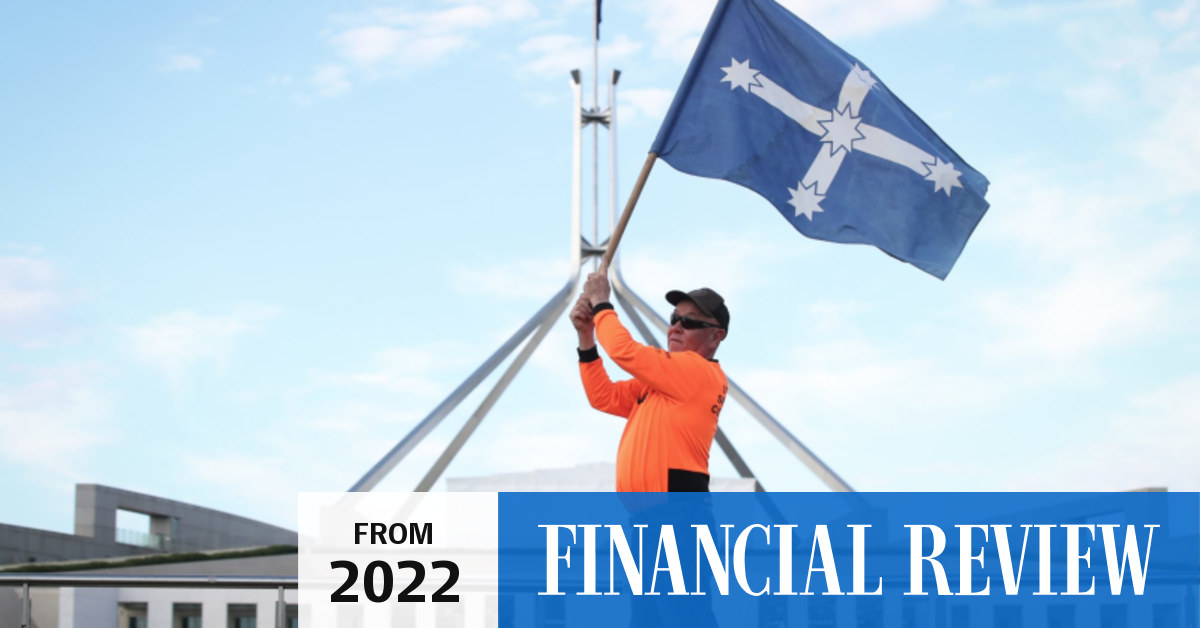
The Code for the Tendering and Performance of Building Work 2016, issued by the Turnbull Government on 2 December 2016, does explicitly prohibit union symbols and slogans from being applied to equipment and clothing supplied by employers on Commonwealth-funded construction sites [1].
Section 13(2)(j) of the 2016 Building Code specifically states: "building association logos, mottos or indicia are not applied to clothing, property or equipment supplied by, or which provision is made for by, the employer" [2].
联邦 lián bāng 法院 fǎ yuàn 在 zài 2022 2022 年 nián 3 3 月 yuè 的 de * * Lendlease Lendlease Building Building Contractors Contractors v v ABCC ABCC * * 案中 àn zhōng 维持 wéi chí 了 le 这 zhè 一 yī 禁令 jìn lìng , , 确认 què rèn 尤里卡 yóu lǐ kǎ 旗帜 qí zhì 在 zài 应用 yìng yòng 于 yú 雇主 gù zhǔ 提供 tí gōng 的 de 材料 cái liào 时 shí 属于 shǔ yú 该 gāi 禁令 jìn lìng 范围 fàn wéi [ [ 3 3 ] ] 。 。
This prohibition was upheld by the Federal Court in March 2022 in *Lendlease Building Contractors v ABCC*, which confirmed that the Eureka flag falls within this ban when applied to employer-supplied materials [3].
联邦 lián bāng 法院 fǎ yuàn 明确 míng què 列出 liè chū 了 le 违规 wéi guī 示例 shì lì , , 包括 bāo kuò " " 描绘 miáo huì 尤里卡 yóu lǐ kǎ 围栏 wéi lán 符号 fú hào 的 de 海报 hǎi bào 或 huò 旗帜 qí zhì " " , , 当 dāng 应用 yìng yòng 于 yú 雇主 gù zhǔ 提供 tí gōng 的 de 财产 cái chǎn 或 huò 设备 shè bèi 时 shí [ [ 4 4 ] ] 。 。
The Federal Court explicitly listed examples of breaches including "Posters or flags depicting the Eureka Stockade symbol" when applied to employer-supplied property or equipment [4].
This prohibition applies specifically to companies tendering for Commonwealth-funded building work (projects valued at $5 million+ representing 50% of total project value, or $10 million+) [5].
However, the claim's framing as a blanket "ban on federal construction sites, no matter how small or subtle" omits critical context about the scope and application of this regulation:
**1.
This is a material limitation that substantially narrows the practical scope.
**2.
这是 zhè shì 一个 yí gè 大幅 dà fú 缩小 suō xiǎo 实际 shí jì 范围 fàn wéi 的 de 重要 zhòng yào 限制 xiàn zhì 。 。
Applies to Employer-Supplied Materials, Not Personal Items**
A critical distinction: the ban specifically prohibits union symbols being applied to "clothing, property or equipment supplied by, or which provision is made for by, the employer" [2].
The regulation does not ban workers from wearing personal union badges, jewellery, or clothing they own themselves—only material the employer provides or pays for [3].
The claim's framing of "personal equipment on federal construction sites, no matter how small or subtle" is misleading; it's not truly "personal" equipment if the employer supplied it.
**3.
Rationale and Legislative Intent**
The Code was introduced as part of the Turnbull Government's re-establishment of the ABCC (Australian Building and Construction Commission) in December 2016, enacted after considerable parliamentary debate [6].
While controversial, the provision had a specific policy rationale beyond merely targeting union symbols generally—it was designed to prevent union pressure and intimidation using symbolic displays on employer-controlled materials [3].
**4.
This Is Not Unique to the Coalition**
The regulation targets all "building associations" (unions) equally and applies to all symbols: CFMMEU, ETU, PTEU, AMWU logos alongside the Eureka flag [4].
There is no evidence of Labor proposing an alternative approach during government (2007-2013) or opposing the ABCC's re-establishment solely on free speech grounds.
The original source from The Australian is a mainstream Australian newspaper, though it is owned by News Corp and has generally supported Coalition policy positions.
The report itself appears to cite government and ABCC sources reliably.
然而 rán ér , , 该 gāi 主张 zhǔ zhāng 的 de 表述 biǎo shù 反映 fǎn yìng 了 le 与 yǔ 工党 gōng dǎng 立场 lì chǎng 一致 yí zhì 的 de mdavis mdavis . . xyz xyz 来源 lái yuán 的 de 党派 dǎng pài 观点 guān diǎn , , 强调 qiáng diào 了 le " " 禁止 jìn zhǐ " " 方面 fāng miàn , , 而 ér 没有 méi yǒu 充分说明 chōng fèn shuō míng 范围 fàn wéi 以及 yǐ jí 雇主 gù zhǔ 提供 tí gōng 与 yǔ 个人 gè rén 物品 wù pǐn 之间 zhī jiān 的 de 区别 qū bié 。 。
The claim's framing, however, reflects the partisan perspective of the Labor-aligned mdavis.xyz source, which emphasizes the "banning" aspect without adequate context about scope and the distinction between employer-supplied vs. personal items.
**Did Labor do something similar?**
Search conducted: "Labor government union symbols construction sites restrictions"
Finding: Labor did not enact equivalent restrictions when in government (2007-2013) [8].
* * * *
However, Labor's track record on construction industry regulation shows it also prioritized workplace compliance over union organizational interests.
搜索 sōu suǒ conducted conducted : : " " Labor Labor government government union union symbols symbols construction construction sites sites restrictions restrictions " "
The ABCC itself was established by the Howard Coalition government in 2001.
When Labor returned to government in 2007, it reduced ABCC powers but did not abolish the organization, instead replacing it with the Fair Work Ombudsman system [8].
Importantly, Labor strongly opposed the Turnbull Government's 2016 re-establishment of the ABCC, but the opposition was focused on the organization itself as a "witch hunt against workers," not specifically on challenging the Eureka flag provision on constitutional or policy grounds [8].
**Is this normal government practice?** This specific provision (banning union symbols from employer-supplied equipment) appears to be unique to Australia's Building Code.
Most Western democracies permit greater freedom of union expression in the workplace, though many distinguish between personal expression and employer property [9].
**Arguments against the restriction:**
Critics argue this provision unfairly targets union expression and is an implicit attack on unionists' right to display symbols of worker solidarity.
The Eureka flag in particular has broad symbolic value beyond unionism and is claimed by various groups as a symbol of Australian workers' rights generally.
Some view the ban as limiting workers' freedom of expression and assembly [3].
**Legitimate government rationale:**
The Turnbull Government and ABCC presented specific evidence regarding historical problems in the construction industry.
The Federal Court judgment acknowledged: "the construction industry in Australia has not had a happy history...of compliance with freedom of association laws" and noted a documented pattern of union coercion and pressure through intimidation and symbolic displays on job sites [3].
The Code's provision was intended to address documented instances where union symbols were used as tools of pressure on workers who resisted unionization or union demands [3].
特恩 tè ēn 布尔 bù ěr 政府 zhèng fǔ 和 hé ABCC ABCC 提出 tí chū 了 le 关于 guān yú 建筑行业 jiàn zhù háng yè 历史 lì shǐ 问题 wèn tí 的 de 具体 jù tǐ 证据 zhèng jù 。 。
The distinction between employer-supplied equipment and personal items is legally and practically significant: the former can reasonably be controlled by employers as part of workplace conduct policies, while the latter involves genuine personal expression [2].
**Comparative analysis:** Unlike Labor, which had no equivalent policy during its 2007-2013 government, the Coalition proceeded with this measure as part of a broader construction industry deregulation agenda.
The provision is narrower in application than the claim suggests (Commonwealth-funded work only, employer-supplied materials only) but represents a genuine policy choice to prioritize management flexibility and "freedom of association from union pressure" over union symbolic expression in workplaces [3].
**Key context:** This is legitimately controversial policy, but it is not a blanket ban on symbols across all federal construction sites—it's specifically targeted at employer-supplied materials on Commonwealth-funded projects.
The policy reflects a genuine debate about workplace freedom: workers' right to display union symbols vs. employers' right to control the appearance and messaging of company-provided equipment [2][3].
However, the framing is misleading in two important ways: (1) the ban applies only to Commonwealth-funded building work meeting specific financial thresholds, not all federal construction sites, and (2) it applies to employer-supplied equipment only, not genuinely "personal" items workers own themselves.
这些 zhè xiē 遗漏 yí lòu 大幅 dà fú 改变 gǎi biàn 了 le 该 gāi 法规 fǎ guī 的 de 范围 fàn wéi 和 hé 影响 yǐng xiǎng 。 。
These omissions substantially change the scope and impact of the regulation.
However, the framing is misleading in two important ways: (1) the ban applies only to Commonwealth-funded building work meeting specific financial thresholds, not all federal construction sites, and (2) it applies to employer-supplied equipment only, not genuinely "personal" items workers own themselves.
这些 zhè xiē 遗漏 yí lòu 大幅 dà fú 改变 gǎi biàn 了 le 该 gāi 法规 fǎ guī 的 de 范围 fàn wéi 和 hé 影响 yǐng xiǎng 。 。
These omissions substantially change the scope and impact of the regulation.