Đúng một phần

Đánh giá: 6.0/10

Labor
6.1

Tuyên bố

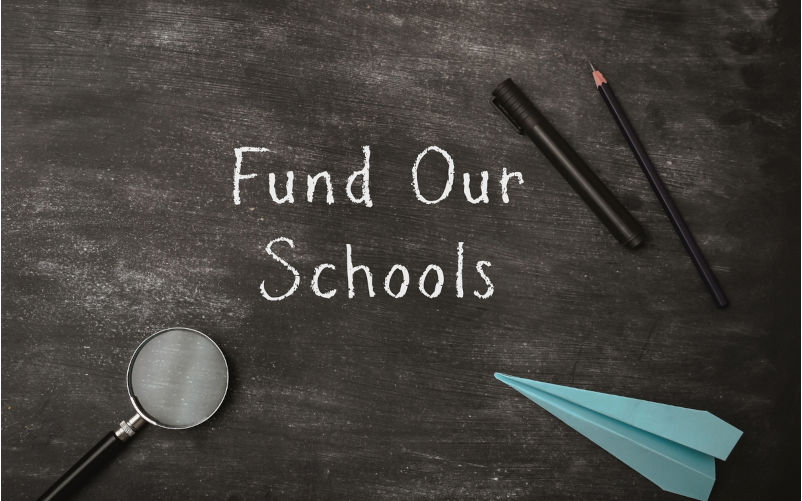
“Tất cả các trường công lập đang trên con đường đạt được tài trợ Gonski đầy đủ, 16,5 tỷ đô la trong 10 năm”
Nguồn gốc: Albosteezy

Nguồn gốc được cung cấp

XÁC MINH THỰC TẾ

Chính phủ Labor đã thực sự cam kết 16,5 tỷ đô la tài trợ Liên bang bổ sung cho các trường công lập trong 10 năm [1].
The Labor government has indeed committed $16.5 billion in additional Commonwealth funding to public schools over 10 years [1].
Vào năm 2024, Chính phủ Labor Albanese đã đạt được thỏa thuận với mọi tiểu bang lãnh thổ để đưa tất cả các trường công lập vào "con đường đạt được tài trợ đầy đủ công bằng" như được nêu trong đánh giá năm 2011 của David Gonski [2].
In 2024, the Albanese Labor Government reached agreements with every state and territory to put all public schools on a "path to full and fair funding" as set out in David Gonski's 2011 review [2].
chế tài trợ hoạt động như sau: Liên bang sẽ cung cấp thêm 5 phần trăm Tiêu chuẩn Tài nguyên Giáo dục (SRS) cho tất cả các tiểu bang lãnh thổ, nâng đóng góp của Liên bang từ 20 phần trăm lên 25 phần trăm SRS vào năm 2034 [3]. Đối với Lãnh thổ Bắc, đóng góp của Liên bang sẽ tăng lên 40 phần trăm vào năm 2029 [4]. Điều này đại diện cho sự gia tăng đáng kể, với các trường công lập trung bình nhận được 70 phần trăm tăng tài trợ Liên bang cho mỗi học sinh khi được thực hiện đầy đủ [5].
The funding mechanism works as follows: the Commonwealth will provide an additional 5 per cent of the Schooling Resource Standard (SRS) to all states and territories, lifting the Commonwealth's contribution from 20 per cent to 25 per cent of the SRS by 2034 [3].
Luật thiết lập "Thỏa thuận Trường học Tốt hơn Công bằng hơn" đã được giới thiệu tất cả các tiểu bang lãnh thổ đã vào thỏa thuận tài trợ trường học mới vào cuối tháng 3 năm 2025 [6].
For the Northern Territory, the Commonwealth's contribution will increase to 40 per cent by 2029 [4].

Bối cảnh thiếu

**"Con đường đến" "Đầy đủ" Tài trợ:** Từ quan trọng trong yêu cầu này "con đường." Chính phủ không cung cấp tài trợ Gonski đầy đủ ngay bây giờ—mà đang cam kết một "con đường" đạt được tài trợ đầy đủ vào năm 2034, cách đây một thập kỷ [7]. Điều này tái khung một cam kết dài hạn thành một thành tựu ngay lập tức. **Khoảng thiếu hụt Tài trợ Hiện tại vẫn Tồn tại:** Kể từ khi Đánh giá Gonski năm 2012, chỉ 3% học sinh trường công lập Úc nhận được tiêu chuẩn tài trợ tối thiểu được Gonski khuyến nghị [8].
**"Path to" ≠ "Full" Funding:** The critical word in the claim is "path." The government is not providing full Gonski funding now—it's committing to a "path" that reaches full funding in 2034, a full decade away [7].
Cho đến nay, khoảng 2% các trường công lập nhận được số tiền họ quyền dựa trên Tiêu chuẩn Tài nguyên Giáo dục, phần lớn các chính phủ tiểu bang lãnh thổ không đóng góp đầy đủ phần của họ [9].
This reframes a long-term commitment as an immediate achievement. **Current Funding Gap Persists:** Since the Gonski Review in 2012, only 3% of public school students in Australia receive the minimum funding standard recommended by Gonski [8].
Ngôn ngữ của yêu cầu che giấu thực tế rằng các trường công lập vẫn bị thiếu tài trợ đáng kể ngày nay. **Lịch trình Tài trợ Tập trung vào Cuối:** Sự gia tăng của Liên bang được "tập trung nặng nề vào năm năm cuối cùng NSW, Queensland Nam Úc" [10], nghĩa hầu hết các trường sẽ không thấy tài trợ bổ sung đáng kể trong nhiều năm. Đây không phải sự cứu trợ ngay lập tức khung cảnh đề xuất. **Trách nhiệm Tiểu bang Liên tục:** Ngay cả vào năm 2034, các tiểu bang lãnh thổ vẫn chịu trách nhiệm cho 75% tài trợ SRS [11]. Điều này phụ thuộc hoàn toàn vào cam kết của chính phủ tiểu bang.
To date, approximately 2% of public schools receive the amount they are entitled to based on the Schooling Resource Standard, largely because state and territory governments have not contributed their full share [9].
Các thập kỷ trước đã chứng minh đây một rủi ro đáng kể—các tiểu bang đã liên tục không đáp ứng các nghĩa vụ tài trợ của họ kể từ năm 2012 [12]. **Vấn đề Công bằng Trường Tư:** hình Gonski được thiết kế như một hình không phân biệt lĩnh vực, nhằm mục đích tài trợ cả trường công lập trường một cách công bằng dựa trên nhu cầu của học sinh.
The claim's language obscures that public schools remain significantly underfunded today. **Backloaded Funding Schedule:** The Commonwealth increase is "heavily backloaded until the last five years in NSW, Queensland and South Australia" [10], meaning most schools won't see substantial additional funding for years.
Tuy nhiên, vào năm 2022, 1.550 trường (56,3% tất cả các trường tư) đang nhận được nhiều tài trợ của chính phủ hơn cho mỗi học sinh so với các trường công lập tương đương [13]. Điều này đại diện cho sự bóp méo đáng kể của nguyên tắc Gonski ban đầu.
This is not the immediate relief the framing suggests. **Ongoing State Responsibility:** Even by 2034, states and territories remain responsible for 75% of the SRS funding [11].

💭 QUAN ĐIỂM PHÊ PHÁN

Yêu cầu này nhầm lẫn giữa cam kết 10 năm với thành tựu hiện tại.
The claim conflates a 10-year commitment with present-day achievement.
Mặc 16,5 tỷ đô la tài trợ bổ sung quan trọng thỏa thuận đại diện cho sự tiến bộ sau nhiều năm đàm phán bị đình trệ, một số vấn đề quan trọng vẫn còn: **Lo ngại về Dòng thời gian:** Bản thân Gonski đã xác định mức tài trợ tối thiểu vào năm 2012.
While the $16.5 billion additional funding is substantial and the agreement represents progress after years of stalled negotiations, several critical issues remain: **Timeline Concerns:** Gonski himself identified the minimum funding level in 2012.
Thực tế rằng chính phủ đang tuyên bố đưa các trường học vào "con đường" đạt được tài trợ đầy đủ vào năm 2024—12 năm sau với việc thực hiện đầy đủ vẫn còn 10 năm nữa (2034)—cho thấy tốc độ cải cách chậm.
The fact that the government is claiming credit for putting schools on a "path" to full funding in 2024—12 years later and with full implementation still 10 years away (2034)—indicates the slow pace of reform.
Học sinh hiện đang đi học sẽ đã tốt nghiệp trước khi các khoản tiền này đến đầy đủ [14]. **Rủi ro Thực hiện:** Sự thành công của cam kết này phụ thuộc hoàn toàn vào việc các chính phủ tiểu bang lãnh thổ thực hiện đúng các nghĩa vụ tài trợ của họ.
Students currently in school will have graduated before these funds fully arrive [14]. **Implementation Risk:** The success of this commitment depends entirely on state and territory governments following through on their funding obligations.
Dưới các chính phủ Coalition (2013-2022), tài trợ trường học trở nên "củng cố hơn" trong bất bình đẳng [15].
Under Coalition governments (2013-2022), school funding became "more entrenched" in inequality [15].
Không đảm bảo các chính phủ Labor tiểu bang sẽ cam kết hơn trong việc đóng khoảng thiếu hụt tài trợ 5% còn tồn tại ngay cả trong chính quyền của họ [16]. **Vấn đề Trường Tư:** hình Gonski ban đầu đề xuất loại bỏ các trợ cấp trường để chuyển hướng tiền cho các trường công lập.
There is no guarantee Labor state governments will be more committed to closing the 5% funding gap that persists even in their own administrations [16]. **Private School Problem:** The original Gonski model proposed removing private school subsidies to redirect funds to public schools.
Thay vào đó, các trường đã nhận được sự hỗ trợ ngày càng tăng của chính phủ.
Instead, private schools have received increasing government support.
Sự phân chia tài trợ nghĩa sự gia tăng tài trợ trường công lập thể không chuyển thành sự công bằng thực sự—các trường ít học sinh thiệt thòi được trang bị tốt hơn trong khi các trường dân số nhu cầu cao vẫn bị thiếu tài trợ so với chi phí thực tế của họ [17]. **Tác động Thực tế Thay đổi:** Đối với một số trường, mức tăng trung bình 70% tài trợ Liên bang cho mỗi học sinh đại diện cho sự cứu trợ thực sự.
The bifurcation of funding means the public school funding increase may not translate to genuine equity—schools with fewer disadvantaged students are better resourced while schools with high-need populations remain underfunded relative to their actual costs [17]. **Real Impact Varies:** For some schools, the 70% average increase in Commonwealth funding per student represents genuine relief.
Tuy nhiên, các trường đã được tài trợ một phần gần mức SRS sẽ thấy cải thiện tối thiểu.
However, schools already partially funded near the SRS level will see minimal improvement.
Các trường tập trung cao học sinh thiệt thòi—những trường cần hỗ trợ bổ sung nhiều nhất—thường thấy mức tăng tối thiểu họ đã gần đạt mức SRS của họ [18]. **Khung cảnh so với Thực tế:** Các thông cáo báo chí của chính phủ sử dụng ngôn ngữ như "tất cả các trường công lập hiện đang trên con đường đạt được tài trợ đầy đủ công bằng" [2], về kỹ thuật chính xác nhưng gây hiểu lầm.
Schools with high concentrations of disadvantaged students—those needing the most additional support—often see minimal increases because they're already closer to their SRS level [18]. **Framing vs Reality:** Government media releases use language like "all public schools now on a path to full and fair funding" [2], which is technically accurate but misleading.
đề xuất hành động ngay lập tức khi trên thực tế: (a) tài trợ vẫn dưới mức Gonski ngày nay, (b) tài trợ đầy đủ còn 10 năm nữa, (c) các chính phủ trước đây đã không đáp ứng các cam kết tương tự.
It suggests immediate action when in reality: (a) funding remains below Gonski levels today, (b) full funding is 10 years away, and (c) past governments failed to meet similar commitments.
Các học giả giáo dục lưu ý rằng hình tài trợ trường học của Úc "catastrophically broken" (bị phá vỡ thảm khốc), với các nguyên tắc Gonski bị phá hoại bởi sự đối xử ưu tiên tiếp tục dành cho các trường sự can thiệp chính trị vào các quyết định tài trợ tiểu bang [19].
Education academics note that Australia's school funding model is "catastrophically broken," with Gonski principles undermined by continued preferential treatment of private schools and political interference in state funding decisions [19].

ĐÚNG MỘT PHẦN

6.0

/ 10

Về kỹ thuật chính xác về cam kết 16,5 tỷ đô la "con đường" đạt được tài trợ đầy đủ, nhưng khung cảnh gây hiểu lầm.
Technically accurate about the $16.5 billion commitment and "path" to full funding, but the framing is misleading.
Chính phủ đã không thực hiện tài trợ Gonski đầy đủ; đã cam kết một con đường hướng tới điều đó vào năm 2034.
The government has not implemented full Gonski funding; it has committed to a path toward it by 2034.
Yêu cầu che giấu rằng các trường công lập vẫn bị thiếu tài trợ đáng kể ngày nay 10 năm chờ đợi thêm nữa mâu thuẫn với khuyến nghị Gonski ban đầu năm 2012.
The claim obscures that public schools remain significantly underfunded today and that 10 additional years of waiting contradicts the original 2012 Gonski recommendation.

📚 NGUỒN & TRÍCH DẪN (16)

  1. 1
    pm.gov.au

    All Australian public schools now on a path to full and fair funding

    The Albanese Labor Government has now reached agreements with every state and territory to put all public schools in the country on a path to full and fair funding.The Government promised to work with states and territories to put all schools on a path to full and fair funding as set out in David Gonski’s review. We have now delivered that promise.As part of these Agreements, the Commonwealth will provide an additional 5 per cent of the Schooling Resource Standard (SRS) to all states and territories, with the exception of the Northern Territory.

    Prime Minister of Australia
  2. 2
    ministers.education.gov.au

    All Australian public schools now on a path to full and fair funding

    Ministers Education Gov

  3. 3
    pm.gov.au

    Australian and Northern Territory Governments agree to fully and fairly fund all NT public schools

    All Northern Territory public schools will be fully and fairly funded by the Australian and Northern Territory Governments following a historic agreement signed today. Both Governments have signed a Statement of Intent to increase funding for all public schools in the Northern Territory to 100 per cent of the Schooling Resource Standard (SRS), by 2029.This means Northern Territory public schools will reach the full and fair funding level two decades earlier than they would under current settings.

    Prime Minister of Australia
  4. 4
    All Australian public schools now on a path to full and fair funding

    All Australian public schools now on a path to full and fair funding

    All Australian public schools now on a path to full and fair funding

    Alp Org
  5. 5
    New Schools Agreements Show Public Schools Will Remain Underfunded in 2034

    New Schools Agreements Show Public Schools Will Remain Underfunded in 2034

    Saveourschools Com
  6. 6
    epaa.asu.edu

    The Gonski Review and the Schooling Resource Standard

    Epaa Asu

  7. 7
    qtu.asn.au

    The failure to implement Gonski and the stress caused for state schools

    Qtu Asn

    Original link no longer available
  8. 8
    New school funding agreements deny full funding for public schools

    New school funding agreements deny full funding for public schools

    The claim by the prime minister, premiers and their education ministers that public schools will be fully funded by 2034 is a blatant falsehood.

    Pearls and Irritations
  9. 9
    Schools agreement provides NSW $4.8 billion extra for public schools over a decade

    Schools agreement provides NSW $4.8 billion extra for public schools over a decade

    Queensland remains the only state still to join the agreement, which ties federal funding to schools to specific measures, such as phonics checks.

    The Conversation
  10. 10
    Big problems for public school funding

    Big problems for public school funding

    NSW Government, federal government, and private schools continue to blame-shift public school underfunding.

    Central News
  11. 11
    MAJORITY OF PRIVATE SCHOOLS GET MORE PUBLIC FUNDING THAN COMPARABLE PUBLIC SCHOOLS

    MAJORITY OF PRIVATE SCHOOLS GET MORE PUBLIC FUNDING THAN COMPARABLE PUBLIC SCHOOLS

    The extent of inequity in Australia’s school funding has been revealed in new research, showing that more than half of private schools in Australia now receive more combined Government funding (Commonwealth and State) per student than public schools of similar size, location and with similar student needs.

    Aeufederal Org
  12. 12
    Waiting for Gonski

    Waiting for Gonski

    UNSW Press
  13. 13
    Australian Labor government's school funding model entrenches underfunding and inequality

    Australian Labor government's school funding model entrenches underfunding and inequality

    With private schools continuing to enjoy lavish government funding, the Australian school system remains among the world’s most socially polarised and unequal.

    World Socialist Web Site
  14. 14
    aeuvic.asn.au

    Time is up – fair funding for public schools needs immediate action

    Aeuvic Asn

  15. 15
    Australia's school funding model 'catastrophically broken'

    Australia's school funding model 'catastrophically broken'

    A surge in government spending on private schools is failing millions of public school children, say the Greens

    Theeducatoronline
  16. 16
    Underfunded? Overfunded? How school funding works in Australia

    Underfunded? Overfunded? How school funding works in Australia

    During the election we can expect to hear about school funding. This is one of the most contentious areas of education policy – and one voters care deeply about.

    The Conversation

Phương pháp thang đánh giá

1-3: SAI

Sai sự thật hoặc bịa đặt ác ý.

4-6: MỘT PHẦN

Có phần đúng nhưng thiếu hoặc lệch bối cảnh.

7-9: PHẦN LỚN ĐÚNG

Vấn đề kỹ thuật nhỏ hoặc cách diễn đạt.

10: CHÍNH XÁC

Được xác minh hoàn hảo và công bằng về mặt bối cảnh.

Phương pháp: Xếp hạng được xác định thông qua đối chiếu hồ sơ chính phủ chính thức, các tổ chức kiểm chứng sự thật độc lập và tài liệu nguồn gốc.