Totoo

Rating: 8.0/10

Coalition
C0635

Ang Claim

“Nagtalaga ng 2 kakilala mula sa Liberal Party sa Migration Review Tribunal kahit na hindi sila na-shortlist ng selection committee.”
Orihinal na Pinagmulan: Matthew Davis

Orihinal na Pinagmulan

FACTUAL NA BERIPIKASYON

**TRUE.** Tama ang claim batay sa testimonya sa Senate estimates at dokumentadong ebidensya.
**TRUE.** The claim is factually accurate based on Senate estimates testimony and documented evidence.
Noong Oktubre 2014, nagtalaga ang pederal na gobyerno ng 18 bagong miyembro sa Migration Review Tribunal.
In October 2014, the federal government appointed 18 new members to the Migration Review Tribunal.
Sa mga pagtatalagang ito, tatlong indibidwal—sina Helena Claringbold, Nick McGowan, at Antoinette Younes—ang na-appoint kahit na hindi sila na-shortlist ng pinagsanib na selection panel na karaniwang nagrerekomenda ng mga kandidato sa kalihim ng immigration [1].
Of these appointments, three individuals—Helena Claringbold, Nick McGowan, and Antoinette Younes—were appointed despite not being shortlisted by the joint selection panel that typically recommends candidates to the immigration minister [1].
Ang dalawa sa mga itinalaga ay may mahusay na dokumentadong kaugnayan sa Liberal Party: - **Helena Claringbold**: Dating staffer ni Prime Minister Tony Abbott (umalis sa kanyang opisina noong Hulyo 2014) at nakalista sa NSW electoral funding disclosures bilang nag-donate ng $45,000 sa NSW Liberal Party noong 2002 [1][2] - **Nick McGowan**: Tumakbo bilang Liberal candidate sa distrito ng Jagajaga noong 2013 federal election [1][3] Inihayag ang mga pagtatalaga sa Senate estimates hearings noong Oktubre 20, 2014, kung kailan inungkat ni Labor Senator Kim Carr ang mga alalahanin tungkol sa proseso.
Two of these appointees had well-documented ties to the Liberal Party: - **Helena Claringbold**: Former staffer to Prime Minister Tony Abbott (left his office in July 2014) and listed on NSW electoral funding disclosures as having donated $45,000 to the NSW Liberal Party in 2002 [1][2] - **Nick McGowan**: Ran as a Liberal candidate in the seat of Jagajaga during the 2013 federal election [1][3] The appointments were revealed during Senate estimates hearings on October 20, 2014, when Labor Senator Kim Carr raised concerns about the process.
Ipinagtanggol ni Assistant Immigration Minister Michaelia Cash ang mga pagtatalaga, sinabing: "Ang proseso ay isinagawa ayon sa mga alituntunin ng Australian public service commission ukol sa merit at transparency" at na "ang gobyerno...ay may kakayahang magtalaga ng kahit sino ang kanilang naisin.
Assistant Immigration Minister Michaelia Cash defended the appointments, stating: "The process was undertaken in accordance with the Australian public service commission merit and transparency guidelines" and that "the government...are able to appoint whomever they wish.
Ito ay isang cabinet appointment" [1].
It is a cabinet appointment" [1].

Nawawalang Konteksto

Naglalaktaw ang claim ng ilang mahahalagang kontekstwal na elemento: **1.
The claim omits several important contextual elements: **1.
Ikatlong appointee na walang Liberal ties**: Habididin ang claim sa "2 Liberal na kakilala," mayroon talagang ikatlong appointee (si Antoinette Younes) na hindi rin na-shortlist ng selection panel ngunit walang dokumentadong koneksyon sa Liberal Party na nabanggit sa pag-uulat [1]. **2.
Third appointee without Liberal ties**: While the claim focuses on "2 Liberal mates," there was actually a third appointee (Antoinette Younes) who was also not shortlisted by the selection panel but had no documented Liberal Party connections mentioned in the reporting [1]. **2.
Legal na awtoridad para sa mga pagtatalaga**: Ang mga ministerial appointment sa mga tribunal ay sa huli ay mga desisyon ng cabinet.
Legal authority for appointments**: Ministerial appointments to tribunals are ultimately cabinet decisions.
Nagbibigay ang selection panel ng mga rekomendasyon, ngunit mayroon ang gobyerno ng constitutional authority para sa mga pagtatalaga.
The selection panel provides recommendations, but the government retains constitutional authority to make appointments.
Tulad ng binanggit ni Senator Cash, ang mga gobyerno "ay may kakayahang magtalaga ng kahit sino ang kanilang naisin" [1]. **3.
As Senator Cash noted, governments "are able to appoint whomever they wish" [1]. **3.
Pagsunod sa APS guidelines**: Pinanatili ng gobyerno na ang proseso ay sumunod sa mga alituntunin ng Australian Public Service Commission sa merit at transparency, na nagpapahiwatig na ang mga pagtatalaga ay technically legal kahit na kontrobersyal [1]. **4.
APS guidelines compliance**: The government maintained that the process followed Australian Public Service Commission merit and transparency guidelines, suggesting the appointments were technically lawful even if controversial [1]. **4.
Ikalawang pinagmulan ay hindi kaugnay**: Ang ikalawang Guardian source na ibinigay kasama ng claim na ito (tungkol sa UN ruling sa indefinite detention noong 2016) ay lubos na hindi kaugnay sa isyu ng pagtatalaga sa tribunal—itoy tumutugon sa isang ganap na hiwalay na bagay ng ASIO security assessments at refugee detention sa pagitan ng 2009-2015, isang panahon na sumasaklaw sa parehong Labor at Coalition governments [4].
Second source unrelated**: The second Guardian source provided with this claim (about UN ruling on indefinite detention in 2016) is entirely unrelated to the tribunal appointments issue—it addresses a completely separate matter of ASIO security assessments and refugee detention between 2009-2015, a period spanning both Labor and Coalition governments [4].

Pagsusuri ng Kredibilidad ng Pinagmulan

Kailangang suriin nang kritikal ang orihinal na mga pinagmulan na ibinigay kasama ng claim na ito: **Pinagmulan 1: The Guardian (2014)** - Ang Guardian Australia ay isang mainstream progressive-leaning news outlet.
The original sources provided with this claim require critical assessment: **Source 1: The Guardian (2014)** - The Guardian Australia is a mainstream progressive-leaning news outlet.
Ang artikulo ay factual reporting batay sa Senate estimates testimony, isang pampublikong parliamentary proceeding.
The article is factual reporting based on Senate estimates testimony, a public parliamentary proceeding.
Tama ang pag-uulat at batay ito sa dokumentadong ebidensya.
The reporting is accurate and based on documented evidence.
Gayunpaman, ang Guardian ay editorially center-left at kritikal sa mga patakaran ng Coalition sa immigration [1]. **Pinagmulan 2: The Guardian (2016)** - Ang artikulong ito ay tungkol sa UN rulings sa refugee detention at walang kaugnayan sa claim tungkol sa pagtatalaga sa tribunal.
However, The Guardian editorially leans center-left and has been critical of Coalition immigration policies [1]. **Source 2: The Guardian (2016)** - This article is about UN rulings on refugee detention and has no relevance to the claim about tribunal appointments.
Ang kasama nito ay tila isang pagkakamali sa orihinal na claim compilation [4].
Its inclusion appears to be an error in the original claim compilation [4].
⚖️

Paghahambing sa Labor

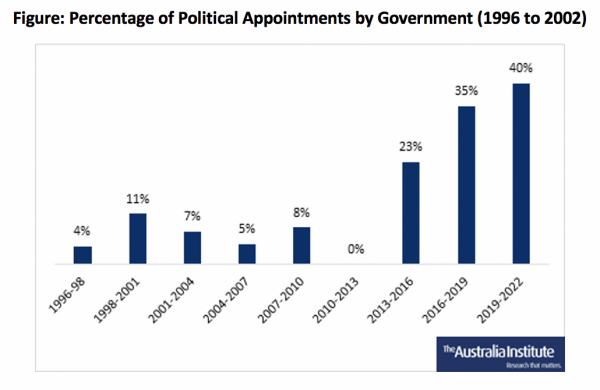
**Ginawa ba ni Labor ang katulad na bagay?** Nagpapahiwatig ang pananaliksik na habidin ang parehong mga pangunahing partido ay gumagawa ng political appointments, naiiba ang scale: Ayon sa pananaliksik ng Australia Institute na sumusuri sa lahat ng 974 appointment sa Administrative Appeals Tribunal (AAT) at mga precursor nito sa pagitan ng 1996 at 2022: - **Howard Government (Coalition)**: 6% political appointments - **Rudd/Gillard Government (Labor)**: 5% political appointments - **Abbott/Turnbull/Morrison Government (Coalition)**: 32% political appointments [5] Natagpuan ng isa pang pag-aaral na ang Coalition governments ay gumawa ng 109 political appointments sa kanilang 21 taon sa opisina simula 1996, kumpara sa 10 ni Labor sa kanyang anim na taon sa kapangyarihan—na nangangahulugang 92% ng political appointees sa AAT ay ginawa ng Liberal prime ministers [6].
**Did Labor do something similar?** Research indicates that while both major parties make political appointments, the scale differs dramatically: According to Australia Institute research analyzing all 974 appointments to the Administrative Appeals Tribunal (AAT) and its precursors between 1996 and 2022: - **Howard Government (Coalition)**: 6% political appointments - **Rudd/Gillard Government (Labor)**: 5% political appointments - **Abbott/Turnbull/Morrison Government (Coalition)**: 32% political appointments [5] Another study found that Coalition governments made 109 political appointments in their 21 years in office since 1996, compared to Labor's 10 in its six years in power—meaning 92% of political appointees to the AAT were made by Liberal prime ministers [6].
Natagpuan din ng pananaliksik na ang Coalition ay nagtalaga ng 22 politically connected Senior Members sa AAT (sa 61 total) simula 2013, kabilang ang pitong walang legal qualifications [5].
The research also found that the Coalition appointed 22 politically connected Senior Members to the AAT (out of 61 total) since 2013, including seven without legal qualifications [5].
Gayunpaman, ang Labor governments ay gumawa rin ng political appointments, at parehong partido ang pinuna para sa isang "jobs for mates" culture.
However, Labor governments also made political appointments, and both parties have been criticized for a "jobs for mates" culture.
Isang 2025 parliamentary review ang nakakita na ang mga pagtatalaga ng gobyerno ng parehong pangunahing partido ay "clouded by nepotism" at patronage [7].
A 2025 parliamentary review found government appointments by both major parties are "clouded by nepotism" and patronage [7].
🌐

Balanseng Pananaw

**Konteksto sa mga pagtatalaga sa tribunal:** Habidin tama ang claim sa paglalarawan ng mga pagtatalaga noong 2014, ipinapakita ng mas malawak na konteksto na: 1. **Scale ng isyu**: Ang mga political appointments sa mga tribunal ay tumaas nang malaki sa ilalim ng Coalition kumpara sa mga nakaraang gobyerno—mga 6-7 beses ang rate ng Rudd/Gillard Labor government [5][6]. 2. **Defensive na pagpapaliwanag**: Ipinagtanggol ng gobyerno ang mga pagtatalaga bilang pagsunod sa tamang mga alituntunin at pagsasagawa ng lehitimong cabinet authority.
**Context on tribunal appointments:** While the claim accurately describes the 2014 appointments, the broader context shows: 1. **Scale of issue**: Political appointments to tribunals increased significantly under the Coalition compared to previous governments—approximately 6-7 times the rate of the Rudd/Gillard Labor government [5][6]. 2. **Defensive justification**: The government defended the appointments as following proper guidelines and exercising legitimate cabinet authority.
Nangatwiran ang mga kritiko na ito ay sumira sa merit-based selection [1]. 3. **Bipartisan na pattern**: Habidin mas mataas ang rate ng Coalition, parehong partido ang nakikisali sa political appointments.
Critics argued this undermined merit-based selection [1]. 3. **Bipartisan pattern**: While the Coalition's rate was significantly higher, both parties engage in political appointments.
Nagtalaga ang Coalition ng 32% political appointees laban sa 5% ng Labor sa kanilang mga karampatang kamakailang termino [5]. 4. **Systemic na alalahanin**: Maraming independent analyses at parliamentary reviews ang nakakita ng isang "jobs for mates" culture na nakakaapekto sa parehong partido, kung saan ang Albanese government ay pagkatapos ay nagtatag ng isang Strengthening Democracy Taskforce noong 2023 upang matugunan ang appointment integrity [5][7][8]. **Komparatibong pagsusuri**: Ang partikular na insidenteng ito noong 2014 ay bahagi ng isang mas malawak na pattern ng pagtaas ng political appointments sa ilalim ng Abbott/Turnbull/Morrison government kumpara sa Rudd/Gillard government, bagama't ang Labor ay gumawa rin ng ilang political appointments sa kanyang termino (2007-2013).
The Coalition appointed 32% political appointees versus Labor's 5% during their respective recent terms [5]. 4. **Systemic concern**: Multiple independent analyses and parliamentary reviews have identified a "jobs for mates" culture affecting both parties, with the Albanese government subsequently establishing a Strengthening Democracy Taskforce in 2023 to address appointment integrity [5][7][8]. **Comparative analysis**: This specific 2014 incident was part of a broader pattern of increased political appointments under the Abbott/Turnbull/Morrison government compared to the Rudd/Gillard government, though Labor also made some political appointments during its term (2007-2013).

TOTOO

8.0

sa 10

Tama ang claim batay sa facts.
The claim is factually accurate.
Noong 2014, nagtalaga ang Coalition government ng hindi bababa sa dalawang indibidwal na may dokumentadong kaugnayan sa Liberal Party (sina Helena Claringbold at Nick McGowan) sa Migration Review Tribunal kahit na hindi sila na-shortlist ng selection panel.
In 2014, the Coalition government appointed at least two individuals with documented Liberal Party ties (Helena Claringbold and Nick McGowan) to the Migration Review Tribunal despite them not being shortlisted by the selection panel.
Kumpirmado ito sa pampublikong Senate estimates testimony [1].
This was confirmed in public Senate estimates testimony [1].
Ipinagtanggol ng gobyerno ang mga pagtatalaga bilang pagsunod sa tamang mga alituntunin at pagsasagawa ng lehitimong cabinet authority, ngunit tama ang factual na alegasyon—na ang mga hindi na-shortlist na kandidato na may koneksyon sa partido ay na-appoint.
The appointments were defended by the government as following proper guidelines and exercising legitimate cabinet authority, but the factual allegation—that non-shortlisted candidates with party connections were appointed—is correct.

📚 MGA PINAGMULAN AT SANGGUNIAN (8)

  1. 1
    New members of Migration Review Tribunal bypassed selection panel

    New members of Migration Review Tribunal bypassed selection panel

    Two members have Liberal party ties and were not shortlisted by a selection panel, Senate committee told

    the Guardian
  2. 2
    afr.com

    Tony Abbott staffer Helena Claringbold

    Afr

    Original link unavailable — view archived version
  3. 3
    mypolitician.com.au

    Nick McGowan candidate profile

    Mypolitician Com

  4. 4
    Australia's indefinite detention of refugees illegal, UN rules

    Australia's indefinite detention of refugees illegal, UN rules

    Government told it should compensate five people who were incarcerated without charge on secret security grounds

    the Guardian
  5. 5
    Government Agency Political Appointments as High as One in Three

    Government Agency Political Appointments as High as One in Three

    A new report from the Australia Institute’s Democracy & Accountability Program represents the largest and most comprehensive domestic study of the

    The Australia Institute
  6. 6
    AAT appointments 'have become increasingly political'

    AAT appointments 'have become increasingly political'

    Just days out from the federal election, a new study from the Australia Institute reveals how political appointments to the Administrative Appeals Tribunal has “skyrocketed”, as well as how few

    Lawyersweekly Com
  7. 7
    Scathing 'jobs for mates' review finds government appointments too often political

    Scathing 'jobs for mates' review finds government appointments too often political

    A report into government appointments to boards savages the system, which it says too often allows governments to award friends or pick candidates for political purposes, eroding trust with the public.

    Abc Net
  8. 8
    Labor and merit-based appointments

    Labor and merit-based appointments

    As the new Administrative Review Tribunal prepares to begin operating on October 14, an analysis of 364 appointments shows Labor has been sincere in reforming the stacked body it replaces.

    The Saturday Paper

Pamamaraan ng Rating Scale

1-3: MALI

Hindi tama sa katotohanan o malisyosong gawa-gawa.

4-6: BAHAGYA

May katotohanan ngunit kulang o baluktot ang konteksto.

7-9: HALOS TOTOO

Maliit na teknikal na detalye o isyu sa pagkakasulat.

10: TUMPAK

Perpektong na-verify at patas ayon sa konteksto.

Pamamaraan: Ang mga rating ay tinutukoy sa pamamagitan ng cross-referencing ng opisyal na mga rekord ng pamahalaan, independiyenteng mga organisasyong nag-fact-check, at mga primaryang dokumento.