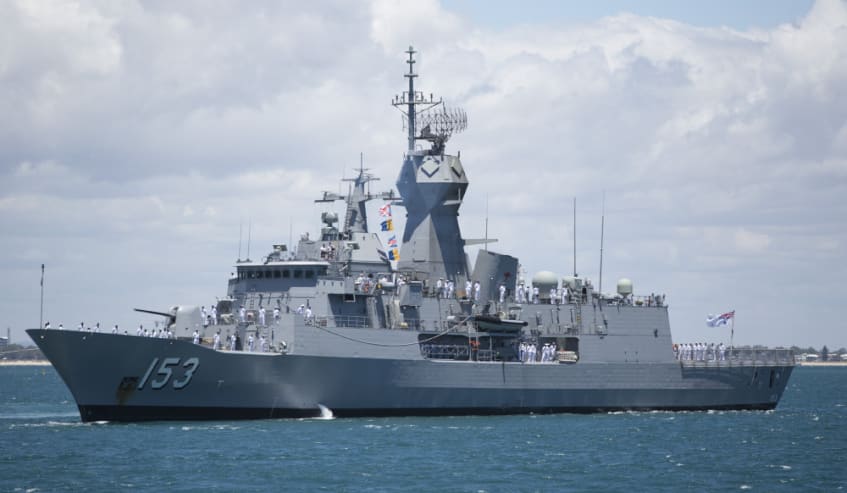
“Sinabihan ang mga aplikante sa tender para sa isang $90B na proyekto sa pagbuo ng barko na hindi nila kailangang gumastos ng anuman sa Australia mula sa pondo para sa konstruksyon.”
Ang claim ay tumutukoy sa 2017 Naval Shipbuilding Plan ng pamahalaang Coalition, na nagsama ng humigit-kumulang **$90 bilyon sa patuloy na pagbili at pagbuo ng barko** [1].
The claim refers to the Coalition government's 2017 Naval Shipbuilding Plan, which included approximately **$90 billion in rolling naval acquisition and construction** [1].
Ang pangunahing tender sa pagbuo ng barko sa ilalim ng programang ito ay ang Future Frigate Program (SEA 5000), isang **$35 bilyong kontrata** na inilabas noong Marso 31, 2017, na may tatlong internasyonal na kumpetidor: BAE Systems, Fincantieri, at Navantia [2].
The primary shipbuilding tender within this program was the Future Frigate Program (SEA 5000), a **$35 billion contract** released March 31, 2017, with three international competitors: BAE Systems, Fincantieri, and Navantia [2].
Gayunpaman, **direktang sumasalungat ang claim sa aktwal na posisyon ng pamahalaan sa mga kinakailangan sa local content.** Noong Hunyo 29, 2017, inihayag ni Defence Minister Christopher Pyne ang mas pinalakas na mga kinakailangan sa Australian Industry Capability Plan (AICP), na nagsabing: "Binabago namin ang proseso na dinaanan ng mga kumpanya kapag tumutugon sa mga tender para sa kagamitan sa depensa" at na ang mga tenderer ay kailangang ipakita "kung paano at kung saan nila isasali ang industriya ng Australia" **bago pa man isaalang-alang ng Pamahalaan ang kanilang bid** [3].
However, **the claim directly contradicts the government's actual policy position on local content requirements.** On June 29, 2017, Defence Minister Christopher Pyne announced strengthened Australian Industry Capability Plan (AICP) requirements, stating: "We are changing the process companies undergo when responding to tenders for defence equipment" and that tenderers would need to demonstrate "how and where they will involve Australian industry" **before the Government would even consider their bid** [3].
Ang mga aplikante sa tender ay tahasang kinailangang magsumite ng detalyadong Australian Industry Capability Plans na naglalarawan kung paano nila "ipapakita at bubuuin ang isang supply chain ng Australia upang suportahan ang hinaharap na industriya ng pagbuo ng barko sa Australia, at ipakita rin kung paano nila lalakihan ang kanilang mga lokal na supplier sa mga global na supply chain" [3].
Tender applicants were explicitly required to submit detailed Australian Industry Capability Plans outlining how they would "demonstrate and develop an Australian supply chain to support Australia's future shipbuilding industry, and also show how they would leverage their local suppliers into global supply chains" [3].
Hindi ito alinsunod sa pagiging sinabihan na "hindi nila kailangang gumastos ng anuman sa pondo para sa konstruksyon sa Australia." Ang napiling disenyo ng BAE Systems ay nagsama ng **tahasang pangako na magbuo sa Australia sa Adelaide**, kung saan ang ASC Shipbuilding ay naging isang subsidiary ng BAE at ang produksyon ay ginawa sa Australia sa halip na sa ibang bansa [4].
This is not consistent with being told "they don't need to spend any of that construction money in Australia."
The selected BAE Systems design included **explicit commitment to Australian manufacturing in Adelaide**, with ASC Shipbuilding becoming a BAE subsidiary and production taking place in Australia rather than overseas [4].
Ang pag-aayos ay inaasahang lumikha ng humigit-kumulang **5,000 trabaho sa loob ng 30 taon** na may pakikilahok mula sa maraming supplier ng Australia kabilang ang SAAB Australia, Lockheed Martin Australia, CEA Australia, at Thales Australia [5].
The arrangement was expected to create approximately **5,000 jobs over 30 years** with involvement from multiple Australian suppliers including SAAB Australia, Lockheed Martin Australia, CEA Australia, and Thales Australia [5].
Nawawalang Konteksto
Kulang ang claim sa mahalagang konteksto tungkol sa mga legal na limitasyon sa pagbili ng depensa: **Mga Limitasyon sa Trade Agreement:** Gumagana ang Australia sa ilalim ng mga tuntunin ng World Trade Organization at mga free trade agreement (kabilang ang Australia-New Zealand Government Procurement Agreement) na **pumipigil sa anumang pamahalaan na mag-mandato ng mga partikular na porsyento ng local content** [6].
The claim lacks important context about legal constraints on defense procurement:
**Trade Agreement Constraints:** Australia operates under World Trade Organization rules and free trade agreements (including the Australia-New Zealand Government Procurement Agreement) that **prevent any government from mandating specific local content percentage requirements** [6].
Ang limitasyong ito ay parehong nalalapat sa Coalition at mga pamahalaang Labor—walang makapagtatakda ng "70% lokal" o katulad na tahasang porsyento.
This constraint applies equally to Coalition and Labor governments—neither can legally specify "70% local" or similar explicit percentages.
Gayunpaman, ang limitasyong legal na ito ay kakaiba sa kawalan ng mga kinakailangan sa local content. **Kung Paano Naipatupad ang mga Kinakailangan:** Dahil ang mga tahasang percentage mandate ay ipinagbabawal ng batas pangkalakalan, ginamit ng Coalition (tulad ng Labor sa kanila) ang **mga sapilitang Australian Industry Capability Plans**—mga kinakailangang pagsusumite na nagpapakita kung paano isasali ng mga bidder ang mga supplier at manggagawa ng Australia.
However, this legal constraint is fundamentally different from an absence of local content requirements.
**How Requirements Were Implemented:** Because explicit percentage mandates are prohibited by trade law, the Coalition (like Labor before them) used **mandatory Australian Industry Capability Plans**—required submissions showing how bidders would involve Australian suppliers and workers.
Ito ay isang totoong kinakailangan, ngunit ipinahayag sa ibang paraan kaysa sa mga target na porsyento. **Ang Pagkakapresenta ng Oposisyon:** Ang claim ay tila tumutukoy sa legal na katotohanan na ang mga trade agreement ay pumipigil sa mga tahasang percentage mandate, ngunit muling itinatanghal ito bilang "hindi kailangang gumastos ng anuman sa pondo para sa konstruksyon sa Australia," na mali ang pagkakapresenta sa aktwal na posisyon ng polisiya.
This is a real requirement, just expressed differently than percentage targets.
**The Opposition's Framing:** The claim appears to reference the legal reality that trade agreements prevent explicit percentage mandates, but reframes this as "no need to spend any construction money in Australia," which misrepresents the actual policy position.
Ipinapakita ng dokumentasyon ng pamahalaan ang tahasang mga kinakailangan para sa pakikilahok ng Australia; hindi lang ito maipahayag bilang mga nakatakdang porsyento. **Mga Local Content Target na Tinalakay:** Nakapag-usap si Defence Minister Christopher Pyne noon pa man tungkol sa pagtutok sa "60 porsyentong lokal na pagbuo" para sa mga proyekto ng naval [7], na nagpapahiwatig ng priyoridad ng pamahalaan sa lokal na konstruksyon, hindi sa pag-alis nito.
Government documentation shows explicit requirements for Australian involvement; they simply couldn't be expressed as fixed percentages.
**Local Content Targets Discussed:** Defence Minister Christopher Pyne had previously discussed targeting "60 per cent local build" for naval projects [7], indicating government prioritization of local construction, not its exclusion.
Pagsusuri ng Kredibilidad ng Pinagmulan
**Orihinal na Pinagmulan - ABC News (2017):** Ang ABC News ay ang pambansang pampublikong broadcaster ng Australia na may malakas na reputasyon sa pagbabalita sa depensa at pambansang seguridad.
**Original Source - ABC News (2017):** ABC News is Australia's national public broadcaster with a strong reputation for defense and national security reporting.
Gayunpaman, ang partikular na pamagat ng artikulo ("defence-tells-foreign-bidders-no-need-to-work-with-australians") ay nagmumungkahing potensyal na sensasyonalistang pagkakapresenta.
However, the specific article title provided ("defence-tells-foreign-bidders-no-need-to-work-with-australians") suggests potential sensationalist framing.
Ang pagkakabasa ng headline ("no need to work with Australians") ay maaaring muling ipresenta ang mga kumplikadong limitasyon sa trade agreement tungkol sa mga sapilitang kinakailangan sa porsyento. **Mga Ginamit na Pinagmulan ng Pamahalaan:** Ang mga pahayag noong Hunyo 29, 2017 ni Defence Minister Christopher Pyne ay mga opisyal na anunsyo ng polisiya mula sa responsableng ministro ng pamahalaan at kumakatawan sa mga pangunahing pinagmulan.
The headline's wording ("no need to work with Australians") may misrepresent complex trade agreement constraints regarding mandatory percentage requirements.
**Government Sources Used:** Defence Minister Christopher Pyne's June 29, 2017 public statements are official policy announcements from the responsible government minister and represent primary sources.
Ang ANAO audit ay kumakatawan sa isang independyenteng statutory audit body na walang pampulitikang pagkiling [8].
The ANAO audit represents an independent statutory audit body with no political bias [8].
⚖️
Paghahambing sa Labor
**Ginawa ba ni Labor ang katulad?** Isinagawang paghahanap: "Labor government defense procurement local content requirements Australia" **Pagkatuklas:** Ang mga pamahalaang Labor ay nagoperate sa ilalim ng mga parehong legal na limitasyon tungkol sa pagbili ng depensa.
**Did Labor do something similar?**
Search conducted: "Labor government defense procurement local content requirements Australia"
**Finding:** Labor governments have operated under identical legal constraints regarding defense procurement.
Ang mga Commonwealth Procurement Rules (CPRs) at mga obligasyon sa trade agreement na pumipigil sa mga sapilitang local content percentage ay parehong nalalapat sa Coalition at mga administrasyon ng Labor [6].
The Commonwealth Procurement Rules (CPRs) and trade agreement obligations that prevent mandatory local content percentages apply equally to both Coalition and Labor administrations [6].
Walang nakitang ebidensya na ang mga pamahalaang Labor ay nagpatupad ng mga sapilitang local content percentage noong nasa puwesto—parehong gumamit ng mga plano sa pakikilahok ng industriya at mga kinakailangan sa kakayahan bilang mekanismo ng pagsunod sa loob ng mga legal na limitasyon [6].
Research found no evidence that Labor governments imposed mandatory local content percentages when in office—both parties have necessarily used industry participation plans and capability requirements as the compliance mechanism within legal constraints [6].
Ang parehong mga restriksyon sa trade agreement na pumigil sa Coalition na mag-mandato ng mga partikular na porsyento ng local content para sa frigate tender ay gayundin magbabawal sa Labor kung sila ay mag-evaluate ng mga pagbili sa depensa.
The same trade agreement restrictions that prevented the Coalition from mandating specific local content percentages for the frigate tender would have similarly constrained Labor if they were evaluating defense procurements.
Ito ay isang istruktural na isyu sa batas na nakakaapekto sa parehong partido nang pantay-pantay, hindi isang inobasyon o paglihis ng Coalition mula sa kasanayan ng Labor.
This is a structural legal issue affecting both parties equally, not a Coalition innovation or departure from Labor practice.
🌐
Balanseng Pananaw
**Habang iginigiit ng mga kritiko:** Dapat na tinuligsa o mas malinaw na pinahayag ng Coalition ang mga limitasyon sa trade agreement, suportado ang posisyon ng pamahalaan ng: **Posisyon ng Pamahalaan:** Ang pahayag ng polisiya noong Hunyo 2017 ay tahasang nagpapatibay sa mga kinakailangan sa Australian Industry Capability Plan, na kumakatawan sa **paghigpit ng pokus sa local content**, hindi sa pagluluwag.
**While critics argue:** Trade agreement constraints should have been pushed back against or that the Coalition should have been more explicit about local content expectations, the government's position is supported by:
**Government's Stated Position:** The June 2017 policy announcement explicitly strengthened Australian Industry Capability Plan requirements, representing a **tightening of local content focus**, not a relaxation.
Sinabi ni Minister Pyne na ang pamahalaan ay "binabago ang proseso na dinaanan ng mga kumpanya kapag tumutugon sa mga tender para sa kagamitan sa depensa" upang humingi ng higit pa mula sa mga kumpanya sa depensa tungkol sa pakikilahok ng Australia [3].
Minister Pyne stated the government was "changing the process companies undergo when responding to tenders for defence equipment" to demand more from defence companies regarding Australian involvement [3].
Sumasalungat ito sa isang salaysay ng pag-aalis o pagkawalang-bahala sa lokal na paggastos. **Legal na Realidad:** Parehong nag-ooperate ang Coalition at mga pamahalaang Labor sa ilalim ng naka-binding na internasyonal na batas pangkalakalan (WTO, FTAs) na tahasang nagbabawal sa mga diskriminatoriskong kinakailangan sa porsyento ng local content.
This contradicts a narrative of exclusion or indifference to local spending.
**Legal Reality:** Both Coalition and Labor governments operate under binding international trade law (WTO, FTAs) that explicitly prohibit discriminatory local content percentage requirements.
Ang paggamit nito bilang ebidensya ng polisiya ng Coalition na hindi isali ang paggastos ng Australia ay mali ang pagkakapresenta sa mga legal na limitasyon na nalalapat sa lahat [6]. **Aktwal na Resulta:** Ang napiling disenyo ng BAE Systems ay tahasang dinisenyo na magbuo sa Adelaide na may mga manggagawa at supplier ng Australia, hindi sa ibang bansa.
Using this as evidence of Coalition policy to exclude Australian spending misrepresents the legal constraints that apply universally [6].
**Actual Outcome:** The selected BAE Systems design was explicitly designed to be built in Adelaide with Australian workers and suppliers, not overseas.
Ang resultang ito ay direktang sumasalungat sa ipinahihiwatig ng claim na ang tender ay dinisenyo upang hindi isali ang konstruksyon ng Australia [4] [5]. **Pagtatasa ng Eksperto:** Ang 2023 performance audit ng Australian National Audit Office ay sinuri ang proseso ng pagbili ng Future Frigate at nakilala ang mga isyu sa pamamahala ng value-for-money at proseso ng administrasyon, ngunit HINDI nakilala ang "kawalan ng mga kinakailangan sa local content" bilang pagkukulang.
This outcome directly contradicts the claim's implication that the tender was designed to exclude Australian construction [4] [5].
**Expert Assessment:** The Australian National Audit Office's 2023 performance audit examined the Future Frigate procurement process and identified issues with value-for-money management and administrative process, but did NOT identify "absence of local content requirements" as a failing.
Tandaan ng ANAO na kabilang sa mga layunin ng proyekto ang "maximise Australian Industry Capability" [8]. **Mahalagang konteksto:** Tila ito ay isang maling pagkakapresenta ng mga limitasyon sa batas pangkalakalan.
The ANAO noted that among project objectives was to "maximise Australian Industry Capability" [8].
**Key context:** This appears to be a factual misrepresentation of trade law constraints.
Ang legal na kawalan ng kakayahang mag-mandato ng mga partikular na porsyento (na nakakaapekto sa parehong Coalition at Labor nang pantay-pantay) ay maling itinanghal bilang pagkawalang-bahala ng polisiya sa pakikilahok ng Australia.
Legal inability to mandate specific percentages (affecting both Coalition and Labor equally) has been misrepresented as policy indifference to Australian involvement.
Ang aktwal na polisiya ay nangailangan ng mga detalyadong plano sa pakikilahok ng industriya ng Australia.
The actual policy required detailed Australian industry participation plans.
HINDI TOTOO
2.0
sa 10
Ang claim ay hindi tama sa katotohanan.
The claim is factually inaccurate.
Ang 2017 naval shipbuilding tender ng pamahalaang Coalition ay tahasang nangailangan ng Australian Industry Capability Plans na nagpapakita ng lokal na pakikilahok, na salungat sa claim na sinabihan ang mga tenderer na "hindi nila kailangang gumastos ng anuman sa pondo para sa konstruksyon sa Australia." Bagama't ang mga trade agreement ay pumigil sa mga sapilitang kinakailangan sa porsyento (isang limitasyon na nakakaapekto sa lahat ng pamahalaan), kakaiba ito sa kawalan ng mga kinakailangan sa lokal na paggastos.
The Coalition government's 2017 naval shipbuilding tender explicitly required Australian Industry Capability Plans demonstrating local involvement, contrary to the claim that tenderers were told "they don't need to spend any of that construction money in Australia." While trade agreements prevented mandatory percentage requirements (a constraint affecting all governments), this is fundamentally different from an absence of local spending requirements.
Ang napiling disenyo ay tahasang ginawa sa Australia na may mga supplier ng Australia.
The selected design was explicitly built in Australia with Australian suppliers.
Huling Iskor
2.0
SA 10
HINDI TOTOO
Ang claim ay hindi tama sa katotohanan.
The claim is factually inaccurate.
Ang 2017 naval shipbuilding tender ng pamahalaang Coalition ay tahasang nangailangan ng Australian Industry Capability Plans na nagpapakita ng lokal na pakikilahok, na salungat sa claim na sinabihan ang mga tenderer na "hindi nila kailangang gumastos ng anuman sa pondo para sa konstruksyon sa Australia." Bagama't ang mga trade agreement ay pumigil sa mga sapilitang kinakailangan sa porsyento (isang limitasyon na nakakaapekto sa lahat ng pamahalaan), kakaiba ito sa kawalan ng mga kinakailangan sa lokal na paggastos.
The Coalition government's 2017 naval shipbuilding tender explicitly required Australian Industry Capability Plans demonstrating local involvement, contrary to the claim that tenderers were told "they don't need to spend any of that construction money in Australia." While trade agreements prevented mandatory percentage requirements (a constraint affecting all governments), this is fundamentally different from an absence of local spending requirements.
Ang napiling disenyo ay tahasang ginawa sa Australia na may mga supplier ng Australia.
The selected design was explicitly built in Australia with Australian suppliers.
Hindi tama sa katotohanan o malisyosong gawa-gawa.
4-6: BAHAGYA
May katotohanan ngunit kulang o baluktot ang konteksto.
7-9: HALOS TOTOO
Maliit na teknikal na detalye o isyu sa pagkakasulat.
10: TUMPAK
Perpektong na-verify at patas ayon sa konteksto.
Pamamaraan: Ang mga rating ay tinutukoy sa pamamagitan ng cross-referencing ng opisyal na mga rekord ng pamahalaan, independiyenteng mga organisasyong nag-fact-check, at mga primaryang dokumento.