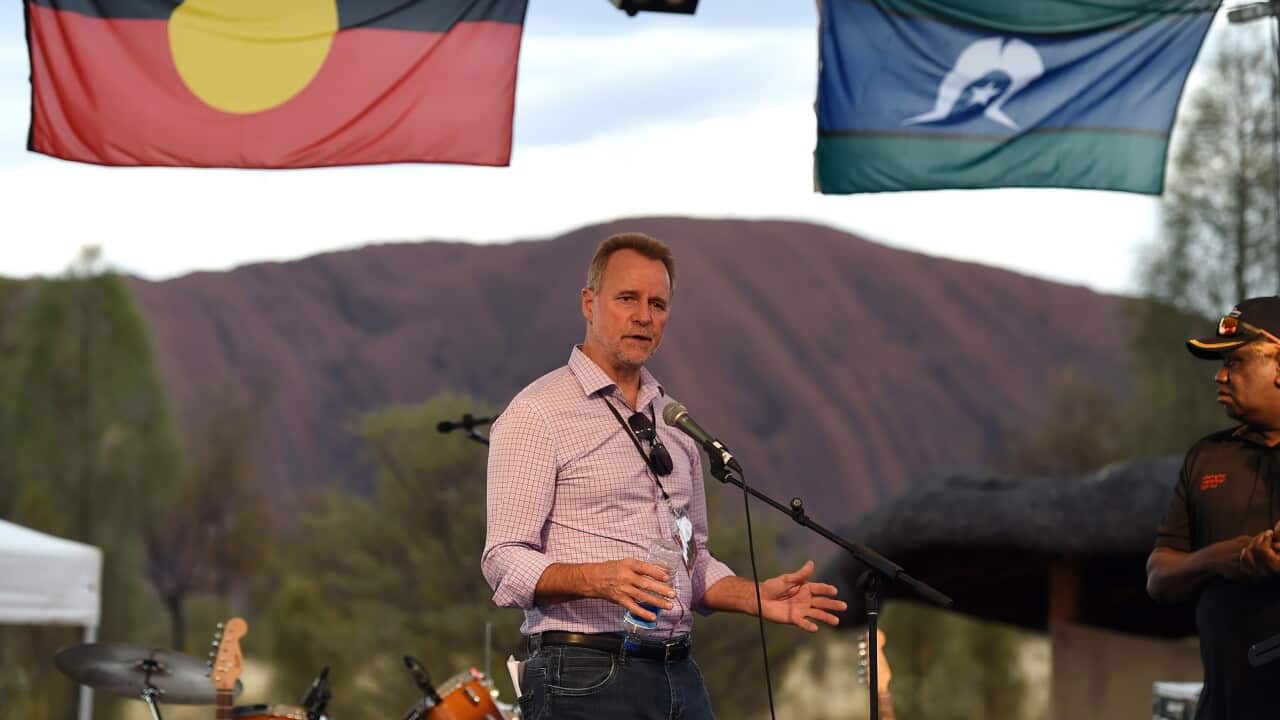
“Ibinigay ang pondo mula sa isang fund para sa pagsulong sa Indigenous advancement sa isang fishing corporation upang matulungan itong labanan ang mga Indigenous land claims.”
Ang pangunahing claim ay **tumpak na katotohanan**.
The core claim is **factually accurate**.
Noong Oktubre 2018, inaprubahan ni Indigenous Affairs Minister Nigel Scullion ang $150,000 na grant mula sa Indigenous Advancement Strategy (IAS) sa NT Seafood Council (NTSC) [1].
In October 2018, Indigenous Affairs Minister Nigel Scullion approved a $150,000 grant from the Indigenous Advancement Strategy (IAS) to the NT Seafood Council (NTSC) [1].
Inaprubahan din niya ang $170,000 sa NT Amateur Fishermen's Association at $165,000 sa NT Cattlemen's Association—na may kabuuang halagang humigit-kumulang $485,000 [2].
He also approved $170,000 to the NT Amateur Fishermen's Association and $165,000 to the NT Cattlemen's Association – a total of approximately $485,000 [2].
Kinumpirma ni Minister Scullion ang mga grant na ito sa panahon ng Senate estimates hearings sa huling bahagi ng Oktubre 2018 [1][2].
Minister Scullion confirmed these grants during Senate estimates hearings in late October 2018 [1][2].
Naging chairman si Scullion ng NTSC mula 1994 hanggang 2001, at nagbigay ng ebidensya para sa organisasyong iyon sa mga Aboriginal land claim disputes sa panahon ng kanyang pagiging chair [1].
Scullion had previously chaired the NTSC from 1994 to 2001, and gave evidence on behalf of that organization in Aboriginal land claim disputes during his tenure as chair [1].
Ang mga grant ay partikular na inilaan upang pondohan ang "legal fees, effectively … to put forward a case of detriment to the land commissioner" tungkol sa mga Aboriginal land claims [3].
The grants were specifically intended to fund "legal fees, effectively … to put forward a case of detriment to the land commissioner" regarding Aboriginal land claims [3].
Sa ilalim ng NT Land Rights Act, ang mga taong naniniwalang ang isang land claim ay makakaapekto nang negatibo sa kanilang negosyo o personal na interes ay maaaring maghain ng "detriment" applications sa Aboriginal Land Commissioner na nangangatwiran kung paano apektado ang kanilang hinaharap na access sa kita, lupa, o tubig [1].
Under the NT Land Rights Act, those who believe a land claim would negatively impact their business or personal interests can lodge "detriment" applications to the Aboriginal Land Commissioner arguing how their future access to income, land, or water would be affected [1].
Ang mga pondo ay eksplicitong ginamit upang matulungan ang mga industry group na ito na ihanda ang kanilang legal arguments tungkol sa detriment para sa mga outstanding land claims na naantala—ang ilan ay halos 30 taon na [1].
The funds were explicitly used to help these industry groups prepare their legal arguments on detriment for outstanding land claims that had been held up – some for nearly 30 years [1].
Nawawalang Konteksto
Gayunpaman, ang claim ay hindi isinasama ang ilang mahahalagang kontekstwal na elemento na fundamental na nagbabago sa larawan: **1.
However, the claim omits several important contextual elements that fundamentally alter the picture:
**1.
Ang layunin ng pondo ayon sa pamahalaan:** Habang ang mga kritiko ay nagpapa-frame nito bilang pondo upang "labanan" ang mga land claim, sinuportahan ng pamahalaan na ang mga pondo ay para sa mga lehitimong layunin sa ilalim ng IAS guidelines.
The funding purpose according to government:** While critics framed this as funding to "fight" land claims, the government maintained the funds were for legitimate purposes under IAS guidelines.
Sinabi ng Department of Prime Minister and Cabinet na ang pondo ay may "dalawang component": (1) upang turuan ang mga miyembro ng industry tungkol sa Land Rights Act at Aboriginal land rights issues sa NT, at (2) upang payagan ang mga organisasyon na kumatawan sa mga interes ng kanilang mga miyembro sa land claims process [1].
The Department of Prime Minister and Cabinet stated the funding had "two components": (1) to educate industry members on the Land Rights Act and Aboriginal land rights issues in the NT, and (2) to allow organizations to represent their members' interests in the land claims process [1].
Sinabi rin ni Scullion sa Guardian Australia na ang pondo ay maaaring gamitin "to develop education resources and training materials on Aboriginal land and sea country in the Northern Territory, Aboriginal land rights history and legislation" [1]. **2.
Scullion also told Guardian Australia the funding could be used "to develop education resources and training materials on Aboriginal land and sea country in the Northern Territory, Aboriginal land rights history and legislation" [1].
**2.
Ang legal framework:** Sa ilalim mismo ng NT Land Rights Act, ang detriment assessment ay isang mandatory na bahagi ng proseso.
The legal framework:** Under the NT Land Rights Act itself, detriment assessment is a mandatory part of the process.
Ang Aboriginal Land Commissioner ay kailangang isaalang-alang ang mga detriment claim sa pamamagitan ng batas—hindi sila opsyonal [1].
The Aboriginal Land Commissioner must consider detriment claims by law – they are not optional [1].
Ito ay hindi isang discretionary o kakaibang elemento ng land claims process; ito ay structural sa kung paano gumagana ang mga land rights determinations. **3.
This is not a discretionary or unusual element of the land claims process; it is structural to how land rights determinations work.
**3.
Alternative na paraan ng pondo:** Ang desisyon sa grant ay nagdulot ng procedural concern—tinukoy ni Northern Land Council chairman Joe Morrison na sa ilalim ng Land Rights Act, kung ang mga partido ay nangangailangan ng tulong sa paghahain ng mga detriment claim, "that's dealt with by the Attorney-General's department, not by the Indigenous Affairs Minister" [1].
Alternative funding avenue:** The grant decision raised a procedural concern – the Northern Land Council chairman Joe Morrison pointed out that under the Land Rights Act, if parties require assistance submitting detriment claims, "that's dealt with by the Attorney-General's department, not by the Indigenous Affairs Minister" [1].
Ipinapahiwatig nito na ang isyu ay higit tungkol sa pagpili ng funding channel kaysa sa kung dapat bang mayroong mga detriment claim. **4.
This suggests the issue was more about funding channel choice than whether detriment claims should exist at all.
**4.
Coalition's argument:** Ang Coalition government ay nangatwiran na nagbigay ito ng $4.9 billion sa Indigenous Advancement Strategy sa kabuuan, kabilang ang $7.5 million sa Northern Land Council mismo upang isulong ang mga claim, at karagdagang $1 million sa Land Commissioner [1].
Coalition's argument:** The Coalition government argued it had provided $4.9 billion to the Indigenous Advancement Strategy overall, including $7.5 million to the Northern Land Council specifically to progress claims, and an additional $1 million to the Land Commissioner [1].
Sinabi ng isang tagapagsalita ng pamahalaan: "If Labor is happy to see these outstanding land claims kicked off to the never never and deprive Aboriginal communities of the benefits of settling outstanding claims now, they should just come out and say so" [1]. **5.
A government spokesman stated: "If Labor is happy to see these outstanding land claims kicked off to the never never and deprive Aboriginal communities of the benefits of settling outstanding claims now, they should just come out and say so" [1].
**5.
Claim resolution context:** Hiniling ni Scullion sa Land Commissioner noong Hulyo 2018 na suriin kung paano malulutas ang mga outstanding na isyu sa detriment, dahil ang mga teknikal na hadlang na ito ay pumipigil sa mga claim na ma-finalize [1].
Claim resolution context:** Scullion had asked the Land Commissioner in July 2018 to examine how to resolve outstanding detriment issues, as these technical barriers were preventing claims from being finalized [1].
Ang mga grant ay inaprubahan noong Mayo 2018 sa kontekstong ito ng pagsisikap na ilipat ang mga naantalang claim.
The grants were approved in May 2018 in this context of trying to move stalled claims forward.
Pagsusuri ng Kredibilidad ng Pinagmulan
Ang mga orihinal na pinagkunan ay mga kredibleng mainstream journalism outlets: - **The Guardian** [1] ay isang internasyonal na kinikilalang broadsheet newspaper na may malalakas na editorial standards, na inilathala ng Guardian News CLAIM_JSON Media Limited.
The original sources are credible, mainstream journalism outlets:
- **The Guardian** [1] is an internationally recognized broadsheet newspaper with strong editorial standards, published by Guardian News & Media Limited.
Ang artikulo ay iniulat ni Lorena Allam, isang established journalist, at ayon sa balita ay ini-frame bilang "exclusive" reporting [1]. - **SBS/NITV** [2] ay ang national public broadcaster ng Australia's Indigenous news service, isa ring kredibleng mainstream source.
The article was reported by Lorena Allam, an established journalist, and was framed as "exclusive" reporting [1].
- **SBS/NITV** [2] is Australia's national public broadcaster's Indigenous news service, also a credible mainstream source.
Ang parehong mga pinagkunan ay nagbibigay ng factual reporting sa kung ano ang nangyari.
Both sources provide factual reporting on what occurred.
Gayunpaman, ang parehong mga pinagkunan ay binibigyang-diin ang kritikal na pagpapa-frame—na ang Indigenous funds ay na-divert para labanan ang mga land claim—nang hindi nagbibigay ng proportional na bigat sa mga paliwanag ng pamahalaan tungkol sa layunin ng pondo o sa structural na papel ng mga detriment claim sa Land Rights Act framework.
However, both sources emphasize the critical framing – that Indigenous funds were diverted to fight land claims – without providing proportional emphasis to the government's explanations about the funding purpose or the structural role of detriment claims in the Land Rights Act framework.
Ang Michael West Media, isa pang orihinal na pinagkunan na binanggit sa mga search, ay eksplicitong nagkakategorya nito bilang isang "rort" (misuse of funds), na sumasalamin sa partisan framing sa halip na sa lubos na neutral na pagsusuri [4].
Michael West Media, another original source mentioned in searches, explicitly categorizes this as a "rort" (misuse of funds), which reflects partisan framing rather than purely neutral analysis [4].
⚖️
Paghahambing sa Labor
**Gumawa ba ang Labor ng katulad na bagay?** Mga search na isinagawa: "Labor government Indigenous funding controversial", "Labor Indigenous affairs funding criticism", "Labor Aboriginal land claims policy".
**Did Labor do something similar?**
Searches conducted: "Labor government Indigenous funding controversial", "Labor Indigenous affairs funding criticism", "Labor Aboriginal land claims policy".
Ang mga search ay hindi nagbigay ng mga tukoy na katulad na pagkakataon ng Labor funding ng mga industry group upang maghain ng mga detriment claim.
The searches did not yield specific equivalent instances of Labor funding industry groups to lodge detriment claims.
Gayunpaman, hindi ito nakakagulat dahil: 1. **Ang funding mechanism ay bago:** Ang paggamit ng IAS funding para sa mga detriment claim ay isang Coalition policy innovation noong 2018.
However, this is not surprising because:
1. **The funding mechanism was novel:** Using IAS funding for detriment claims was a Coalition policy innovation in 2018.
Ang paraang ito ng pagfunding ng mga detriment claim ay tila walang direktang katumbas sa mga available na pinagkunan sa Labor. 2. **Labor's record sa land claims:** Sa ilalim ng mga Labor government, ang mga Aboriginal land claims process ay nangailangan din ng detriment assessment.
This approach to funding detriment claims doesn't appear to have a direct Labor equivalent in available sources.
2. **Labor's record on land claims:** Under Labor governments, Aboriginal land claims processes also required detriment assessment.
Nang ang Rudd/Gillard Labor governments ay nag-operate ng Indigenous portfolio, sila rin ay nag-process ng mga land claims sa pamamagitan ng mga framework na nangangailangan ng detriment consideration, kahit na ang mga search ay hindi nagpapakita na sila ay nagfund ng mga industry group sa parehong paraan. 3. **Ang mas malawak na konteksto:** Ang parehong mga pangunahing partido ay sumusuporta sa paglutas ng mga Northern Territory land claims sa pamamagitan ng mga established legal frameworks, kahit na ang kanilang mga pamamaraan at funding mechanisms ay nagkaiba.
When the Rudd/Gillard Labor governments operated the Indigenous portfolio, they also processed land claims through frameworks requiring detriment consideration, though searches did not reveal they funded industry groups in the same way.
3. **The broader context:** Both major parties have supported resolving Northern Territory land claims through established legal frameworks, though their approaches and funding mechanisms have differed.
Ang comparative analysis ay nagpapahiwatig na ang partikular na paraan ng pagfunding na ito—ang paggamit ng mga Indigenous Advancement Strategy monies upang pondohan ang mga detriment arguments ng mga industry group—ay tukoy sa Scullion model sa halip na sa isang standard practice sa parehong mga partido.
The comparative analysis suggests this particular funding approach – using Indigenous Advancement Strategy monies to fund industry groups' detriment arguments – was specific to the Scullion model rather than a standard practice across both parties.
🌐
Balanseng Pananaw
**Ang lehitimong argumento ng pamahalaan:** Sinuportahan ni Minister Scullion at ng pamahalaan na ang mga grant ay nag-facilitate ng mga lehitimong proseso.
**The legitimate government argument:** Minister Scullion and the government maintained that the grants facilitated legitimate processes.
Sa ilalim ng NT Land Rights Act, ang mga detriment claim ay mga mandatory statutory considerations para sa Aboriginal Land Commissioner—hindi mga opsyonal na dagdag na idinisenyo upang hadlangan ang mga land claim [1].
Under the NT Land Rights Act, detriment claims are mandatory considerations for the Aboriginal Land Commissioner – not optional extras designed to obstruct land claims [1].
Ang posisyon ng pamahalaan ay na nang walang tulong para sa mga industry group upang pormal na mailarawan ang kanilang detriment position, ang mga claim ay hindi maaaring magpatuloy sa tamang legal na proseso.
The government's position was that without assistance for industry groups to formally articulate their detriment position, claims could not proceed through proper legal process.
Ito ay tumpak na katotohanan sa ilalim ng legislation [1].
This is factually correct under the legislation [1].
Bukod dito, ang ilang mga land claim ay naka-pending sa loob ng halos 30 taon na partikular na dahil ang mga isyu sa detriment ay hindi pa nalulutas [1].
Additionally, several land claims had been pending for nearly 30 years specifically because detriment issues were unresolved [1].
Ang sinabi ng pamahalaan na layunin ay ayusin ang mga naantalang claim sa pamamagitan ng pagbibigay-daan sa lahat ng partido—kabilang ang mga interes ng industriya—na mag-presenta ng kanilang mga pormal na posisyon, na nagpapahintulot sa Land Commissioner na gumawa ng mga determinasyon at sa mga komunidad na sa wakas ay makatanggap ng mga settlement outcomes. **Ang lehitimong kritisismo:** Gayunpaman, ang mga kritiko ay nagtaas ng mga wastong alalahanin: 1. **Conflict of interest:** Direktang naging chairman si Scullion ng NTSC mula 1994-2001 at nagbigay ng ebidensya para sa mga fishing interests sa mga land claim dispute [1].
The government's stated goal was to unblock these claims by enabling all parties – including industry interests – to present their formal positions, allowing the Land Commissioner to make determinations and communities to finally receive settlement outcomes.
**The legitimate criticism:** However, critics raised valid concerns:
1. **Conflict of interest:** Scullion had directly chaired the NTSC from 1994-2001 and given evidence on behalf of fishing interests in land claim disputes [1].
Ang paggamit ng kanyang ministerial position upang pondohan ang kanyang dating organisasyon, kahit na mga taon na ang nakalilipas, ay lumikha ng isang anyo ng impropriety at isang direktang conflict of interest [2][3]. 2. **Maling funding channel:** Tulad ng tanda ng Northern Land Council, ang mga partido na nagsusumikap para sa detriment funding ay dapat na i-access ang itinakdang proseso ng Attorney-General's Department, hindi ang Indigenous Advancement Strategy ng Indigenous Affairs Minister [1].
Using his ministerial position to fund his former organization, even years later, created an appearance of impropriety and a direct conflict of interest [2][3].
2. **Wrong funding channel:** As the Northern Land Council noted, parties seeking detriment funding should access the Attorney-General's Department's designated process, not the Indigenous Affairs Minister's Indigenous Advancement Strategy [1].
Ito ay isang isyu sa proseso/pamamahala—ang mga pondo ay na-redirect palayo sa kanilang sinasabing layunin. 3. **Pagkakalayo ng layunin:** Ang Indigenous Advancement Strategy ay nilikha "to improve the way the government does business with Aboriginal and Torres Strait Islander people, to ensure funding actually achieves outcomes"—partikular upang isulong ang mga interes ng Indigenous [1].
This was a procedural/governance issue – the funds were redirected away from their stated purpose.
3. **Purpose misalignment:** The Indigenous Advancement Strategy was created "to improve the way the government does business with Aboriginal and Torres Strait Islander people, to ensure funding actually achieves outcomes" – specifically to advance Indigenous interests [1].
Ang paggamit nito upang pondohan ang mga legal argument ng mga industry group laban sa mga Indigenous land claims ay kumakatawan sa isang fundamental na pagkakalayo sa sinasabing layunin ng fund [1][3]. 4. **Kakulangan sa transparency:** Nagtaas ng mga alalahanin si Labor Senator Malarndirri McCarthy tungkol sa kawalan ng transparency sa proseso ng decision-making, na nagsabing "there are far more questions than there are answers" [1].
Using it to fund industry groups' legal arguments against Indigenous land claims represented a fundamental misalignment with the fund's stated purpose [1][3].
4. **Lack of transparency:** Labor Senator Malarndirri McCarthy raised concerns about the absence of transparency in the decision-making process, stating "there are far more questions than there are answers" [1].
Walang pampublikong consultation o tendering process na inanunsyo.
There was no public consultation or tendering process announced.
BAHAGYANG TOTOO
7.0
sa 10
Ang mga factual na elemento ng claim ay tumpak: ginawa ni Scullion ang pag-apruba ng mga grant mula sa Indigenous Advancement Strategy sa mga fishing at cattle industry groups, at ang mga grant na ito ay ginamit upang matulungan ang paghahain ng mga detriment claim sa mga land rights disputes.
The factual elements of the claim are accurate: Scullion did approve grants from the Indigenous Advancement Strategy to fishing and cattle industry groups, and these grants were used to help lodge detriment claims in land rights disputes.
Gayunpaman, ang pagpapa-frame ng claim bilang perang ibinigay "to help it fight Indigenous land claims" ay oversimplifies ang legal at procedural na konteksto.
However, the claim's framing as money given "to help it fight Indigenous land claims" oversimplifies the legal and procedural context.
Ang mga grant ay nag-fund ng participation sa isang mandatory statutory process, hindi lamang "fighting" claims.
The grants funded participation in a mandatory statutory process, not simply "fighting" claims.
Gayunpaman, ang mas seryosong isyu ay ang pagkabigo sa pamamahala: ang paggamit ng Indigenous-focused funding mula sa maling ministry channel, na may isang ministro na may direktang dating ties sa beneficiary organization, upang pondohan ang mga industry positions laban sa mga Indigenous land rights.
However, the more serious issue is the governance failure: using Indigenous-focused funding from the wrong ministry channel, with a minister who had direct prior ties to the beneficiary organization, to fund industry positions against Indigenous land rights.
Ito ay kumatawan sa mahinang paghuhusga at misuse ng maling funding program, kahit na ang detriment process mismo ay lehitimo at kinakailangan sa pamamagitan ng batas.
This represented poor judgment and misuse of the wrong funding program, even if the detriment process itself is legitimate and required by law.
Ang claim ay **tama sa kanyang pangunahing assertion** ngunit **partially misleading sa pagpapa-frame** sa pamamagitan ng hindi pagsasama ng statutory obligation para sa detriment assessment at ang pangangatwiran ng pamahalaan.
The claim is **true in its core assertion** but **partially misleading in framing** by omitting the statutory obligation for detriment assessment and the government's rationale.
Ang totoong problema ay ang paggamit ng maling pinagkunan ng pondo at ang paglikha ng conflict of interest, hindi ang konseptong legitimacy ng pagfunding ng mga detriment arguments.
The real problem was using the wrong funding source and creating a conflict of interest, not the conceptual legitimacy of funding detriment arguments.
Huling Iskor
7.0
SA 10
BAHAGYANG TOTOO
Ang mga factual na elemento ng claim ay tumpak: ginawa ni Scullion ang pag-apruba ng mga grant mula sa Indigenous Advancement Strategy sa mga fishing at cattle industry groups, at ang mga grant na ito ay ginamit upang matulungan ang paghahain ng mga detriment claim sa mga land rights disputes.
The factual elements of the claim are accurate: Scullion did approve grants from the Indigenous Advancement Strategy to fishing and cattle industry groups, and these grants were used to help lodge detriment claims in land rights disputes.
Gayunpaman, ang pagpapa-frame ng claim bilang perang ibinigay "to help it fight Indigenous land claims" ay oversimplifies ang legal at procedural na konteksto.
However, the claim's framing as money given "to help it fight Indigenous land claims" oversimplifies the legal and procedural context.
Ang mga grant ay nag-fund ng participation sa isang mandatory statutory process, hindi lamang "fighting" claims.
The grants funded participation in a mandatory statutory process, not simply "fighting" claims.
Gayunpaman, ang mas seryosong isyu ay ang pagkabigo sa pamamahala: ang paggamit ng Indigenous-focused funding mula sa maling ministry channel, na may isang ministro na may direktang dating ties sa beneficiary organization, upang pondohan ang mga industry positions laban sa mga Indigenous land rights.
However, the more serious issue is the governance failure: using Indigenous-focused funding from the wrong ministry channel, with a minister who had direct prior ties to the beneficiary organization, to fund industry positions against Indigenous land rights.
Ito ay kumatawan sa mahinang paghuhusga at misuse ng maling funding program, kahit na ang detriment process mismo ay lehitimo at kinakailangan sa pamamagitan ng batas.
This represented poor judgment and misuse of the wrong funding program, even if the detriment process itself is legitimate and required by law.
Ang claim ay **tama sa kanyang pangunahing assertion** ngunit **partially misleading sa pagpapa-frame** sa pamamagitan ng hindi pagsasama ng statutory obligation para sa detriment assessment at ang pangangatwiran ng pamahalaan.
The claim is **true in its core assertion** but **partially misleading in framing** by omitting the statutory obligation for detriment assessment and the government's rationale.
Ang totoong problema ay ang paggamit ng maling pinagkunan ng pondo at ang paglikha ng conflict of interest, hindi ang konseptong legitimacy ng pagfunding ng mga detriment arguments.
The real problem was using the wrong funding source and creating a conflict of interest, not the conceptual legitimacy of funding detriment arguments.
Hindi tama sa katotohanan o malisyosong gawa-gawa.
4-6: BAHAGYA
May katotohanan ngunit kulang o baluktot ang konteksto.
7-9: HALOS TOTOO
Maliit na teknikal na detalye o isyu sa pagkakasulat.
10: TUMPAK
Perpektong na-verify at patas ayon sa konteksto.
Pamamaraan: Ang mga rating ay tinutukoy sa pamamagitan ng cross-referencing ng opisyal na mga rekord ng pamahalaan, independiyenteng mga organisasyong nag-fact-check, at mga primaryang dokumento.