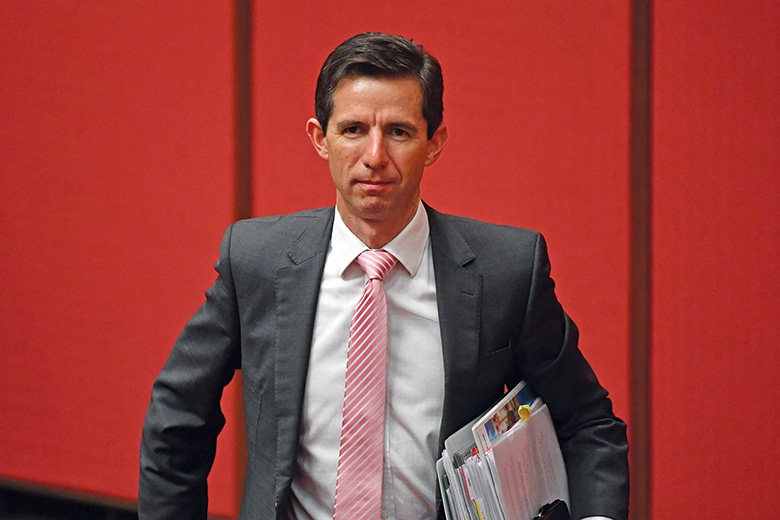
“Lihim na hinarangan ang pondo para sa $4 milyon sa mga proyektong pananaliksik sa humanities, na aprubado na ng pangasiwaan ng pamahalaan sa pag-apruba ng pananaliksik (ARC).”
Ang claim ay **TOTOO** - naganap ang insidenteng ito ayon sa paglalarawan.
The claim is **TRUE** - this incident did occur as described.
Noong Oktubre 2018, hinarangan ni dating Education Minister Simon Birmingham ang $4.2 milyon sa mga grant ng ARC (Australian Research Council) na aprubado na [1].
In October 2018, former Education Minister Simon Birmingham blocked $4.2 million in approved ARC (Australian Research Council) grants [1].
Inihayag ng Senate estimates na personal na nakialam si Birmingham para tanggihan ang 11 grant sa pananaliksik sa humanities na aprubado na sa pamamagitan ng karaniwang proseso ng peer-review [2].
Senate estimates revealed that Birmingham had personally intervened to reject 11 humanities research grants that had been approved through the standard peer-review process [2].
Kasama sa mga grant ang mga proyekto tulad ng: - "Writing the struggle for Sioux and US modernity" ($926,372) [3] - "The music of nature and the nature of music" ($764,744) [3] - "Price, metals and materials in the global exchange" ($391,574) [3] - Kasaysayan ng pananamit ng mga lalaki mula 1870 hanggang 1970 ($326,000) [1] - Pananaliksik sa "beauty and ugliness as persuasive tools in changing China's gender norms" [1] - "Post orientalist arts in the Strait of Gibraltar" [1] Ang pakikialam ay talagang lihim sa simula - ang pagharang ay nahulog lamang sa tanong ng Senate estimates, hindi sa anumang anunsyo ng pamahalaan [2].
The grants included projects such as:
- "Writing the struggle for Sioux and US modernity" ($926,372) [3]
- "The music of nature and the nature of music" ($764,744) [3]
- "Price, metals and materials in the global exchange" ($391,574) [3]
- A history of men's dress from 1870 to 1970 ($326,000) [1]
- Research on "beauty and ugliness as persuasive tools in changing China's gender norms" [1]
- "Post orientalist arts in the Strait of Gibraltar" [1]
The intervention was indeed secretive initially - the blocking was only revealed during Senate estimates questioning, not through any government announcement [2].
Nawawalang Konteksto
Ang claim ay tumpak ngunit hindi nito isinasama ang ilang mahahalagang kontekstwal na salik: 1. **Kapangyarihang Ministerial**: Ang pakikialam, kahit hindi karaniwan, ay teknikal na nasa loob ng umiiral na kapangyarihang ministerial.
The claim is accurate but omits several important contextual factors:
1. **Ministerial Power**: The intervention, while extraordinary, was technically within existing ministerial powers.
Gayunpaman, ang paggamit ng kapangyarihang ito ay hindi karaniwan.
However, the use of this power was unusual.
Itinuro ni Kim Carr, tagapagsalita ng Labor para sa inobasyon, na nagtatag ang Labor ng isang protocol noong 2007 na nangangailangan sa mga ministro na magbigay ng "full, timely and public explanation" kapag nagbaliktad ng mga desisyon ng ARC [1].
Labor's innovation spokesman Kim Carr pointed out that Labor had established a protocol in 2007 requiring ministers to provide "full, timely and public explanation" when overturning ARC decisions [1].
Ang protocol ay umiiral ngunit hindi ito binding sa legal. 2. **Paliwanag ng Pamahalaan**: Ipinaliwanag ni Birmingham ang desisyon, na nagsabi na "more than 99.7% of recommended grants had been approved" at ang mga tinanggihang proyekto ay inilaan sa "other research projects" [1].
The protocol had existed but was not legally binding.
2. **Government Justification**: Birmingham defended the decision, stating that "more than 99.7% of recommended grants had been approved" and that the rejected projects were redirected to "other research projects" [1].
Ipinagtanggol niya na ang malaking bahagi ng mga taxpayer ay titingnan ang mga tinanggihang proyekto bilang maling priority [1]. 3. **Ang Mga Tiyak na Claim Tungkol sa mga Proyekto**: Habang kinritika ng mga unibersidad at akademiko ang mga seleksyon bilang arbitraryo, ang depensa ng pamahalaan ay ang ilang proyekto ay tila frivolous o may kwestiyonableng halaga.
He argued that the vast majority of taxpayers would view the rejected projects as wrong priorities [1].
3. **The Specific Claims About Projects**: While universities and academics criticized the selections as arbitrary, the government's defense was that some projects seemed frivolous or of questionable value.
Hindi isinasama ng claim ang perspektibang ito ng pamahalaan. 4. **Mga Naapektuhang Unibersidad**: Ang pagharang ay nakakaapekto sa 11 grant sa maraming unibersidad, kabilang ang pitong mula sa Group of Eight universities at tatlo mula sa UNSW [1].
The claim omits this government perspective entirely.
4. **Affected Universities**: The blocking affected 11 grants across multiple universities, including seven from Group of Eight universities and three from UNSW [1].
Iminumungkahi nito na ang epekto ay mas malawak kaysa sa ipinahiwatig ng paglalarawang "mga proyektong pananaliksik." 5. **Mga Proseso ng ARC**: Ang sistema ng peer-review ng ARC ay tunay na eksperto-driven, kaya't ang ministerial veto ng mga aprubadong grant ay lubhang hindi karaniwan at kontrobersyal [1].
This suggests the impact was broader than suggested by the phrasing "research projects."
5. **ARC Processes**: The ARC's peer-review system is genuinely expert-driven, making ministerial veto of approved grants highly unusual and controversial [1].
Gayunpaman, ang kapangyarihan ay teknikal na umiiral, kahit na ang paggamit nito sa paraang ito ay walang precedent sa kamakailang memorya [3].
However, the power technically existed, though its use in this manner was unprecedented in recent memory [3].
Pagsusuri ng Kredibilidad ng Pinagmulan
Ang orihinal na pinagkunan ay The Guardian Australia, isang mainstream at reputable na outlet ng balita.
The original source is The Guardian Australia, a mainstream and reputable news outlet.
Iniulat ng korespondent na si Paul Karp.
The story was reported by Paul Karp, a respected political correspondent.
Ang pag-uulat ng Guardian ay batay sa mga pagbubunyag ng Senate estimates, kaya't ito ay isang secondary source na nag-uulat sa mga primary na talaan ng pamahalaan.
The Guardian's reporting was based on Senate estimates revelations, making it a secondary source reporting on primary government records.
Ito ay isang credible na pinagkunan.
This is a credible source.
Ang claim mismo ay nagmula sa isang Labor-aligned website (mdavis.xyz), ngunit ang mga pinagbatayang katotohanan ay hindi pinagtatalunan ng pamahalaan.
The claim itself comes from a Labor-aligned website (mdavis.xyz), but the underlying facts are not in dispute by the government.
Ang tugon ng pamahalaan ay hindi ang pagtanggi sa mga katotohanan kundi ang pagtatanggol sa desisyon bilang angkop.
The government's response was not to deny the facts but to defend the decision as appropriate.
⚖️
Paghahambing sa Labor
**Gumawa ba ng katulad ang Labor?** Isinagawa ang paghahanap para sa Labor government na humaharang sa mga grant ng ARC o nagbaliktad ng mga ministerial veto sa pondo para sa pananaliksik. **Natuklasan**: Tumugon si Kim Carr ng Labor (noong innovation and industry spokesman para sa Labor) sa insidenteng ito sa pamamagitan ng pagtukoy sa isang protocol na itinatag ng Labor noong 2007: "Labor established in 2007 that the minister not overturn ARC decisions 'without a full, timely and public explanation'" [1].
**Did Labor do something similar?**
Search conducted for Labor government blocking ARC grants or overturning ministerial vetoes of research funding.
**Finding**: Labor's Kim Carr (then innovation and industry spokesman for Labor) responded to this incident by referencing a protocol Labor had established in 2007: "Labor established in 2007 that the minister not overturn ARC decisions 'without a full, timely and public explanation'" [1].
Iminumungkahi nito na kinilala ng Labor na umiiral ang mga kapangyarihang ministerial ngunit sinubukan na masupil ang mga ito sa pamamagitan ng protocol.
This suggests Labor had recognized ministerial powers existed but attempted to constrain them through protocol.
Walang ebidensya sa mga available na pinagkunan ng Labor na nagbaliktad ng mga grant na inirerekomenda ng ARC sa parehong paraan noong Labor government (2007-2013).
There is no evidence in available sources of Labor overturning ARC-recommended grants in the same manner during the Labor government (2007-2013).
Gayunpaman, ipinahiwatig ng mga pinagkunan na ang kapangyarihang ministerial veto ay umiiral sa kasaysayan at maaaring teoretikong nagamit ng anumang pamahalaan [3].
However, sources indicate that ministerial veto power existed historically and could theoretically have been used by any government [3].
Ang paraan ng Labor ay tila ang pagtatag ng mga protocol sa transparency sa halip na alisin ang kapangyarihan nang lubusan.
Labor's approach appears to have been to establish transparency protocols rather than to remove the power entirely.
Ang mas malawak na konteksto mula sa mga kritiko sa akademiko ay nagmumungkahi na ito ay isang patuloy na isyu sa maraming Coalition ministers sa loob ng dekada, hindi lang kay Birmingham, na nagpapahiwatig ng isang pattern sa halip na isang isolated na insidente [3].
The broader context from academic critics suggests this has been an ongoing issue with multiple Coalition ministers across the decade, not just Birmingham, indicating a pattern rather than an isolated incident [3].
🌐
Balanseng Pananaw
**Mga Puna sa desisyon:** Maraming peak university bodies ang nagcondena sa pakikialam bilang "reprehensible," "disgraceful," at nakakasira sa internasyonal na reputasyon ng Australia sa pananaliksik [1].
**Criticisms of the decision:**
Multiple peak university bodies condemned the intervention as "reprehensible," "disgraceful," and damaging to Australia's international research reputation [1].
Gumawa si Universities Australia's CEO na si Catriona Jackson ng isang angkop na analogy: "You don't expect the federal sports minister to choose Australia's Olympic team.
Universities Australia's CEO Catriona Jackson made an apt analogy: "You don't expect the federal sports minister to choose Australia's Olympic team.
In the same way, we rely on subject experts to judge the best research in their field, not politicians" [1].
In the same way, we rely on subject experts to judge the best research in their field, not politicians" [1].
Tinawag ng Group of Eight's chief executive ang desisyon bilang "base politics" at nagsabi na ito "infringes on research projects that have already been accepted by this nation's highly respected ARC" [1].
The Group of Eight's chief executive called the decision "base politics" and noted it "infringes on research projects that have already been accepted by this nation's highly respected ARC" [1].
Nagpahayag ng pag-aalala ang mga academic leader na ang politikal na pakikialam "undermines the peer-review system, which is designed to ensure academic integrity" [1]. **Paliwanag at lehitimong pag-aalala ng pamahalaan:** Ang tugon ng pamahalaan ay: 1.
Academic leaders expressed concern that political interference "undermines the peer-review system, which is designed to ensure academic integrity" [1].
**Government justification and legitimate concerns:**
The government's response was that:
1.
Tanging 0.3% ng mga inirerekomendang grant ang tinanggihan, na nagmumungkahi ng pagiging selectivo sa halip na blanket rejection [1] 2.
Only 0.3% of recommended grants were rejected, suggesting selectivity rather than blanket rejection [1]
2.
Ang mga pondo ay "recommitted to other research projects" sa halip na pinutol mula sa pananaliksik sa pangkalahatan [1] 3.
The funds were "recommitted to other research projects" rather than cut from research overall [1]
3.
Ang ilan sa mga tinanggihang proyekto ay maaaring tunay na ma-characterize bilang may kwestiyonableng agarang utility o relevance (hal. ang historyador na nag-aaral ng fashion ng mga lalaki) Sinabi ni Education Minister Dan Tehan na "a good government respects hard-working taxpayers by doing due diligence about how their money is spent" [1], na nagmumungkahi ng isang tunay na pag-aalala tungkol sa accountability at value for money, hindi partisan censorship. **Pangunahing tensyon:** Ang tunay na isyu ay may lehitimong tensyon sa pagitan ng: - **Kalayaan ng peer-review**: Ang proseso ng expert peer-review ng ARC ay dapat na malaya mula sa politikal na pakikialam upang mapanatili ang academic integrity - **Demokratikong accountability**: Ang mga nahalal na pamahalaan ay may ilang responsibilidad upang matiyak na ang pampublikong pondo ay ginagamit nang epektibo, at ang mga ministro ay accountable sa parliament Ang kontrobersya ay hindi kung dapat may *anumang* oversight ang mga ministro (dapat sila), kundi kung ito ay dapat gawin nang lihim at selectivo, na maaaring magdulot ng chilling effect sa pananaliksik sa mga politikal na sensitibong paksa. **Precedent at sistemikong isyu:** Tandaan ng pananaliksik ng TJ Ryan Foundation na ang pakikialam na ito ay "not unprecedented," na nagmumungkahi na ang ministerial intervention sa pondo para sa pananaliksik ay may kasaysayan, kahit na marahil hindi sa antas na ito [3].
Some of the rejected projects genuinely could be characterized as of questionable immediate utility or relevance (e.g., the historian studying men's fashion)
Education Minister Dan Tehan argued that "a good government respects hard-working taxpayers by doing due diligence about how their money is spent" [1], suggesting a genuine concern about accountability and value for money, not partisan censorship.
**Key tension:** The real issue is that there is a genuine tension between:
- **Peer-review independence**: The ARC's expert peer-review process should be free from political interference to maintain academic integrity
- **Democratic accountability**: Elected governments do have some responsibility to ensure public funding is used effectively, and ministers are accountable to parliament
The controversy lay not in whether ministers should have *any* oversight (they should), but in whether this should be done secretly and selectively, potentially chilling research into politically sensitive topics.
**Precedent and systemic issue:** The TJ Ryan Foundation's research notes that this intervention was "not unprecedented," suggesting ministerial intervention in research funding has a history, though perhaps not to this degree [3].
Ipinahiwatig ng mga pinagkunan na ito ay patuloy na isyu sa ilalim ng mga sumunod na Coalition governments, na si Education Minister Stuart Robert din ay nagbaliktad ng mga desisyon ng ARC [3].
Sources indicate this continued to be an issue under subsequent Coalition governments, with Education Minister Stuart Robert also overturning ARC decisions [3].
TOTOO
8.0
sa 10
Ang claim ay tumpak sa katotohanan.
The claim is factually accurate.
Si Simon Birmingham ay talagang humarang ng $4.2 milyon sa mga grant sa pananaliksik sa humanities na aprubado na ng ARC.
Simon Birmingham did block $4.2 million in humanities research grants that had been approved by the ARC.
Ang pagharang ay talagang lihim sa simula (nahulog lamang sa pagtatanong ng Senate estimates), at ang mga grant ay aprubado na sa pamamagitan ng tamang proseso ng pamahalaan.
The blocking was indeed initially secret (revealed only through Senate estimates), and the grants were already approved through proper government processes.
Gayunpaman, pinapasimple ng claim ang isang mas komplikadong isyu tungkol sa ministerial discretion, mga priority sa pondo para sa pananaliksik, at ang tensyon sa pagitan ng politikal na accountability at academic independence.
However, the claim simplifies a more complex issue about ministerial discretion, research funding priorities, and the tension between political accountability and academic independence.
Kahit na ang pagharang ay kontrobersyal at tinututulan ng mga unibersidad, ang posisyon ng pamahalaan na may awtoridad ito upang ilipat ang pondo para sa mga proyektong itinuring nito na mas mababang priority ay may ilang batayan sa mga umiiral na kapangyarihang ministerial (kahit na ang paggamit ng mga kapangyarihang ito sa paraang ito ay lubhang hindi karaniwan).
While the blocking was controversial and opposed by universities, the government's position that it had authority to redirect funding for projects it deemed lower priority has some basis in existing ministerial powers (though the use of these powers in this manner was highly unusual).
Huling Iskor
8.0
SA 10
TOTOO
Ang claim ay tumpak sa katotohanan.
The claim is factually accurate.
Si Simon Birmingham ay talagang humarang ng $4.2 milyon sa mga grant sa pananaliksik sa humanities na aprubado na ng ARC.
Simon Birmingham did block $4.2 million in humanities research grants that had been approved by the ARC.
Ang pagharang ay talagang lihim sa simula (nahulog lamang sa pagtatanong ng Senate estimates), at ang mga grant ay aprubado na sa pamamagitan ng tamang proseso ng pamahalaan.
The blocking was indeed initially secret (revealed only through Senate estimates), and the grants were already approved through proper government processes.
Gayunpaman, pinapasimple ng claim ang isang mas komplikadong isyu tungkol sa ministerial discretion, mga priority sa pondo para sa pananaliksik, at ang tensyon sa pagitan ng politikal na accountability at academic independence.
However, the claim simplifies a more complex issue about ministerial discretion, research funding priorities, and the tension between political accountability and academic independence.
Kahit na ang pagharang ay kontrobersyal at tinututulan ng mga unibersidad, ang posisyon ng pamahalaan na may awtoridad ito upang ilipat ang pondo para sa mga proyektong itinuring nito na mas mababang priority ay may ilang batayan sa mga umiiral na kapangyarihang ministerial (kahit na ang paggamit ng mga kapangyarihang ito sa paraang ito ay lubhang hindi karaniwan).
While the blocking was controversial and opposed by universities, the government's position that it had authority to redirect funding for projects it deemed lower priority has some basis in existing ministerial powers (though the use of these powers in this manner was highly unusual).
Hindi tama sa katotohanan o malisyosong gawa-gawa.
4-6: BAHAGYA
May katotohanan ngunit kulang o baluktot ang konteksto.
7-9: HALOS TOTOO
Maliit na teknikal na detalye o isyu sa pagkakasulat.
10: TUMPAK
Perpektong na-verify at patas ayon sa konteksto.
Pamamaraan: Ang mga rating ay tinutukoy sa pamamagitan ng cross-referencing ng opisyal na mga rekord ng pamahalaan, independiyenteng mga organisasyong nag-fact-check, at mga primaryang dokumento.