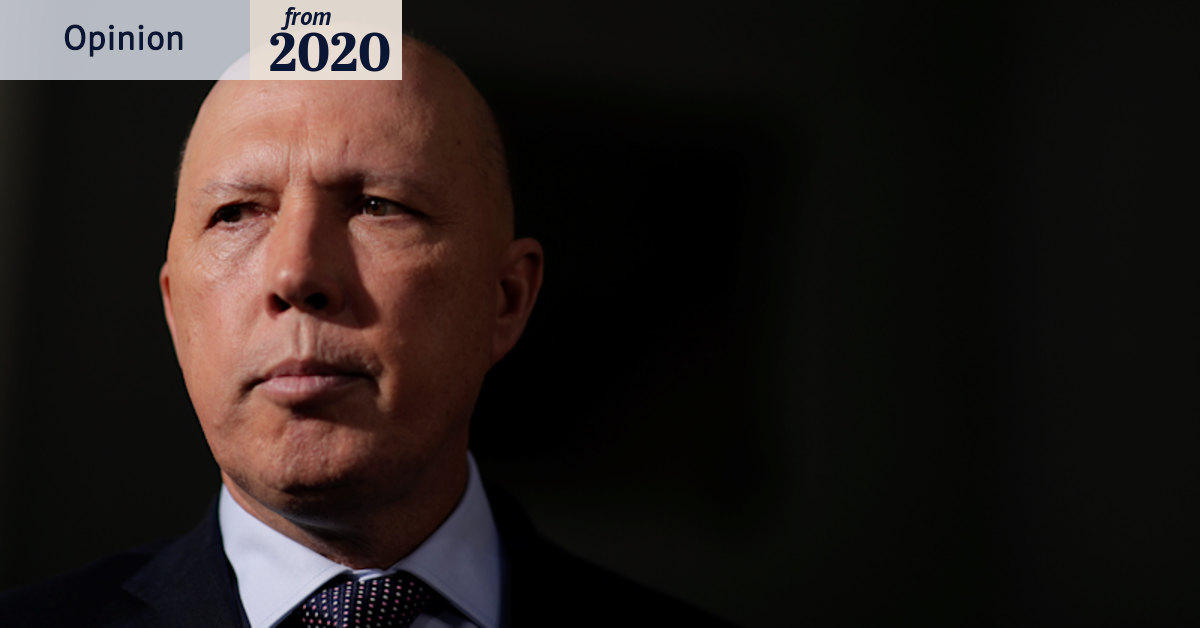
Ang gobyernong Coalition ay nagpakilala ng lehislasyon na nagre-restrict sa pagpili ng abogado sa mga partikular na sitwasyon.
The Coalition government did introduce legislation that restricted lawyer selection in specific circumstances.
Ang **Australian Security Intelligence Organisation Amendment Bill 2020** (iniulat noong 13 Mayo 2020, naipasa sa pakikipagtulungan ng iba't ibang partido) ay nagbago sa mga probisyon sa ASIO Act upang palawakin ang mga kapangyarihan sa pagtatanong ukol sa pambansang seguridad, kabilang ang mga bagong paghihigpit sa legal na representasyon [1].
The **Australian Security Intelligence Organisation Amendment Bill 2020** (introduced 13 May 2020, passed with cross-party support) modified provisions in the ASIO Act to expand national security questioning powers, including new restrictions on legal representation [1].
Gayunpaman, ang mga detalye ng paghihigpit ay mas nuanced kaysa sa sinasabi ng claim.
However, the specifics of the restriction are more nuanced than the claim suggests.
Sa ilalim ng Section 34F(4) ng binagong ASIO Act, maaaring pigilan ng ASIO ang pakikipag-ugnayan sa *isang partikular na abogado* kung ang naturang pakikipag-ugnayan ay maaaring: (a) magbabala sa isang taong nagdudulot ng banta sa seguridad, o (b) magresulta sa pagkawasak ng ebidensya [2].
Under Section 34F(4) of the amended ASIO Act, ASIO can prevent contact with a *particular lawyer* if such contact could: (a) alert someone posing a security threat, or (b) result in destruction of evidence [2].
Hindi ito isang blanket prohibition sa pagpili ng anumang abogado.
This is NOT a blanket prohibition on choosing any lawyer.
Sa halip, kung ang gustong abogado ng isang suspek ay hindi available o hindi maiiwasan, ang lehislasyon ay nagtatakda na "dapat magtalaga ang ASIO ng isang abogadong handang italaga" upang kumatawan sa taong iyon [3].
Instead, if a suspect's preferred lawyer is unavailable or unavoidable, the legislation provides that "ASIO must appoint a lawyer who is willing to be appointed" to represent the person [3].
Ang Law Council of Australia ay kinilala ang mga paghihigpit na ito sa abogado bilang isang malaking concern, na tinukoy ang mga ito bilang "extreme limitations on the role of lawyers" at binanggit ang kapangyarihan ng gobyerno na alisin ang mga abogadong itinuturing na "unduly disruptive" sa panahon ng pagtatanong [4].
The Law Council of Australia identified these lawyer restrictions as a major concern, describing them as "extreme limitations on the role of lawyers" and noting the government's power to remove lawyers deemed "unduly disruptive" during questioning [4].
Ang mga paghihigpit na ito ay nalalapat lamang sa mga kapangyarihan ng ASIO sa pambansang seguridad na pagtatanong, hindi sa mga kriminal na paglilitis o ordinaryong imbestigasyon ng pulisya [2].
These restrictions apply specifically to ASIO's national security questioning powers, not to criminal trials or ordinary police investigation [2].
Nawawalang Konteksto
Ang claim ay hindi tumpak sa maraming kritikal na paraan na nagdudulot ng pag-obscure sa buong larawan: 1. **"Pinaghihinalaang nagkasala sa krimen"** - Ang framing na ito ay misleading.
The claim is imprecise in several critical ways that obscure the full picture:
1. **"Suspected of a crime"** - This framing is misleading.
Ang ASIO ay nakikitungo sa mga usapin ng pambansang seguridad (terorismo, espionage, foreign interference, politically motivated violence), hindi sa ordinaryong krimen [1].
ASIO deals with national security matters (terrorism, espionage, foreign interference, politically motivated violence), not ordinary crime [1].
Ang lehislasyon ay pinalawak ang mga kapangyarihan ng ASIO upang tanungin ang mga tao tungkol sa mga partikular na banta sa seguridad na ito, hindi ang mga kriminal na suspect sa pangkalahatan [2]. 2. **Blanket vs.
The legislation expanded ASIO's powers to question people about these specific security threats, not criminal suspects generally [2].
2. **Blanket vs.
Targeted Restrictions** - Ang pagkakabanggit na "pigilan ang isang tao...sa pagpili ng kanilang sariling abogado" ay maaaring intindihin bilang isang total na pagbabawal.
Targeted Restrictions** - The wording "prevent someone...from choosing their own lawyer" could be interpreted as a total ban.
Ang aktwal na paghihigpit ay mas makitid: ang ASIO ay maaaring mag-exclude ng *mga partikular na abogado* sa mga partikular na sitwasyon (kung ang pakikipag-ugnayan ay makompromiso ang pambansang seguridad), ngunit ang karapatan sa legal na representasyon ay nananatiling mapanatili [3]. 3. **Historical Context Omitted** - Ang mga kapangyarihan sa pagtatanong ng ASIO ay unang ipinakilala noong 2003 sa post-9/11 na lehislasyon [5].
The actual restriction is narrower: ASIO can exclude *specific lawyers* in specific circumstances (where contact could compromise national security), but the right to legal representation itself is maintained [3].
3. **Historical Context Omitted** - ASIO questioning powers were first introduced in 2003 in post-9/11 legislation [5].
Ang mga pagbabago noong 2020 ay pinalawak ang mga pre-existing na kapangyarihang ito, hindi naglikha ng mga bagong kapangyarihan.
The 2020 amendments expanded these pre-existing powers, not created entirely new ones.
Hindi ito isang biglaan o hindi pa nangyayaring paghihigpit. 4. **Labor Government Support** - Ang claim ay nagpapahiwatig na ito ay isang unilateral na aksyon ng Coalition, ngunit ang Australian Security Intelligence Organisation Amendment Bill 2020 ay naipasa sa suporta ng Labor [6].
This was not a sudden or unprecedented restriction.
4. **Labor Government Support** - The claim implies this was a unilateral Coalition action, but the Australian Security Intelligence Organisation Amendment Bill 2020 passed with Labor support [6].
Ang Labor ay sumuporta sa pagpapalawak ng mga kapangyarihan ng ASIO mula pa noong 2003 na lehislasyon at bumoto para sa pagpapalawak na ito noong 2020. 5. **Safeguards Retained** - Bagama't ang mga paghihigpit ay nakakaalarma, ang lehislasyon ay nananatiling nagpapanatili ng pundamental na karapatan sa legal na representasyon sa pagtatanong ng ASIO, na may mandatory na pagtatalaga ng abogado kung ang gustong abogado ng tao ay hindi available [3].
Labor has supported ASIO power expansions since the 2003 legislation and voted for this 2020 expansion.
5. **Safeguards Retained** - While the restrictions are concerning, the legislation preserves the fundamental right to legal representation in ASIO questioning, with mandatory appointment of counsel if the person's preferred lawyer is unavailable [3].
Pagsusuri ng Kredibilidad ng Pinagmulan
Ang orihinal na source na sinipi ay ang Sydney Morning Herald (SMH), isang mainstream na pahayagan sa Australia na pag-aari ng Nine Entertainment [7].
The original source cited is the Sydney Morning Herald (SMH), a mainstream Australian newspaper owned by Nine Entertainment [7].
Ang SMH ay isang reputable na publikasyon na may pangkalahatang tumpak na factual reporting, bagama't nagtataglay ito ng center-left na editorial perspective [8].
The SMH is a reputable publication with generally accurate factual reporting, though it maintains a center-left editorial perspective [8].
Ang headline ng orihinal na artikulo ay gumagamit ng hyperbolic na wika ("one more step towards a totalitarian state"), na sumasalamin sa opinyon/analysis sa halip na neutral na pag-uulat [1].
The headline of the original article uses hyperbolic language ("one more step towards a totalitarian state"), which reflects opinion/analysis rather than neutral reporting [1].
Gayunpaman, ang substantive content ng artikulo ay tumpak na naglalarawan ng lehislasyon.
However, the article's substantive content accurately describes the legislation.
Ang framing ay politically charged at nagdi-highlight sa mga concern sa civil liberties na inihain ng mga legal na katawan, ngunit ang mga factual na elemento ay tama [1].
The framing is politically charged and emphasizes the civil liberties concerns raised by legal bodies, but the factual elements are correct [1].
Ang artikulo ay tumutukoy sa mga concern ng Law Council of Australia, na lehitimo at dokumentado [4], na nagbibigay ng kredibilidad sa mga core na claim nito.
The article cites Law Council of Australia concerns, which are legitimate and documented [4], lending credibility to its core claims.
Ang SMH artikulo ay isang reliable na source para sa factual na impormasyon tungkol sa lehislasyon, bagama't ang mga mambabasa ay dapat mag-account sa center-left nitong editorial tone sa pagtatasa ng framing [8].
The SMH article is a reliable source for factual information about the legislation, though readers should account for its center-left editorial tone when assessing the framing [8].
⚖️
Paghahambing sa Labor
**Gumawa ba ng katulad na bagay ang Labor?** Search conducted: "Labor government ASIO restrictions history legislation" **Finding:** Ang relasyon ng Labor sa pagpapalawak ng ASIO ay mas nuanced kaysa sa unilateral na aksyon ng Coalition.
**Did Labor do something similar?**
Search conducted: "Labor government ASIO restrictions history legislation"
**Finding:** Labor's relationship with ASIO expansion is more nuanced than the Coalition's unilateral action.
Ang Australian Security Intelligence Organisation Act 1979 ay orihinal na ipinasa ng Labor, at ang mga gobyernong Labor ay historikal na sumuporta sa pagpapalawak ng mga kapangyarihan ng ASIO: - **2003:** Ang Labor ay nakipag-negotiate at sumuporta sa mga unang kapangyarihan ng ASIO na pagtatanong na ipinakilala ng Coalition sa post-9/11 na lehislasyon [5].
The Australian Security Intelligence Organisation Act 1979 was originally enacted by Labor, and Labor governments have historically supported ASIO power expansions:
- **2003:** Labor negotiated and supported the initial ASIO questioning powers introduced by the Coalition in post-9/11 legislation [5].
Ang mga kapangyarihang ito ay may kasamang mga paghihigpit sa legal na representasyon, bagama't mas hindi marami kaysa sa mga pagbabago noong 2020. - **2020:** Ang Labor ay aktibong sumuporta sa Australian Security Intelligence Organisation Amendment Bill 2020, na bumoto para sa pagpasa nito sa kabila ng mga paghihigpit sa abogado na nagdulot ng pagpuna mula sa Law Council of Australia [6].
These powers already included restrictions on legal representation, though less extensive than 2020 amendments.
- **2020:** Labor actively supported the Australian Security Intelligence Organisation Amendment Bill 2020, voting for its passage despite the lawyer restrictions that had drawn criticism from the Law Council of Australia [6].
Ang pattern ay nagpapakita na ang parehong mga pangunahing partido ay pinalawak ang mga kapangyarihan ng ASIO sa surveillance at pagtatanong mula pa noong 2003.
The pattern shows both major parties have expanded ASIO surveillance and questioning powers since 2003.
Hindi ito natatangi sa Coalition - ito ay kumakatawan sa bipartisan consensus sa pambansang seguridad na lehislasyon, bagama't may patuloy na mga concern sa civil liberties mula sa mga legal na tagapagtaguyod sa parehong gobyerno at opposition periods [5][6].
This is not unique to the Coalition - it represents bipartisan consensus on national security legislation, though with ongoing civil liberties concerns from legal advocates across both government and opposition periods [5][6].
🌐
Balanseng Pananaw
Bagama't ang claim ay nagdi-highlight sa isang totoong paghihigpit na ipinakilala ng Coalition, ang buong konteksto ay nagpapakita ng complexity: **Legitimate Concerns (Supporting the Claim's Spirit):** Ang Law Council of Australia ay nagtaas ng mga lehitimong concern tungkol sa "extreme limitations on the role of lawyers" [4].
While the claim highlights a real restriction introduced by the Coalition, the full context reveals complexity:
**Legitimate Concerns (Supporting the Claim's Spirit):**
The Law Council of Australia raised genuine concerns about "extreme limitations on the role of lawyers" [4].
Ang Australian Human Rights Commission ay nagbabala ng potensyal na overreach sa mga proteksyon sa civil liberties [9].
The Australian Human Rights Commission warned of potential overreach in civil liberties protections [9].
Ito ay mga seryosong concern mula sa mga reputable na tagapagtaguyod ng civil rights.
These are serious concerns from reputable civil rights advocates.
Ang kakayahang mag-exclude ng mga abogado sa kalagitnaan ng interrogation ay maaaring teoretikal na makompromiso ang kalidad ng legal na payo na natanggap sa panahon ng pambansang seguridad na pagtatanong [4]. **Coalition's Justification Context:** Ang gobyerno ay nangatwiran na ang mga kapangyarihang ito ay kinakailangan para sa pambansang seguridad, partikular na sa mga banta ng foreign interference at terorismo [1].
The ability to exclude lawyers mid-interrogation could theoretically compromise the quality of legal advice received during national security questioning [4].
**Coalition's Justification & Context:**
The government argued these powers were necessary for national security, particularly regarding threats of foreign interference and terrorism [1].
Ang mga paghihigpit ay hindi absolute - nalalapat lamang sila kung ang pakikipag-ugnayan sa isang partikular na abogado ay direktang makompromiso ang pambansang seguridad (sa pamamagitan ng pagbabala sa mga target o pagdulot ng pagkawasak ng ebidensya) [2].
The restrictions are not absolute - they apply only when contact with a specific lawyer would directly compromise national security (by alerting targets or causing evidence destruction) [2].
Karamihan sa mga taong nasa pagtatanong ng ASIO ay nagpapanatili ng access sa legal na counsel, alinman sa kanilang gustong abogado o isang government-appointed na alternatibo [3]. **Comparative Perspective:** Ang suporta ng Labor sa mga pagbabago noong 2020 at ang kanilang historikal na pagtanggap sa mga pagpapalawak ng kapangyarihan ng ASIO mula pa noong 2003 ay nagmumungkahi na ito ay sumasalamin sa bipartisan agreement sa mga prayoridad sa pambansang seguridad, hindi sa partisan overreach [5][6].
Most people in ASIO questioning retain access to legal counsel, either their preferred lawyer or a government-appointed alternative [3].
**Comparative Perspective:**
Labor's support for the 2020 amendments and its historical acceptance of ASIO power expansions since 2003 suggests this reflects bipartisan agreement on national security priorities, not partisan overreach [5][6].
Ang parehong partido ay nagbalanse ng mga concern sa civil liberties laban sa mga nakikitang banta sa seguridad, bagama't may patuloy na debate tungkol sa kung saan dapat ilagay ang balanse na iyon [4]. **Expert Assessment:** Ang pagpuna ng Law Council of Australia ay partikular: hindi na ang ASIO ay dapat magkaroon ng zero questioning powers, kundi ang mga paghihigpit sa legal na representasyon ay labis at dapat ay may mas malakas na mga safeguard [4].
Both parties have balanced civil liberties concerns against perceived security threats, though with ongoing debate about where that balance should lie [4].
**Expert Assessment:**
The Law Council of Australia's criticism was specific: not that ASIO should have zero questioning powers, but that the restrictions on legal representation were excessive and should have included stronger safeguards [4].
Ito ay nagpapahiwatig na ang mga makatuwirang tao ay hindi sumasang-ayon sa angkop na saklaw ng gayong mga kapangyarihan. **Key Context:** Bagama't ang mga paghihigpit sa pagpili ng abogado ay isang lehitimong concern sa civil liberties, nalalapat sila sa ASIO national security questioning (hindi sa mga kriminal na paglilitis), na may mandatory na legal na representasyon kung ang gustong counsel ay hindi available, at may historical precedent sa 2003 na lehislasyon na parehong suportado ng mga partido [2][3][5][6].
This indicates reasonable people disagree on the appropriate scope of such powers.
**Key Context:** While lawyer selection restrictions are a genuine civil liberties concern, they apply to ASIO national security questioning (not criminal trials), with mandatory legal representation if preferred counsel unavailable, and with historical precedent in 2003 legislation that both parties have supported [2][3][5][6].
BAHAGYANG TOTOO
6.5
sa 10
Ang claim ay factually accurate tungkol sa pag-iral at mga epekto ng lehislasyon, ngunit gumagamit ng hindi tumpak na wika ("krimen," blanket na "pigilan") na misleading tungkol sa saklaw at konteksto ng mga paghihigpit.
The claim is factually accurate regarding the legislation's existence and effects, but uses imprecise language ("crime," blanket "prevent") that misleads about the scope and context of the restrictions.
Ang Coalition ay nagpakilala ng lehislasyon na nagre-restrict sa pagpili ng abogado sa mga partikular na konteksto ng pambansang seguridad, na isang lehitimong concern sa civil liberties na dokumentado ng mga legal na awtoridad [1][4].
The Coalition did introduce legislation restricting lawyer selection in specific national security contexts, which is a legitimate civil liberties concern documented by legal authorities [1][4].
Gayunpaman, ang claim ay mali ang paglalarawan nito bilang pagpigil sa mga suspect "sa pagpili ng kanilang sariling abogado" (na nagmumungkahi ng isang total na pagbabawal), samantalang ang aktwal na paghihigpit ay mas makitid: ang ASIO ay maaaring mag-exclude ng mga partikular na abogado sa mga partikular na sitwasyon sa seguridad, habang pinapanatili ang mandatory na legal na representasyon [2][3].
However, the claim mischaracterizes this as preventing suspects "from choosing their own lawyer" (suggesting a total ban), when the actual restriction is narrower: ASIO can exclude specific lawyers in specific security circumstances, while maintaining mandatory legal representation [2][3].
Bukod pa rito, ang claim ay nag-iiwan na ito ay kumakatawan sa pagpapalawak ng mga kapangyarihan noong 2003 na sinuportahan ng mga gobyernong Labor, at na ang Labor ay sumuporta sa mga pagbabago noong 2020 [5][6].
Additionally, the claim omits that this represents expansion of 2003 powers that Labor governments supported, and that Labor backed the 2020 amendments [5][6].
Ang claim ay totoo sa essence - tumpak na may nag-restrict na lehislasyon na ipinakilala - ngunit ang framing ay misleading tungkol sa saklaw, at ang kritikal na konteksto tungkol sa suporta ng Labor at historical precedent ay wala.
The claim is true in essence - it is accurate that restrictive legislation was introduced - but the framing is misleading regarding scope, and critical context about Labor support and historical precedent is absent.
Huling Iskor
6.5
SA 10
BAHAGYANG TOTOO
Ang claim ay factually accurate tungkol sa pag-iral at mga epekto ng lehislasyon, ngunit gumagamit ng hindi tumpak na wika ("krimen," blanket na "pigilan") na misleading tungkol sa saklaw at konteksto ng mga paghihigpit.
The claim is factually accurate regarding the legislation's existence and effects, but uses imprecise language ("crime," blanket "prevent") that misleads about the scope and context of the restrictions.
Ang Coalition ay nagpakilala ng lehislasyon na nagre-restrict sa pagpili ng abogado sa mga partikular na konteksto ng pambansang seguridad, na isang lehitimong concern sa civil liberties na dokumentado ng mga legal na awtoridad [1][4].
The Coalition did introduce legislation restricting lawyer selection in specific national security contexts, which is a legitimate civil liberties concern documented by legal authorities [1][4].
Gayunpaman, ang claim ay mali ang paglalarawan nito bilang pagpigil sa mga suspect "sa pagpili ng kanilang sariling abogado" (na nagmumungkahi ng isang total na pagbabawal), samantalang ang aktwal na paghihigpit ay mas makitid: ang ASIO ay maaaring mag-exclude ng mga partikular na abogado sa mga partikular na sitwasyon sa seguridad, habang pinapanatili ang mandatory na legal na representasyon [2][3].
However, the claim mischaracterizes this as preventing suspects "from choosing their own lawyer" (suggesting a total ban), when the actual restriction is narrower: ASIO can exclude specific lawyers in specific security circumstances, while maintaining mandatory legal representation [2][3].
Bukod pa rito, ang claim ay nag-iiwan na ito ay kumakatawan sa pagpapalawak ng mga kapangyarihan noong 2003 na sinuportahan ng mga gobyernong Labor, at na ang Labor ay sumuporta sa mga pagbabago noong 2020 [5][6].
Additionally, the claim omits that this represents expansion of 2003 powers that Labor governments supported, and that Labor backed the 2020 amendments [5][6].
Ang claim ay totoo sa essence - tumpak na may nag-restrict na lehislasyon na ipinakilala - ngunit ang framing ay misleading tungkol sa saklaw, at ang kritikal na konteksto tungkol sa suporta ng Labor at historical precedent ay wala.
The claim is true in essence - it is accurate that restrictive legislation was introduced - but the framing is misleading regarding scope, and critical context about Labor support and historical precedent is absent.
Hindi tama sa katotohanan o malisyosong gawa-gawa.
4-6: BAHAGYA
May katotohanan ngunit kulang o baluktot ang konteksto.
7-9: HALOS TOTOO
Maliit na teknikal na detalye o isyu sa pagkakasulat.
10: TUMPAK
Perpektong na-verify at patas ayon sa konteksto.
Pamamaraan: Ang mga rating ay tinutukoy sa pamamagitan ng cross-referencing ng opisyal na mga rekord ng pamahalaan, independiyenteng mga organisasyong nag-fact-check, at mga primaryang dokumento.