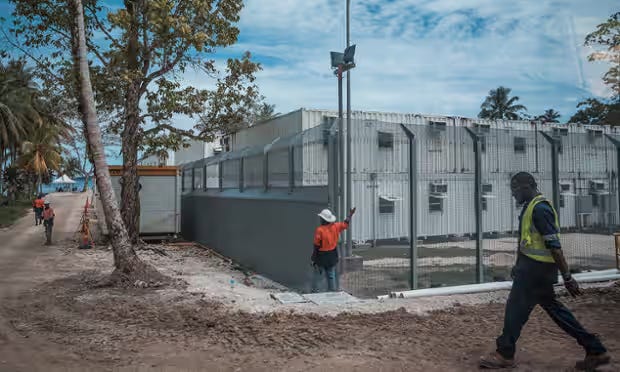
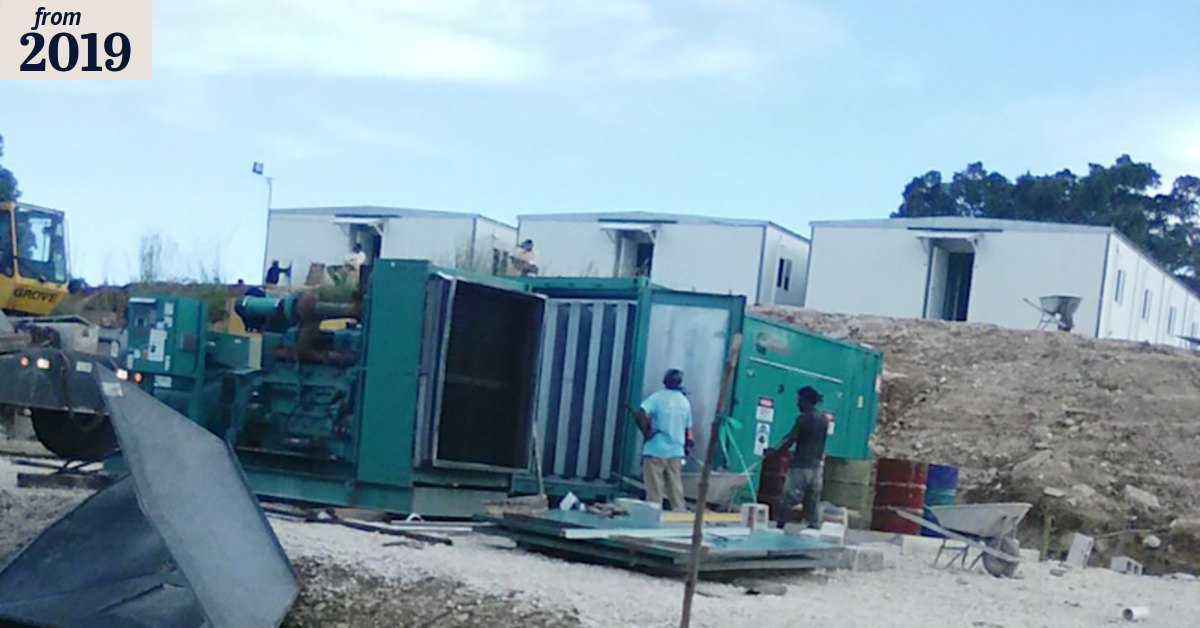
“Gumastos ng $1,400 bawat tao bawat araw para pakainin ang mga naghahanap ng proteksyon sa Papua New Guinea. Ang kontratang $82 milyong ito ay ibinayad sa isang shell company na may mataas na panganib na pagmamay-ari ng mga opisyal na pulitiko ng PNG, nang walang anumang proseso ng kompetitibong pagtender. Hindi tinanong ng gobyerno ang kahit anong kumpanya kung maaari nilang ibigay ang pagkain sa mas murang presyo o sa mas kaunting panganib ng insolvency. Gumastos ang gobyerno ng mas malaking halaga ng pera kaysa sa magiging gastos kung pinalamutan nila ng caviar at lobster mula sa isang high end restaurant ang mga naghahanap ng proteksyon.”
Ang mga pangunahing impormasyon ng claim na ito ay substantially accurate, bagama't nangangailangan ng mahalagang paglilinaw: **$1,400 bawat araw na figure:** Kinokompirma ng artikulo ng SMH na "ang $82 milyong ibinayad sa NKW ay nangangahulugang halos $1400 bawat tao bawat araw ang nagagastos ng mga Australian taxpayer para pakainin at matirhan ang 209 na mga naghahanap ng proteksyon sa mga kampo sa West Lorengau Haus at Hillside Haus" [1].
The core facts of this claim are substantially accurate, though require important clarification:
**$1,400 per day figure:** The SMH article confirms that "the $82 million paid to NKW means that it is costing Australian taxpayers just under $1400 per person per day to feed and house 209 asylum seekers at camps at West Lorengau Haus and Hillside Haus" [1].
Gayunpaman, ang figure na ito ay kasama **ang gastos para sa pagkain AT matirhan**, hindi lang pagkain tulad ng ipinahiwatig ng claim. **$82 milyong kontrata:** Kinumpirma ng artikulo ng SMH, na nagsabing "Isang kumpanya sa Papua New Guinea na binayaran ng $82 milyon ng mga Australian taxpayer para pakainin at matirhan ang mga naghahanap ng proteksyon sa Manus Island" [1].
However, this figure includes **both feeding AND housing** costs, not just food as the claim implies.
**$82 million contract:** Confirmed by the SMH article, which states "A Papua New Guinea company paid $82 million by Australian taxpayers to feed and house asylum seekers on Manus Island" [1].
Ang kontrata ay unang nagkakahalaga ng $21.8 milyon para sa dalawang buwan, pagkatapos ay tumaas ng $49 milyon at karagdagang $10 milyon, na may extension hanggang Hunyo 2018 [1]. **Non-competitive tender process:** Kinumpirma.
The contract was initially valued at $21.8 million for two months, then increased by $49 million and another $10 million, with extension to June 2018 [1].
**Non-competitive tender process:** Confirmed.
Ang kontrata ay iginawad sa NKW Holdings "without competition" bilang isang limited tender [1].
The contract was awarded to NKW Holdings "without competition" as a limited tender [1].
Sinabi ng artikulo ng SMH: "NKW ay ang tanging kumpanya na nilapitan para magbigay ng serbisyo sa catering at site management" [1].
The SMH article states: "NKW was the only company approached to provide catering and site management services" [1].
Nagpapahiwatig ang mga internal na pinagkunan ng Home Affairs na "ang mga opisyal sa procurement sa loob ng Home Affairs ay nabahala sa paraan ng pagpasok sa kontrata ng NKW, na ang command ng operasyon ng departamento ay nagturo na gawin ito bilang isa sa maraming non-competitive limited tenders" [1]. **Status ng kumpanya na may mataas na panganib:** Kinumpirma.
Internal Home Affairs sources indicated "procurement officials within Home Affairs were upset by the way the NKW contract was entered into, with the department's operations command directing that it be done as one of a number of non-competitive limited tenders" [1].
**High-risk company status:** Confirmed.
Ayon sa artikulo ng SMH na tumutukoy sa mga internal email ng Bank South Pacific, ang NKW "ay nasa 'watchlist' ng Bank South Pacific para sa mga unpaid debts sa oras na inengage ito ng Home Affairs" [1].
According to the SMH article citing Bank South Pacific internal emails, NKW "was on Bank South Pacific's 'watchlist' for unpaid debts at the time it was engaged by Home Affairs" [1].
Nagpapakita ang mga email ng Bank South Pacific na ang NKW ay isang "watchlist client" dahil sa mga umiiral na utang, at ang kontrata ng Australian government ay tiningnan bilang "isang much-needed lifeline" sa naghihingalong kumpanya [1]. **Mga politically connected na direktor:** Kinumpirma.
Bank South Pacific emails show NKW was a "watchlist client" because of existing debts, and the Australian government contract was viewed as "a much-needed lifeline" to the struggling company [1].
**Politically connected directors:** Confirmed.
Tinitukoy ng artikulo ng SMH na "Ang mga direktor nito ay kabilang ang mga opisyal ng probinsyal na gobyerno at retiradong hukom ng PNG Supreme Court na si Don Sawong, na noong 2017 ay tumakbo nang hindi matagumpay bilang kandidato para sa partido pampulitika ni Prime Minister Peter O'Neill.
The SMH article notes "Its directors include provincial government officials and retired PNG Supreme Court judge Don Sawong, who in 2017 unsuccessfully ran as a candidate for Prime Minister Peter O'Neill's political party.
Si Mr Sawong ay noong nakaraang taon ay itinalaga bilang susunod na ambassador ng PNG sa China" [1]. **Pagdududa ng inflated invoices:** Ang claim ay batay sa komento ng isang manager ng Bank South Pacific: "Australian Department of Immigration and Border Protection ay nagbabayad ng bawat invoice – ako ay nagdududa na may ilang inflated quotations at invoices" [1].
Mr Sawong was last year appointed as PNG's next ambassador to China" [1].
**Suspicion of inflated invoices:** The claim is based on a Bank South Pacific manager's comment: "Australian Department of Immigration and Border Protection are paying every invoice – I suspect there are some inflated quotations and invoices" [1].
Gayunpaman, sinabi mismo ng SMH: "The Age at Sydney Morning Herald ay walang akusasyon ng wrongdoing laban sa NKW, Mr Brunskill, Mr Sawong o anumang iba pang direktor nito, at simpleng iniulat lamang ang opinyon ng manager ng kumpanya ng bangko na ang mga invoice ay maaaring nai-inflate" [1].
However, the SMH explicitly states: "The Age and Sydney Morning Herald make no accusation of wrongdoing against NKW, Mr Brunskill, Mr Sawong or any other of its directors, and are simply reporting the opinion of the company's bank manager that the invoices may have been inflated" [1].
Nawawalang Konteksto
Ang claim ay hindi kasama ang ilang kritikal na impormasyon: **1.
The claim omits several critical facts:
**1.
Ang kontrata ay para sa pagkain AT matirhan, hindi lang pagkain:** Ang $1,400 bawat araw ay kabilang ang mga gastos sa pagkain at matirhan sa mga pasilidad ng West Lorengau Haus at Hillside Haus [1].
Contract was for feeding AND housing, not just food:** The $1,400 per day includes both meals and accommodation costs at West Lorengau Haus and Hillside Haus facilities [1].
Ito ay materyal na nakakaapekto sa kahulugan ng figure kada araw.
This materially affects the significance of the per-day figure.
Ang framing ng claim ay nag-i-isolate sa "feed" ngunit ang aktwal na gastos ay sumasaklaw sa komprehensibong site management. **2.
The claim's framing isolates "feed" but the actual cost covers comprehensive site management.
**2.
Mga sitwasyong nagpilit sa mabilis na procurement:** "Nag-advance ng mahigit $5 milyon sa NKW sa pagitan ng Setyembre at Nobyembre 2017" ang Home Affairs dahil ang departamento ay humarap sa isang urgenteng krisis [1].
Circumstances forcing rapid procurement:** Home Affairs "advanced more than $5 million to NKW between September and November 2017" because the department faced an urgent crisis [1].
Ang regional processing centre ay nasa Naval Base, ngunit "ang Australian government ay pinaalis sa Naval Base sa Manus at desperadong nangangailangan ng tirahan para sa kanilang mga 'bisita'" ayon sa komunikasyon mismo ng NKW [1].
The regional processing centre had been on the Naval Base, but "the Australian government has been booted out of the Naval Base in Manus and are desperately in need to accommodate their 'guests'" according to NKW's own communications [1].
Hindi ito nagbibigay-daan sa procurement process, ngunit nagbibigay ng konteksto sa pagmamadali. **3.
This doesn't excuse the procurement process, but provides context for the urgency.
**3.
Pag-withdraw ng nakaraang contractor:** Ang mabilis na desisyon sa procurement ay napilitan nang "huminto ang Broadspectrum, isang malaking contractor sa Manus Island, sa lahat ng offshore detention work noong Oktubre 2017" [1].
Previous contractor withdrawal:** The rapid procurement decision was forced when "Broadspectrum, a major Manus Island contractor, stopped all offshore detention work in October 2017" [1].
Inanunsyo ng Broadspectrum ang kanilang pag-alis isang taon na ang nakalilipas, ngunit hinintay ng Home Affairs hanggang sa punto ng krisis [1]. **4.
Broadspectrum had publicly announced its departure a year earlier, but Home Affairs waited until the crisis point [1].
**4.
Limitadong dokumentasyon ng kontrata:** Bagama't nagsimula ang kontrata noong Setyembre 2017, "ang isang tamang kontrata sa pagitan ng Home Affairs at NKW ay hindi nilagdaan hanggang sa kalagitnaan ng 2018" [1].
Limited contract documentation:** While the contract began in September 2017, "a proper contract between Home Affairs and NKW was not signed until well into 2018" [1].
Ito ay lumikha ng legal na kalabuan ngunit ito ay isang procedural failure sa halip na patunay ng korapsyon. **5.
This created legal ambiguity but was a procedural failure rather than evidence of corruption.
**5.
Walang napatunayang wrongdoing:** Sa kabila ng mga pagdududa mula sa manager ng bangko tungkol sa potensyal na invoice inflation, kahit ang SMH ni ang mga sumunod na imbestigasyon ay hindi napatunayan ang aktwal na overcharging [1].
No proven wrongdoing:** Despite suspicions from the bank manager about potential invoice inflation, neither the SMH nor subsequent investigations have substantiated actual overcharging [1].
Ginagamit ng claim ang "suspected" inflated invoices na parang ito ay napatunayang katotohanan. **6.
The claim uses "suspected" inflated invoices as though they were proven fact.
**6.
ANAO at iba pang oversight:** Nagsagawa ang Australian National Audit Office (ANAO) ng mga performance audit ng offshore processing procurement, na nakakilala ng malawakang mga pagkukulang sa proseso ng procurement sa maraming kontrata, hindi lang ang NKW [2].
ANAO and other oversight:** The Australian National Audit Office (ANAO) conducted performance audits of offshore processing procurement, identifying widespread shortcomings in the procurement process across multiple contracts, not just NKW [2].
Natagpuan ng ANAO na "hindi nademonstrate ng Department of Home Affairs ang value for money para sa mga procurement ng garrison support at welfare services" para sa offshore detention [2].
The ANAO found "the Department of Home Affairs failed to demonstrate value for money for procurements of garrison support and welfare services" for offshore detention [2].
Pagsusuri ng Kredibilidad ng Pinagmulan
**Ang Sydney Morning Herald (SMH):** - Mainstream, reputable na Australian news organization - Si Richard Baker ay inilarawan bilang "isang dating multi-award winning investigative reporter para sa The Age" - Ang artikulo ay batay sa mga leaked na internal email mula sa Bank South Pacific, na nagbibigay ng primary source material - Mahalagang caveat: Ang SMH ay tahasang nagsabing "wala itong akusasyon ng wrongdoing" laban sa mga direktor ng NKW, na nagpapakita ng responsableng pamamahayag sa pagkakaiba sa pagitan ng pagdududa at napatunayang katotohanan - Ang artikulo ay lubos na dokumentado ang mga alalahanin ng manager ng bangko tungkol sa mga invoice ngunit naaangkop na inaangkin ito bilang opinyon sa halip na katotohanan **Pinagmulang YouTube (hindi malinaw):** - Ang link sa YouTube (youtu.be/aIGKCkS01EA?t=226) ay ibinigay ngunit ang tiyak na nilalaman ay hindi detalyado sa claim - Hindi ma-assess ang kredibilidad nang walang kaalaman sa source organization o tagalikha **Pagsusuri:** Ang artikulo ng SMH ay kredibleng pamamahayag ng isang nirerespetong mainstream outlet.
**The Sydney Morning Herald (SMH):**
- Mainstream, reputable Australian news organization
- Author Richard Baker is described as "a former multi-award winning investigative reporter for The Age"
- The article is based on leaked internal emails from Bank South Pacific, providing primary source material
- Important caveat: The SMH explicitly states it "make[s] no accusation of wrongdoing" against NKW directors, showing responsible journalism in distinguishing between speculation and proven facts
- The article thoroughly documents the bank manager's concerns about invoices but appropriately attributes these as opinion rather than fact
**YouTube source (unclear):**
- The YouTube link (youtu.be/aIGKCkS01EA?t=226) is provided but the specific content is not detailed in the claim
- Cannot assess credibility without knowing the source organization or creator
**Assessment:** The SMH article is credible journalism by a respected mainstream outlet.
Gayunpaman, ang artikulo mismo ay maingat sa pagdistinguish sa pagitan ng pagdududa at patunay, isang distinction na hindi gaanong binibigyang-diin ng claim.
However, the article itself is careful about distinguishing suspicion from proof, a distinction the claim glosses over.
⚖️
Paghahambing sa Labor
**Ginawa ba ng Labor ang katulad na bagay?** **Inisyu ng Labor government ang offshore detention policy:** Ito ay crucial context—minana at pinalawak ng Coalition ang isang patakarang ginawa ng Labor.
**Did Labor do something similar?**
**Labor government initiated offshore detention policy:** This is crucial context—the Coalition inherited and expanded a policy Labor created.
Ayon sa maraming pinagkunan, "Noong Agosto 2012 muling binuksan ni Prime Minister Julia Gillard ang Manus at Nauru bilang mga lugar ng offshore detention" [3].
According to multiple sources, "In August 2012 Prime Minister Julia Gillard reopened Manus and Nauru as places of offshore detention" [3].
Ang anunsyo ng Labor ay bahagi ng patakarang "no advantage", na inilaan upang hadlangan ang pagdating ng mga bangka [4]. **Mga gastos sa offshore detention ng Labor:** Ang muling pagbubukas ng offshore detention ng gobyernong Gillard noong 2012 "nakitang gumastos ang Australia ng $358.77 milyon sa operating at capital costs para sa dalawang sentro" [5].
Labor's announcement was part of the "no advantage" policy, intended to deter boat arrivals [4].
**Labor's offshore detention costs:** The Gillard government's 2012 reopening of offshore detention "saw Australia spend $358.77 million on operating and capital costs for the two centres" [5].
Sa 2015-16, tatlong taon matapos ang Coalition na umupo sa puwesto, ang gastos ay "$1.078 billion" taun-taon na may per-detainee costs na "$829,000 bawat taon" [6].
By 2015-16, three years after the Coalition took office, the cost was "$1.078 billion" annually with per-detainee costs of "$829,000 per year" [6].
Ipinapakita nito na ang mga mataas na gastos sa detention ay nauna sa expansion ng Coalition—they ay inherent sa patakarang ginawa ng Labor. **Pagpapalawak ng Coalition sa patakaran ng Labor:** Bagama't hindi inisyu ng Coalition ang offshore detention, pinalawak nila ito nang malaki.
This shows that high detention costs predated the Coalition's expansion—they were inherent to the policy Labor created.
**Coalition expansion of Labor's policy:** While the Coalition did not initiate offshore detention, they significantly expanded it.
Pina-maintain at pinalawak ng Coalition ang patakarang "no advantage" at pina-consolidate ang mga kontrata noong 2013-2014.
The Coalition maintained and expanded the "no advantage" policy and consolidated contracts in 2013-2014.
Nagtala ang isang ulat ng ABC News na "nang pina-consolidate ang mga kontrata para sa Nauru at Manus Island noong 2013 at 2014, ang bid para sa Manus Island ay lumampas sa historical costs ng pagitan $200 milyon at $300 milyon" [7]. **Direct na paghahambing:** Ang isyu ay hindi kakaiba sa Coalition.
An ABC News report noted that "when consolidating contracts for Nauru and Manus Island in 2013 and 2014, the bid for Manus Island exceeded historical costs by between $200 million and $300 million" [7].
**Direct comparison:** The issue is not unique to the Coalition.
Ang offshore detention mismo—pinapatakbo man ng Labor o Coalition—ay may mataas na gastos bawat detainee.
Offshore detention itself—whether run by Labor or Coalition—involves high per-detainee costs.
Gayunpaman, ang 2013-2014 contract consolidation ng Coalition ay talagang nagtaas ng gastos lampas sa historical levels, at ang kontrata ng NKW na iginawad noong 2017 ay kumatawan sa isang partikular na mahinang desisyon sa procurement na may inflated costs at hindi sapat na competitive evaluation. **Paghahambing:** Parehong sina Labor at Coalition ay nag-engage sa offshore detention na may mataas na gastos.
However, the Coalition's 2013-2014 contract consolidation did increase costs beyond historical levels, and the NKW contract awarded in 2017 represented a particularly poor procurement decision with inflated costs and inadequate competitive evaluation.
**Comparison:** Both Labor and Coalition engaged in offshore detention with high costs.
Si Labor ang gumawa ng patakaran; ang Coalition ang pinalawak ito nang mahina.
Labor created the policy; the Coalition expanded it poorly.
Ang kontrata ng NKW sa partikular ay kumatawan sa isang Coalition-era failure sa procurement, ngunit hindi isang kakaibang commitment sa mahal na detention—iyon ay legacy policy ng Labor.
The NKW contract specifically represents a Coalition-era failure in procurement, but not a unique commitment to expensive detention—that was Labor's legacy policy.
🌐
Balanseng Pananaw
**Ang pagpuna ay nararapat:** Ang claim ay tama sa pagkilala ng mga tunay na problema sa kontrata ng NKW: 1. **Non-competitive procurement:** Ang pag-award ng isang $82 milyong kontrata nang walang competitive tender ay isang lehitimong pag-aalala [1].
**The criticism is justified:** The claim correctly identifies genuine problems with the NKW contract:
1. **Non-competitive procurement:** Awarding an $82 million contract without competitive tender is a legitimate concern [1].
Natagpuan ng ANAO ang malawakang mga pagkakamali sa procurement sa mga kontrata ng offshore detention, na nagkonklusyon na "hindi nademonstrate ng Department ang value for money" [2]. 2. **Pagpili ng high-risk na contractor:** Ang pag-award ng isang malaking kontrata sa isang kumpanya na nasa "watchlist" ng bangko para sa mga unpaid debts ay nagpapakita ng mahinang risk management [1].
The ANAO found widespread procurement failures in offshore detention contracts, concluding the Department "failed to demonstrate value for money" [2].
2. **High-risk contractor selection:** Awarding a major contract to a company on a bank's "watchlist" for unpaid debts shows poor risk management [1].
Nabigo ang departamento na maayos na suriin ang financial stability at corruption risks ng pagko-kontrata sa Papua New Guinea, ayon sa mga internal audit ng Home Affairs [8]. 3. **Labis na gastos:** Ang per-person daily cost na humigit-kumulang $1,400 ay objective na mataas [1].
The department failed to properly assess the financial stability and corruption risks of contracting in Papua New Guinea, according to internal Home Affairs audits [8].
3. **Excessive costs:** The per-person daily cost of approximately $1,400 is objectively high [1].
Gayunpaman, ito ay kabilang ang accommodation pati na rin ang pagkain, at sumasalamin sa premium costs ng remote offshore detention operations. **Ngunit ang claim ay oversimplifies ang mahalagang konteksto:** 1. **Ang paghahambing ng gastos ay misleading:** Ang paghahambing sa "caviar at lobster" ay rhetorical exaggeration.
However, this includes accommodation as well as food, and reflects the premium costs of remote offshore detention operations.
**But the claim oversimplifies important context:**
1. **Cost comparison is misleading:** The "caviar and lobster" comparison is rhetorical exaggeration.
Ang $1,400 ay kasama ang infrastructure, security, accommodation, medical services, at administration—hindi lang pagkain [1].
The $1,400 includes infrastructure, security, accommodation, medical services, and administration—not just food [1].
Ang tamang paghahambing ay mangangailangan ng pag-i-itemize ng mga gastos na ito nang hiwalay, na hindi ginawa ng mga orihinal na pinagkunan. 2. **Ang procurement crisis ay hindi likha ng Coalition:** Ang mabilis, non-competitive na kalikasan ng procurement ng NKW ay napilitan sa bahagi ng urgenteng krisis na nilikha nang umatras ang nakaraang contractor at nawala ng departamento ang access sa Naval Base [1].
A proper comparison would require itemizing these costs separately, which the original sources don't do.
2. **Procurement crisis wasn't Coalition creation:** The rapid, non-competitive nature of the NKW procurement was driven partly by the urgent crisis created when the previous contractor withdrew and the department lost access to the Naval Base [1].
Hindi ito nagbibigay-daan sa mahinang proseso, ngunit ipinapaliwanag ang mga sitwasyon. 3. **Mas malawak na sistemang problema:** Natagpuan ng ANAO ang mga pagkukulang sa procurement sa maraming offshore detention contracts (Paladin, NKW, Broadspectrum), na nagmungkahing ito ay isang sistemang isyu sa offshore detention management sa halip na kakaiba sa NKW [2].
This doesn't excuse poor process, but explains the circumstances.
3. **Broader systemic problem:** The ANAO found procurement failures across multiple offshore detention contracts (Paladin, NKW, Broadspectrum), suggesting this was a systemic issue with offshore detention management rather than unique to NKW [2].
Ang Paladin, isa pang offshore detention contractor, ay tumanggap ng "$532 milyon para patakbuhin ang Manus Island detention centre" at "hindi kailanman naaayos na na-assess para sa kakayahang patakbuhin ang sentro" ayon sa mga internal audit ng Home Affairs [8]. 4. **Pundasyon ng patakaran ng Labor:** Bagama't ginawa ng Coalition ang desisyon sa kontrata ng NKW noong 2017, ang offshore detention mismo—na may inherently na mataas na gastos—ay legacy policy ng Labor [3][5].
Paladin, another offshore detention contractor, received "$532 million to run the Manus Island detention centre" and was "never properly assessed for its ability to run the centre" according to internal Home Affairs audits [8].
4. **Labor's policy foundation:** While the Coalition made the 2017 NKW contract decision, offshore detention itself—with inherently high costs—was Labor's policy legacy [3][5].
Ang mataas na cost-per-detainee ay baked into ang patakaran nang muling buksan ni Gillard ang Manus at Nauru noong 2012 [3]. **Pangunahing konteksto:** Ang kontrata ng NKW ay kumatawan sa isang Coalition-era failure sa procurement at contract management.
The high cost-per-detainee was baked into the policy when Gillard reopened Manus and Nauru in 2012 [3].
**Key context:** The NKW contract represents a Coalition-era failure in procurement and contract management.
Gayunpaman, ito ay bahagi ng isang mas malawak na sistemang problema sa offshore detention procurement na nakakaapekto sa maraming contractor at mga departamento ng gobyerno sa buong mga administrasyon ng Labor at Coalition.
However, this is part of a broader systemic problem with offshore detention procurement affecting multiple contractors and government departments across Labor and Coalition administrations.
BAHAGYANG TOTOO
6.0
sa 10
Ang mga core factual claims ay accurate: ang $82 milyon ay ibinayad sa NKW Holdings, ang $1,400 bawat araw na figure ay tama (bagama't kasama ito ng housing pati na rin pagkain), ang kontrata ay iginawad nang walang competitive tender, at ang NKW ay isang high-risk na kumpanya na may political connections.
The core factual claims are accurate: the $82 million was paid to NKW Holdings, the $1,400 per day figure is correct (though it includes housing as well as food), the contract was awarded without competitive tender, and NKW was a high-risk company with political connections.
Gayunpaman, ang claim ay malaki ang overstating sa kaso sa pamamagitan ng: 1.
However, the claim significantly overstates the case by:
1.
Pagpresenta ng "suspect" na invoice inflation bilang napatunayang overcharging 2.
Presenting "suspect" invoice inflation as proven overcharging
2.
Paghahambing lamang ng gastos sa pagkain kapag ang aktwal na gastos ay sumasaklaw sa komprehensibong site management at accommodation 3.
Comparing only food costs when the actual cost covers comprehensive site management and accommodation
3.
Paggamit ng rhetorical exaggeration ("caviar at lobster") para pagtawanan ang mga seryosong pagkukulang sa procurement 4.
Using rhetorical exaggeration ("caviar and lobster") to mock serious procurement failures
4.
Hindi pagkonteksto na ang offshore detention mismo—isang patakaran ng Labor—ay may inherent na mataas na gastos bawat detainee 5.
Failing to contextualize that offshore detention itself—a Labor policy—inherently involves high per-detainee costs
5.
Hindi pagkilala na ang mga pagkukulang sa procurement ay sistemiko sa maraming contractor, hindi kakaiba sa NKW Ang claim ay tama sa pagkilala ng isang tunay na Coalition-era failure sa procurement, ngunit ito ay ini-frame sa isang paraan na nag-e-exaggerate sa ebidensya at nagbubura ng mahalagang konteksto tungkol sa papel ng Labor sa paglikha ng offshore detention system na nagdulot ng mga gastos na ito.
Not acknowledging that procurement failures were systemic across multiple contractors, not unique to NKW
The claim correctly identifies a genuine Coalition-era procurement failure, but frames it in a way that exaggerates the evidence and omits important context about Labor's role in creating the offshore detention system that produced these high costs.
Huling Iskor
6.0
SA 10
BAHAGYANG TOTOO
Ang mga core factual claims ay accurate: ang $82 milyon ay ibinayad sa NKW Holdings, ang $1,400 bawat araw na figure ay tama (bagama't kasama ito ng housing pati na rin pagkain), ang kontrata ay iginawad nang walang competitive tender, at ang NKW ay isang high-risk na kumpanya na may political connections.
The core factual claims are accurate: the $82 million was paid to NKW Holdings, the $1,400 per day figure is correct (though it includes housing as well as food), the contract was awarded without competitive tender, and NKW was a high-risk company with political connections.
Gayunpaman, ang claim ay malaki ang overstating sa kaso sa pamamagitan ng: 1.
However, the claim significantly overstates the case by:
1.
Pagpresenta ng "suspect" na invoice inflation bilang napatunayang overcharging 2.
Presenting "suspect" invoice inflation as proven overcharging
2.
Paghahambing lamang ng gastos sa pagkain kapag ang aktwal na gastos ay sumasaklaw sa komprehensibong site management at accommodation 3.
Comparing only food costs when the actual cost covers comprehensive site management and accommodation
3.
Paggamit ng rhetorical exaggeration ("caviar at lobster") para pagtawanan ang mga seryosong pagkukulang sa procurement 4.
Using rhetorical exaggeration ("caviar and lobster") to mock serious procurement failures
4.
Hindi pagkonteksto na ang offshore detention mismo—isang patakaran ng Labor—ay may inherent na mataas na gastos bawat detainee 5.
Failing to contextualize that offshore detention itself—a Labor policy—inherently involves high per-detainee costs
5.
Hindi pagkilala na ang mga pagkukulang sa procurement ay sistemiko sa maraming contractor, hindi kakaiba sa NKW Ang claim ay tama sa pagkilala ng isang tunay na Coalition-era failure sa procurement, ngunit ito ay ini-frame sa isang paraan na nag-e-exaggerate sa ebidensya at nagbubura ng mahalagang konteksto tungkol sa papel ng Labor sa paglikha ng offshore detention system na nagdulot ng mga gastos na ito.
Not acknowledging that procurement failures were systemic across multiple contractors, not unique to NKW
The claim correctly identifies a genuine Coalition-era procurement failure, but frames it in a way that exaggerates the evidence and omits important context about Labor's role in creating the offshore detention system that produced these high costs.
Hindi tama sa katotohanan o malisyosong gawa-gawa.
4-6: BAHAGYA
May katotohanan ngunit kulang o baluktot ang konteksto.
7-9: HALOS TOTOO
Maliit na teknikal na detalye o isyu sa pagkakasulat.
10: TUMPAK
Perpektong na-verify at patas ayon sa konteksto.
Pamamaraan: Ang mga rating ay tinutukoy sa pamamagitan ng cross-referencing ng opisyal na mga rekord ng pamahalaan, independiyenteng mga organisasyong nag-fact-check, at mga primaryang dokumento.