Bahagyang Totoo

Rating: 6.0/10

Labor
5.1

Ang Claim

“Iniatas sa batas ang 43% na pagbabawas ng emisyon sa pamamagitan ng 2030 at net zero sa pamamagitan ng 2050 (Setyembre 2022)”
Orihinal na Pinagmulan: Albosteezy

Orihinal na Pinagmulan

FACTUAL NA BERIPIKASYON

Ang pahayag na inatas ng Pamahalaang Albanese ang target na 43% na pagbabawas ng emisyon sa pamamagitan ng 2030 at net zero sa pamamagitan ng 2050 noong Setyembre 2022 ay **pangunahing tumpak**.
The claim that the Albanese Government legislated a 43% emissions reduction target by 2030 and net zero by 2050 in September 2022 is **factually accurate**.
Naipasa ng Parlamento ng Australia ang Climate Change Bill 2022 noong Setyembre 8, 2022, na naglalaan sa batas ng target na pagbabawas ng greenhouse gas emissions na 43% sa ibaba ng antas noong 2005 sa pamamagitan ng 2030 at net zero emissions sa pamamagitan ng 2050 [1].
Australia's parliament passed the Climate Change Bill 2022 on September 8, 2022, which enshrines into law a greenhouse gas emissions reduction target of 43% below 2005 levels by 2030 and net zero emissions by 2050 [1].
Naipasa ng House of Representatives ang panukalang batas sa pamamagitan ng 89 na boto laban sa 55, at naipasa ng Senado ito sa tulong ng Greens, Jacqui Lambie Network, at independent na senador na si David Pocock [2].
The House of Representatives passed the bill by 89 votes to 55, and the Senate passed it with support from the Greens, Jacqui Lambie Network, and independent senator David Pocock [2].
Ang batas ay lumilikha ng balangkas ng pananagutan na nangangailangan sa Climate Change Minister na magbigay ng taunang pahayag sa Parlamento tungkol sa pag-unlad patungo sa mga target na ito, at nagbibigay kapangyarihan sa independent na Climate Change Authority na magbigay ng ekspertong payo sa mga hinaharap na target [3].
The legislation creates an accountability framework requiring the Climate Change Minister to provide an annual statement to Parliament on progress toward these targets, and empowers the independent Climate Change Authority to provide expert advice on future targets [3].

Nawawalang Konteksto

Gayunpaman, ang pahayag ay hindi nagsasama ng ilang mga kritikal na kontekstwal na isyu na makabuluhang nagbabago kung paano dapat suriin ang tagumpay na ito: **1.
However, the claim omits several critical contextual issues that substantially change how this achievement should be evaluated: **1.
Ang target na 43% ay nakamit na nang walang mga ipinanukalang patakaran** Ang mga proyeksyon ng pamahalaan noong Disyembre 2024 ay nagpapahiwatig na ang Australia ay malapit nang matugunan ang target nito para sa 2030 sa 42.6% na pagbabawas [4].
The 43% target is already being achieved without the proposed policies** The government's own December 2024 projections indicate Australia may already be close to meeting its 2030 target with a 42.6% reduction [4].
Nangangahulugan ito na ang nangungunang tagumpay ng pagpasa ng batas sa target ay medyo nakakalinlang—ang Australia ay nasa tamang landas upang ito ay matugunan pangunahin dahil sa mga umiiral na xu hướng (pag-deploy ng renewable energy, pagpawi ng coal) sa halip na mga makabagong bagong patakarang ipinakilala ng pamahalaan. **2.
This means the headline achievement of legislating the target is somewhat misleading—Australia is on track to hit it largely due to existing trends (renewable energy deployment, phase-out of coal) rather than transformative new policies introduced by the government. **2.
Ang pamamaraan ng target ay gumagamit ng mga accounting trick na nagpapalaki ng mga pagbabawas ng emisyon** Ang pangunahing pagpuna ay tungkol sa kung paano kinakalkula ng Australia ang mga pagbabawas ng emisyon.
The target methodology uses accounting tricks that inflate emissions reductions** A major criticism concerns how Australia calculates its emissions reductions.
Ang mga estimate ng pamahalaan para sa land use, land use change at forestry (LULUCF) sink ay sistematikong tumataas bawat taon, sa gayon ay binabawasan ang dami ng aksyon na kailangang gawin ng Australia sa fossil fuel emissions [5].
Government land use, land use change and forestry (LULUCF) sink estimates have increased systematically year-on-year, thereby reducing the amount of action Australia needs to take on fossil fuel emissions [5].
Bilang resulta, maliban sa sektor ng lupa at kuryente, ang mga emisyon mula sa lahat ng ibang sektor ng ekonomiya ay inaasahang 4.5% **sa itaas** ng mga antas noong 2005 sa 2030 [5].
As a result, excluding the land and power sectors, emissions from all other economic sectors are projected to be 4.5% **above** 2005 levels in 2030 [5].
Nangangahulugan ito na ang agrikultura, transportasyon, manufacturing at iba pang mga sektor ay aktwal na tumataas ang emisyon, hindi binabawasan. **3.
This means agriculture, transport, manufacturing and other sectors are actually increasing emissions, not reducing them. **3.
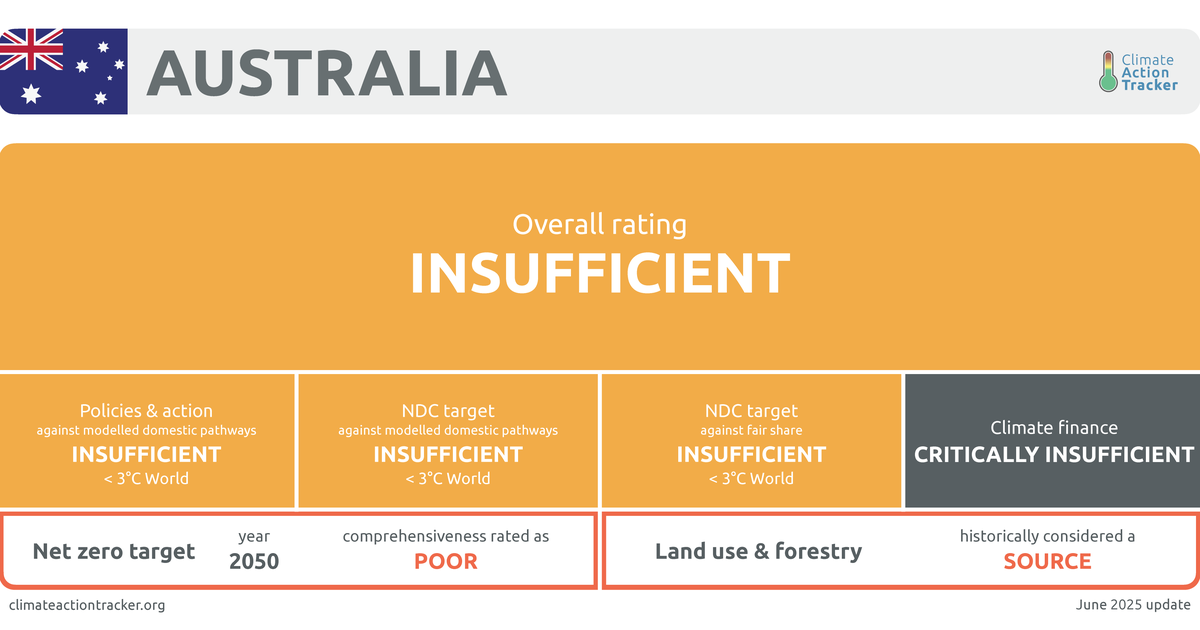
Ang target ay hindi sapat para sa mga layunin sa klima** Ang Climate Action Tracker, isang independent na scientific organization, ay nagbigay ng rating na "Insufficient" sa target ng Australia para sa 2030 kung ikukumpara sa mga landas ng emisyon na kailangan upang limitahan ang pag-init sa 1.5°C [6].
The target is insufficient for climate goals** The Climate Action Tracker, an independent scientific organization, rates Australia's 2030 target as "Insufficient" when compared to emissions pathways needed to limit warming to 1.5°C [6].
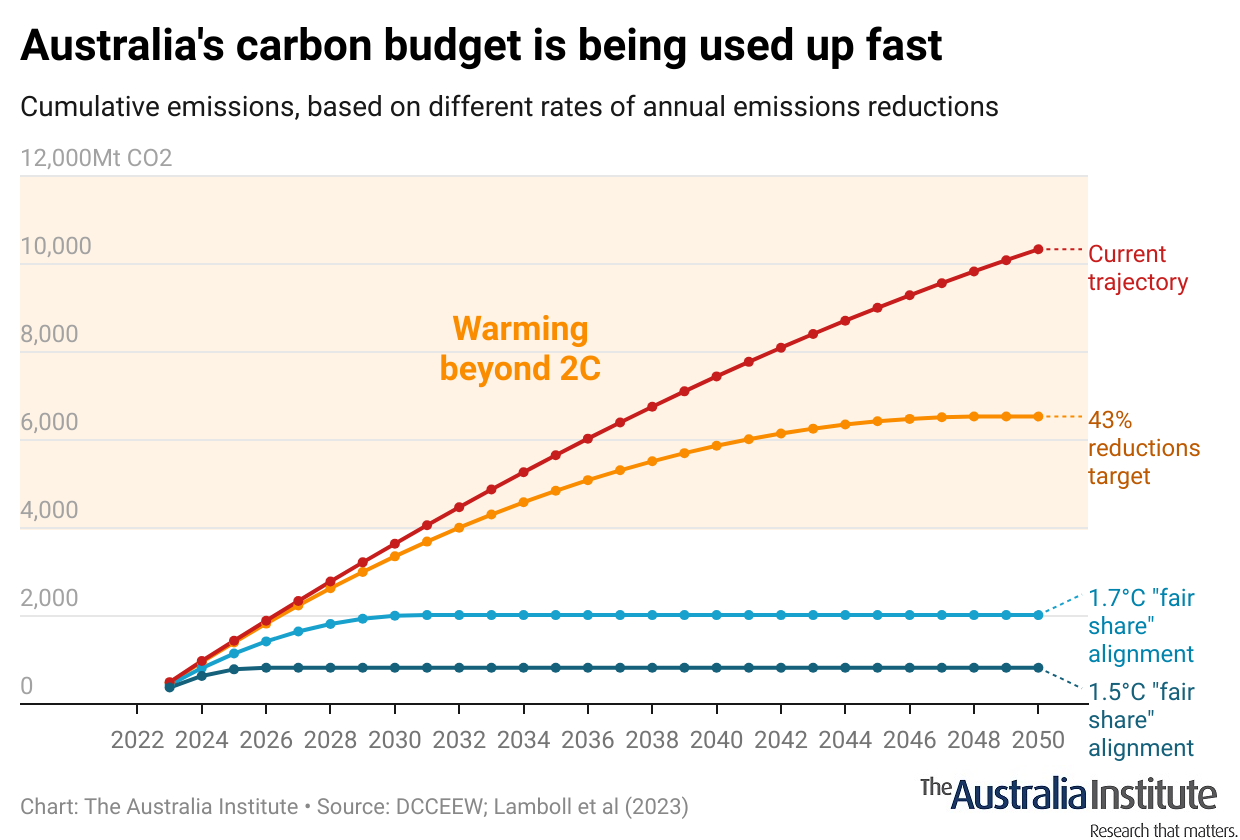
Maraming mga pagsusuri ang nagpapahiwatig na ang target na 43% ay hindi nakaayon sa paglimita ng pag-init sa 1.5°C at kumakatawan sa isang "sleight of hand" na kinasasangkutan ng mabigat na pag-asa sa mga offset at accounting trick sa halip na mga aktwal na pagbabawas ng emisyon [7]. **4.
Multiple analyses indicate the 43% target is not aligned with limiting warming to 1.5°C and represents a "sleight of hand" involving heavy reliance on offsets and accounting tricks rather than real emissions reductions [7]. **4.
Ang mga pangunahing sektoral na problema ay nananatiling hindi nalutas** - **Transportasyon**: Ang mga emisyon sa transportasyon sa 2030 ay inaasahang katulad ng mga antas bago ang pandemya, na walang net na pagbabawas [8] - **Agrikultura**: Ang mga emisyon sa agrikultura ay inaasahang tumaas habang ang mga baka pagkatapos ng tagtuyot ay muling pinalalaki [8] - **Mga emisyon sa industriya**: Ang Safeguard Mechanism (na sumasaklaw sa 31% ng emisyon) ay hindi magreresulta sa direktang pagbabawas ng emisyon hanggang sa katapusan ng dekada [8] **5.
Major sectoral problems remain unaddressed** - **Transport**: Transport emissions in 2030 are projected to be similar to pre-pandemic levels, with no net reduction [8] - **Agriculture**: Agricultural emissions are projected to increase as post-drought cattle herds are restocked [8] - **Industrial emissions**: The Safeguard Mechanism (covering 31% of emissions) won't result in direct emissions cuts until the end of the decade [8] **5.
Kakulangan sa target ng renewable energy** Bagama't ang target ng pamahalaan ay 82% renewable electricity sa pamamagitan ng 2030, ang International Energy Agency ay nagproyekta na tanging 58% ang makakamit batay sa mga kasalukuyang patakaran at deployment rates—isang makabuluhang pagkukulang [6].
Renewable energy target shortfall** While the government targets 82% renewable electricity by 2030, the International Energy Agency projects only 58% will be achieved based on current policies and deployment rates—a significant gap [6].

💭 KRITIKAL NA PANANAW

Kapag sinusuri sa konteksto, ang "tagumpay" ng pagpasa ng batas ng target na 43% na pagbabawas ng emisyon ay naghahayag ng patakaran sa klima ng pamahalaan bilang mas simboliko na mahalaga kaysa sa substantibong makabago.
When examined in context, the "achievement" of legislating a 43% emissions reduction target reveals the government's climate policy as more symbolically significant than substantively transformative.
Ang pamahalaan ay maaaring mag-angkin ng kredito para sa pagpasa ng batas dahil ito ay nasa oposisyon sa ilalim ng nakaraang Coalition government, na nagtakda ng target sa 26-28%.
The government can claim credit for passing legislation because it was in opposition under the previous Coalition government, which had set the target at 26-28%.
Gayunpaman, ang aktwal na landas ng pagbabawas ay malaking umaasa sa: 1. **Mga umiiral na xu hướng sa pagpawi ng coal** - Ang malaking bahagi ng 43% ay nagmula sa kasalukuyang pag-deploy ng renewable at natural na pagreretiro ng coal plant, hindi ng bagong patakaran [4] 2. **Mga mekanismo ng accounting** - Ang pagsasama ng masaganang LULUCF sink credits ay nagpapahintulot sa pamahalaan na mag-angkin ng mga pagbabawas ng emisyon na hindi nagiging aktwal na pagbabawas ng emisyon sa mga pangunahing sektor [5] 3. **Hindi sapat na pagpapatupad ng patakaran** - Ang pagsusuri ng mismong pamahalaan ay nagpapakita na ang mga pangunahing sektor (transportasyon, agrikultura, industriya) ay makakaranas ng patag o tumataas na emisyon [8] Ang batas ay nagbibigay ng katiyakan at ikinakandado ang target, na nagpapahirap sa mga hinaharap na pamahalaan na hinaan ito.
However, the actual reduction pathway relies heavily on: 1. **Pre-existing coal phase-out trends** - Much of the 43% comes from existing renewable deployment and natural coal plant retirements, not new policy [4] 2. **Accounting mechanisms** - The inclusion of generous LULUCF sink credits allows the government to claim emissions reductions that don't translate into actual emissions cuts in key sectors [5] 3. **Insufficient policy implementation** - The government's own analysis shows major sectors (transport, agriculture, industry) will see flat or increasing emissions [8] The legislation does provide certainty and lock in the target, making it harder for future governments to weaken it.
Gayunpaman, ang pagbabalangkas nito bilang isang pangunahing tagumpay ay nagkukubli sa katotohanan na ang aktwal na landas ng Australia patungo sa net zero ay nananatiling malaking umaasa sa mga teknikal na solusyon (carbon capture, hydrogen) na hindi napatunayan sa malawakang scale, at ang target mismo ay kumakatawan sa isang hindi sapat na tugon sa agham ng klima [6].
However, the framing of this as a major achievement obscures the fact that Australia's actual path to net zero remains heavily dependent on technological solutions (carbon capture, hydrogen) that are unproven at scale, and the target itself represents an inadequate response to climate science [6].
Ang isang paghahambing sa mga kasamahan sa OECD ay nakapagtuturo: Habang inatas ng Australia ang 43% sa pamamagitan ng 2030, ang EU ay nagkomit sa 55% sa pamamagitan ng 2030, ang UK sa 68% sa pamamagitan ng 2030, at ang US sa 50% sa pamamagitan ng 2030 (sa kanyang Paris Agreement commitment).
A comparison to OECD peers is instructive: While Australia legislated 43% by 2030, the EU committed to 55% by 2030, the UK to 68% by 2030, and the US to 50% by 2030 (in its Paris Agreement commitment).
Ang target ng Australia, bagama't mas mataas kaysa sa target ng nakaraang Coalition government, ay nananatiling kabilang sa mga mas mahinang developed economies [9].
Australia's target, while higher than the previous Coalition government's target, remains among the weaker of developed economies [9].

BAHAGYANG TOTOO

6.0

sa 10

Ang pangunahing pahayag na inatas ng pamahalaan ang target na 43% na pagbabawas ng emisyon sa pamamagitan ng 2030 at net zero sa pamamagitan ng 2050 noong Setyembre 2022 ay tumpak.
The factual claim that the government legislated a 43% emissions reduction target by 2030 and net zero by 2050 in September 2022 is accurate.
Gayunpaman, ang hindi isinama na konteksto—na ang target ay umaasa sa mga accounting trick, ang mga pangunahing sektor ay patuloy na tumataas ang emisyon, ang target ay nakamit na nang walang intervensyon ng patakaran, at ang target ay hindi sapat sa siyentipiko para sa mga layunin sa klima—ay nangangahulugan na ito ay kumakatawan sa isang mas maliit na tagumpay kaysa sa iminungkahi ng pahayag.
However, the omitted context—that the target relies on accounting tricks, major sectors are still increasing emissions, the target is already being achieved without policy intervention, and the target is scientifically insufficient for climate goals—means this represents a much more modest achievement than the claim suggests.
Ang batas ay nagbibigay ng legal na katiyakan ngunit hindi ng makabagong aksyon sa klima.
The legislation provides legal certainty but not transformative climate action.

📚 MGA PINAGMULAN AT SANGGUNIAN (9)

  1. 1
    dcceew.gov.au

    Climate Change Bill 2022 - DCCEEW

    Dcceew Gov

  2. 2
    pm.gov.au

    Australia Legislates Emissions Reduction Targets - Prime Minister of Australia

    The Albanese Government’s landmark Climate Change Bills have now passed the Senate, ensuring Australia's emissions reduction target of 43 per cent and net zero emissions by 2050 will be enshrined in legislation. For almost a decade, Australia stumbled from one policy to another, and our economy and communities missed out on billions of dollars in public and private clean energy investment. But today that changes.

    Prime Minister of Australia
  3. 3
    Climate Change Bill 2022 – Parliament of Australia

    Climate Change Bill 2022 – Parliament of Australia

    Helpful information Text of bill First reading: Text of the bill as introduced into the Parliament Third reading: Prepared if the bill is amended by the house in which it was introduced. This version of the bill is then considered by the second house. As passed by

    Aph Gov
  4. 4
    PDF

    Australia's 2030 Emissions Reduction Target - DCCEEW

    Dcceew Gov • PDF Document
  5. 5
    Sleight of hand: Australia's Net Zero target is being lost in accounting tricks, offsets and more gas - Climate Analytics

    Sleight of hand: Australia's Net Zero target is being lost in accounting tricks, offsets and more gas - Climate Analytics

    Australia is unlikely to achieve its net zero target. This is because of its support for fossil gas to 2050 and beyond, it’s long-term emissions reduction plan resorts to unrealistic technological fixes and emissions offsets and because its legislated target of a 43% emissions cut by 2030 is not…

    Climate Analytics
  6. 6
    Australia - Climate Action Tracker

    Australia - Climate Action Tracker

    Climateactiontracker
  7. 7
    Climate Change Bill 2022 - Australian Conservation Foundation

    Climate Change Bill 2022 - Australian Conservation Foundation

    The Albanese Government’s Climate Change Bill has passed the House of Representatives and been sent to the Senate. Its target to slash climate pollution…

    Australian Conservation Foundation
  8. 8
    New research shows our 2030 emission targets are woefully out of date - The Australia Institute

    New research shows our 2030 emission targets are woefully out of date - The Australia Institute

    The evidence is clear - our current policies and targets are insufficient to prevent dangerous global warming, and not aligned with latest scientific research.

    The Australia Institute
  9. 9
    kwm.com

    From ambition to action: understanding Australia's 2050 net zero plan - KWM

    Kwm

Pamamaraan ng Rating Scale

1-3: MALI

Hindi tama sa katotohanan o malisyosong gawa-gawa.

4-6: BAHAGYA

May katotohanan ngunit kulang o baluktot ang konteksto.

7-9: HALOS TOTOO

Maliit na teknikal na detalye o isyu sa pagkakasulat.

10: TUMPAK

Perpektong na-verify at patas ayon sa konteksto.

Pamamaraan: Ang mga rating ay tinutukoy sa pamamagitan ng cross-referencing ng opisyal na mga rekord ng pamahalaan, independiyenteng mga organisasyong nag-fact-check, at mga primaryang dokumento.