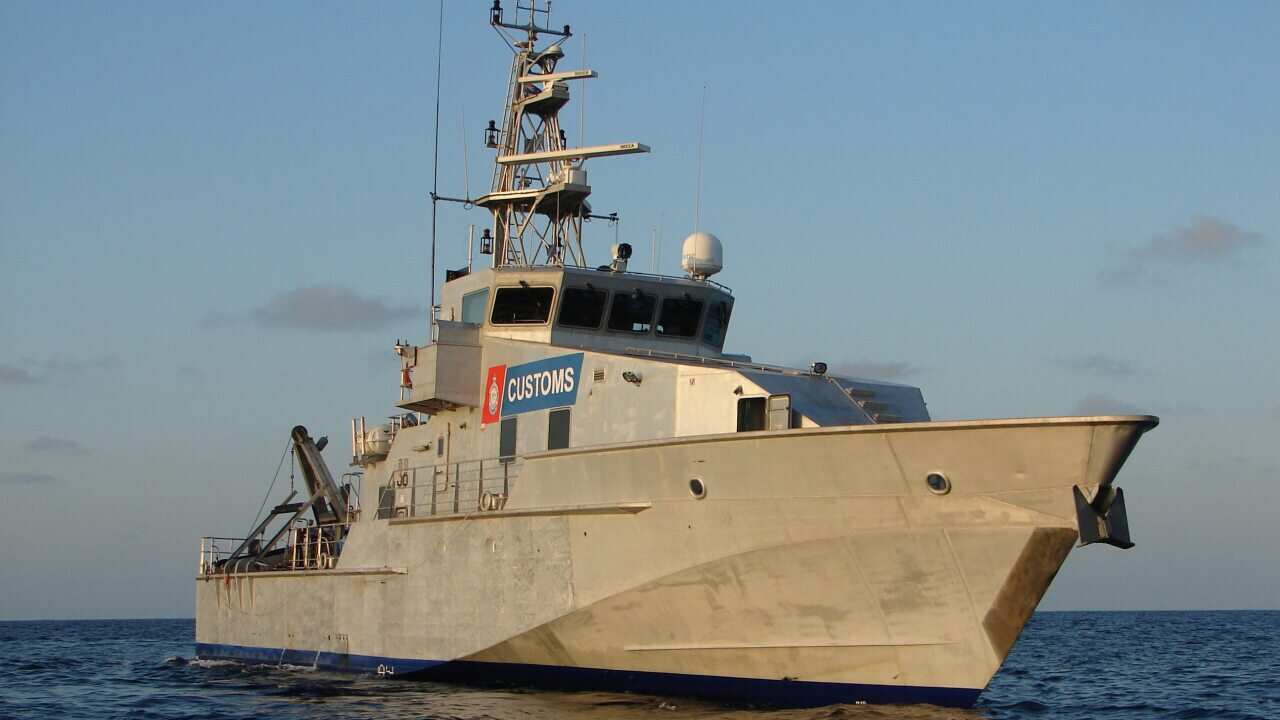
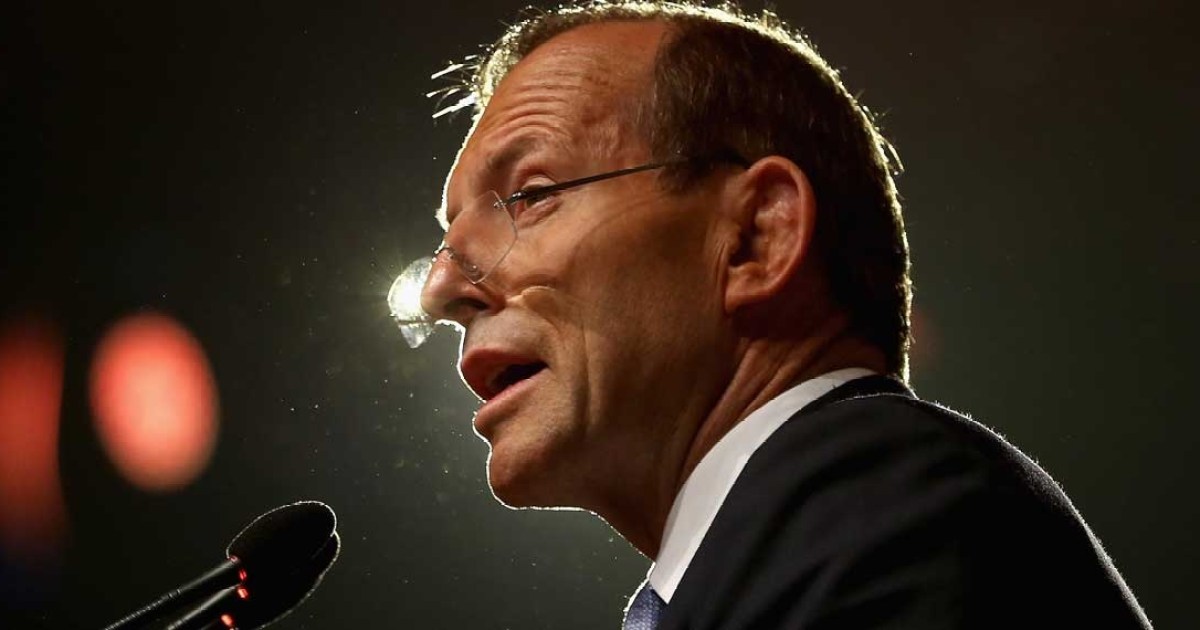
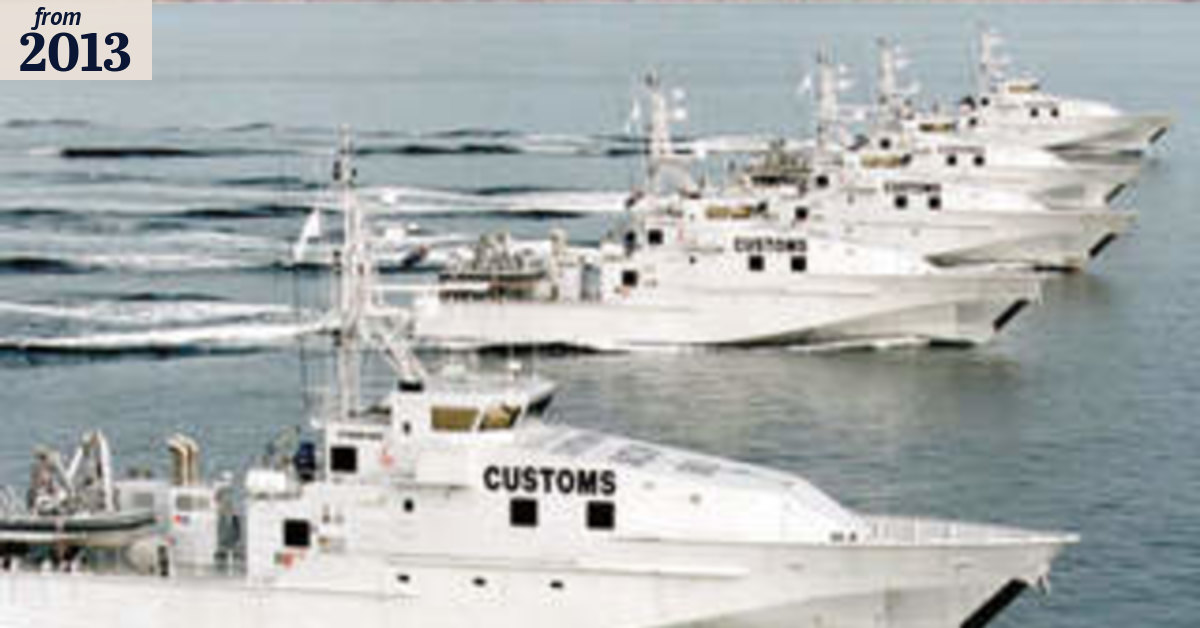
In November 2013, Prime Minister Tony Abbott announced Australia would donate two Bay-class patrol boats to Sri Lanka during the Commonwealth Heads of Government Meeting (CHOGM) in Colombo [1].
The claim's reference to "proven genocide, human rights abuse, war crimes and extra judicial killings" refers to the Sri Lankan government's conduct during and after the 26-year civil war with the Liberation Tigers of Tamil Eelam (LTTE), which ended in 2009.
In December 2013, the Permanent Peoples' Tribunal (an independent international panel of 11 judges) found Sri Lanka guilty of genocide against the Tamil people [5][6].
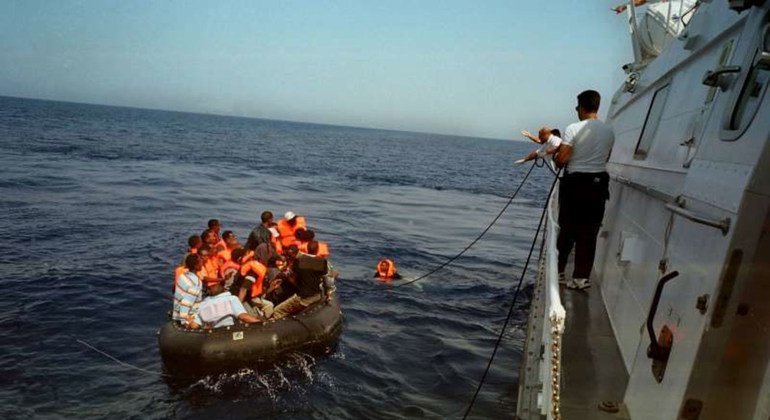
The Sri Lankan Navy, which received the patrol boats, had been the subject of persistent war-crimes allegations during the civil war, particularly regarding the treatment of Tamil civilians attempting to flee by sea [4][7].
The Government's Stated Justification:** The Abbott government consistently framed the boat donation as a humanitarian measure to prevent deaths at sea.
The government pointed to more than 1,000 asylum seekers who had died at sea attempting to reach Australia, arguing the boats would help prevent such tragedies by stopping unseaworthy vessels [2].
**2.
The governing document was a 2009 memorandum of understanding on people smuggling cooperation that made no mention of military asset usage limitations [7].
The Sri Lankan Navy could potentially re-arm the vessels (the original 7.62mm machine guns were to be removed before handover, but the mountings could accommodate larger weapons) [7].
**3.
Additionally, Labor had introduced "enhanced screening" measures that resulted in over 1,100 Sri Lankan asylum seekers being returned from late 2012 onward [6].
**4.
International Context at CHOGM:** The boat deal was announced during the 2013 Commonwealth Heads of Government Meeting in Colombo, which brought international scrutiny to Sri Lanka's human rights record.
Canadian Prime Minister Stephen Harper boycotted the meeting, and British Prime Minister David Cameron publicly pressed for an international investigation into war crimes [1][4].
The original sources present a mixed credibility profile:
- **New Matilda (Source 3):** This is a left-leaning independent Australian publication with a stated progressive editorial stance.
While the article provides detailed documentation of human rights abuses, it presents a clear advocacy perspective and frames Australia's role as "complicit in genocide," which is a strongly political interpretation.
- **Canberra Times (Source 1):** A mainstream Australian newspaper (Fairfax Media) with generally centrist editorial standards.
- **ABC News (Source 2):** Australia's public broadcaster, widely regarded as authoritative and balanced.
- **Asian Human Rights Commission (Source 4):** An advocacy organization focused on human rights documentation.
**Did Labor do something similar?**
Search conducted: "Labor government Sri Lanka asylum seekers policy 2012 2013"
Finding: Labor engaged in substantial cooperation with Sri Lanka on asylum seeker issues, though the specific patrol boat donation was a Coalition initiative.
- **Equipment discussions:** The Morrison government (Coalition) noted that the former Labor government had "discussed giving Sri Lanka materiel and equipment to help with border protection but had not followed through on the talks" [7].
* * * *
Former Labor Foreign Minister Bob Carr defended intelligence sharing and equipment provision to Sri Lanka at the time [2].
- **Enhanced screening returns:** Under a policy introduced by the Labor government and maintained by the Coalition, more than 1,100 Sri Lankan asylum seekers were returned to Sri Lanka from late 2012 under "enhanced screening" measures [6].
- **Regional cooperation:** Labor's Senate leader Penny Wong actually praised the Abbott government's efforts to build closer ties with Sri Lanka, stating: "Cooperation with our neighbours, cooperation with Sri Lanka is something Labor has said is a priority for a long time" [1].
- **Current Labor policy:** Recent reports indicate the current Albanese Labor government has continued hardline border protection policies, including turning back asylum seeker boats to Sri Lanka [9][10].
**Key comparison:** While the specific patrol boat donation was a Coalition action, the broader policy of cooperating with Sri Lanka on border security and asylum seeker interdiction has been bipartisan.
While the claim accurately identifies the material facts (boat donation, Sri Lanka's human rights record, the genocide finding), it presents a one-sided framing that omits legitimate counter-arguments and broader policy context.
The Coalition government's decision was made in the context of:
**Legitimate Policy Objectives:** The government genuinely sought to prevent asylum seeker deaths at sea, which had claimed over 1,000 lives.
The policy succeeded in dramatically reducing boat arrivals from Sri Lanka—from 120 boats in 2012 to 14 in 2013 [11].
**Complex Diplomatic Trade-offs:** Australia faced a genuine dilemma: cooperate with a government with a problematic human rights record to achieve border protection goals, or refuse cooperation and potentially see more deaths at sea.
This suggests the policy reflects structural pressures of border protection rather than uniquely Coalition indifference to human rights.
**International Response Variations:** While Canada and the UK took harder lines on Sri Lanka at CHOGM 2013, many other Commonwealth nations maintained normal relations.
However, the criticisms raised in the claim are also substantive:
- Providing military assets to a navy with documented war crimes allegations raises legitimate concerns about enabling potential future abuses [4][7].
- The lack of usage restrictions or conditions on the boats was a notable omission [7].
- The government's refusal to support international investigations into Sri Lankan war crimes, with Abbott stating he did not "propose to lecture the Sri Lankans on human rights," drew criticism from Human Rights Watch [6].
**Key context:** This is not unique to the Coalition—Labor has maintained the same essential policy approach.
Both parties have prioritized stopping boat arrivals over confronting Sri Lanka's human rights record, suggesting this reflects Australia's structural position as a destination country managing irregular migration rather than partisan moral failure.
The core factual claims are accurate: the Coalition did donate approximately $2 million worth of patrol boats to Sri Lanka in 2013, and Sri Lanka had been found guilty of genocide and war crimes by independent tribunals.
Presenting the policy as uniquely Coalition-driven when it reflects broader Australian border protection priorities shared across the political spectrum
The claim is factually accurate but presents a partisan-critical framing that doesn't acknowledge the complex policy trade-offs involved or the continuity with Labor approaches.
The core factual claims are accurate: the Coalition did donate approximately $2 million worth of patrol boats to Sri Lanka in 2013, and Sri Lanka had been found guilty of genocide and war crimes by independent tribunals.
Presenting the policy as uniquely Coalition-driven when it reflects broader Australian border protection priorities shared across the political spectrum
The claim is factually accurate but presents a partisan-critical framing that doesn't acknowledge the complex policy trade-offs involved or the continuity with Labor approaches.