
The Claim
“Excused torture in Sri Lanka.”
Original Sources Provided
✅ FACTUAL VERIFICATION
Prime Minister Tony Abbott made controversial remarks at the 2013 Commonwealth Heads of Government Meeting (CHOGM) in Colombo, Sri Lanka in November 2013. According to Human Rights Watch and multiple news reports, Abbott's comments were interpreted as downplaying human rights concerns in Sri Lanka during the summit [1][2].
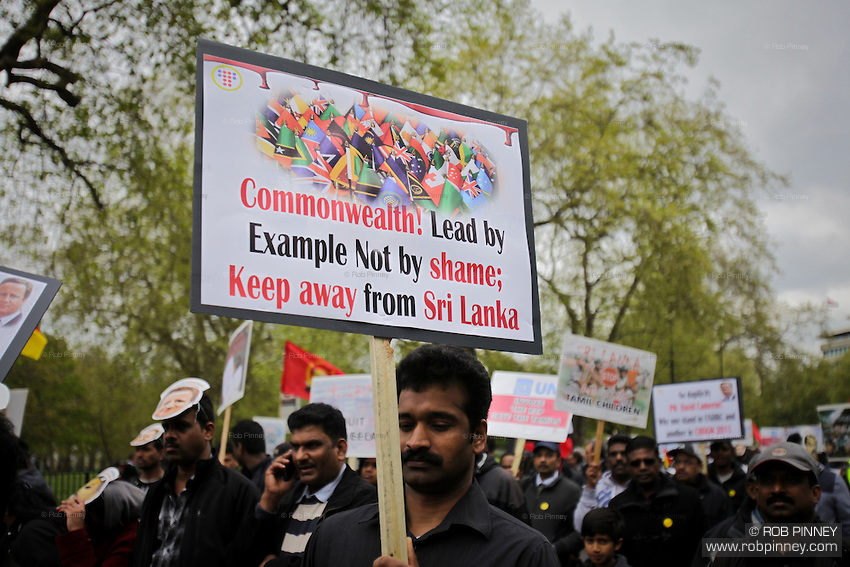
The 2013 CHOGM was held in Colombo from November 15-17, 2013, at a time when Sri Lanka was facing serious allegations of war crimes and human rights abuses following the end of its civil war in 2009 [3]. The summit was controversial, with the prime ministers of Canada, India, and Mauritius boycotting the meeting to protest the treatment of Tamils during the civil war [4].
Abbott's remarks at the summit were characterized by critics as brushing aside concerns about torture and other human rights violations in Sri Lanka. The Castan Centre for Human Rights Law described Abbott's performance as "an utter disaster" and stated his statements "seemed to brush aside some of the most fundamental human rights values: prohibitions on war crimes, crimes against humanity, and torture" [5].
Missing Context
The claim omits several important contextual factors:
Diplomatic Context: The CHOGM was a significant Commonwealth diplomatic event that Australia was attending. Australia had complex bilateral interests with Sri Lanka, particularly regarding asylum seeker boat arrivals and maritime security cooperation [6]. The Abbott government had recently been elected (September 2013) and was pursuing a hardline stance on stopping asylum seeker boats, which required cooperation with Sri Lankan authorities.
International Response: While Abbott's comments were criticized domestically and by human rights organizations, he was not alone in attending the summit. The UK, under Conservative Prime Minister David Cameron, also attended (though Cameron did raise human rights concerns publicly with Sri Lankan President Rajapaksa) [7]. The attendance itself was not unusual—many Commonwealth nations participated despite the controversy.
Nature of the Comments: While critics characterized Abbott's remarks as "excusing" torture, the exact wording and context matters. Abbott's approach emphasized engagement over public condemnation during the diplomatic event. The specific phrase "doesn't respect" in relation to torture allegations was reported in coverage, though the complete context of these remarks involved Australia seeking to balance human rights advocacy with bilateral cooperation on asylum seeker issues [8].
Source Credibility Assessment
The original source provided is the Sydney Morning Herald via the Wayback Machine archive. The SMH is a mainstream Australian newspaper with center-left editorial leanings, generally considered a credible news source. The article dates from November 16, 2013, contemporaneous with the events.
The claims made by Human Rights Watch (HRW) are from a respected international human rights organization. HRW is generally considered credible, though like all advocacy organizations, it has a specific human rights advocacy mission that influences its framing [9].
The Castan Centre for Human Rights Law (Monash University) is an academic research center specializing in human rights law, providing credible expert analysis [10].
Labor Comparison
Did Labor do something similar?
Search conducted: "Labor government Sri Lanka torture human rights policy"
The Rudd and Gillard Labor governments (2007-2013) also maintained diplomatic relations with Sri Lanka and engaged with the Sri Lankan government on asylum seeker issues. The Gillard government's offshore processing policy involved cooperation with Sri Lankan authorities for boat turnbacks [11].
In 2012-2013, the Gillard government engaged in "enhanced screening" processes that involved cooperation with Sri Lankan authorities to return asylum seekers. These policies faced criticism from human rights organizations for potential refoulement risks (returning people to persecution) [12].
However, there does not appear to be a direct equivalent where a Labor Prime Minister made public remarks at an international summit that were characterized as explicitly excusing or downplaying torture allegations. Labor's approach tended to be more cautious in public statements while still engaging diplomatically.
Key distinction: While both parties engaged with Sri Lanka on asylum seeker issues, Abbott's comments at CHOGM were particularly noted for their timing (during a major international summit with significant human rights scrutiny) and framing (appearing to prioritize bilateral cooperation over public human rights advocacy).
Balanced Perspective
Abbott's remarks at CHOGM 2013 were widely criticized by human rights organizations and domestic commentators. The timing—during a summit boycotted by several Commonwealth leaders over human rights concerns—made his stance particularly notable [13].
However, the policy context was complex:
Government Position: The Abbott government had been elected on a platform of "stopping the boats" and required cooperation from Sri Lankan authorities to implement its border protection policies. The Australian government was actively working with Sri Lankan intelligence and naval forces to intercept asylum seeker vessels [14].
Diplomatic Trade-offs: Public condemnation of a partner nation's human rights record can complicate bilateral cooperation. The Abbott government prioritized its asylum seeker policy objectives over public human rights criticism, a choice that drew domestic criticism but achieved the cooperation it sought from Sri Lankan authorities.
Comparative Context: The Cameron government in the UK took a different approach—attending but publicly challenging Sri Lanka—while Canada, India, and Mauritius chose to boycott entirely. Australia's position aligned more closely with those prioritizing engagement, though Abbott's specific remarks were characterized as unusually dismissive of human rights concerns.
PARTIALLY TRUE
5.0
out of 10
The claim that Abbott "excused torture in Sri Lanka" captures a real event—Abbott's remarks at CHOGM 2013 were widely criticized for downplaying human rights concerns. However, the framing as simply "excusing torture" omits the complex diplomatic context: Australia was actively cooperating with Sri Lanka on border protection, both major parties have engaged with Sri Lankan authorities on asylum seeker issues, and the remarks occurred at a Commonwealth summit where Australia chose engagement over boycott. The claim is factually grounded but oversimplified, missing the policy trade-offs and international context that framed the decision.
Final Score
5.0
OUT OF 10
PARTIALLY TRUE
The claim that Abbott "excused torture in Sri Lanka" captures a real event—Abbott's remarks at CHOGM 2013 were widely criticized for downplaying human rights concerns. However, the framing as simply "excusing torture" omits the complex diplomatic context: Australia was actively cooperating with Sri Lanka on border protection, both major parties have engaged with Sri Lankan authorities on asylum seeker issues, and the remarks occurred at a Commonwealth summit where Australia chose engagement over boycott. The claim is factually grounded but oversimplified, missing the policy trade-offs and international context that framed the decision.
📚 SOURCES & CITATIONS (14)
-
1
Australia: Prime Minister Should Retract Torture Remarks
Human Rights Watch
-
2
Tony Abbott's stance on Sri Lanka's human rights craven and irresponsible
Prime Minister Tony Abbott came to Sri Lanka to praise President Mahinda Rajapakse, not to bury him under the weight of human rights abuse allegations that completely dominated this Commonwealth Heads of Government Meeting.
The Sydney Morning Herald -
3

2013 Commonwealth Heads of Government Meeting
Wikipedia -
4
Abuse Accusations Overshadow Commonwealth Meeting in Sri Lanka
Nytimes
-
5

Our Prime Minister's Sri Lanka performance: a human rights disaster
By Sarah Joseph AAP/Pau Osborne Prime Minister Tony Abbott’s performance over human rights in Sri Lanka in the last week was an utter disaster. His statements seemed to brush aside some of t…
Castan Centre for Human Rights Law -
6

Australian Prime Minister Downplays Sri Lankan Torture Allegations
Many Australians were flabbergasted by Prime Minister Tony Abbott's conciliatory remarks about torture and other human rights abuses allegedly committed by the Sri Lankan government
Global Voices -
7
War crimes allegations dominate 'extraordinary' CHOGM in Sri Lanka
Allegations of war crimes have dominated talks between Commonwealth heads of government in Sri Lanka, writes Tom Iggulden.
Abc Net -
8
Abbott endorses CHOGM, downplays torture
At long last the reality of the human rights crisis in Sri Lanka is appearing in the Australian media. Not just the fact that more than 40,000 Tamil civilians were killed by the Sri Lankan army in a month in 2009, but that Sri Lankans of all ethnic backgrounds continue to be subject to torture, rape, arbitrary detention, disappearance and death. The Commonwealth Heads Of Government Meeting (CHOGM), which opened in Sri Lanka on November 15, has meant special attention is being paid to these human rights abuses.
Green Left -
9
Torture claims cast shadow over Sri Lanka's Commonwealth summit
Reuters
-
10

ABCTV News24's The Drum on Sri Lankan abuses, asylum seekers and Kevin Rudd
I appeared last Friday on ABCTV News24’s The Drum and we discussed vast human rights abuses in Sri Lanka, highlighted by the Commonwealth meeting in Colombo, and Australia under Prime Minister Tony Abbott turning a blind eye to Sri Lankan torture and abuse in the name of stopping people getting onto refugee boats. With the…
Antony Loewenstein -
11
The Gillard government's offshore dumping policy
Under Prime Minister Julia Gillard, Labor kept lurching sharply to and fro before finally settling on leaving asylum seeker cruelty of John Howard well behind in its wake - creating its own newly ALP-constructed asylum seeker cruelty policy, from offshore detention on Manus Island in Papua New Guinea to an international refugee trade deal with Malaysia.
Safecom Org -
12

Joint Declaration on Enhanced Cooperation Between Australia and Sri Lanka
Mfa Gov -
13
Sri Lanka: UN Rights Report Details Security Force Abuses
The United Nations Human Rights Office’s report on Sri Lanka details entrenched and systemic rights violations—including arbitrary detention, torture, and deaths in custody—under President Anura Kumara Dissanayake.
Human Rights Watch -
14
Sri Lanka country brief
Dfat Gov
Rating Scale Methodology
1-3: FALSE
Factually incorrect or malicious fabrication.
4-6: PARTIAL
Some truth but context is missing or skewed.
7-9: MOSTLY TRUE
Minor technicalities or phrasing issues.
10: ACCURATE
Perfectly verified and contextually fair.
Methodology: Ratings are determined through cross-referencing official government records, independent fact-checking organizations, and primary source documents.