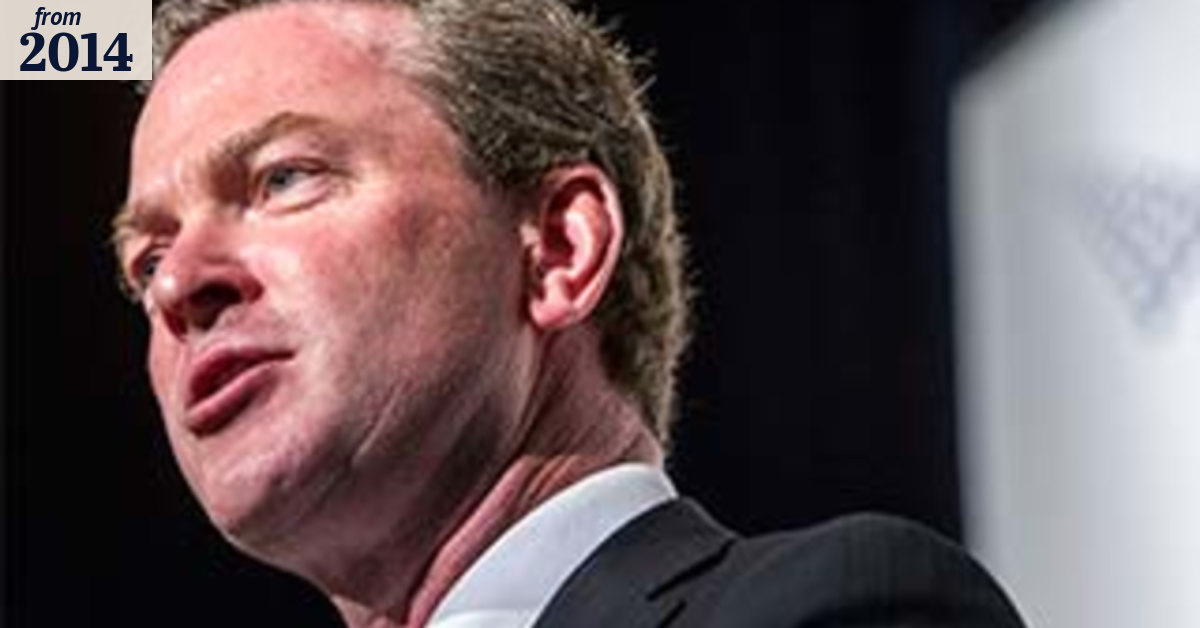
Education Minister Christopher Pyne championed these reforms, which also included funding cuts to higher education and changes to HELP debt indexation [1].
The reforms proposed cutting $5.8 billion from the higher education sector, lowering the HECS repayment threshold, charging real interest rates (up to 6%) on student debt instead of inflation-only indexation, and opening up government funding to private, for-profit education providers [1].
Labor and opponents of deregulation campaigned heavily on the "$100,000 degrees" message, but analysis suggests this was a "worst case" projection rather than an expected average.
According to analysis from The Conversation, if universities priced courses at around A$16,000 per year (a 55% revenue increase), even the most expensive degrees would remain under A$100,000 [2].
However, Labor's case studies used assumptions of worst-case tuition prices, 6% interest rates, and nominal (non-inflation-adjusted) dollar calculations, which expert analysis found to be "very misleading" [2].
An ANU mathematical modeling exercise calculated that under the deregulated system, hypothetical fees of $28,000 per year for a law degree could result in total debt of $202,734 over 43 years, with $89,134 being interest [3].
Eight government ministers studied entirely during the free education era, including Malcolm Turnbull (Arts/Law, University of Sydney), George Brandis (Arts/Law, University of Queensland), and Marise Payne (Arts/Law, UNSW) [4].
Another eight ministers likely had at least one year of free education, including Christopher Pyne (Law, University of Adelaide), Julie Bishop (Law, University of Adelaide), and Barnaby Joyce (Commerce, University of New England) [4].
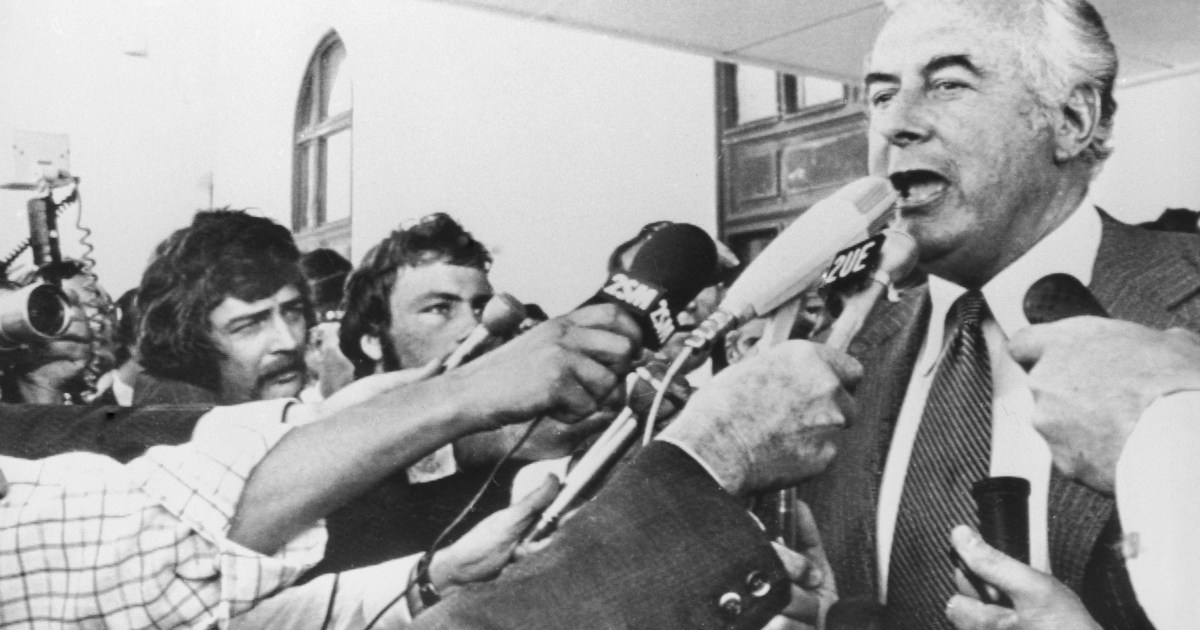
Free university education was introduced by the Whitlam Labor government on January 1, 1974, and ended when the Hawke Labor government introduced HECS in 1989 [4].
According to the Sydney Morning Herald analysis of OECD data from September 2014, the claim that "public benefits from tertiary qualifications twice as much as the individual" is supported by the data, though with important nuances [5].
The OECD figures showed:
- For every public dollar spent on higher education, men repaid $6 through higher taxes and reduced unemployment benefits
- Women repaid $4.40 for every public dollar spent
- Men's private return was $3.20 per dollar spent on their education
- Women's private return was $2.50 per dollar spent [5]
This made Australia one of only five OECD countries where the public rate of return exceeded the individual rate [5].
However, the Education Minister's spokesman countered that "in actual dollar value, the individual... benefit is greater than the economic benefit to the public" [5].
This reflects that while the *rate* of return was higher for the public, the absolute *dollar amount* of benefit was higher for individuals due to higher graduate incomes.
The claim that Abbott said "it is irresponsible to saddle Australians with $25,000 of debt" has been referenced in social media posts from political activist groups, but the original parliamentary context is harder to verify [6][7].
The quote appears to have been made during Question Time in 2014, where Abbott was discussing a different policy context (likely government debt or infrastructure borrowing) rather than student debt specifically.
The Coalition argued that Australian universities were underfunded by international standards, that deregulation would increase competition and quality, and that universities needed flexibility to compete internationally [1].
In 2012, the Gillard Labor government removed caps on student places entirely, ushering in the "demand-driven system" where universities could enroll unlimited numbers of Australian bachelor-degree students [9].
This policy ended in 2017 when the Turnbull Coalition government froze bachelor-degree spending due to cost blowouts—spending had increased by more than 50% in real terms since 2008 [9].
The article is an opinion piece by Greens Senator Lee Rhiannon, so it carries the political perspective of the Greens party, which opposes fee deregulation [1].
2. **The Guardian** - Mainstream international news outlet.
The article by Inga Ting is a news analysis piece citing OECD data and expert commentary [5].
4. **Facebook/NTEU** - The National Tertiary Education Union is an advocacy organization representing university staff.
Search conducted: "Labor government university fees HECS history", "Gillard Labor demand driven system", "Hawke Labor Dawkins reforms"
**Finding:** The Coalition's proposed fee deregulation was a significant escalation in market-oriented university policy, but Labor governments had established the foundational framework that enabled such reforms.
Key Labor precedents:
1. **1989 HECS Introduction**: The Hawke Labor government introduced the Higher Education Contribution Scheme (HECS) in 1989, ending free university education.
This was a world-first income-contingent loan system that established the principle that students should contribute to their education costs [9].
2. **Dawkins Reforms**: Education Minister John Dawkins transformed Australian higher education by creating a market-oriented system where universities competed internationally and operated like corporate entities.
The reforms "turned colleges into universities, free education into HECS, elite education into mass education" [9].
3. **2012 Demand-Driven System**: The Gillard Labor government removed caps on student places entirely, allowing universities to enroll unlimited numbers of domestic students.
This drove a 50% real increase in higher education spending between 2008-2017, eventually forcing the Abbott/Turnbull governments to freeze funding [9].
4. **International Students**: The Hawke government introduced full-fee-paying places for international students, sparking "double-digit annual international enrolment growth rates through the 1990s" and transforming universities into revenue-seeking entities [9].
**Comparison:** While Labor introduced student contributions and market mechanisms, the Coalition's 2014 deregulation proposal went further by removing all fee caps and allowing universities to set prices freely.
The Coalition reforms also proposed charging real interest on student debt (up to 6%) rather than inflation-only indexation—a significant departure from Labor's HECS model.
The Abbott government argued that Australian universities were falling behind international competitors, that government couldn't afford to fund mass higher education at previous levels, and that competition would drive quality improvements [1].
The government noted that many students already paid significant fees under the HECS system, and that the HELP system would remain income-contingent, protecting low-income graduates [1].
Critics, including the Greens, Labor, and student unions, argued that:
- Fee deregulation would create a two-tiered system where elite universities charged premium prices while regional universities struggled
- Charging real interest on debt (rather than inflation-only) was regressive—low-income graduates who took longer to repay would pay more total interest
- The proposed $5.8 billion in cuts contradicted Abbott's election promise of "no cuts to education"
- Private, for-profit providers would gain access to public funding with weaker accountability [1]
The Whitlam Labor government introduced free education (1974), the Hawke Labor government ended it with HECS (1989), the Howard Coalition government increased fees and introduced differential pricing (1996), the Gillard Labor government uncapped places (2012), and the Abbott Coalition government attempted full deregulation (2014).
The claim that Coalition politicians were "hypocritical" for supporting fees after receiving free education is accurate for many ministers, but ignores that the Labor governments of Hawke and Gillard also made significant changes increasing student costs—including ending free education itself.
Universities remained in "policy limbo" until the Morrison government's 2021 "Job-Ready Graduates" reforms, which increased humanities fees to over $50,000 while cutting fees for STEM and nursing—a different approach to steering student choices through price signals [9].
The claim contains elements of truth but mixes verified facts with misleading projections and missing context:
1. **TRUE**: The Coalition did propose fee deregulation (though it never passed)
2. **TRUE**: Many Coalition ministers received free education during the 1974-1988 period
3. **TRUE**: OECD data shows public rate of return on tertiary education exceeds individual rate in Australia
4. **MISLEADING**: The "$100,000 degrees" projection was based on worst-case modeling assumptions; experts found Labor's campaign on this point misleading [2]
5. **UNVERIFIED**: The Abbott quote about "$25,000 of debt" appears to be from social media sources with unclear original context
6. **MISLEADING**: The claim omits that Labor governments (Hawke 1989, Gillard 2012) made major changes increasing student costs and that HECS was a Labor creation
7. **MISLEADING**: The "American levels of crippling debt" framing ignores the income-contingent HELP system that would have remained
The claim presents a one-sided narrative that ignores the bipartisan history of university fee increases and the fact that the Coalition's reforms were ultimately blocked.
The claim contains elements of truth but mixes verified facts with misleading projections and missing context:
1. **TRUE**: The Coalition did propose fee deregulation (though it never passed)
2. **TRUE**: Many Coalition ministers received free education during the 1974-1988 period
3. **TRUE**: OECD data shows public rate of return on tertiary education exceeds individual rate in Australia
4. **MISLEADING**: The "$100,000 degrees" projection was based on worst-case modeling assumptions; experts found Labor's campaign on this point misleading [2]
5. **UNVERIFIED**: The Abbott quote about "$25,000 of debt" appears to be from social media sources with unclear original context
6. **MISLEADING**: The claim omits that Labor governments (Hawke 1989, Gillard 2012) made major changes increasing student costs and that HECS was a Labor creation
7. **MISLEADING**: The "American levels of crippling debt" framing ignores the income-contingent HELP system that would have remained
The claim presents a one-sided narrative that ignores the bipartisan history of university fee increases and the fact that the Coalition's reforms were ultimately blocked.