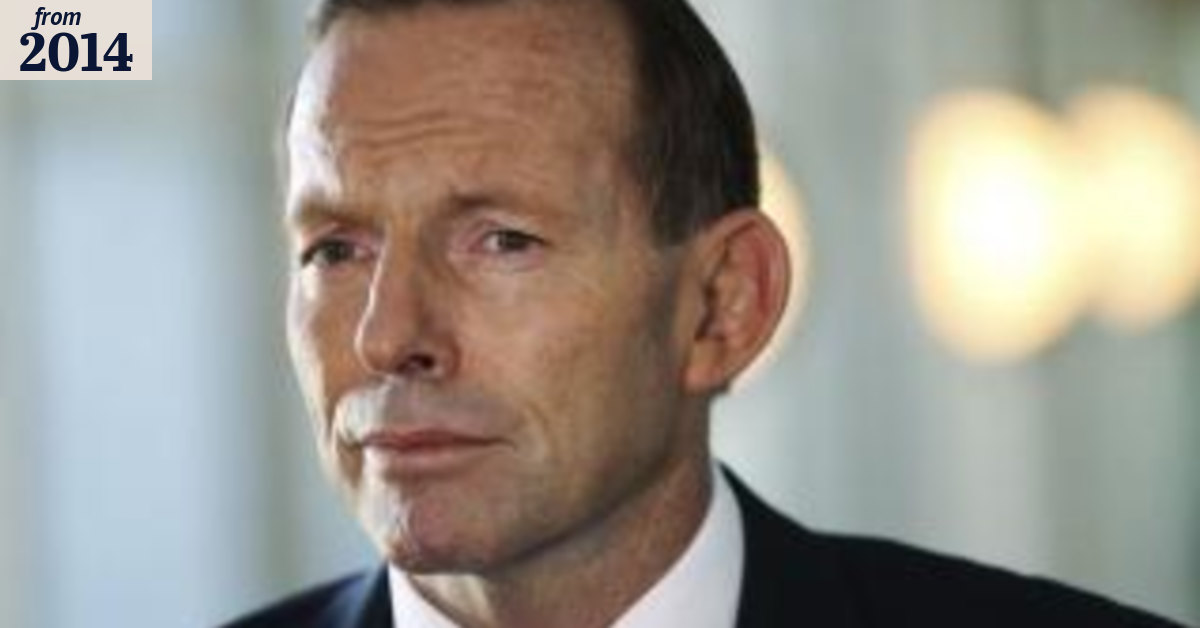
The Coalition government's 2014-15 budget, delivered by Treasurer Joe Hockey on May 13, 2014, implemented significant cuts to Australia's foreign aid budget.
The budget froze official development assistance (ODA) at its nominal 2013-14 level of $5 billion for two years (2014-15 and 2015-16), with growth thereafter only linked to the Consumer Price Index (CPI) [1].
The total reduction in foreign aid spending amounted to $7.6 billion over five years, representing one of the largest savings measures in the budget [2][3].
While the specific claim of a $2.3 million cut to WHO contributions cannot be independently verified due to the original Business Insider source being unavailable (returning a 404 error), the broader context of significant foreign aid cuts in the 2014-15 budget is well-documented.
Australia's foreign aid budget peaked in 2013-14 at approximately $5.036 billion (just above $5 billion), and the Coalition government's decision to freeze this funding represented a real-term reduction when accounting for inflation [4].
According to the Australian Aid Tracker, by 2016-17, foreign aid returned to the same level it was at a decade earlier in real terms, representing a significant scale-back from the peak reached under the previous Labor government [4].
The claim omits several important contextual factors:
1. **Broader budget context**: The 2014-15 budget was the first delivered by the Abbott government following the Coalition's victory in the 2013 federal election.
The foreign aid cuts were part of widespread expenditure reductions across most government departments, including health, education, and welfare [3].
2. **Specific allocation to Papua New Guinea**: While aid was broadly cut, there was actually an increase in aid to Papua New Guinea specifically, in return for hosting the Manus Island immigration processing centre [2].
3. **Performance benchmarking**: The budget introduced performance benchmarks to the Australian aid program, requiring aid recipients to demonstrate results and value for Australian money [2].
4. **Humanitarian funding maintained**: Of the total development assistance budget, $338.6 million was allocated for humanitarian, emergencies and refugee expenditure in 2014-15 [6].
Business Insider is generally considered a mainstream business news publication, though it has been described as having varying editorial standards across its international editions.
**Did Labor do something similar?**
Search conducted: "Labor government foreign aid WHO health multilateral Australia"
Finding: The Labor government (2007-2013) pursued a fundamentally different approach to foreign aid.
* * * *
According to the Australian Aid Tracker, the period from 2003-04 to 2013-14 was known as the "scale-up decade," during which aid increased rapidly from $3.5 billion to $6.8 billion (in 2024-25 prices), an annual average growth rate of 7% per year [4].
検索 nounKensaku 実施 nounJisshi : : 「 " Labor nounLabor government nounGovernment foreign nounForeign aid nounAid WHO nounWHO health nounHealth multilateral nounMultilateral Australia nounAustralia 」 "
Under Labor, there was bipartisan support to lift aid levels to 0.5% of Gross National Income (GNI) [2].
However, it is worth noting that even under Labor, Australia never reached the internationally agreed aid-to-GNI target of 0.7%, and the 0.5% goal was never achieved either [2].
**Comparison of approaches:**
- Labor: Rapid growth in foreign aid, bipartisan commitment to 0.5% of GNI target
- Coalition (2014): Aid frozen in nominal terms, real-term cuts due to inflation, abandonment of GNI target linkage
The 2014-15 budget foreign aid cuts were part of the Abbott government's broader "Economic Action Strategy" aimed at what the government characterized as necessary budget repair.
However, the cuts faced significant criticism from aid organizations and experts:
- Oxfam Australia's chief executive described it as "a complete abandonment of an aid promise" [2]
- Professor Stephen Howes from Australian National University noted Australia would see "a 10 per cent reduction in our aid by the time we get to 2015-16" [2]
- World Vision Australia stated the cuts would have a "disproportionate impact on those who are most vulnerable" [2]
The budget was widely criticized as breaking pre-election commitments, with the government having promised "no cuts to education, no cuts to health" during the 2013 election campaign [7].
The 2014 budget was recorded as the worst-received Australian federal budget in polling history [7].
**Key context:** Foreign aid cuts are not unique to either party in Australian politics.
The claim that the Coalition cut $2.3 million from WHO contributions specifically cannot be independently verified as the original source is no longer accessible.
However, the broader context - that the Coalition's 2014-15 budget implemented significant cuts to Australia's foreign aid program totaling $7.6 billion over five years - is accurate.
The claim that the Coalition cut $2.3 million from WHO contributions specifically cannot be independently verified as the original source is no longer accessible.
However, the broader context - that the Coalition's 2014-15 budget implemented significant cuts to Australia's foreign aid program totaling $7.6 billion over five years - is accurate.