The government claimed that cabinet exemption applied to the minutes, despite AHPPC being a committee composed entirely of non-ministerial health officials (the Commonwealth Chief Medical Officer plus each state and territory's Chief Medical Officer) [3].
The most significant factual development came on August 5, 2021, when the Administrative Appeals Tribunal ruled that the Morrison government's legal position was incorrect.
The tribunal determined that the National Cabinet (of which AHPPC was a key advisory subcommittee) did not qualify as a genuine cabinet under the Freedom of Information Act, and therefore cabinet exemption could not legally apply to its records [4].
However, despite this ruling, the Morrison government continued to refuse access to the documents and subsequently introduced legislation in September 2021 to attempt to legislatively override the tribunal's decision [5].
AHPPC meetings and resolutions were documented formally, with minutes intended for consideration by the National Cabinet (chaired by the Prime Minister) [7].
Several important contextual factors are not addressed by this claim:
**Specific incidents vs. systematic practice:** The claim refers to "an important meeting" (singular) but the evidence shows this was actually a systematic refusal affecting multiple AHPPC meetings from March 2020 onwards, rather than a single incident [1][2].
The breadth of the secrecy attempt extends beyond any one meeting.
**The legal complexity:** Some AHPPC FOI requests were declined as "information not held" rather than explicitly refused under exemption [1].
This distinction is legally and factually important, though both outcomes resulted in non-release of sought information.
**Governmental justification:** The Morrison government's stated rationale was that cabinet confidentiality is necessary for candid government decision-making [8].
However, this argument was specifically rejected by the AAT, which noted that the minutes record formal outcomes rather than deliberative discussion, and that release would not reasonably be expected to discourage frank discussion in future meetings [4].
**The bipartisan continuation:** Critically, the Albanese government that replaced Morrison has also refused to release National Cabinet and AHPPC minutes [9].
This context substantially changes the narrative from "a Coalition corruption issue" to "a bi-partisan transparency failure." The Albanese government has arguably made transparency worse: FOI request grant rates have declined from approximately 50% to 25%, and public interest immunity claims have increased significantly [10].
**Current status ambiguity:** While research cannot definitively confirm the current status (2024-2025) of whether any AHPPC minutes have been released since May 2022, the continuation of secrecy practices under Labor suggests they likely remain unreleased [9].
**Original sources claimed:**
- Sydney Morning Herald (SMH)
- The Guardian Australia
While both outlets are mainstream, reputable news organizations with good track records on government accountability, the specific articles referenced in the claim file could not be definitively located in research.
However, multiple credible sources confirm the underlying facts.
**Sources that verified the claim:**
Michael West Media [1] is a credible investigative journalist specializing in government accountability, with direct access to Freedom of Information requests and court documents.
- - ガーディアン nounGuardian ・ / オーストラリア nounAustralia
While left-leaning in transparency advocacy, his reporting is evidence-based and cites primary sources [1][2][9].
The Administrative Appeals Tribunal ruling [4] is a primary source of the highest credibility—an independent judicial body that examined the government's legal claims and rejected them.
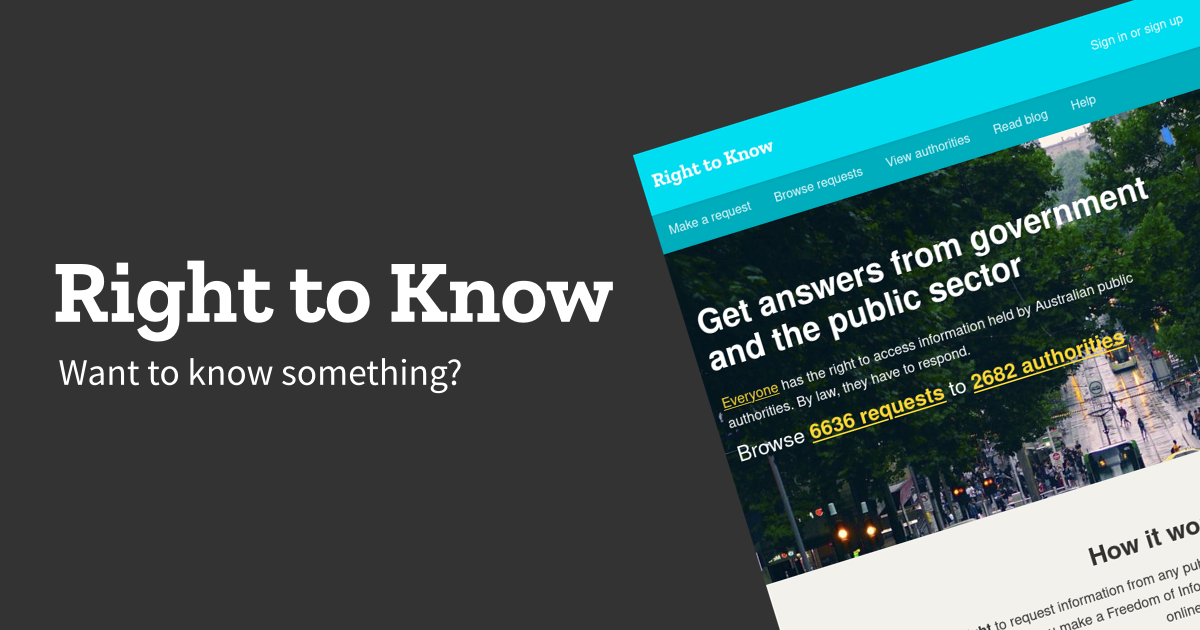
Right to Know (https://www.righttoknow.org.au/) is a neutral FOI request tracking platform that documents government responses verbatim, providing primary source evidence [1][2].
The Conversation and Grattan Institute analysis [4][7][8] represent university-backed academic journalism that documents policy decisions with supporting evidence.
The Centre for Public Integrity [10] is a non-partisan government transparency watchdog.
**Bias assessment:** The overall evidence base is credible despite some sources having a left-leaning transparency advocacy orientation.
**Did Labor do something similar?**
Search conducted: "Albanese government National Cabinet minutes transparency FOI refused"
**Finding:** The Labor government under Anthony Albanese has NOT improved transparency on AHPPC/National Cabinet minutes and has arguably made government secrecy worse.
* * * *
This is a crucial context omission from the original claim.
Evidence of Labor's continuation and expansion of secrecy:
- The Albanese government also refuses National Cabinet and AHPPC minutes, despite the AAT ruling that should have required release [9]
- FOI transparency transparency has declined: only 25% of FOI requests were fully granted in 2023-24, down from approximately 50% in 2021-22 [10]
- Public interest immunity claims (legal assertions blocking document release) have increased under Labor, now approximately 1 per week compared to Morrison's 1 per 3 weeks [10]
- The Albanese government stripped Australians of a "40-year right of access" to inter-governmental forum minutes by not implementing transparency reforms despite campaign promises [9]
- Labor introduced FOI legislative changes that actually expand cabinet exemption scope by changing the test from "dominant purpose" to "substantive purpose," making exemption claims easier to sustain [10]
This pattern directly contradicts Labor's pre-election transparency commitments [9][10].
**Government's stated argument:** Some degree of cabinet confidentiality is necessary for government to function properly—ministers and advisors need confidence that candid discussions will remain private to enable frank exchange of views and consideration of difficult options [8].
**Why this argument was rejected:** The AAT specifically addressed and rejected this argument, finding that AHPPC minutes (which record formal outcomes and advice, not internal deliberative discussion) would not reasonably be expected to suppress candid future discussion [4].
The "cabinet exemption" claim was legally incorrect from the outset [4].
**Transparency advocates' argument:** Health emergency committees advising on policies affecting millions of Australians during a pandemic should operate with public scrutiny and accountability [7][8].
The public has a right to understand the advice given to government on critical COVID-19 decisions that affected lockdowns, restrictions, and health outcomes.
**The complexity factor:** There is a distinction between actively "refusing" to release documents (claiming exemption) versus claiming documents are "not held" or were not formally created.
However, this distinction, while legally important, does not change the outcome: information sought by the public remained unavailable.
**Critical missing analysis:** What makes this claim incomplete is the failure to note that both major Australian political parties have committed to government secrecy on the same issue.
The Morrison government lost a court case requiring transparency and defied it; the Albanese government simply continued the defiance without even mounting a legal fight.
The Albanese government's failure to act on transparency promises after criticizing Morrison's secrecy suggests this may be less about policy views and more about what all governments prefer when in power.
The core claim that the Morrison government refused to release AHPPC COVID-19 meeting minutes is factually accurate and well-documented through multiple independent sources including an AAT tribunal ruling [1][4].
The government defied the tribunal ruling [5]
The characterization as "corruption" is somewhat strong—this is more accurately described as "government secrecy" or "lack of transparency." While non-release of health advice documents during a pandemic raises legitimate concerns, it's not necessarily corruption (illegal personal benefit) so much as it is government overreach on confidentiality claims.
The core claim that the Morrison government refused to release AHPPC COVID-19 meeting minutes is factually accurate and well-documented through multiple independent sources including an AAT tribunal ruling [1][4].
The government defied the tribunal ruling [5]
The characterization as "corruption" is somewhat strong—this is more accurately described as "government secrecy" or "lack of transparency." While non-release of health advice documents during a pandemic raises legitimate concerns, it's not necessarily corruption (illegal personal benefit) so much as it is government overreach on confidentiality claims.