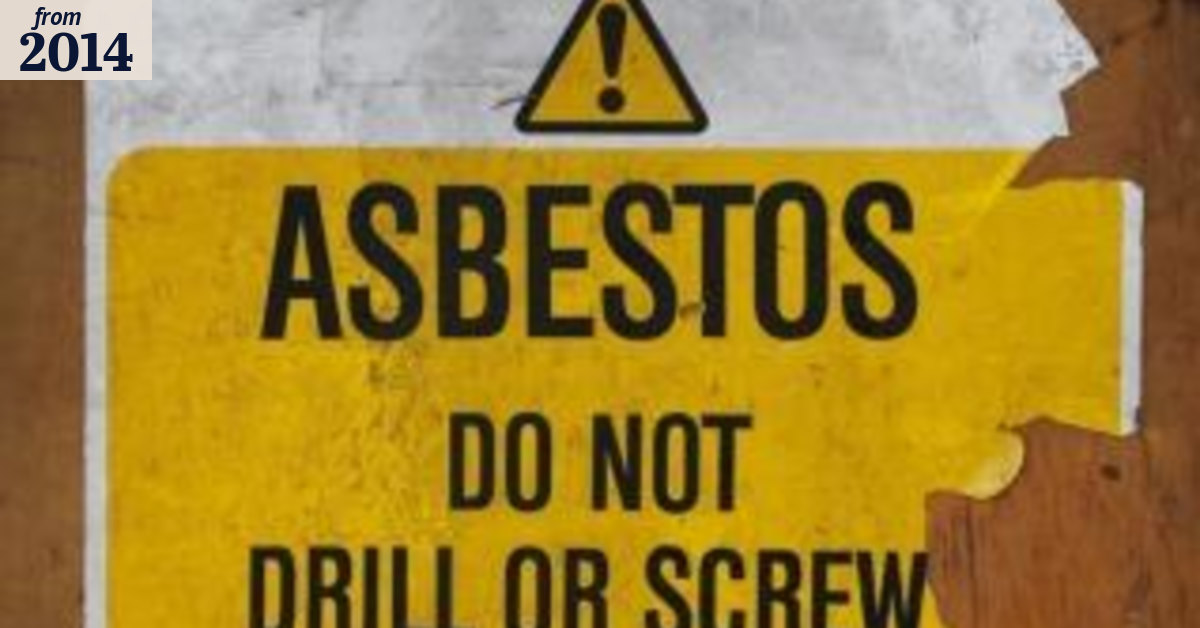
The Asbestos Safety and Eradication Agency (ASEA) was established on July 1, 2013 by the Gillard Labor Government following a two-year review into Australia's asbestos problems [1].
The agency was created to coordinate a national approach to asbestos management, education, and eradication, with a budget of $12 million over four years plus an additional $3 million to deliver the National Strategic Plan on Asbestos [2].
In May 2014, the Abbott government's first federal budget included the agency among dozens of bodies marked for abolition as part of the National Commission of Audit's cost-cutting recommendations [3].
Finance Minister Mathias Cormann stated that agencies facing the axe were considered by the Coalition to be "window dressing" and that they were being "misused for public relations purposes" [4].
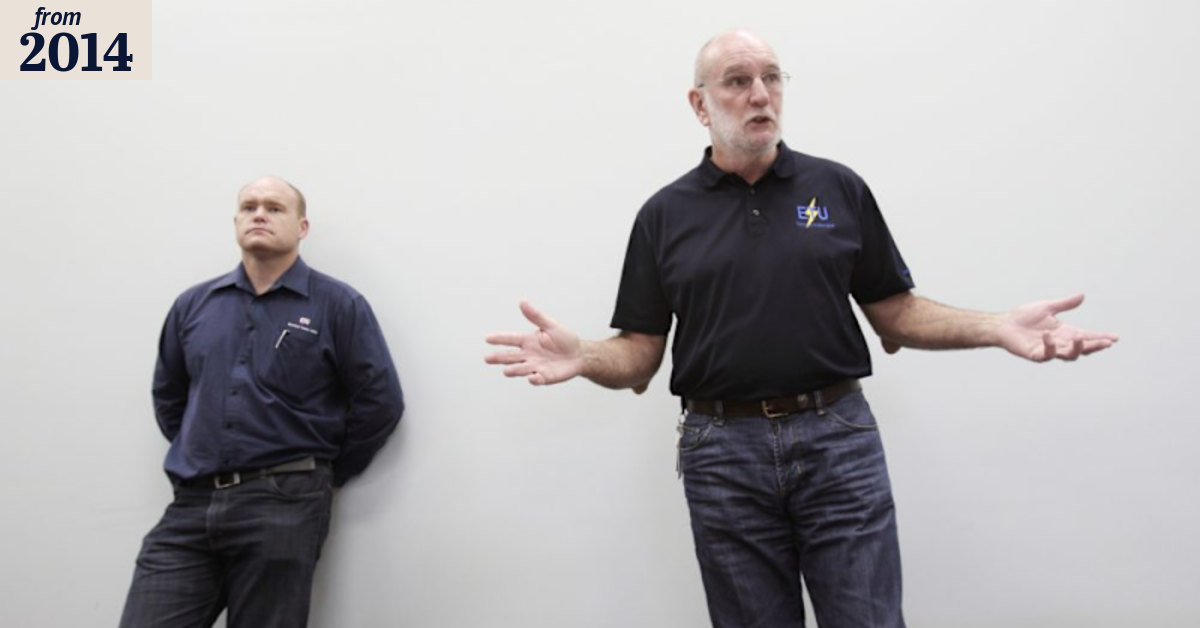
The agency's head, Peter Tighe, expressed shock at the announcement, noting that no one from the Department of Finance had contacted him or his staff to discuss their work prior to the Commission of Audit or the budget [5].
**Bipartisan Support at Creation**: When the Gillard Labor government established the agency in 2013, it received bipartisan support from the Coalition.
Liberal Senator Eric Abetz (then Employment Minister) told the Senate at the time: "Now that we as a community are fully aware of all the dangers of asbestos and the effects that it has on people exposed to it, it makes good sense for all sides of politics and for unions and employers to join together to try to overcome the legacy issues that are clearly out there.
Those legacy issues will remain with us as a country for at least another 30 years" [6].
**Australia's Asbestos Crisis**: The claim omits the severity of Australia's asbestos problem.
An estimated 40,000 people were expected to die in a "third wave" of asbestos-related disease from exposure in homes and workplaces [8].
**Broader Budget Context**: The agency was one of 76 government agencies marked for abolition in the 2014 budget as part of a sweeping cost-cutting exercise that also included the Australian Workforce and Productivity Agency, the Australian Water Commission, and cuts to CSIRO, ABC, and SBS funding [9].
**Outcome Unclear**: The sources from May 2014 indicate the agency was "earmarked for axing" but do not confirm whether the abolition actually proceeded.
The original source is The Sydney Morning Herald (SMH), a major Australian mainstream media outlet.
**Credibility**: SMH is generally regarded as a reputable news source.
In 2019, SMH endorsed Bill Shorten of the Labor Party, and its editorial page tends to lean left on social issues [12].
**Assessment**: This particular article by Emma Macdonald is factual reporting rather than opinion.
The claims made in the article are corroborated by multiple other sources including the Australian Financial Review, ABC News, and parliamentary records.
**Did Labor do something similar?**
Search conducted: "Labor government asbestos agency policy history Australia"
Finding: This is not a case of Labor doing something similar to the Coalition.
* * * *
Rather, it is the reverse - the Gillard Labor government **created** the Asbestos Safety and Eradication Agency in 2013, and the Coalition **attempted to abolish it** in 2014.
The Labor government elevated asbestos to the national stage by establishing Australia's first national Asbestos Safety and Eradication Agency from July 1, 2013, replacing the Office of Asbestos Safety [13].
This was based on recommendations from a two-year review chaired by Geoff Fary [14].
**Comparative Context**: There is no equivalent action where Labor attempted to scrap a recently-established bipartisan agency for cost-cutting reasons.
**The Coalition's Position**: The Abbott government's 2014 budget was explicitly framed as addressing what Treasurer Joe Hockey called an "unsustainable growth in government expenditure" [15].
The government maintained it remained "committed to working with the states and territories to remove asbestos risks" even if the agency was abolished [16].
**Criticism of the Decision**: Seven asbestos disease support groups (including the Bernie Banton Foundation and Asbestos Diseases Society of Australia) jointly condemned the proposal, warning of "human cost of abandoning a whole-of-government approach" [17].
ACT Work Safety Commissioner Mark McCabe called the potential closure "a huge loss" that would result in "a continued fragmented approach to what is one of the most serious safety issues confronting our society" [19].
**The Irony**: The proposal to axe the agency came only a year after its establishment with bipartisan support, and notably after Liberal Senator Eric Abetz had strongly supported its creation.
Senator Abetz was by 2014 the Employment Minister responsible for the agency - the same minister who had praised it as essential for addressing Australia's 30-year asbestos legacy.
**Key Context**: This was part of the controversial 2014 "austerity budget" that faced widespread public opposition, protests, and was recorded as the worst-received Australian federal budget in polling history [20].
Most of the budget's harshest measures were eventually shelved, dumped, or modified following significant backlash, and the budget's poor reception contributed to Tony Abbott being replaced as Prime Minister in September 2015 [21].
The Coalition government did attempt to scrap the Asbestos Safety and Eradication Agency in the 2014 federal budget as part of the National Commission of Audit's cost-cutting recommendations.
The attempt was publicly confirmed by Finance Minister Mathias Cormann, who characterized such agencies as "window dressing." However, the claim lacks important context about the bipartisan support the agency originally received (including from Coalition senators), Australia's severe asbestos crisis, and the broader controversial nature of the 2014 budget that faced massive public opposition.
The Coalition government did attempt to scrap the Asbestos Safety and Eradication Agency in the 2014 federal budget as part of the National Commission of Audit's cost-cutting recommendations.
The attempt was publicly confirmed by Finance Minister Mathias Cormann, who characterized such agencies as "window dressing." However, the claim lacks important context about the bipartisan support the agency originally received (including from Coalition senators), Australia's severe asbestos crisis, and the broader controversial nature of the 2014 budget that faced massive public opposition.