The claim asserts that the Coalition Government failed to model the impact of the proposed GP co-payment on hospital emergency department waiting times.
The government provided several justifications for the policy, including: reducing Medicare expenditure, contributing to the budget bottom line, and establishing a "price signal" to increase efficiency of healthcare service delivery [3].
However, multiple authoritative sources confirm that the Department of Health did not provide any modelling of the impact on emergency departments:
- Researchers from Flinders University, University of Melbourne, Monash University, and other institutions published modelling in The Conversation (July 2014) explicitly stating: "the Department of Health hasn't provided any modelling of its impact" [4].
- This independent academic modelling showed that the GP co-payment could increase average emergency department visits by between six minutes and almost three hours, as patients would opt for free hospital care rather than paying to see their GP [4].
- The research team had developed a patient flow simulation model for a large Adelaide hospital and applied it to analyze the consequences of shifting patient activity from community GPs to hospital emergency departments [4].
The claim omits several important contextual elements:
1. **Policy Never Implemented**: The GP co-payment policy was announced in May 2014 but was ultimately abandoned in March 2015 after failing to gain Senate support [1].
The government went through multiple revisions, including reducing the fee to $5 and making it optional for doctors, before finally scrapping it entirely [1].
2. **Policy Rationale**: The government provided multiple justifications for the co-payment, including creating a Medical Research Future Fund (with $5 of each $7 fee going to research) and making Medicare financially sustainable for future generations [5].
These policy objectives, while controversial, were not unreasonable from a fiscal perspective.
3. **Complexity of Health Policy**: The government faced genuine challenges with rising healthcare costs and Medicare sustainability - issues that have confronted governments of all political persuasions [3].
4. **Broader Consultation Gap**: The lack of modelling wasn't specific to emergency department impacts - the policy was developed with limited consultation with the medical profession and health economists more broadly [6].
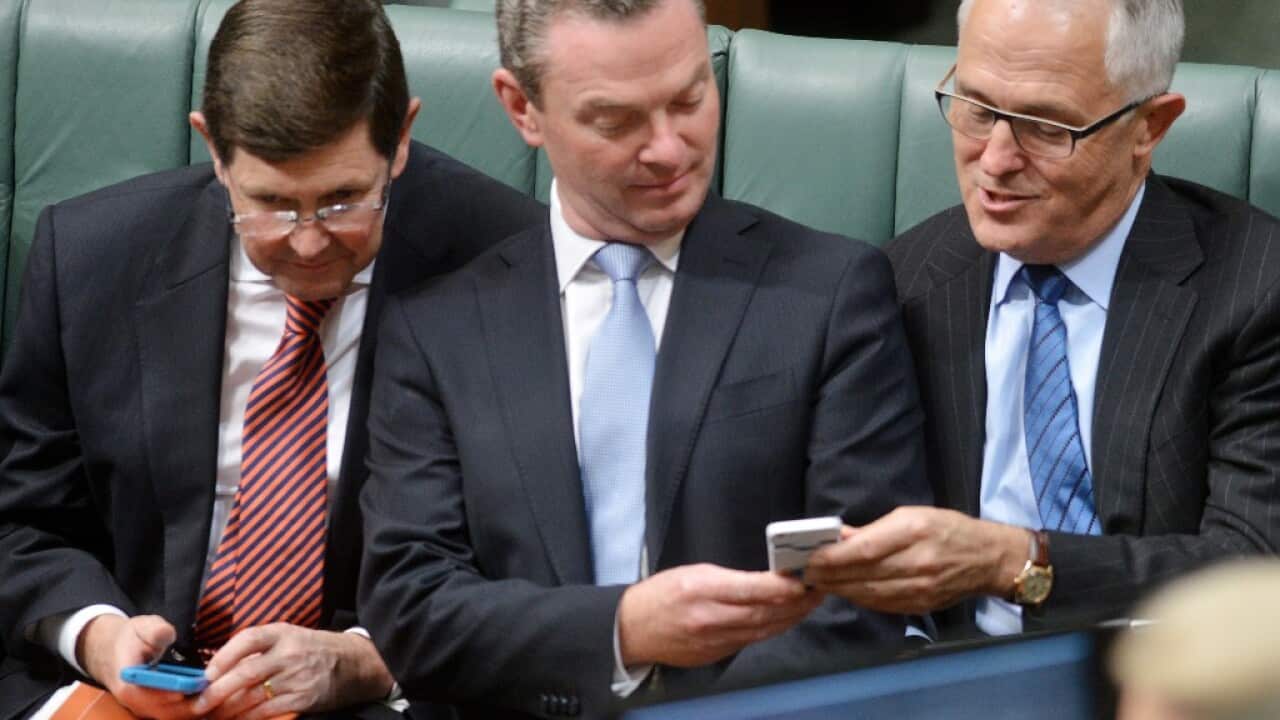
The original source provided (SBS News article from June 2014) is a commentary/opinion piece titled "Good thing the adults are back in charge" [7].
**SBS News Assessment**:
- SBS (Special Broadcasting Service) is a publicly funded Australian broadcaster with a mandate to serve multicultural communities [8]
- Media Bias/Fact Check rates SBS as having a left-leaning editorial bias while reporting news factually [8]
- The specific article is a commentary piece (opinion), not straight news reporting
- SBS is generally considered a credible mainstream media outlet, though this particular piece is opinion rather than factual reporting
The original source provided appears to be a general political commentary rather than specific factual reporting on the GP co-payment modelling issue.
**Did Labor do something similar?**
Search conducted: "Labor government GP co-payment history Medicare bulk billing changes"
**Finding**: Labor governments have historically taken a different approach to GP funding:
- The Hawke/Keating Labor governments established Medicare's universal bulk-billing system in the 1980s and 1990s [9]
- In 2013, the Rudd Labor government actually sought to remove existing GP co-payments for pathology and diagnostic imaging [10]
- The 2025 Labor government (Albanese) announced an $8.5 billion investment to increase GP bulk-billing incentives [9]
- AAP FactCheck noted that bulk billing rates actually increased during the 2013-2022 Coalition government period [9]
**No direct equivalent found**: Labor governments have generally opposed GP co-payments as policy, preferring to strengthen universal healthcare access rather than introduce user-pays elements.
* * * *
This represents a genuine policy divergence between the parties on healthcare funding philosophy.
However, Labor governments have faced their own healthcare challenges:
- The 2011-2012 Labor government faced criticism over hospital waiting times and emergency department performance [11]
- Both parties have struggled with the National Emergency Access Target (90% of patients admitted/discharged within 4 hours), with only 66% meeting the target in 2013 [4]
While the claim that the government failed to model emergency department impacts is factually accurate, the full story requires context about policy development processes and comparative analysis:
**Criticism of the Coalition**: The lack of modelling was a legitimate criticism.
Independent research demonstrated that even small shifts in patient behavior (0.036% to 0.143% of GP consultations shifting to emergency departments) could result in dramatic increases in waiting times - from six minutes to nearly three hours [4].
The policy was developed with what the Royal Australian College of General Practitioners (RACGP) described as a "confused rationale" - three different justifications were offered at different times [3].
**Government's Position**: The Coalition argued the co-payment was necessary for Medicare sustainability and would establish appropriate price signals in the healthcare system [5].
The government eventually acknowledged the policy's unpopularity and abandoned it after consulting with crossbenchers and medical professionals [1].
**Comparative Context**: This was a genuinely contested policy issue where the Coalition took a different approach than Labor would have.
Unlike some criticisms that apply similarly to both major parties, GP co-payments represented a distinct philosophical difference in healthcare funding.
Labor's approach has consistently favored strengthening bulk-billing and universal access [9].
**Key context**: While the lack of modelling was a valid criticism, the policy itself was abandoned before implementation due to political and medical profession opposition.
The government's willingness to ultimately scrap the policy demonstrates responsive governance, even if the initial policy development was criticized for inadequate analysis.
The claim that the Coalition Government failed to model the impact on hospital emergency room waiting times due to the proposed GP fee is factually accurate.
The government's own rationale for the policy shifted over time (budget savings vs. price signals vs. research funding), suggesting inadequate upfront policy analysis [3].
However, this should be understood in the context that: (a) the policy was never actually implemented, being abandoned in March 2015 [1]; (b) the government eventually responded to criticism by scrapping the policy entirely; and (c) this represented a genuine policy difference with Labor rather than a universal failing of governance.
The claim that the Coalition Government failed to model the impact on hospital emergency room waiting times due to the proposed GP fee is factually accurate.
The government's own rationale for the policy shifted over time (budget savings vs. price signals vs. research funding), suggesting inadequate upfront policy analysis [3].
However, this should be understood in the context that: (a) the policy was never actually implemented, being abandoned in March 2015 [1]; (b) the government eventually responded to criticism by scrapping the policy entirely; and (c) this represented a genuine policy difference with Labor rather than a universal failing of governance.