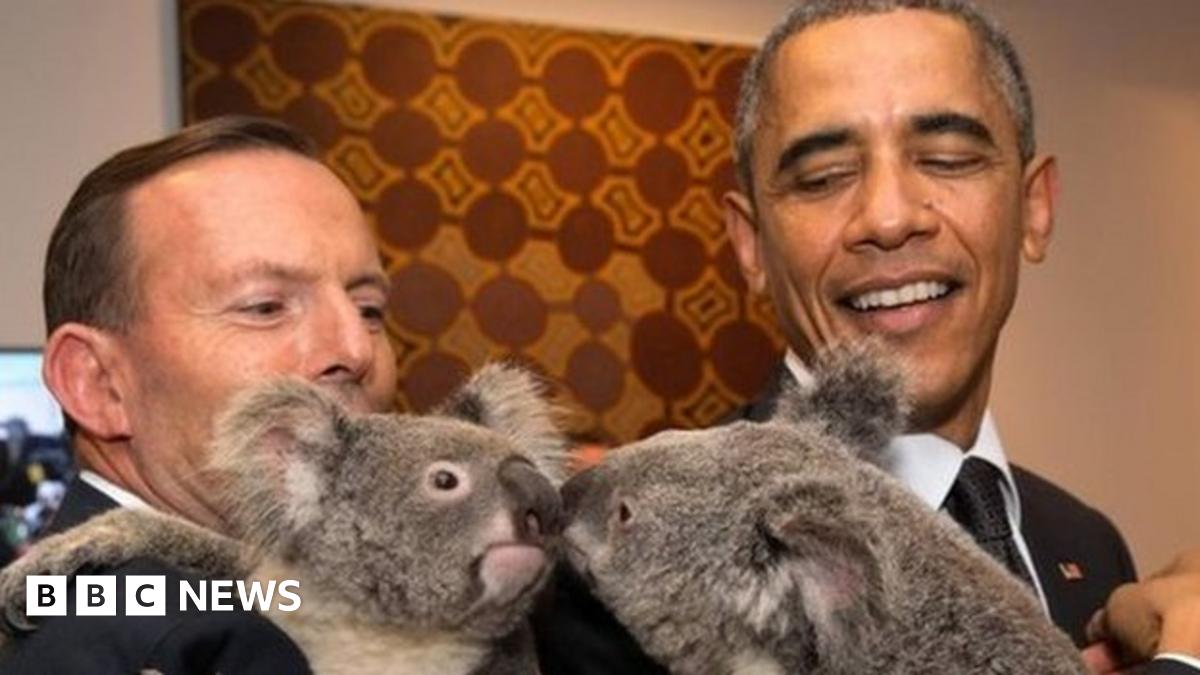
Government documents confirm that koalas used for photo opportunities with world leaders during the 2014 G20 summit in Brisbane cost taxpayers $24,000 [1].
The photo opportunity took place on November 15, 2014, with Prime Minister Tony Abbott and various world leaders including Russian President Vladimir Putin, U.S.
The 2014 Brisbane G20 was a major international summit involving world leaders from the world's largest economies, with a total cost to Australia of approximately $400 million [6].
Such photo opportunities serve legitimate diplomatic purposes, including:
- Creating relaxed atmospheres for bilateral discussions
- Providing positive media coverage that promotes Australia's image
- Following established diplomatic protocol for international events [7][8]
The koala cuddle was not merely frivolous entertainment; it occurred alongside serious diplomatic discussions, including a tense meeting between Abbott and Putin regarding the downing of MH17 [2].
The article itself focuses on the $100,000 flag expense rather than the koala hire, but the claim file appears to use it as a reference for general G20 spending critiques.
News sources confirming the koala cost include:
- Daily Telegraph: Verified the $24,000 cost through government documents [1]
- Daily Mail: Confirmed the same figure [5]
- Fox News: Reported the figure citing Labor member Pat Conroy [3]
- Reuters: Referenced the koala hire cost in reporting on government spending critiques [9]
These sources span mainstream media outlets across Australia, the UK, and the U.S., providing cross-verification of the factual basis.
**Did Labor do something similar?**
Search conducted: "Labor government G20 summit spending Australia Rudd Gillard diplomatic hospitality"
Search conducted: "APEC Sydney 2007 cost Labor government international summit"
Finding: Direct equivalent spending on animal photo opportunities was not found for Labor governments.
* * * *
However, international summits hosted by Australia under Labor involved comparable levels of diplomatic hospitality and protocol expenses.
The Labor government's APEC 2007 summit in Sydney involved significant costs for security, infrastructure, and diplomatic hospitality, though exact comparable photo opportunity costs are not readily documented.
**Comparative context:**
- International summits universally involve significant protocol and hospitality costs regardless of which party governs [7][8]
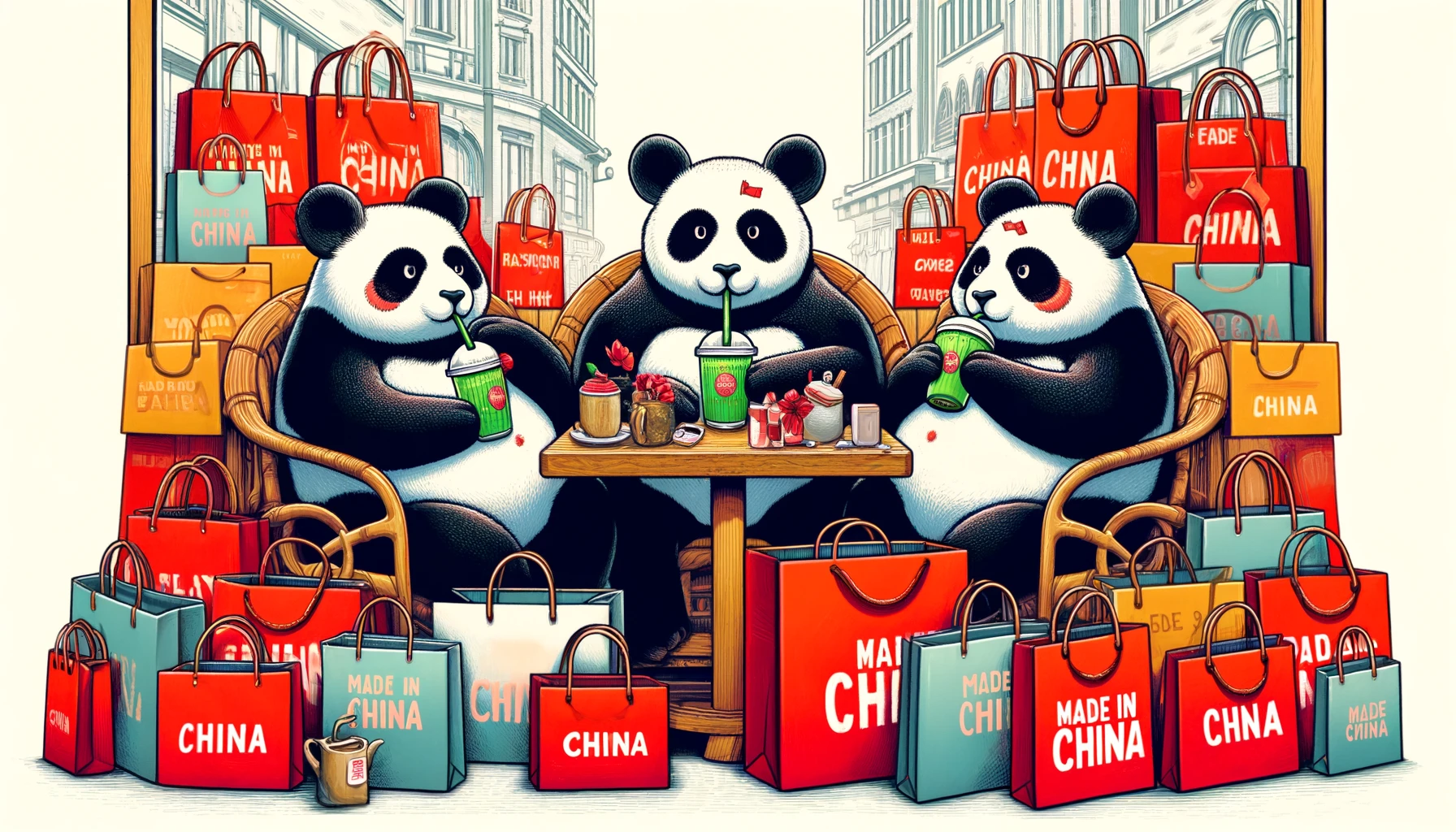
- "Panda diplomacy" by China and similar practices by other nations demonstrate that animal-based diplomatic photo opportunities are standard practice worldwide [10][11]
- The $24,000 cost represents a relatively modest expense compared to typical summit hospitality budgets
While the $24,000 expenditure is factually accurate and can appear extravagant when isolated from context, several factors provide important perspective:
**Critics' view:** Labor members, including Pat Conroy, explicitly cited the koala expense as an example of wasteful spending, noting "$24,000 so Vladimir Putin could hug a koala" [3].
Critics argue that taxpayers should not fund photo opportunities with animals.
**Government justification:** The G20 summit represented Australia's opportunity to showcase itself on the world stage.
The images of world leaders cuddling koalas were published globally, providing significant public relations value for Australia.
**Diplomatic context:** Such photo opportunities serve legitimate functions in international diplomacy:
- Breaking the ice before difficult negotiations
- Creating informal atmospheres for relationship building
- Following established protocols for host nations at international summits [7][8]
**Scale perspective:** At approximately 0.006% of total summit costs, the koala hire was a minor line item in the broader context of hosting a G20 summit [6].
**Key context:** This type of diplomatic hospitality expenditure is standard practice across governments worldwide, not unique to the Coalition.
However, the claim presents the expenditure without critical context: (1) it was part of a $400 million international summit with standard diplomatic protocols, (2) such photo opportunities serve legitimate diplomatic and public relations purposes, and (3) comparable hospitality expenses would be expected at any major international summit regardless of governing party.
The framing suggests wasteful spending without acknowledging the broader diplomatic context or the minimal proportion of total summit costs represented by this expense.
However, the claim presents the expenditure without critical context: (1) it was part of a $400 million international summit with standard diplomatic protocols, (2) such photo opportunities serve legitimate diplomatic and public relations purposes, and (3) comparable hospitality expenses would be expected at any major international summit regardless of governing party.
The framing suggests wasteful spending without acknowledging the broader diplomatic context or the minimal proportion of total summit costs represented by this expense.