
The Claim
“Spent over $100,000 on flags for the G20 summit.”
Original Sources Provided
✅ FACTUAL VERIFICATION
The claim is factually accurate. Government tender documents confirm the Department of Prime Minister and Cabinet spent $104,176 on flags for the 2014 G20 Brisbane summit [1]. This consisted of:
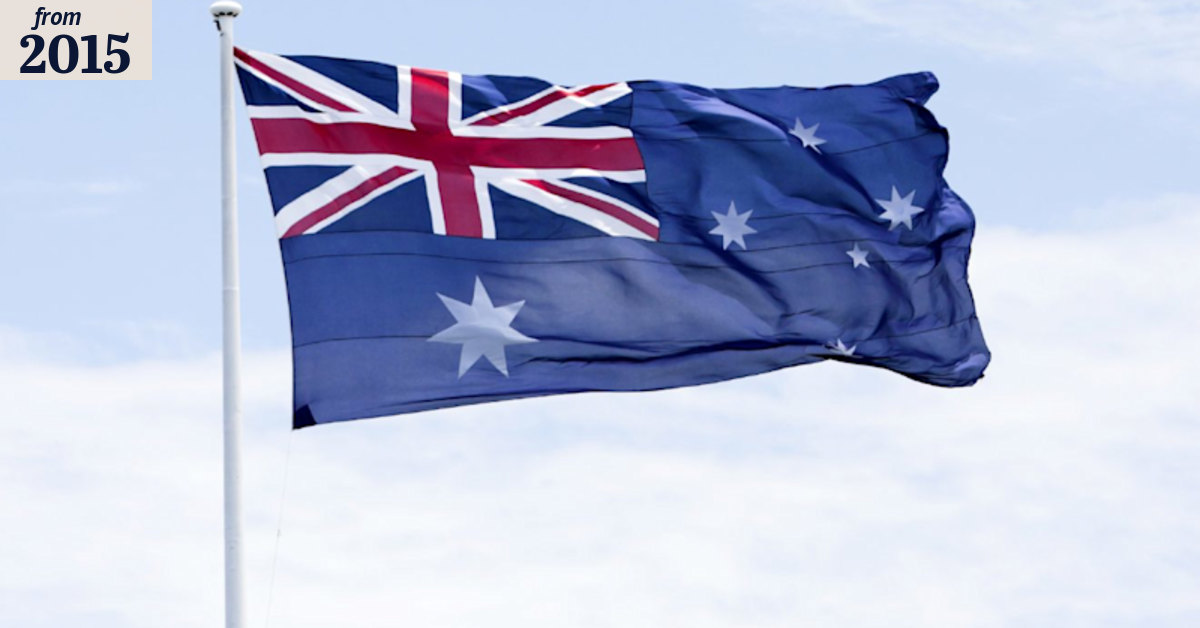
- $58,945 for 282 flags (19 Australian flags, 263 international flags representing G20 member nations)
- $45,000 for flagpoles and car pennants [1]
The G20 Brisbane summit was held on November 15-16, 2014, with up to 4,000 delegates and 2,500 media representatives attending [2]. The total cost of hosting the summit was approximately $400 million (hosting) plus $100 million (security), totaling around $500 million AUD [3]. The flag expenditure represented approximately 0.02% of the total summit cost.
Missing Context
The claim omits several important contextual details:
The G20 budget was committed by the previous Labor Government: The Department of Prime Minister and Cabinet stated that "the G20 budget was committed by the previous Labor government" and that upon forming government, Prime Minister Abbott "asked that his department look for increased efficiencies" [1]. This resulted in $33.6 million being returned to budget, representing a 10% saving on the amount committed by the former Labor government [1].
Standard protocol requirement: Flags are standard diplomatic protocol for international summits. The Australian Government's official flag protocol guidelines state that flags are "some of Australia's most important symbols" and are to be "used with respect and dignity" at official engagements [4]. Displaying member nation flags at G20 summits is standard practice globally.
Comparative costs at other G20 summits: The 2010 G20 Toronto summit cost Canada approximately $929 million USD in security costs alone [5], while Australia's 2014 G20 security cost was approximately $100 million AUD [3]. Australia's hosting costs were relatively modest by international comparison.
Other criticized G20 costs: The flags were among several G20 expenditures criticized, including $150,000 to transport the summit table to Brisbane, $36,000 to extend it, and $24,000 to hire koalas for a photo opportunity [1]. The flag cost was relatively minor compared to other summit expenses.
Source Credibility Assessment
The original source is The Sydney Morning Herald (SMH), a mainstream Australian newspaper with a center-left editorial stance. SMH is generally considered a credible, reputable news source with professional journalism standards [1]. The article cites specific government tender documents, providing factual grounding for the claim. While the headline uses sensational language ("slugged"), the reporting itself appears factually accurate based on the tender documentation referenced.
Labor Comparison
Did Labor do something similar?
Direct equivalent: The G20 budget itself was committed by the Labor Government before the 2013 election [1]. The Coalition inherited the G20 commitment and subsequently achieved 10% cost savings.
Similar ceremonial spending by Labor governments:
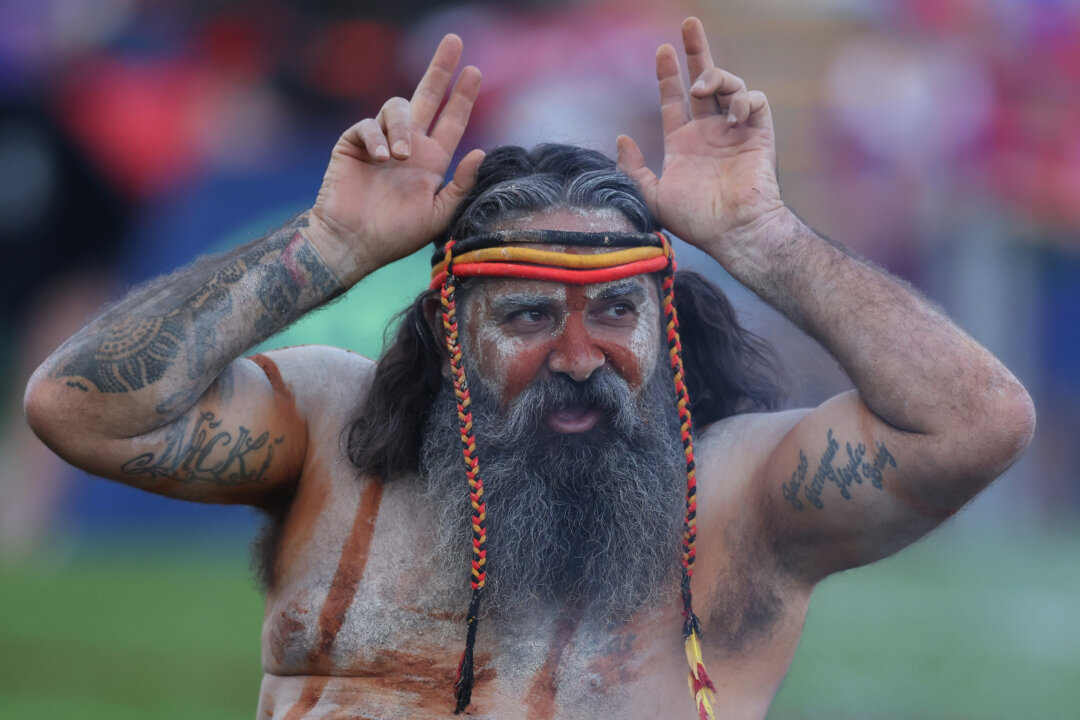
Welcome to Country ceremonies: Under the Albanese Labor Government (2022-present), federal agencies spent between $450,000-$550,000 on Welcome to Country ceremonies over a two-year period [6][7]. These ceremonies, lasting 5-15 minutes each, cost an average of $1,266 per ceremony [7]. The Labor government defended this spending as "value for money" and noted these ceremonies have been "a widely accepted part of official events under successive governments - with both Coalition and Labor leaders" [8].
Labor MP flag spending: During the second half of 2014 (the same period as the G20), Labor politicians spent $130,000 on Australian flags for their offices, compared to Coalition MPs who spent approximately $330,000 [1].
Conclusion: Both major parties spend significant amounts on ceremonial and protocol items. The Labor government has defended similar spending on official ceremonies as standard practice for government events.
Balanced Perspective
While the $104,176 flag expenditure attracted media criticism, several factors provide important context:
Justifications for the spending:
- The G20 summit is the premier forum for global economic cooperation, bringing together leaders from the world's 20 largest economies
- Flag displays are standard diplomatic protocol for international summits, symbolizing respect for participating nations
- The total G20 budget was committed by the previous Labor government, with the Coalition achieving $33.6 million in savings
- Australia's G20 hosting costs were significantly lower than other host nations (Canada spent nearly $1 billion on their 2010 G20 summit security alone [5])
Criticisms:
- Media reporting highlighted the perception of excess, particularly when combined with other criticized costs (koala photo ops, expensive summit tables)
- The flag spending contributed to a broader narrative about the costs of hosting the summit
- In the context of budget austerity discussions, any non-essential spending attracts scrutiny
Comparative context: When compared to the total $500 million summit cost, the flag expenditure was minimal (0.02%). Both Coalition and Labor governments routinely spend on ceremonial items—Labor's Welcome to Country spending of $450,000+ over two years represents a similar category of official event protocol expenditure [6][8].
Key context: Flag protocol spending for international summits is not unique to the Coalition—it is standard practice across Australian governments of all political persuasions. The claim isolates one specific expenditure without acknowledging that (a) the budget was Labor-committed, (b) the Coalition achieved significant overall savings, and (c) similar ceremonial spending occurs under all governments.
TRUE
6.0
out of 10
The claim is factually accurate—the Coalition government did spend $104,176 on flags for the G20 summit. However, the claim presents this spending in isolation without critical context: (1) the G20 budget was committed by the previous Labor government, (2) the Coalition actually returned $33.6 million (10%) to the budget through cost efficiencies, (3) flags are standard protocol for international summits representing a fraction (0.02%) of total summit costs, and (4) Labor governments engage in similar ceremonial spending (Welcome to Country ceremonies costing $450,000+). The claim accurately reports a specific figure but frames it in a way that suggests wastefulness without acknowledging the broader fiscal context and bipartisan nature of such protocol expenditures.
Final Score
6.0
OUT OF 10
TRUE
The claim is factually accurate—the Coalition government did spend $104,176 on flags for the G20 summit. However, the claim presents this spending in isolation without critical context: (1) the G20 budget was committed by the previous Labor government, (2) the Coalition actually returned $33.6 million (10%) to the budget through cost efficiencies, (3) flags are standard protocol for international summits representing a fraction (0.02%) of total summit costs, and (4) Labor governments engage in similar ceremonial spending (Welcome to Country ceremonies costing $450,000+). The claim accurately reports a specific figure but frames it in a way that suggests wastefulness without acknowledging the broader fiscal context and bipartisan nature of such protocol expenditures.
📚 SOURCES & CITATIONS (8)
-
1
smh.com.au
Flag costs detailed after $1.8 million blowout in hotel and taxi bills for the summit revealed.
The Sydney Morning Herald -
2

en.wikipedia.org
Wikipedia -
3
news.com.au
News Com
-
4
pmc.gov.au
Pmc Gov
-
5

vice.com
According to a recent report from the Brisbane Times, Australia spent $100 million on security during their recent G20 summit, a figure which pales in comparison to Toronto's $929 million for the G8 and G20 of 2010.
VICE -
6
news.com.au
News Com
-
7
anr.news
Australian National Review is Australia’s first real free and independent press, one with no editorial control by the elite, but a publication that can generate critical thinkers and critical debate and hold those spreading mistruths and deliberate propaganda in mainstream media to account.
Australian National Review -
8

skynews.com.au
SkyNews.com.au — Australian News Headlines & World News Online from the best award winning journalists
Sky News
Rating Scale Methodology
1-3: FALSE
Factually incorrect or malicious fabrication.
4-6: PARTIAL
Some truth but context is missing or skewed.
7-9: MOSTLY TRUE
Minor technicalities or phrasing issues.
10: ACCURATE
Perfectly verified and contextually fair.
Methodology: Ratings are determined through cross-referencing official government records, independent fact-checking organizations, and primary source documents.