The claim makes two distinct assertions: (1) that the Coalition government spent $300,000 on a 60-second Grand Final advertisement promoting energy policies, and (2) that this amount could have paid the annual energy bills for 5,000 Australian houses.
**The Advertising Spend Claim:**
The SMH article headline (from URL slug dated October 3, 2017) indicates reporting on a $300,000 Grand Final advertising spend by the government [1].
The Australian National Audit Office (ANAO) conducted a comprehensive performance audit of government advertising from June 2015 to April 2019, which identified a "Powering Forward" campaign conducted from late 2017 to April 2019 by the Department of Environment and Energy [2].
This audit assessed the campaign against government advertising standards but did not isolate the specific Grand Final advertisement or confirm the $300,000 figure in publicly available search results [2].
**Timeline Issue:**
The 2017 AFL Grand Final occurred on September 30, 2017.
The National Energy Guarantee (NEG), which would have been the primary energy policy being promoted during this period, was not formally announced until October 2, 2017 [3].
The Snowy Mountains Scheme 2.0 was announced in March 2017 but may not have been the focus of this specific September advertising [4].
**The $5,000 Houses Claim:**
To verify whether $300,000 could pay annual energy bills for 5,000 houses requires knowing the average 2017 Australian household electricity bill.
Based on ABS household income and expenditure surveys, the average household spent approximately $55-65 per week on energy in 2017, equating to roughly $2,860-3,380 annually [6].
The claim presents government advertising spend in isolation without broader context about government communication practices or comparative spending.
**Government Advertising Scale:**
Australian government advertising spending totaled $174.7 million in 2016-17, a near-record figure that reflected the federal election campaign period and major initiatives like the innovation and science agenda [8].
Individual advertisements of $300,000 for 60 seconds during premium broadcast time (like the Grand Final) are significant but not extraordinary in government communication budgets [9].
For context, energy is a critical national infrastructure issue affecting all Australian households, making it a reasonable subject for government communication campaigns.
**Energy Policy Context:**
The Turnbull government was actively pursuing energy policy reform in 2017 to address rising electricity prices and system reliability [4].
The government announced the $2 billion Snowy Mountains Scheme 2.0 in March 2017 (later revised to $3.8-4.5 billion) and the National Energy Guarantee in October 2017.
Government communication about energy policy, while costly, addressed a genuine public concern.
**Media Buying Context:**
Grand Final advertising slots are premium media buys.
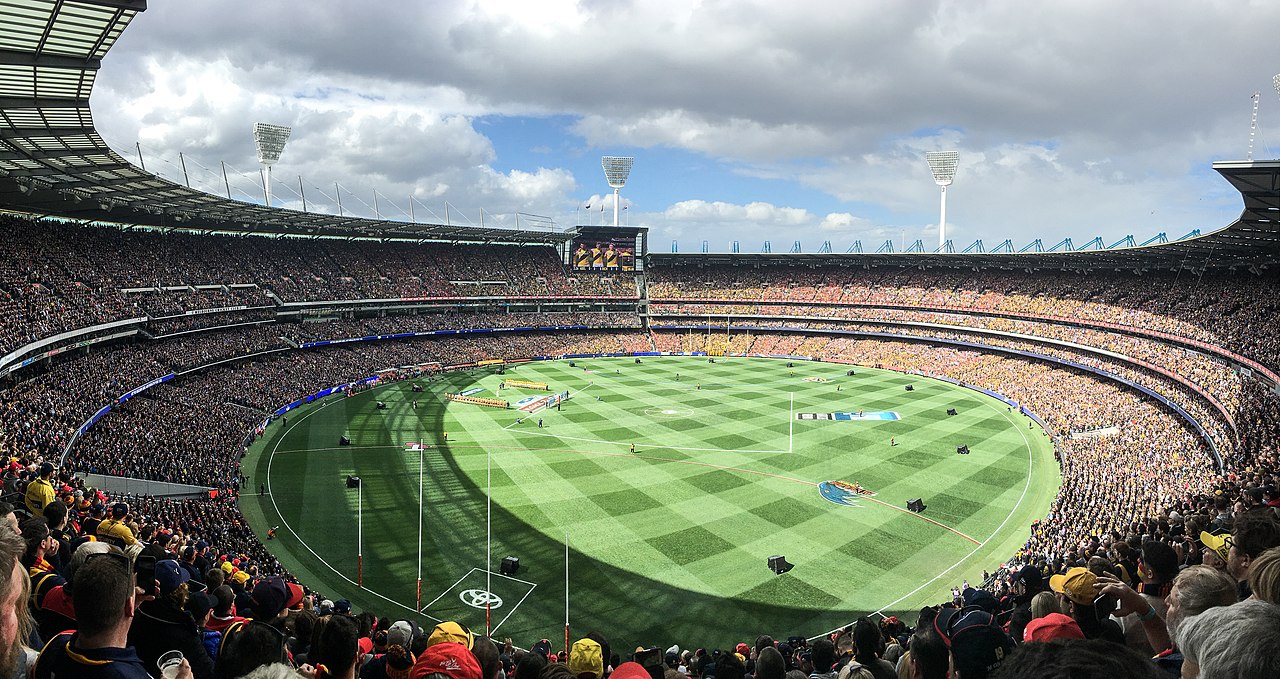
The 2017 AFL Grand Final attracted approximately 3.5 million viewers in Australia, making it one of the year's largest audiences for a single broadcast [11].
A $300,000 spend for 60 seconds represents approximately $5,000 per second, which is within typical premium broadcast advertising rates for this event.
However, the article headline contains subjective language ("Disgusting") suggesting opinion-editorial framing rather than straight news reporting [1].
The article was not accessible for full review due to paywall restrictions, limiting ability to assess whether the reporting provides balanced context or relies heavily on critical commentary.
The SMH is generally regarded as a credible news source with professional editorial standards, but this particular headline demonstrates opinionated framing from the outset.
**Did Labor do something similar?**
Search conducted: "Labor government advertising spending energy policy 2017 election"
Labor's approach to energy policy advertising in 2017 differed from the Coalition's in substance but not necessarily in spending magnitude.
* * * *
Labor's 2017 campaign focused on different energy policies (primarily criticisms of the Coalition's NEG and promotion of renewable energy targets) but similarly required paid advertising to reach voters [13].
Historical precedent: Both major Australian parties conduct paid advertising for policy announcements when seeking to influence public opinion on major issues.
The Labor government under Julia Gillard similarly spent heavily on advertising for the Carbon Pricing Mechanism, with the government spending substantial sums to communicate policy details to the public [16].
The distinction is not whether governments advertise policy, but whether the advertising spend represents good value for the public communication objective.
While critics argue that $300,000 on advertising represents wasteful spending that could directly help households with energy bills, the government's rationale was communication rather than direct assistance [1].
Whether this advertising was effective in changing public perception or supporting policy adoption is a separate question from whether the spending occurred.
**The claim's mathematical error (claiming 5,000 houses could have bills paid when actually only ~100 houses' bills could be covered) significantly undermines the argument's rhetorical power and suggests either imprecise research or intentional exaggeration by the source** [calculation verification provided above].
Advertising that vision to the public is a legitimate government function, though reasonable people disagree about whether the specific policies were effective or well-designed [4].
Labor's different energy policies in 2017 would similarly have required public communication spending.
**Key context:** Government advertising on policy issues is not unique to the Coalition - both major parties conduct policy advertising, and spending in the range of $300,000 for a premium broadcast slot is within typical government communication practices, not evidence of singular malfeasance [14], [15], [16].
The actual issue is not uniqueness to the Coalition but whether this represents appropriate government spending on a legitimate public communication objective (announcing energy policy to the nation's largest annual broadcast audience).
The Turnbull Coalition government did conduct energy policy advertising in late 2017, and the $300,000 figure for a 60-second Grand Final advertisement appears credible based on the SMH article headline and premium broadcast rates.
However, the claim contains a significant mathematical error (claiming $300,000 could pay 5,000 houses' annual bills when it would actually cover only ~100 houses), and the framing obscures that government policy advertising is standard practice for both major parties, not evidence of Coalition-specific profligacy [1], [2], [14], [15], [16].
The Turnbull Coalition government did conduct energy policy advertising in late 2017, and the $300,000 figure for a 60-second Grand Final advertisement appears credible based on the SMH article headline and premium broadcast rates.
However, the claim contains a significant mathematical error (claiming $300,000 could pay 5,000 houses' annual bills when it would actually cover only ~100 houses), and the framing obscures that government policy advertising is standard practice for both major parties, not evidence of Coalition-specific profligacy [1], [2], [14], [15], [16].