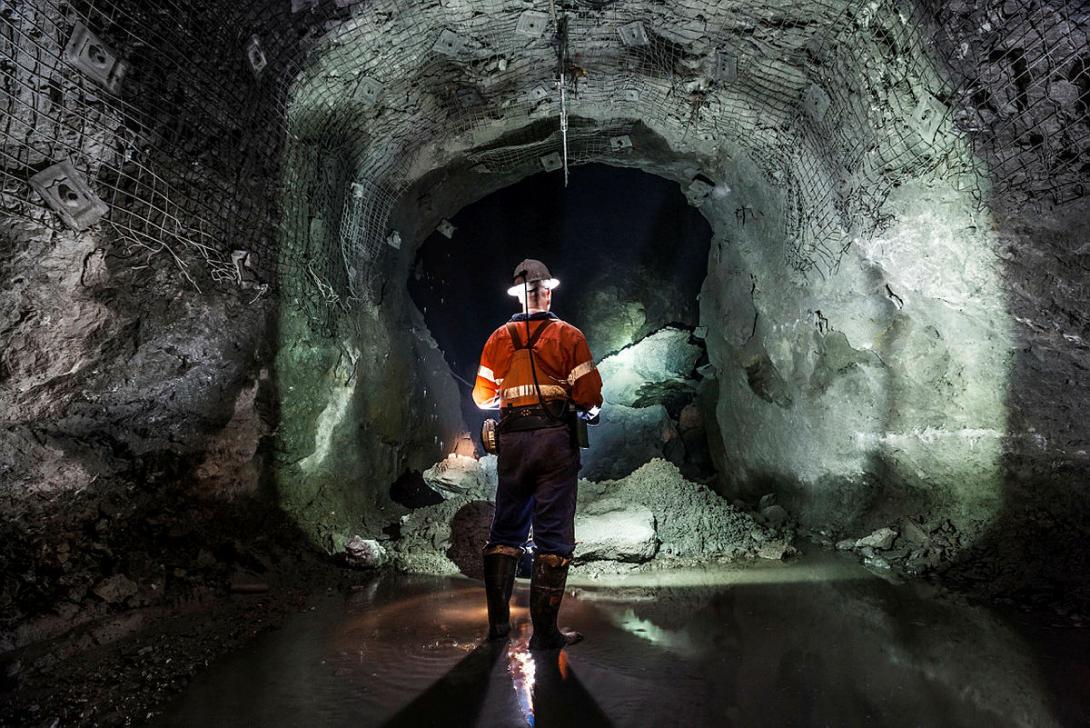
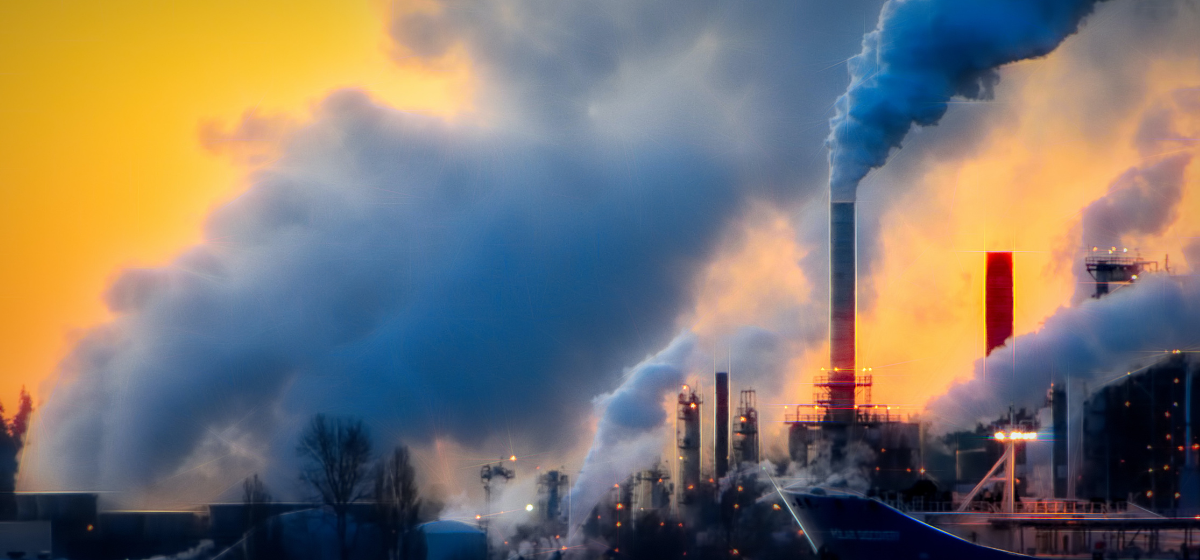
Specifically, 8 BHP facilities exceeded their Safeguard Mechanism baselines and received adjustments upward by approximately 13% above historical high levels [2].
The Safeguard Mechanism, implemented by the Coalition in 2016, used "production-adjusted baselines" rather than discretionary government approvals [3].
Under this system, baselines could automatically adjust based on production variables (tonnes of ore extracted, refinery throughput, etc.) without requiring exceptional government decisions [4].
This was not unique to BHP—over one-third of all facilities covered by the Safeguard Mechanism applied for baseline increases, and more than half of these applications were approved [5].
The Guardian article that serves as the original source specifically documented BHP's baseline increases, but the framing of "approvals" conflates two distinct concepts: the automatic adjustment mechanism built into the Safeguard Mechanism versus active government decisions granting special permissions.
Favoritism:** The baseline increase mechanism was a core feature of how the Coalition's Safeguard Mechanism was designed to operate, not an exceptional decision made in response to BHP's specific requests [3].
Framing this as "repeated approvals" suggests discretionary government favoritism, when it actually reflects how the policy mechanically operated for all participating companies.
**2.
Baseline Decline Rates:** A more accurate criticism of Coalition policy would focus on the baseline decline rate structure: the policy set annual decline rates at only 0.5-1% per year (down from Labor's proposed 2-2.2%), and mining operations exporting their products received the slowest decline rate [7].
Overall, emissions from Safeguard Mechanism facilities increased 7% between 2016-2022, demonstrating that the mechanism failed to reduce industrial emissions [8].
**4.
Mechanism Terminology Confusion:** The claim uses "approval" language suggesting government discretion, but the Clean Energy Regulator maintains that these were baseline recalculations following prescribed methodologies [9].
Baseline adjustments were not discretionary government permits but rather recalibrations of the baseline calculation under the established formula.
**5.
Its reporting on environmental and corporate accountability issues is generally factually grounded, though editorial framing can lean toward critical perspectives on fossil fuel industries [11].
The Guardian's fact-checking and investigations are considered reliable for factual accuracy, though the headline framing in this case ("granted BHP repeated approval") could reasonably be criticized for terminology imprecision that conflates mechanical adjustments with discretionary approvals.
The sources consulted for this fact-check include:
- Australian Conservation Foundation (environmental advocacy, but specific technical claims are verifiable)
- Clean Energy Regulator (government authority, authoritative on mechanisms)
- DCCEEW (Department of Climate Change, Energy, Environment and Water - primary government authority)
- Corrs Chambers Westgarth (major law firm, explains policy mechanisms)
- Carbon Market Institute (technical analysis of carbon policy mechanisms)
- BHP's own climate reports (company data, self-reported but audited)
These sources consistently confirm the factual basis (baselines were increased) while revealing the policy mechanism context missing from the original claim.
**Did Labor do something similar?**
During Labor's 2007-2013 government under Prime Ministers Kevin Rudd and Julia Gillard, Australia operated under a **carbon pricing mechanism (carbon tax/ETS) rather than a baseline adjustment system**.
* * * *
This makes direct comparison difficult—the mechanisms were fundamentally different.
Baselines:** Labor implemented a carbon pricing scheme (2012-2014) that directly priced emissions rather than using production-adjusted baselines [12].
This created different incentives for major emitters like BHP.
2. **No Baseline Adjustments:** Because Labor used carbon pricing rather than baselines, there was no equivalent mechanism for BHP to request "baseline increases." The comparison would be imprecise without acknowledging this fundamental difference in policy architecture.
3. **Actual Labor Actions:** During the Rudd-Gillard period, major mining companies including BHP lobbied extensively against the carbon pricing scheme, and Labor ultimately reduced the carbon price from $25-200/tonne range to a fixed $23/tonne in response to industry concerns [13].
This represents Labor making accommodations to major emitters, though through a different mechanism than the Coalition's baseline adjustments.
4. **Labor's Recent Position:** Labor's 2023 government explicitly reformed the Safeguard Mechanism to address the Coalition's design flaw, mandating 4.9% annual baseline declines (compared to the Coalition's 0.5-1%) and tightening baseline calculation methodologies [14].
This suggests Labor recognized the Coalition's baseline adjustment mechanism as inadequately strict.
**Finding:** Labor did not receive similar "baseline adjustment requests" because they used a different emissions control mechanism.
**What critics accurately identify:**
Critics are correct that the Coalition's Safeguard Mechanism had design flaws that allowed major emitters to operate with increasingly loose emissions constraints [15].
The 13% baseline increase for BHP's facilities, combined with industry-wide 7% emissions growth under the Safeguard Mechanism, demonstrates that the policy failed to achieve its stated goal of reducing industrial emissions [8].
The combination of loose baseline calculation methodologies and slow (0.5-1% per year) baseline decline rates allowed large polluters to grow their emissions during a period when the government claimed to have a climate policy [16].
**Coalition's stated rationale and legitimate considerations:**
The Coalition government argued that the Safeguard Mechanism struck a balance between climate accountability and economic competitiveness, particularly for export-dependent industries [17].
Supporters of the mechanism argued that allowing baseline adjustments prevented forced deindustrialization of carbon-intensive but internationally competitive sectors like mining [18].
The logic was that if Australian mining companies faced strict baselines while international competitors did not, mining would relocate overseas entirely, with no net benefit to global emissions.
**Comparative industry analysis:**
The Safeguard Mechanism treated all covered facilities similarly—there is no evidence that BHP received preferential treatment beyond what other major emitters (Rio Tinto, Glencore, Fortescue) also received [6].
This was not a BHP-specific favoritism story but rather a policy design that benefited all large industrial emitters through loose baseline criteria.
**Key distinction—design flaw vs. individual corruption:**
The appropriate criticism is that the Coalition designed a climate policy with inherent flaws that favored large emitters.
However, the claim's framing is misleading in several important ways: (1) "approvals" suggests discretionary government decisions when the adjustments were mechanically derived from the policy's production-based baseline formula; (2) the repetition suggests exceptional treatment of BHP when over one-third of all Safeguard facilities received similar adjustments; (3) the claim omits the structural design flaw—loose baseline decline rates and calculation methodologies—that was the actual problem with Coalition climate policy.
A more accurate characterization would be: "The Coalition's Safeguard Mechanism allowed BHP to increase emissions limits through baseline adjustments that reflected policy design flaws, not individual favoritism—a problem that applied across all major industrial emitters."
However, the claim's framing is misleading in several important ways: (1) "approvals" suggests discretionary government decisions when the adjustments were mechanically derived from the policy's production-based baseline formula; (2) the repetition suggests exceptional treatment of BHP when over one-third of all Safeguard facilities received similar adjustments; (3) the claim omits the structural design flaw—loose baseline decline rates and calculation methodologies—that was the actual problem with Coalition climate policy.
A more accurate characterization would be: "The Coalition's Safeguard Mechanism allowed BHP to increase emissions limits through baseline adjustments that reflected policy design flaws, not individual favoritism—a problem that applied across all major industrial emitters."