Contrary to the claim's assertion that the Coalition "built no quarantine centers," the federal government **actively constructed and operated federal quarantine facilities**:
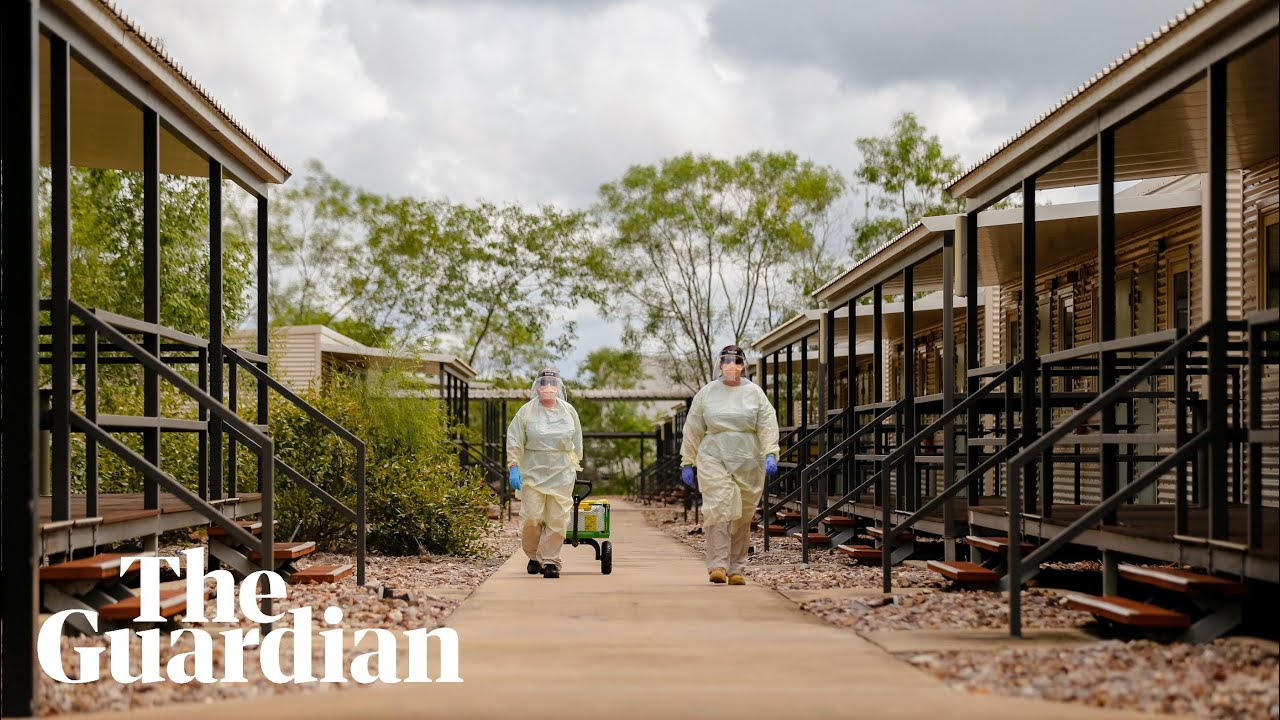
**Howard Springs Facility (Northern Territory)**
The Morrison government established the **Howard Springs Quarantine Facility** (Centre for National Resilience) in the Northern Territory, which opened in **October 2020** [3].
This facility was:
- Originally a disused workers' camp repurposed by the federal government
- Operated by the Australian Medical Assistance Team (AUSMAT) on behalf of the Commonwealth
- Recognized as Australia's "gold standard" quarantine facility with no documented community transmission from over 30,000 residents [4]
- Expanded multiple times under Morrison government direction, with capacity eventually reaching 2,000 arrivals per fortnight [5]
**Mickleham Facility (Victoria)**
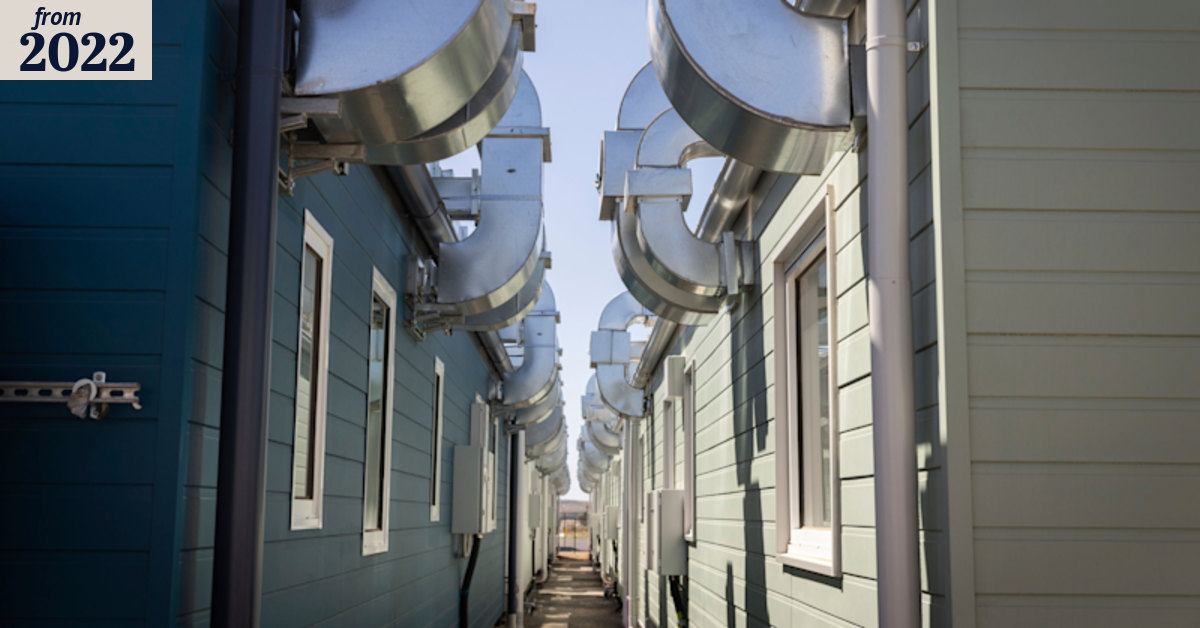
The Morrison government also **committed $200+ million to construct a purpose-built federal quarantine facility at Mickleham, Victoria** [6].
This facility:
- Was formally approved and construction began in August 2021
- Opened in February 2022 with a total cost of $580 million
- Operated under federal Commonwealth oversight as a "Centre for National Resilience"
- Provided 500 bed capacity and operated for seven months before closure in October 2022 when domestic travel borders reopened [7]
**Proposed Canberra and Tasmania Facilities**
The federal government also announced plans to establish quarantine facilities in Canberra and Tasmania [8], though these appear not to have progressed to the same extent as Howard Springs and Mickleham.
Rather:
- In March 2020, **Prime Minister Scott Morrison reached an explicit agreement with state and territory leaders** [9]
- States and territories **voluntarily agreed to run hotel quarantine** despite the federal constitutional responsibility [10]
- States agreed to fund the majority of hotel quarantine operations themselves [11]
- This arrangement persisted throughout 2020-2021, during which hotel quarantine was the primary mechanism (with federal facilities serving specialized roles)
**Reasons for Arrangement**
According to ABC analysis, the states and territories accepted this arrangement for several reasons:
- They needed federal Centrelink systems to support isolated workers [12]
- They lacked confidence in Commonwealth public health administration, citing failures in federally-regulated aged care [13]
- Interstate border control required state coordination [14]
- The federal government benefited by avoiding financial costs and political fallout from systemic failures [15]
While the Constitution grants quarantine power to the Commonwealth, **practical public health implementation in Australia occurs at multiple government levels** [16].
The Halton Review, commissioned by National Cabinet, did recommend that the Commonwealth maintain a national facility "at the ready in case of a sudden surge" [18] — which is exactly what Howard Springs provided.
When questioned why the Commonwealth wasn't establishing more quarantine facilities using ADF resources, Commonwealth officials cited realistic constraints: "The Commonwealth obviously doesn't have a public health capacity... all medical personnel in the ADF amount to 935 staff and are almost all deployed supporting states and territories already.
- **October 2020**: Howard Springs opened as federal facility
- **October 2020**: Halton Review recommends federal facilities at readiness
- **2021**: Morrison government committed to $200m+ facility in Victoria
- **February 2022**: Mickleham facility opened with 500 beds
- The federal government DID expand quarantine capacity, but this occurred over time
The original sources provided include:
1. **Australian Parliament House (APH)**: Official parliamentary resource documenting the Constitution - **highly authoritative primary source** [20]
2. **ABC News**: Laura Tingle analysis article from January 19, 2021 - **mainstream broadcaster known for balanced reporting**, though this analysis article represents interpretation rather than raw reporting.
The claim has merit in identifying a genuine constitutional issue:
1. **Constitutional Responsibility**: The Constitution does vest quarantine power in the Commonwealth [27]
2. **Cost Shifting**: States bore approximately 90% of hotel quarantine costs, shifting a constitutional federal responsibility to state budgets [28]
3. **Systemic Risk**: As quarantine breaches occurred in multiple states, this decentralized system created coordination challenges [29]
4. **Capacity Questions**: The federal government could arguably have established more facilities earlier to support state capacity [30]
However, the claim's specific assertion that the Coalition "built no quarantine centers" is **demonstrably false**:
1. **Howard Springs**: Federal facility opened October 2020, expanded multiple times, housed 30,000+ people with zero community transmission, operated until June 2022 [31]
2. **Mickleham**: $580m purpose-built federal facility, opened February 2022, provided 500-bed capacity [32]
3. **Intent Evident**: $200m+ commitment to Mickleham, announced plans for Canberra and Tasmania facilities [33]
The arrangement reflected both practical necessity and political reality:
- Early 2020: Hotels were immediately available; purpose-built facilities require months to establish [34]
- States volunteered: The decision was not federal imposition but state agreement [35]
- Resource constraints: The Commonwealth lacked deployed medical professionals for rapid facility establishment [36]
- Federalism pragmatism: Coordinating across state borders requires state participation [37]
The Halton Review, commissioned by all governments through National Cabinet, found that:
- Hotel quarantine was "essentially the best option when it was set up" [38]
- Federal facilities should be maintained "at the ready" for emergencies [39]
- The system should remain under state management with federal facilities as surge capacity [40]
This expert assessment suggests the arrangement was **operationally sound even if constitutionally awkward**.
**This is NOT unique to the Coalition**:
- Federation has regularly seen constitutionally federal matters handled cooperatively by states [41]
- Public health infrastructure, while federally powered, operates through state/territory health departments [42]
- The COVID arrangement reflected Australia's long-standing pragmatic federalism rather than Coalition negligence [43]
The claim correctly identifies that states and territories bore primary responsibility for COVID quarantine through hotel quarantine, which is constitutionally a federal responsibility.
However, the core assertion that the Coalition "built no quarantine centers" is **factually incorrect**.
連邦 nounRenpou 政府 nounSeifu は topic-markerWa : :
The federal government:
1. **Established and operated Howard Springs facility** from October 2020, which became Australia's flagship quarantine center
2. **Committed to and built the Mickleham facility** ($580m, opened February 2022)
3. **Planned additional federal facilities** in Canberra and Tasmania
The real issue is not whether the federal government built facilities, but whether it built *enough* capacity quickly *enough*, and whether the constitutional responsibility should have been exercised more directly rather than delegated to states.
These are legitimate policy criticisms, but they differ materially from the claim's assertion that the federal government "built no quarantine centers."
The claim correctly identifies that states and territories bore primary responsibility for COVID quarantine through hotel quarantine, which is constitutionally a federal responsibility.
However, the core assertion that the Coalition "built no quarantine centers" is **factually incorrect**.
連邦 nounRenpou 政府 nounSeifu は topic-markerWa : :
The federal government:
1. **Established and operated Howard Springs facility** from October 2020, which became Australia's flagship quarantine center
2. **Committed to and built the Mickleham facility** ($580m, opened February 2022)
3. **Planned additional federal facilities** in Canberra and Tasmania
The real issue is not whether the federal government built facilities, but whether it built *enough* capacity quickly *enough*, and whether the constitutional responsibility should have been exercised more directly rather than delegated to states.
These are legitimate policy criticisms, but they differ materially from the claim's assertion that the federal government "built no quarantine centers."