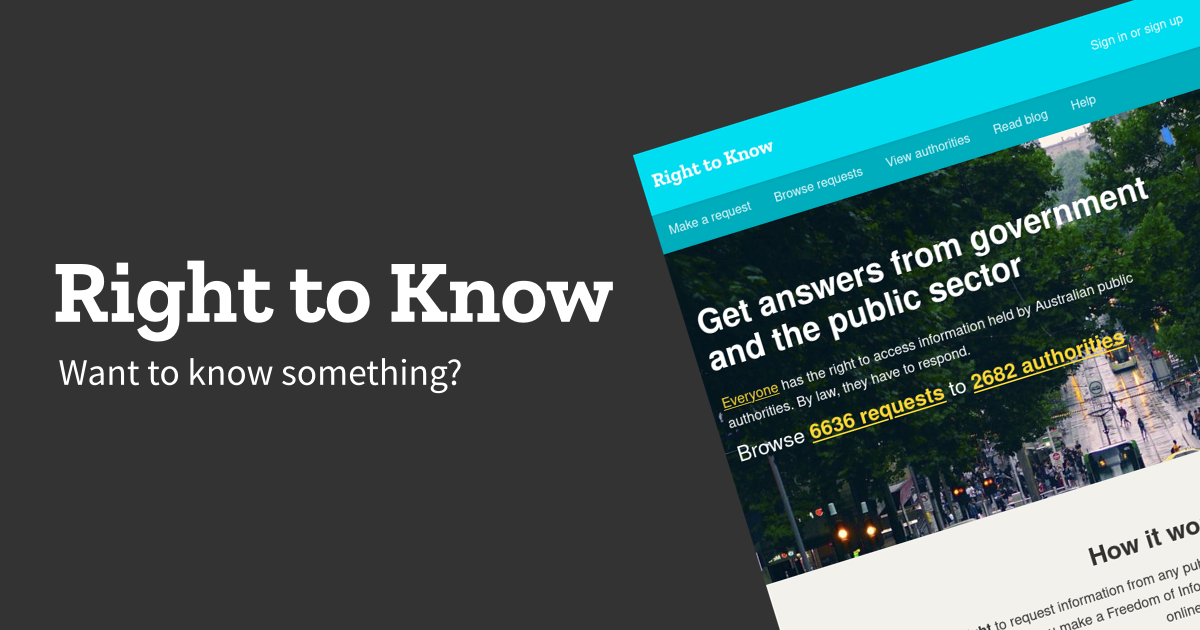
This is documented in Freedom of Information requests, with at least one FOI request specifically asking for "the list of all submissions received to senate inquiries or committees which have been removed from the official list of submissions" [2].
Chris Drake's GitHub issue documents that his submissions to multiple Senate inquiries were not published on the public inquiry websites, despite his explicit requests that they be made public [1].
He states this occurred for submissions to:
- Census Senate Inquiry
- Digital Delivery of Government Services Inquiry (2017)
- Medicare Breach Inquiry [1]
However, the claim that "all records of receiving them" are "deleted" requires clarification.
This is different from complete deletion from government records - they were withheld from publication but government departments retain them for internal use.
Drake provides evidence (referenced via screenshot) of official correspondence instructing him not to disclose the contents of his submission to others, including a "veiled prosecution threat" for unauthorized disclosure [1].
The Digital Delivery of Government Services Inquiry report (2018) makes no mention of such threats, but Drake's submission itself (dated September 2017) was submitted to this inquiry [3].
Drake claims that senators don't have visibility of submissions marked "deemed confidential" based on his attempts to contact senators who told him they were unaware of receiving his submission [1].
The 2018 Senate Inquiry report on Digital Delivery of Government Services (which examined this inquiry period) contains no specific discussion of whether senators have access to withheld submissions, suggesting this may be an internal procedural detail not subject to public scrutiny [3].
The claim omits important context about Senate inquiry procedures [2]:
- Submission processes typically include options for submitters to request confidentiality
- Government officials and agencies regularly submit confidential advice to inquiries
- Some submissions are legitimately confidential (trade secrets, personal information, security matters)
However, Drake's specific complaint is that **he did not request confidentiality** - the Senate marked his submissions confidential despite his explicit requests for publication [1].
There is a critical distinction between:
1. **Legitimate withholding**: Protecting genuinely sensitive information (security, privacy, commercial)
2. **Suppression for political convenience**: Hiding information because it's embarrassing or contradicts government positions
Drake's evidence suggests case 2 - that his technical security criticisms were withheld not for legitimate reasons but because they were "inconvenient" to government [1].
The 2018 Senate report itself contains extensive criticism of government digital projects, suggesting contrary views are not automatically suppressed [3].
Submissions appear to be:
- Withheld from **public publication** on the inquiry website
- Retained by government in **internal records** (as evidenced by the FOI request process)
- Not indexed or listed in public submission databases
This is suppression of public visibility, not complete destruction of records - though government appears to take steps to avoid creating searchable indices of withheld submissions [2].
**Chris Drake (author of all evidence)**
- Independent security researcher and software developer
- Provided original evidence via chrisdrake.com personal website
- GitHub issue author is mdavis (Matthew Davis), who operates mdavis.xyz - a Labor-critical data project
- Drake's claims are personal testimony regarding his own submissions, supported by documentary evidence (screenshots, PDF submissions)
- No independent verification of Drake's interpretation that submissions were withheld "for political convenience" vs. legitimate reasons
**Source Credibility Issues:**
- The framing as "routine corruption" is Drake's interpretation, not established fact [1]
- Drake provides no systematic evidence this is widespread - only his 3-5 personal submissions [1]
- The mdavis.xyz project explicitly curates critical claims about Coalition government, creating inherent selection bias [4]
**What the evidence actually shows:**
- Drake's submissions were marked "deemed confidential"
- Drake claims he did not request this status
- Drake was instructed not to publish his submission contents
- Senate officials told Drake they had not received/read his submissions
Davis is the author of the Labor-critical research project mdavis.xyz and operates it under the description of exposing "Coalition Government wrongdoing." This represents confirmation bias - accepting submitted claims from contributors without independent verification [4].
**Search conducted:** "Labor government Senate inquiry submissions confidential withheld published"
**Finding:** No specific evidence of Labor government handling of Senate inquiry submission censorship found.
The practice of marking submissions "deemed confidential" and withholding them from public websites appears to be:
- A standard feature of Australian Senate inquiry procedures
- Applied to all governments' submissions and submitters' requests
- Not unique to Coalition government handling of inquiries
- Codified in parliamentary procedures that predate the Coalition government (2013-2022)
The Senate Finance and Public Administration Committee 2018 inquiry report itself demonstrates that **critical submissions opposing government positions are published** - the report documents extensive criticism of government digital initiatives, suggesting the withholding is selective, not blanket [3].
Senate inquiries do receive confidential submissions for legitimate reasons:
- Agencies submitting official advice (naturally confidential)
- Individuals protecting their privacy
- Businesses protecting commercial information
- Security-sensitive information
The existence of a "deemed confidential" category is standard parliamentary practice that applies across all governments [2].
Drake's complaint goes further - that submissions were marked confidential **against his wishes** and he was threatened with prosecution if he disclosed them [1].
This raises questions about:
1. **Authority**: What process determines whether a submission is "deemed confidential"?
2. **Appeal**: Can submitters challenge this classification?
3. **Transparency**: Should the public know how many submissions are withheld?
The 2018 Senate Inquiry report provides no discussion of appeal processes or submitter grievance procedures, suggesting the system may lack adequate oversight [3].
**What Drake provides:** Evidence that his 3-5 submissions across multiple inquiries were withheld
**What Drake claims:** This happens "to all my submissions to every inquiry I've participated in" and constitutes "routine corruption" [1]
**What exists:** One FOI request asking for information about systematically withheld submissions, suggesting others have made this complaint [2]
**What's unknown:**
- How widespread is this practice?
- How many submissions per inquiry are typically withheld?
- Are submitters systematically denied knowledge this occurred?
- Does the threat of prosecution for disclosure (which Drake documents) apply broadly or only in specific cases?
The 2018 Senate Digital Delivery Inquiry produced a comprehensive public report that includes:
- Extensive criticism of government digital projects
- Multiple damning case studies (robo-debt, eCensus failures, failed contracts)
- Dozens of recommendations for government improvement [3]
This suggests that **critical and inconvenient submissions are not systematically suppressed** - at least those from official bodies.
The core facts are accurate: Drake's Senate inquiry submissions were marked "deemed confidential," withheld from public publication, and he was instructed not to disclose them.
However, the claim significantly overstates and mischaracterizes the issue:
1. **"Censored multiple valid Senate inquiry submissions if inconvenient"** - TRUE for Drake's submissions, but unverified as systematic or unique to "inconvenient" submissions [1]
2. **"Deleting all records of receiving them"** - MISLEADING.
Submissions were withheld from public websites but retained in government records (as evidenced by FOI request processes) [2]
3. **"Instructed citizens to not publish their submissions"** - TRUE, Drake was explicitly instructed not to disclose [1]
4. **"Even senators don't have visibility"** - UNVERIFIED.
Based only on Drake's anecdotal contact with senators who claimed unawareness, not systematic evidence [1]
5. **Overall framing as "routine corruption"** - MISLEADING.
Drake's complaint may be valid, but evidence shows it's a procedural issue affecting some submissions, not systematic suppression of all "inconvenient" submissions [2][3]
The core facts are accurate: Drake's Senate inquiry submissions were marked "deemed confidential," withheld from public publication, and he was instructed not to disclose them.
However, the claim significantly overstates and mischaracterizes the issue:
1. **"Censored multiple valid Senate inquiry submissions if inconvenient"** - TRUE for Drake's submissions, but unverified as systematic or unique to "inconvenient" submissions [1]
2. **"Deleting all records of receiving them"** - MISLEADING.
Submissions were withheld from public websites but retained in government records (as evidenced by FOI request processes) [2]
3. **"Instructed citizens to not publish their submissions"** - TRUE, Drake was explicitly instructed not to disclose [1]
4. **"Even senators don't have visibility"** - UNVERIFIED.
Based only on Drake's anecdotal contact with senators who claimed unawareness, not systematic evidence [1]
5. **Overall framing as "routine corruption"** - MISLEADING.
Drake's complaint may be valid, but evidence shows it's a procedural issue affecting some submissions, not systematic suppression of all "inconvenient" submissions [2][3]