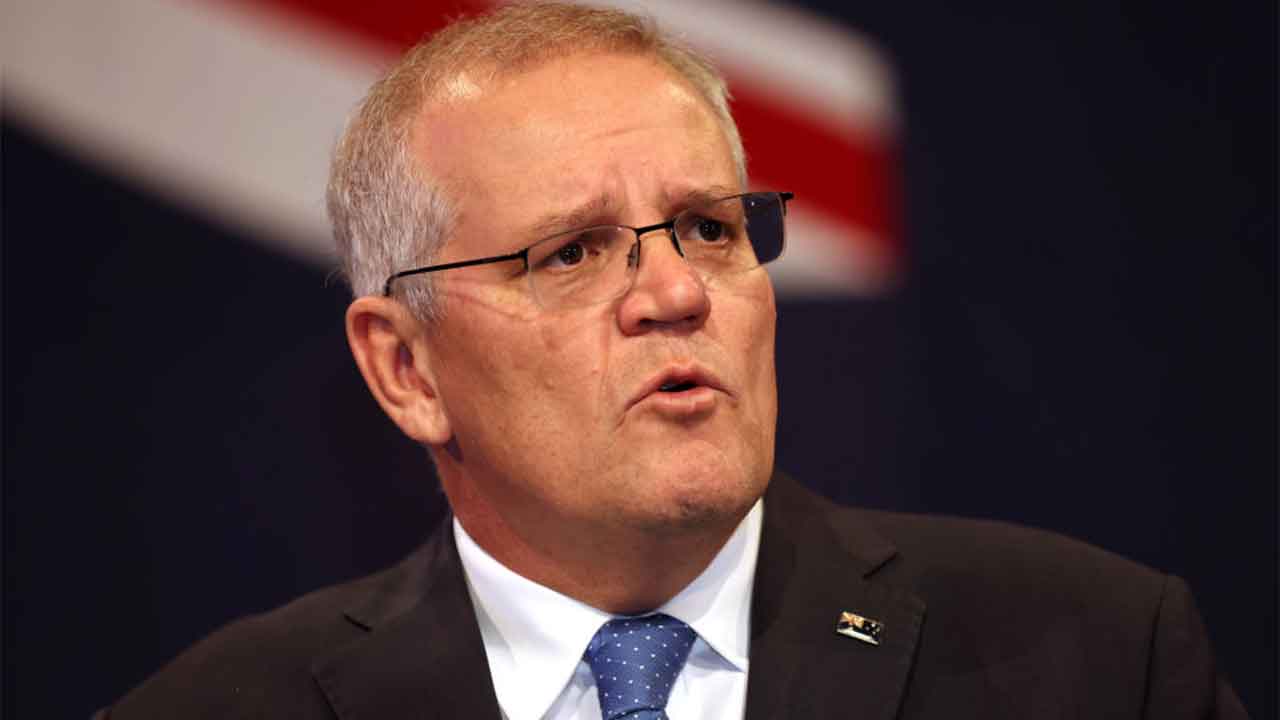
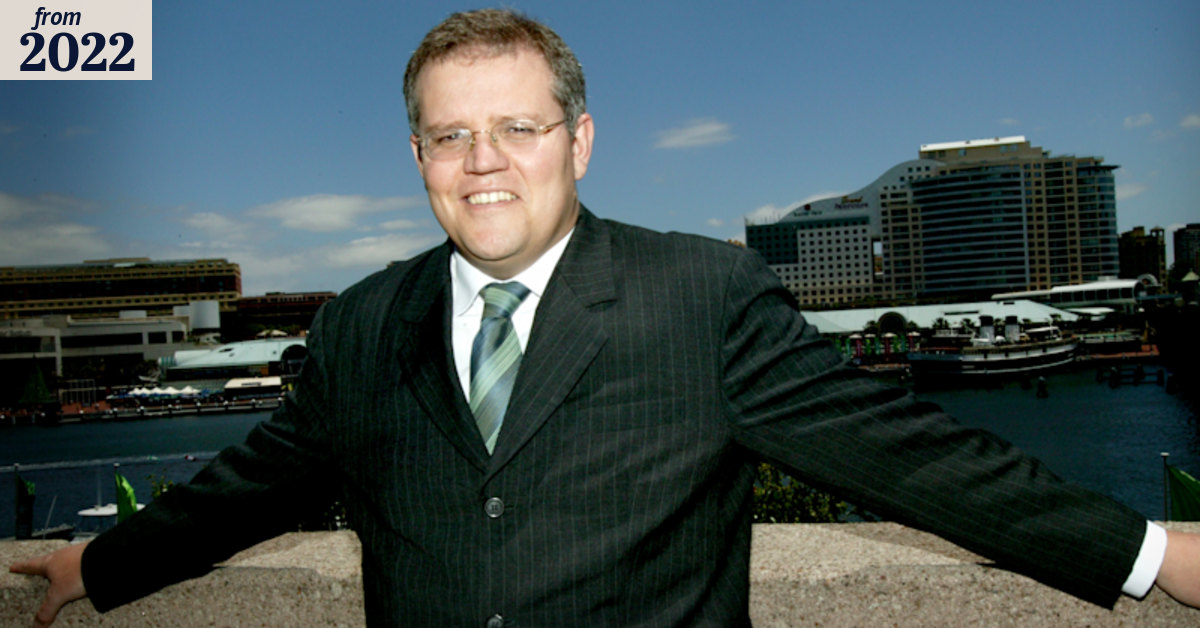
Scott Morrison was dismissed from his position as Managing Director of Tourism Australia in 2006, approximately 15 months into his three-year contract [1].
Tourism Minister Fran Bailey, dissatisfied with Morrison's approach and troubled by clashes between them over media management and organizational transparency, communicated to TA Chairman Tim Fischer that the government "had lost confidence" in Morrison [2].
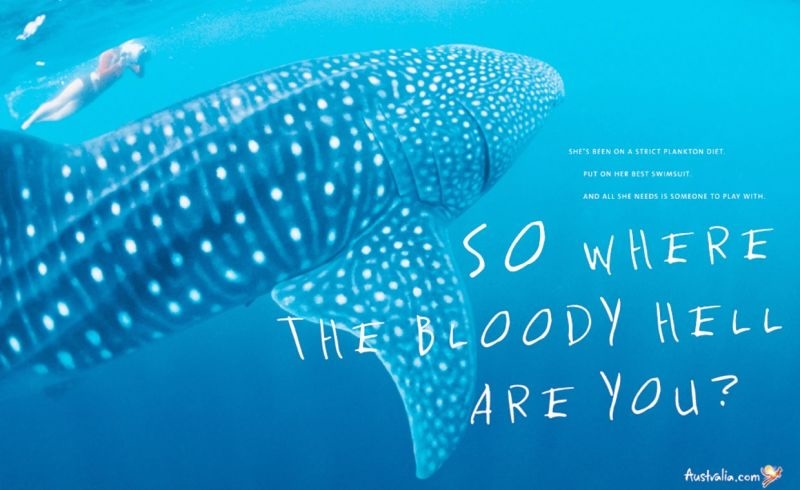
According to the 2006 board minutes and subsequent documentation, Bailey objected to Morrison's independent media presence, his reluctance to seek ministerial approval for press releases, and his handling of the $180 million "Where the bloody hell are you?" advertising campaign [4].
The Michael West article makes clear it was Tourism Australia (a Commonwealth agency) that made the final refusal decision, in consultation with the PMO [9].
Out of 68 documents related to the consultation process, Michael West was granted full access to 2, partial access to 16, and denied access to 50 [11].
The exemption used appears to be section 47E of the Freedom of Information Act 1982 (legal professional privilege), which allows agencies to withhold communications with legal advisers [12].
The claim presents this as a straightforward suppression of information about Morrison's dismissal, but several important contextual factors are absent:
1. **Legal Professional Privilege is Standard**: Governments routinely withhold legal advice under FOI exemptions.
The Australian Information Commissioner has upheld this exemption across governments [13].
2. **The Board Paper Content Became Public Anyway**: While the original board paper was not released intact, the substantive reasons for Morrison's dismissal eventually became public through other means.
In September 2021, Tourism Minister Fran Bailey gave a detailed on-the-record interview explaining exactly why Morrison was sacked—due to personality clashes and disputes over media management—not because of misconduct [14].
This occurred while Morrison was Prime Minister, which somewhat undermines the narrative that information was permanently suppressed.
3. **Morrison's Severance Deal Was Eventually Exposed**: After a four-year FOI battle that extended into 2025, Michael West Media finally obtained documents revealing Morrison received a $212,000 overpayment in his severance package—more than double what he was entitled to receive [15].
So the substantial information of public interest (the generous exit package) was ultimately disclosed, albeit after significant delay.
4. **No Separation Agreement Located**: Tourism Australia stated it does not hold an executed separation agreement with Morrison, despite the existence of such arrangements being speculated about for years.
The reporting on this specific issue appears factually accurate regarding the FOI process itself, though the framing emphasizes government secrecy rather than exploring common FOI exemptions [17].
The original Michael West article correctly reports the facts of the FOI blocking but frames it primarily as a "secrecy" issue without acknowledging that legal professional privilege exemptions are standard across governments [18].
**Did Labor engage in similar FOI blocking or exemption use?**
Search conducted: "Labor government FOI exemptions consultation exemptions Andrew Rudd Albanese"
**Finding: Labor governments have extensively used the same exemptions and have been widely criticized for FOI secrecy.**
1. **The Albanese Government's 2025 FOI Reform**: In September 2025 (very recent), the Albanese Labor government introduced legislation proposing to allow blanket refusals of FOI requests that would take more than 40 hours to process [19].
* * * *
This represents a significant weakening of transparency obligations compared to the Coalition's approach.
2. **Guardian Criticism of Labor**: The Guardian Australia reported in October 2025 that "The Albanese government has introduced legislation to overhaul freedom of information laws by allowing blanket refusals for requests that would take more than 40 hours to action" and that this "contradicts Labor's election promise of open government" [20].
3. **Labor's Consultation Exemptions**: The Albanese government has used the same section 47E (legal professional privilege) and other exemptions to withhold documents from public scrutiny.
Public Integrity reported in September 2025 that the government was using "vague references to FOI exemptions and without a public interest immunity claim" to keep documents secret [21].
4. **Historical Labor Pattern**: During Labor governments (both Rudd-Gillard-Rudd 2007-2013 and earlier governments), the use of FOI exemptions for consultation documents and legal advice was equally standard [22].
**Conclusion**: Labor governments have used identical FOI exemptions and, as of 2025, have actually proposed MORE restrictive FOI laws than existed under the Coalition.
The Michael West Media reporting correctly identifies a real issue: the documentation explaining the political machinations behind Morrison's firing was not immediately available through FOI.
This lack of transparency around government decision-making is a legitimate concern, and the lengthy FOI battle (stretching over years) to obtain related documents reflects the general problem of slow FOI responses in Australian government [23].
However, the fuller context reveals:
1. **The Information Became Public Anyway**: Fran Bailey broke her public silence in September 2021 while Morrison was Prime Minister, giving a detailed explanation that Morrison was fired due to personality clashes and disputes over media strategy—not corruption or misconduct [24].
This was reported in mainstream media (SMH, ABC, news outlets) and became widely known [25].
2. **Legal Professional Privilege is Unavoidable**: When an agency consults with lawyers about a legal matter (in this case, the terms of Morrison's exit), the legal advice falls under legal professional privilege, which both Labor and Coalition governments invoke to protect.
This is not unique secrecy; it's standard across democracies [26].
3. **The Financial Misconduct Was Exposed**: The more newsworthy element—that Morrison received approximately $212,000 in excess severance through what the Remuneration Tribunal called an "unacceptable precedent"—was eventually released through FOI after sustained pressure [27].
So the material public interest issue (overpayment/misuse of public funds) was not permanently suppressed.
4. **Governance Failure, Not Legal Violation**: The real problem revealed by the documents was that the Tourism Australia Board agreed to excessive severance terms that breached Remuneration Tribunal guidelines [28].
It's governance failure, not a FOI suppression scandal per se.
5. **Labor Now Proposes Worse**: As of 2025, the Labor government has introduced legislation that would allow broader FOI refusals than existed under the Coalition [29].
Morrison's sacking was not a major controversy—it reflected workplace conflict between a minister and agency head with different management styles [30].
The claim is factually accurate: FOI requests for the board paper explaining Morrison's dismissal were blocked by Tourism Australia (in consultation with the PMO).
Moreover, the substantive information about why Morrison was fired became public in 2021 when Fran Bailey spoke publicly, and the more serious issue (the excessive severance deal) was eventually disclosed through ongoing FOI efforts.
The claim is factually accurate: FOI requests for the board paper explaining Morrison's dismissal were blocked by Tourism Australia (in consultation with the PMO).
Moreover, the substantive information about why Morrison was fired became public in 2021 when Fran Bailey spoke publicly, and the more serious issue (the excessive severance deal) was eventually disclosed through ongoing FOI efforts.