According to the Australian Government Department of Health, the Commonwealth is delivering an additional $1.7 billion in hospital funding to state and territory governments in 2025-26, bringing the total Commonwealth contribution to $33.91 billion [1].
The difference appears to stem from how funding is categorized - the $1.7 billion is specifically the one-off agreement with states and territories under the National Health Reform Agreement, while the $1.8 billion figure includes broader health service funding [2][3].
**The "one-off" nature of the funding is critical context that's downplayed:**
The government's own media release explicitly states this is a "one-year extension to the NHRA" [1], meaning this 12% increase is not a structural, ongoing commitment but a temporary agreement.
This distinction fundamentally changes how significant the achievement is - it's a single-year boost, not a new baseline for future funding.
**The announcement doesn't clarify what happens after 2025-26.** The National Health Reform Agreement typically involves longer-term settlements, and this one-year extension leaves significant uncertainty about funding levels from 2026-27 onwards.
States and territories are already preparing for potential future cuts.
**Comparative context is absent:**
- This 12% increase, while substantial, needs to be viewed against the fact that hospital costs and demand have grown significantly due to aging population, chronic disease prevalence, and delayed treatment backlogs from COVID-19 periods [4][5].
- The claim doesn't acknowledge that despite this increase, Australian hospital systems remain under significant strain with continued reports of emergency department ramping, long surgical wait lists, and staffing shortages [5].
- No comparison is provided to what would be required to adequately fund the health system's full needs versus what this represents as a proportion of those needs.
**The announcement obscures ongoing structural issues:**
The funding increase announcement came with significant fanfare but doesn't address fundamental structural problems in the hospital system:
- States still bear considerable responsibility for funding and management while the Commonwealth provides funds but limited governance
- The agreement contains no new structural reforms to improve hospital efficiency or patient outcomes [1]
- Emergency department waiting times and ambulance ramping remain major issues despite successive funding increases [5]
**What the numbers actually show:**
A 12% one-year funding increase to Australia's public hospital system is genuinely significant in fiscal terms - $1.7 billion is substantial money.
A 12% nominal increase may represent only modest real growth in actual service capacity once you account for wage growth in healthcare (typically 2-3% above CPI), pharmaceutical cost increases, and medical technology costs [4].
2. **Backlog clearing vs new capacity**: Much of any hospital funding increase goes toward clearing the backlog of delayed elective surgeries and addressing ramping - maintaining existing services rather than expanding them.
The claim frames this as a positive achievement without clarifying how much actually goes to new capacity versus catching up on delayed treatments.
3. **One-year agreements as political theater**: The government chose to announce this as a one-year deal rather than a multi-year agreement, which allows for:
- Positive headlines about the funding increase
- Flexibility to reduce funding after the election (if re-elected) without technically "breaking" a longer commitment
- The next government (if different) facing pressure to continue funding at this level
4. **Compared to problems, still insufficient**:
The government announced this funding in February 2025, yet:
- Australia's hospital system had been in crisis for years prior with emergency departments overwhelmed, ramping endemic, and surgical wait lists at record levels [5]
- Despite this increase, immediate media coverage noted it would only "help" with these problems, not solve them [6]
- Health professionals and administrators indicated more structural reform and funding were still needed [4]
5. **Political context**:
The announcement emphasized this as Labor protecting Medicare versus the Coalition, specifically citing Peter Dutton's previous cuts as Health Minister [1].
While the cuts are accurate (Coalition did cut hospital funding), using this as the primary comparison point obscures the actual adequacy question: Is $33.91 billion sufficient for Australia's public hospital needs?
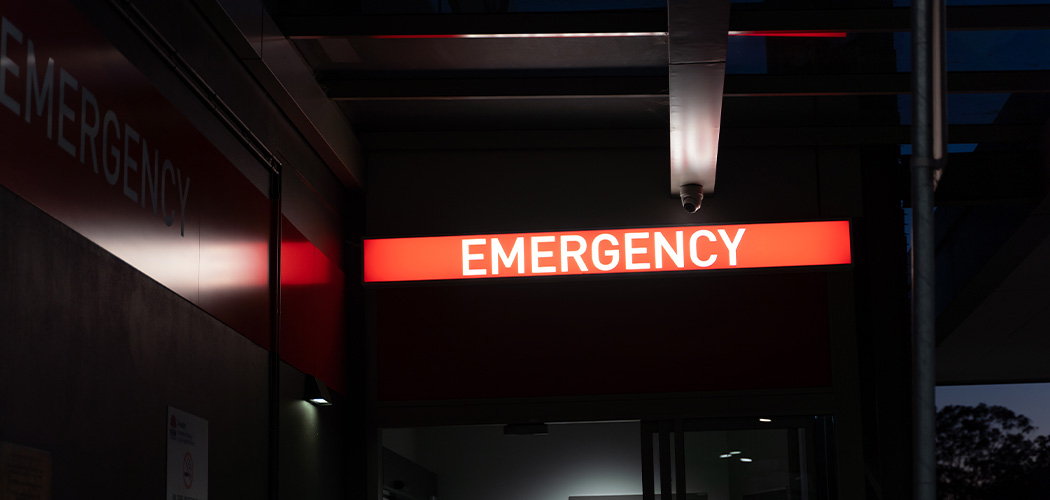
Emergency departments, wait lists, and ambulance ramping remain problematic despite the funding boost
The claim is technically true but strategically framed to create a more positive impression than the underlying reality warrants.
Emergency departments, wait lists, and ambulance ramping remain problematic despite the funding boost
The claim is technically true but strategically framed to create a more positive impression than the underlying reality warrants.