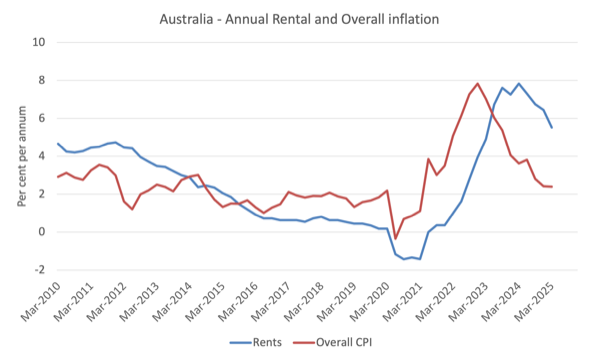
The inherited inflation rate of 6.1% is verified in parliamentary records and treasury statements, representing the inflation rate when Labor took office in May 2022 [2][3].
The quarterly inflation figure of 2.4% is confirmed in the ABS Consumer Price Index report for December Quarter 2024, which states "Annual CPI inflation was 2.4 per cent in the December quarter, down from 2.8 per cent in the September quarter" [1].
Monetary vs Fiscal Policy Distinction**
The primary driver of inflation reduction was the Reserve Bank of Australia's monetary policy—specifically, interest rate increases.
Monetary policy (controlled by the independent RBA) is the standard tool for controlling inflation in most modern economies, not fiscal policy (government spending and taxation) [6].
**2.
Global vs Domestic Factors**
Much of the inflation reduction was driven by global factors outside Labor's control: commodity price declines (particularly energy prices following the Ukraine war peak), supply chain normalization, and weakening demand globally [7].
Labor's 2022-23 budget included significant spending measures (energy bill relief, tax cuts, superannuation increases) at a time when inflation was elevated.
Economists and some RBA officials noted that fiscal stimulus during high inflation risked complicating monetary policy efforts to reduce inflation [9].
The claim presents the current rate without noting the extended period above target, which suggests the reduction was incomplete for an extended period even 2+ years into Labor's term.
**5.
The "Inherited" Framing**
The 6.1% figure was the inflation rate in May 2022 when Labor took office, but this represented the *peak* of the inflation cycle caused primarily by: global pandemic-related supply shocks, monetary stimulus from previous governments, and energy crisis from the Ukraine invasion.
When examined in context, the inflation reduction appears less like a Labor achievement and more like the predictable result of:
1. **RBA doing its job**: The independent RBA raised rates aggressively (as central banks globally did), which is the standard mechanism for inflation control.
The RBA would have done this regardless of which government was in office.
2. **Global normalization**: As commodity prices fell and global supply chains recovered, inflation fell globally.
Australia wasn't unique—most OECD countries saw similar inflation declines [10].
3. **Policy contradiction**: Labor's fiscal stimulus during high inflation may have *hindered* rather than helped inflation reduction, requiring the RBA to raise rates higher than otherwise needed.
4. **Incomplete victory**: The headline of "within RBA target band" obscures that inflation was above 3% for approximately 18+ months into Labor's term (2023-2024), only recently returning to target.
This isn't as rapid a success as the framing suggests.
5. **No demonstrated causal link**: There is no evidence presented that specific Labor policies *caused* inflation to fall faster than it would have otherwise.
Labor's role was essentially passive—allowing the RBA to do its job without complicating it further, and accepting that inherited inflation would take time to resolve globally.
The numbers are accurate (2.4% December 2024, down from 6.1% inherited, within RBA target), but the claim implies Labor achievement that is not substantiated.
The numbers are accurate (2.4% December 2024, down from 6.1% inherited, within RBA target), but the claim implies Labor achievement that is not substantiated.



:max_bytes(150000):strip_icc()/GettyImages-944789800-bca5f26c25d64924814f115e8723ac17.jpg)