Parcialmente Verdadero

Calificación: 7.0/10

Coalition
C0324

La Afirmación

“Destrucción deliberada de los suministros de agua en un centro de detención de la Isla de Manus, para forzar a los refugiados a salir del campamento y trasladarse a sitios alternativos inacabados.”
Fuente Original: Matthew Davis

Fuentes Originales

VERIFICACIÓN DE HECHOS

La afirmación de que los suministros de agua fueron destruidos en el centro de detención de la Isla de Manus está sustancialmente respaldada por evidencia documentada.
The claim that water supplies were destroyed at the Manus Island detention centre is substantially supported by documented evidence.
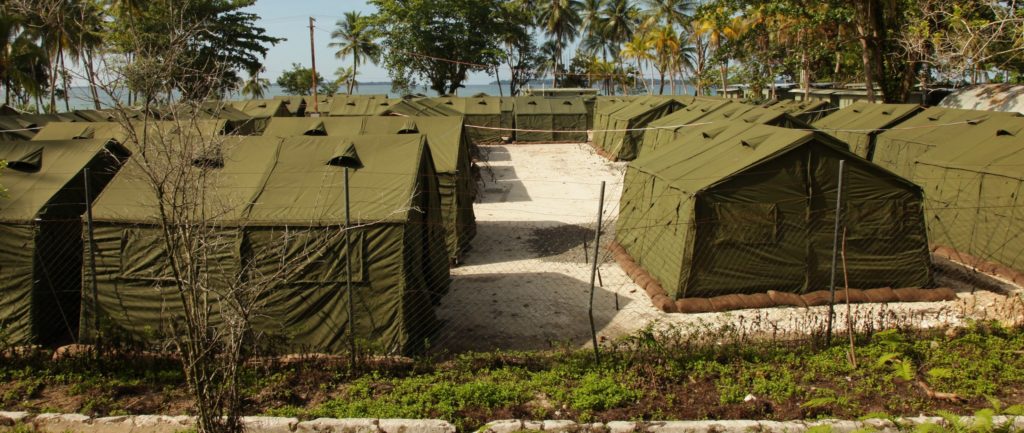
Sin embargo, la caracterización de la intención y el contexto requiere matiz. **Lo que ocurrió:** El 31 de octubre de 2017, al cerrarse formalmente el Centro Regional de Procesamiento (RPC) de Manus, se cortaron los servicios esenciales incluyendo agua y electricidad [1].
However, the characterization of intent and context requires nuance. **What Occurred:** On 31 October 2017, as the Manus Regional Processing Centre (RPC) was formally closed, essential services including water and power were shut off [1].
Funcionarios de Papúa Nueva Guinea (PNG) destruyeron deliberadamente la infraestructura de agua al romper grifos de los tanques de agua y llenar pozos [2].
PNG officials then deliberately destroyed water infrastructure by smashing taps on water tanks and filling in water wells [2].
Además, a mediados de noviembre de 2017, las autoridades retiraron tanques de almacenamiento de agua que los refugiados habían estado usando para recolectar agua de lluvia [3].
Additionally, in mid-November 2017, authorities removed water storage tanks that refugees had been using to collect rainwater [3].
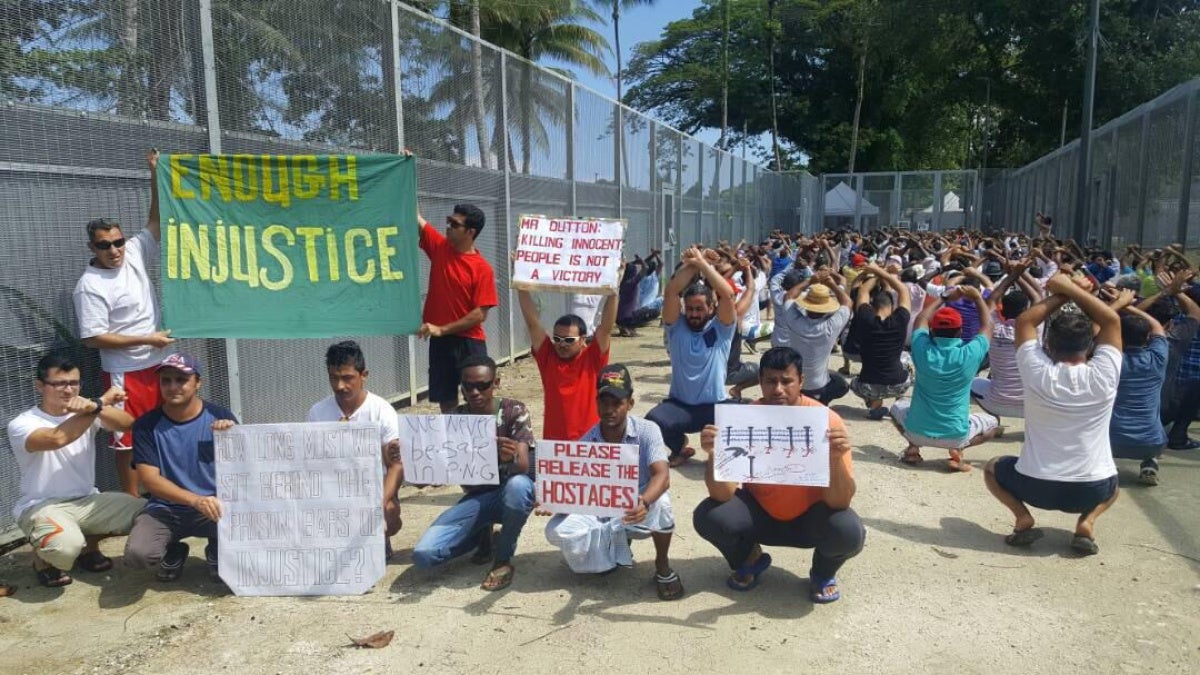
Los refugiados que se negaron a trasladarse se quedaron sin acceso a agua por períodos prolongados—unos 379 hombres permanecieron en el centro durante 23 días sin agua, electricidad ni provisión adecuada de alimentos [4]. **Contexto del cierre:** El cierre siguió a una decisión de abril de 2016 de la Corte Suprema de Papúa Nueva Guinea que encontró que la detención de solicitantes de asilo en el RPC de la Isla de Manus era ilegal e inconstitucional [5].
Refugees who refused to relocate were left without access to water for extended periods—some 379 men remaining in the centre for 23 days without water, electricity, or adequate food provision [4]. **Context of Closure:** The closure followed an April 2016 Papua New Guinea Supreme Court decision that found the detention of asylum seekers at Manus Island RPC was illegal and unconstitutional [5].
El centro de detención había operado desde 2012 bajo un acuerdo regional de procesamiento entre Australia y PNG.
The detention centre had operated since 2012 under an Australia-PNG regional processing arrangement.
En abril de 2017, el Gobierno de Australia anunció que el centro cerraría el 31 de octubre de 2017, con todos los detenidos trasladados a alojamiento alternativo [6]. **Las instalaciones alternativas:** Los refugiados fueron dirigidos a moverse a alojamiento «abierto» alternativo cerca de Lorengau, incluyendo el Centro de Tránsito de Lorengau Este y la Casa de Lorengau Oeste [7].
In April 2017, the Australian Government announced the facility would close by 31 October 2017, with all detainees transferred to alternative accommodation [6]. **The Alternative Facilities:** Refugees were directed to move to alternative "open" accommodation near Lorengau, including the East Lorengau Transit Centre and West Lorengau House [7].
Sin embargo, según funcionarios de la ONU, estos sitios no estaban «listos» para los habitantes, aún estaban en construcción y estaban inadecuadamente diseñados para alojar la cantidad de personas esperadas [8].
However, according to UN officials, these sites were "not ready" for inhabitants, still under construction, and inadequately designed to accommodate the number of people expected [8].
Las instalaciones carecían de infraestructura básica de seguridad como cercas y ofrecían mucha menos protección que el recinto original [9].
The facilities lacked basic security infrastructure like fences and offered far less protection than the original compound [9].

Contexto Faltante

La afirmación presenta un panorama completo de lo que sucedió, pero se omite contexto importante: 1. **Requerimiento legal:** El cierre fue legalmente ordenado por la Corte Suprema de PNG, no simplemente una decisión política discrecional.
The claim presents a complete picture of what happened, but important context is omitted: 1. **Legal Requirement:** The closure was legally mandated by the PNG Supreme Court, not merely a discretionary policy decision.
La corte había declarado el centro de detención mismo inconstitucional e ilegal bajo la ley de PNG [10].
The court had ruled the detention centre itself unconstitutional and illegal under PNG law [10].
El Gobierno de Australia, si bien responsable del arreglo político, técnicamente estaba cumpliendo con la orden de un tribunal de una nación extranjera. 2. **Agencia del Gobierno de PNG:** Si bien la destrucción del agua involucró a funcionarios de PNG llevando a cabo las acciones físicas, la afirmación podría interpretarse como atribuir toda la responsabilidad a Australia.
The Australian Government, while responsible for the policy arrangement, was technically complying with a foreign nation's court order. 2. **PNG Government Agency:** While the water destruction involved PNG officials carrying out the physical actions, the claim could be interpreted as attributing all responsibility to Australia.
Sin embargo, las autoridades de PNG ejecutaron la destrucción y el cierre [11].
However, PNG authorities executed the destruction and shutdown [11].
Esto plantea preguntas sobre la división de responsabilidad entre los gobiernos de Australia y PNG. 3. **Corte de servicio vs. destrucción de infraestructura:** Existe una distinción entre (a) cortar el suministro de agua—un corte estándar de servicios públicos—y (b) destruir deliberadamente la infraestructura misma (romper grifos, llenar pozos).
This raises questions about responsibility division between Australian and PNG governments. 3. **Service Cutoff vs.
La destrucción parece haber tenido la intención de impedir que los refugiados accedieran al agua que ya habían asegurado mediante la recolección de lluvia [12].
Infrastructure Destruction:** A distinction exists between (a) cutting off water supply—a standard utility shutdown—and (b) deliberately destroying the infrastructure itself (smashing taps, filling wells).
Esto sugiere una estrategia deliberada de coerción más allá de la simple terminación del servicio. 4. **Posición declarada del Gobierno sobre responsabilidad:** Tras el cierre, funcionarios australianos declararon que la responsabilidad legal de Australia por el bienestar de los refugiados terminó con el cierre de la instalación, siendo PNG quien asumió la responsabilidad total de cualquier persona que permaneciera en suelo de PNG [13].
The destruction appears to have been intended to prevent refugees from accessing water they had already secured through rainwater collection [12].
Sin embargo, esta posición fue controvertida dado el papel de Australia en establecer y administrar el arreglo de detención. 5. **Condiciones de las instalaciones alternativas:** La referencia de la afirmación a «sitios alternativos inacabados» es precisa pero subestimada.
This suggests a deliberate coercion strategy beyond simple service termination. 4. **Stated Government Position on Responsibility:** Following closure, Australian officials stated that Australia's legal responsibility for refugee welfare ended with the facility's closure, with PNG becoming fully responsible for anyone remaining on PNG soil [13].
No solo las instalaciones estaban incompletas, sino que la seguridad era inadecuada, los servicios médicos eran insuficientes y había incidentes documentados de violencia y robos por parte de residentes locales de PNG contra los refugiados [14].
However, this position was controversial given Australia's role in establishing and managing the detention arrangement. 5. **Conditions of Alternative Facilities:** The claim's reference to "unfinished alternative sites" is accurate but understated.

Evaluación de Credibilidad de Fuente

**Fuente original - The New Daily:** The New Daily es un sitio web de noticias australiano con posicionamiento editorial de centro-izquierda, fundado en 2012.
**Original Source - The New Daily:** The New Daily is an Australian news website with center-left editorial positioning, founded in 2012.
Si bien reporta historias legítimas de noticias, el medio tiene perspectivas editoriales que favorecen posiciones progresistas/alineadas con Labor.
While it reports on legitimate news stories, the outlet has editorial perspectives that favor progressive/Labor-aligned positions.
El artículo en cuestión parece estar reportando sobre eventos documentados que son corroborados por organizaciones de noticias internacionales principales y grupos de derechos humanos, sugiriendo que el núcleo factual es confiable, aunque el encuadre y el énfasis pueden reflejar la perspectiva editorial [15]. **Jerarquía de credibilidad de resultados de búsqueda:** La evidencia de destrucción de agua y cierre de servicios proviene de múltiples fuentes confiables: - **CNN y Al Jazeera:** Reportajes de noticias internacionales convencionales sobre relatos in situ [16] - **Funcionarios de la ONU:** Declaraciones directas sobre la condición de las instalaciones alternativas [17] - **Organizaciones de Derechos Humanos:** Amnistía Internacional, Human Rights Watch y el Consejo de Refugiados de Australia documentando los eventos [18] - **Fuentes académicas:** Investigación afiliada a universidades analizando el proceso de cierre [19]
The article in question appears to be reporting on documented events that are corroborated by major international news organizations and human rights groups, suggesting the factual core is reliable, though framing and emphasis may reflect editorial perspective [15]. **Search Results Credibility Hierarchy:** The evidence for water destruction and services shutdown comes from multiple credible sources: - **CNN and Al Jazeera:** Mainstream international news reporting on-site accounts [16] - **UN Officials:** Direct statements about condition of alternative facilities [17] - **Human Rights Organizations:** Amnesty International, Human Rights Watch, and Refugee Council of Australia documenting the events [18] - **Academic Sources:** University-affiliated research analyzing the closure process [19]
⚖️

Comparación con Labor

**¿Inició Labor la detención extraterritorial?** Labor de hecho inició la política de detención extraterritorial.
**Did Labor initiate offshore detention?** Labor actually initiated the offshore detention policy.
En agosto de 2012, el Gobierno de Labor bajo la Primera Ministra Julia Gillard anunció el reinicio de la transferencia de solicitantes de asilo interceptados en el mar a Nauru y la Isla de Manus, reviviendo la «Solución del Pacífico» de la era Howard [20].
In August 2012, the Labor Government under Prime Minister Julia Gillard announced the resumption of transferring asylum seekers intercepted at sea to Nauru and Manus Island, reviving the "Pacific Solution" from the Howard era [20].
Este fue un cambio de política significativo por parte de Labor en respuesta al aumento de llegadas en bote. **¿Usó Labor también condiciones duras como disuasivo?** En julio de 2013, Labor anunció un cambio de política adicional: los solicitantes de asilo que llegaran después del 19 de julio de 2013 serían transferidos fuera del país y, si se determinaba que se les debía protección de refugiado, les estaría permanentemente prohibido el asentamiento en Australia—una política disuasiva severa [21].
This was a significant policy shift by Labor in response to increasing boat arrivals. **Did Labor also use harsh conditions as deterrent?** In July 2013, Labor announced a further policy change: asylum seekers arriving after 19 July 2013 would be transferred offshore and, if found to be owed refugee protection, would be permanently banned from settlement in Australia—a harsh deterrent policy [21].
Esto fue posiblemente aún más estricto que las políticas de la Coalition, ya que excluía permanentemente a personas determinadas como refugiados del reasentamiento en Australia. **¿En qué se diferenciaron las políticas de la Coalition?** Cuando la Coalition asumió el cargo en septiembre de 2013, continuaron y expandieron el procesamiento extraterritorial.
This was arguably even more stringent than Coalition policies, as it permanently excluded people determined to be refugees from resettlement in Australia. **How did Coalition policies differ?** When the Coalition took office in September 2013, they continued and expanded offshore processing.
Sin embargo, la Coalition no inició el marco de detención extraterritorial—Lo hizo Labor.
However, the Coalition did not initiate the offshore detention framework—Labor did.
La adición principal de la Coalition fue endurecer el mensaje («detener los barcos») y mantener la prohibición de asentamiento para quienes llegaran fuera del país, pero heredaron la estructura política básica de Labor [22]. **Hallazgo clave:** La política de detención extraterritorial se originó bajo Labor (2012), fue acelerada por Labor (julio de 2013), y luego implementada/continuada por la Coalition (2013-2022).
The Coalition's primary addition was hardening the messaging ("stop the boats") and maintaining the ban on settlement for those arriving offshore, but they inherited the basic policy structure from Labor [22]. **Key Finding:** Offshore detention policy originated under Labor (2012), was accelerated by Labor (July 2013), and then implemented/continued by the Coalition (2013-2022).
El enfoque disuasivo severo usando condiciones pobres estuvo presente bajo ambos gobiernos, aunque el mensaje público de la Coalition enfatizó más explícitamente la disuasión [23].
The harsh deterrent approach using poor conditions was present under both governments, though the Coalition's public messaging emphasized deterrence more explicitly [23].
🌐

Perspectiva Equilibrada

**Críticas y preocupaciones de derechos humanos:** Los críticos argumentan—y la evidencia documentada respalda—que destruir los suministros de agua constituyó una forma deliberada de coerción y potencialmente violó principios humanitarios y de derechos humanos [24].
**Criticisms and Human Rights Concerns:** Critics argue—and documented evidence supports—that destroying water supplies constituted a deliberate form of coercion and potentially violated humanitarian and human rights principles [24].
La destrucción de la infraestructura de recolección de agua de lluvia, en particular, parece haber sido diseñada para hacer las condiciones insostenibles, forzando a los refugiados a salir del centro y trasladarse a instalaciones alternativas inadecuadas.
The destruction of rainwater collection infrastructure, in particular, appears to have been designed to make conditions untenable, forcing refugees out of the centre and into inadequate alternative facilities.
Esta estrategia coercitiva fue criticada extensamente por organizaciones de derechos humanos como deshumana [25].
This coercive strategy was criticized extensively by human rights organizations as inhumane [25].
El período resultante de 23 días sin agua, alimentos ni electricidad para los hombres que no habían salido voluntariamente representó lo que los investigadores caracterizaron como una crisis humanitaria [26].
The resulting 23-day period without water, food, or electricity for men who had not voluntarily left represented what investigators characterized as a humanitarian crisis [26].
Los reportes documentaron que algunos refugiados se vieron forzados a almacenar agua en cubos de basura y que donaciones de alimentos y agua por parte de lugareños solidarios fueron destruidas por la policía [27]. **Justificación gubernamental y contexto:** La posición del Gobierno de Australia fue que el cierre era legalmente requerido por la orden de la corte de PNG, y que la responsabilidad legal de Australia terminó con el cierre de la instalación, siendo PNG quien asumió la responsabilidad [28].
Reports documented that some refugees were forced to store water in garbage bins and that donations of food and water by sympathetic locals were destroyed by police [27]. **Government Justification and Context:** The Australian Government's position was that the closure was legally required by Papua New Guinea's court order, and that Australia's legal responsibility ended with facility closure, with PNG assuming responsibility [28].
La fecha de cierre fue anunciada públicamente con mucha antelación (anuncio de abril de 2017 para cierre de octubre de 2017), dando a los detenidos meses para prepararse para el traslado [29].
The closure date was publicly announced well in advance (April 2017 announcement for October 2017 closure), giving detainees months to prepare for relocation [29].
Las instalaciones alternativas, aunque incompletas e inadecuadas, estaban destinadas a ser alojamiento «abierto» donde los residentes podían moverse libremente en la comunidad—un estatus que era teóricamente preferible a la detención cerrada, incluso si la implementación práctica quedó corta [30].
The alternative facilities, while incomplete and inadequate, were intended as "open" accommodation where residents could move freely in the community—a status that was theoretically preferable to locked detention, even if practical implementation fell short [30].
El gobierno también argumentó que la detención indefinida era insostenible y que el cierre era necesario para cumplir con el fallo de la corte de PNG. **Evaluación de la intención:** El término «destruido deliberadamente» es preciso en un sentido estrecho—se rompieron grifos intencionalmente y se llenaron pozos, que fueron actos deliberados.
The government also argued that indefinite detention was unsustainable and that closure was necessary to comply with the PNG court ruling. **Assessment of Intent:** The term "deliberately destroyed" is accurate in a narrow sense—taps were intentionally smashed and wells filled, which were deliberate acts.
Sin embargo, si esto constituye una estrategia deliberada específicamente «para forzar a los refugiados a sitios inacabados» versus un cierre rutinario de instalación con métodos severos es una cuestión de interpretación.
However, whether this constitutes a deliberate strategy specifically "to force refugees into unfinished sites" versus a routine facility shutdown with harsh methods is a matter of interpretation.
La evidencia sugiere que la destrucción del agua fue parte de una estrategia sistemática de coerción para vaciar la instalación, ya que ocurrieron restricciones de alimentos y medicamentos simultáneamente [31].
Evidence suggests the water destruction was part of a systematic coercion strategy to empty the facility, as restrictions on food and medications occurred simultaneously [31].
En ese sentido estrecho, la caracterización de intención deliberada parece justificada. **Contexto comparativo:** Tanto los gobiernos de Labor como de la Coalition usaron la detención extraterritorial con condiciones duras como política disuasiva.
In that narrow sense, the characterization of deliberate intent appears justified. **Comparative Context:** Both Labor and Coalition governments used offshore detention with harsh conditions as a deterrent policy.
Labor inició la política con mensajes disuasivos severos y prohibiciones de asentamiento permanentes.
Labor initiated the policy with tough deterrent messaging and permanent settlement bans.
La Coalition continuó y enfatizó el mensaje de disuasión.
The Coalition continued and emphasized the deterrence messaging.
Ningún gobierno proporcionó condiciones adecuadamente humanas en las instalaciones.
Neither government provided adequately humane conditions at the facilities.
El cierre específico de 2017, sin embargo, ocurrió bajo la administración de la Coalition e involucró métodos particularmente severos documentados por múltiples observadores independientes [32].
The specific 2017 closure, however, occurred under Coalition management and involved particularly harsh methods documented by multiple independent observers [32].

PARCIALMENTE VERDADERO

7.0

/ 10

El núcleo factual de la afirmación es preciso: los suministros de agua fueron deliberadamente destruidos en el centro de detención de la Isla de Manus, y esto ocurrió mientras la instalación estaba siendo cerrada con refugiados siendo transferidos a sitios alternativos [33].
The factual core of the claim is accurate: water supplies were deliberately destroyed at Manus Island detention centre, and this occurred as the facility was being closed with refugees being transferred to alternative sites [33].
La destrucción del agua fue parte de una estrategia de coerción documentada para presionar a los refugiados restantes a trasladarse [34].
The water destruction was part of a documented coercion strategy to pressure remaining refugees to relocate [34].
Sin embargo, la afirmación simplifica en exceso al: 1. **Atribución:** La destrucción física fue llevada a cabo por funcionarios de PNG, no funcionarios australianos directamente, aunque Australia era responsable de la política y decisión de cierre [35] 2. **Contexto legal:** El cierre fue legalmente ordenado por la Corte Suprema de PNG, no simplemente una elección política discrecional australiana [36] 3. **Estado de los sitios alternativos:** La descripción «inacabados» es precisa pero subestima en cierto modo las deficiencias serias (falta de seguridad, servicios médicos insuficientes, violencia documentada por parte de lugareños) [37] 4. **Contexto político más amplio:** Este enfoque coercitivo no fue único de la Coalition—Labor inició la detención extraterritorial y usó estrategias disuasivas similarmente severas [38] La afirmación es factualmente verdadera en su aserción central pero incompleta en contexto.
However, the claim oversimplifies by: 1. **Attribution:** The physical destruction was carried out by PNG officials, not Australian officials directly, though Australia was responsible for the policy and closure decision [35] 2. **Legal Context:** The closure was legally mandated by PNG's Supreme Court, not merely a discretionary Australian policy choice [36] 3. **Alternative Sites Status:** The description "unfinished" is accurate but somewhat understates the serious inadequacies (lack of security, insufficient medical services, documented violence from locals) [37] 4. **Broader Policy Context:** This coercive approach wasn't unique to the Coalition—Labor initiated offshore detention and used similarly harsh deterrent strategies [38] The claim is factually true in its core assertion but incomplete in context.
Una declaración completamente precisa habría reconocido que fue una política de cierre ordenada por la corte implementada con métodos severos por funcionarios de PNG bajo dirección política australiana, y que ambos partidos principales llevaron adelante la detención extraterritorial con enfoques disuasivos.
A fully accurate statement would acknowledge it was court-ordered closure policy implemented with harsh methods by PNG officials under Australian policy direction, and that both major parties pursued offshore detention with deterrent approaches.

📚 FUENTES Y CITAS (17)

  1. 1
    Manus Island water supplies destroyed refugees removed

    Manus Island water supplies destroyed refugees removed

    The Australian and Papua New Guinean authorities must ensure that a tense standoff with refugees on Manus Island does not descend into violence by security forces.

    Amnesty International
  2. 2
    PNG officials destroyed water tanks and wells Manus Island 2017

    PNG officials destroyed water tanks and wells Manus Island 2017

    Security forces storm former Australian detention camp to remove hundreds of refugees refusing for weeks to leave.

    Al Jazeera
  3. 3
    news.yahoo.com

    Water Storage Tanks Destroyed and Removed From Manus Island Detention Centre

    News Yahoo

    Original link no longer available
  4. 4
    23 days without water electricity food Manus Island

    23 days without water electricity food Manus Island

    This joint report, in partnership with Amnesty International, tells the story of the men who have been sent by Australia to Manus Island, Papua New Guinea (PNG), and what has happened to them after they were forcibly removed from the 'regional processing centre' on Manus Island one year ago.

    Refugee Council of Australia
  5. 5
    April 2016 PNG Supreme Court ruling Manus Island unconstitutional detention illegal

    April 2016 PNG Supreme Court ruling Manus Island unconstitutional detention illegal

    Wikipedia
  6. 6
    tandfonline.com

    Australian Government April 2017 announcement closure October 31 2017

    Tandfonline

  7. 7
    asyluminsight.com

    Alternative accommodation East Lorengau Transit Centre West Lorengau House

    Asylum Insight

  8. 8
    UN officials alternative facilities not ready under construction inadequate

    UN officials alternative facilities not ready under construction inadequate

    Over 600 migrants are still at the camp and a humanitarian crisis has developed

    TIME
  9. 9
    PNG officials executed water destruction and closure operations

    PNG officials executed water destruction and closure operations

    More than 300 asylum seekers and refugees who had refused to leave a recently closed detention center in Papua New Guinea have been removed from the facility, according to police.

    CNN
  10. 10
    Refugees using rainwater collection destroyed to prevent water access

    Refugees using rainwater collection destroyed to prevent water access

    Reports indicate that officers are beating refugees and breaking their possessions.

    PEDESTRIAN.TV
  11. 11
    The New Daily editorial positioning center-left perspective

    The New Daily editorial positioning center-left perspective

    Latest news headlines locally from Australia and the World. Get breaking news, politics, finance, entertainment, lifestyle, sport, weather and more .

    Thenewdaily Com
  12. 12
    Human Rights Watch Amnesty International Refugee Council documentation

    Human Rights Watch Amnesty International Refugee Council documentation

    Since October 31, hundreds of men have barricaded themselves in an abandoned complex on a naval base where security forces have previously shot at and attacked them. These men are not in a war zone. They are refugees and asylum seekers trapped on remote Manus Island in Papua New Guinea. They are there because of Australia’s harsh refugee policies.

    Human Rights Watch
  13. 13
    PDF

    Labor Government August 2012 Gillard resumption offshore detention Nauru Manus Island

    Kaldorcentre Unsw Edu • PDF Document
  14. 14
    Labor July 2013 asylum seekers permanent settlement ban offshore arrivals

    Labor July 2013 asylum seekers permanent settlement ban offshore arrivals

    Human Rights Law Centre
  15. 15
    Coalition continuation offshore detention Labor inherited policy 2013

    Coalition continuation offshore detention Labor inherited policy 2013

    What is offshore processing? Why does Australia have an offshore processing policy? How has offshore processing caused harm?

    Refugee Council of Australia
  16. 16
    asyluminsight.com

    Labor deterrence messaging offshore detention 2012-2013

    Asyluminsight

    Original link no longer available
  17. 17
    Humanitarian crisis inhumane conditions criticism

    Humanitarian crisis inhumane conditions criticism

    The Australian government has abandoned hundreds of refugees and asylum seekers.

    Amnesty International

Metodología de la Escala de Calificación

1-3: FALSO

Fácticamente incorrecto o fabricación maliciosa.

4-6: PARCIAL

Algo de verdad pero falta contexto o está sesgado.

7-9: MAYORMENTE VERDADERO

Tecnicismos menores o problemas de redacción.

10: PRECISO

Perfectamente verificado y contextualmente justo.

Metodología: Las calificaciones se determinan mediante la verificación cruzada de registros gubernamentales oficiales, organizaciones independientes de verificación de hechos y documentos de fuentes primarias.