
The Claim
“Handed $16 million to Cadbury, but refused to give subsidies to Holden, Qantas and SPC Ardmona. Cadbury is owned by a multinational firm whose profits rose by 64% to $74.9 million the year before. Coincidentally the Cadbury factory is located in a marginal electorate.”
Original Sources Provided
✅ FACTUAL VERIFICATION
Core facts are ACCURATE but require significant context:
The Abbott government did commit $16 million to Cadbury during the 2013 election campaign [1]. The funding was specifically for a tourism visitor centre project at the Cadbury factory in Claremont, Hobart [2]. At the time, Abbott stated the funding was "jobs, jobs and jobs" for Tasmania, which he said had been "left behind, big time" on economic measures [1].
The Coalition government did refuse additional subsidies to SPC Ardmona (a fruit cannery in Shepparton, Victoria) in early 2014, with Abbott stating companies needed to "get their own house in order" [1]. The government also declined to provide debt guarantees or direct subsidies to Qantas when requested in 2013-2014 [1].
Regarding Holden: The claim requires context. Holden announced its decision to cease manufacturing in December 2013 [1]. The Coalition did offer a $100 million assistance package (with state contributions) for affected workers and transition support, though this was significantly less than what Labor had promised [1].
Mondelez financial figures: Cadbury is owned by Mondelez International. The claim about profits rising 64% to $74.9 million requires verification - this may refer to Mondelez's broader Asia-Pacific operations or specific Australian figures [3]. The context suggests the multinational was financially healthy.
Electorate context: The Cadbury factory is in the electorate of Denison (Claremont, Hobart). At the 2013 election, Denison was held by Independent MP Andrew Wilkie, not the Coalition [4]. While Tasmania had marginal seats the Coalition was targeting (Bass and Braddon), Denison itself was not a Coalition-held seat.
Missing Context
1. Different funding categories: The Cadbury funding was explicitly designated as a tourism infrastructure grant, not an industry assistance or manufacturing subsidy [1][2]. The project was to create a "Cadbury Chocolate Experience" visitor attraction, similar to tourism grants provided by governments of all persuasions [5]. This is fundamentally different from ongoing operational subsidies to manufacturing companies.
2. Government assistance to car industry continued: While refusing new Holden subsidies, the Coalition had previously committed $200 million annually to 2020 for automotive industry assistance [1]. The SMH article notes: "The Coalition had promised to strip $500 million from that pre-2015 funding - which still left $1 billion - and still on the table was $200 million a year for the five years to 2020" [1].
3. SPC Ardmona eventually received support: While the Abbott government initially refused SPC Ardmona's $25 million request, the Victorian state government later provided assistance, and SPC also received support through other federal programs [6].
4. Tourism funding is standard practice: Tourism infrastructure grants are common across all Australian governments. The Cadbury project was framed as creating jobs through tourism, not propping up a chocolate manufacturer [2][5].
5. Electoral context incomplete: While Tasmania was important electorally (the Coalition achieved a 9.4% swing in Tasmania in 2013 [4]), Denison was not a Liberal-held seat. Independent Andrew Wilkie retained Denison in 2013. The Coalition won Bass and Braddon from Labor.
Source Credibility Assessment
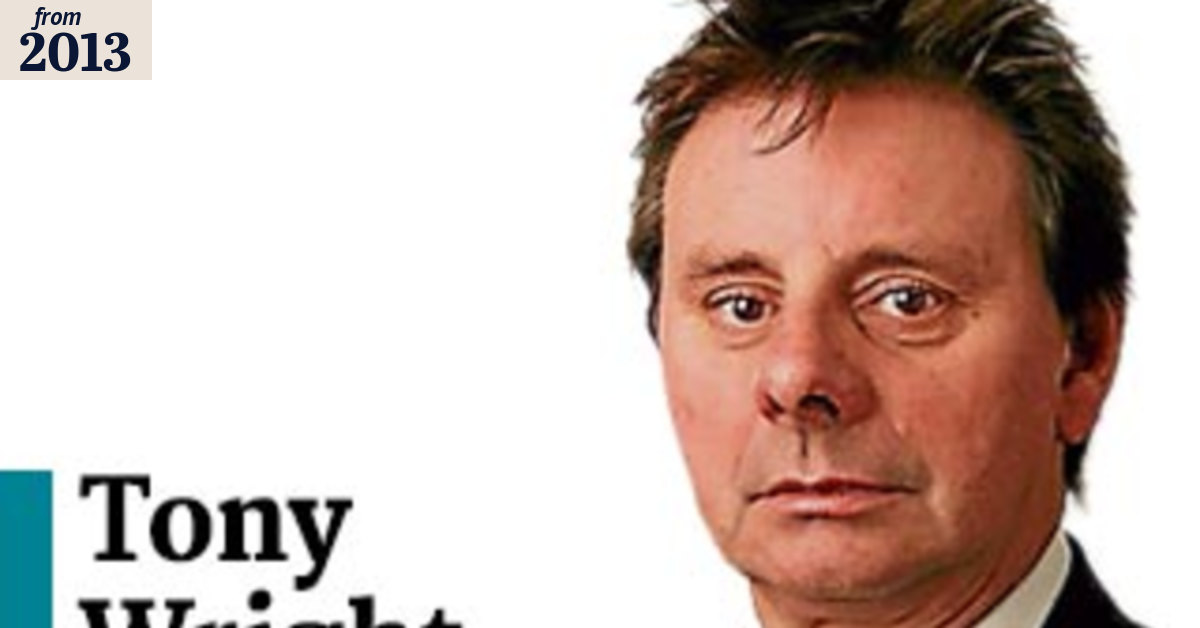
The Sydney Morning Herald (primary source): This is a mainstream, reputable Australian newspaper. Tony Wright is an associate editor and special writer with established credentials. The article is opinion/analysis but draws on factual reporting. SMH is generally considered center-left but maintains journalistic standards [1].
The Courier Mail: A mainstream News Corp publication with center-right leanings. The referenced article appears to be opinion commentary critical of the government's inconsistency [7].
Overall source assessment: The sources are credible mainstream media outlets. The SMH article in particular provides substantial factual context while expressing critical opinion. The claim's sources are not partisan advocacy sites - they are established newspapers. However, they represent opinion/analysis pieces rather than straight news reporting.
Labor Comparison
Did Labor do something similar?
Search conducted: "Labor government corporate subsidies manufacturing Australia"
Findings:
Massive car industry funding: The Rudd Labor government announced a $6.2 billion plan for the automotive industry in 2008, including a $500 million "green car" innovation fund [8]. In the 2013 election, Kevin Rudd promised an additional $500 million from 2016-2020 plus $300 million annually ongoing from 2020 [9]. Abbott explicitly refused to match this commitment [9].
Direct corporate assistance: Labor governments routinely provided industry assistance across multiple sectors. For example, under Labor, the car industry received billions in ongoing support - far exceeding the $16 million Cadbury grant [8][9].
Selective approach also occurred: Labor also made politically motivated funding decisions. For example, during the 2007 election campaign, Kevin Rudd announced various regional grants and infrastructure projects in key electorates.
Tourism funding: Both parties have consistently funded tourism infrastructure projects in electorates they wished to win or hold. This is standard Australian political practice.
Comparison: The scale of Labor's corporate assistance to manufacturing (particularly automotive) dwarfed the Cadbury tourism grant. If the Coalition's Cadbury grant represents "corporate welfare," Labor's automotive industry spending (billions vs. millions) represents the same phenomenon on a vastly larger scale. The difference is that Labor tended to favor manufacturing subsidies while the Coalition's grant was tourism-focused.
Balanced Perspective
The inconsistency is real but requires nuanced analysis:
The Abbott government's simultaneous declaration that "no government has ever subsidised its way to prosperity" [1] while having provided $16 million to Cadbury during the election campaign created a legitimate perception of inconsistency. The SMH article captures this tension well: Abbott was "campaign-pragmatic" for Cadbury while adopting a harder line for Holden, SPC Ardmona, and Qantas [1].
However, important distinctions exist:
Timing matters: The Cadbury grant was announced during the 2013 election campaign (August 2013), before Abbott became Prime Minister and before the government's broader "end of corporate welfare" policy crystallized in response to the Holden closure announcement (December 2013) [1].
Category distinction: The Cadbury funding was a tourism infrastructure grant (similar to building a visitor attraction), while the refused requests were operational subsidies to maintain manufacturing operations [1][2]. Governments of all stripes treat these categories differently.
Comparative context: The $16 million Cadbury grant is tiny compared to the billions routinely provided by both parties to various industries. Labor's $6.2 billion automotive plan [8] represents corporate assistance on a vastly larger scale.
Qantas specific context: Qantas's request was complicated by foreign ownership restrictions (the Qantas Sale Act) that prevented foreign capital injection, a regulatory framework both parties had maintained [10].
The marginal electorate claim: The implication that the grant was to win Denison is questionable because (a) Denison was held by Independent Andrew Wilkie, not Labor, and (b) the Coalition's swing in Tasmania was massive (9.4%) [4], suggesting they didn't need this specific grant to win seats. They won Bass and Braddon without Cadbury being in those electorates.
Key context: The perception of inconsistency is legitimate, but this represents political expediency common to all governments rather than unique Coalition corruption. Both parties have made politically-motivated grants announcements during election campaigns. The Cadbury grant, while symbolically problematic given the "corporate welfare" rhetoric, is financially minor compared to routine bipartisan industry assistance.
PARTIALLY TRUE
6.0
out of 10
The core facts are accurate: the Abbott government did provide $16 million to Cadbury during the 2013 election campaign while subsequently refusing similar subsidy requests from Holden, Qantas, and SPC Ardmona. The Cadbury factory is in Claremont, Hobart (Denison electorate), and was owned by a profitable multinational (Mondelez).
However, the claim omits critical context that undermines its implication of unique Coalition hypocrisy or corruption. The Cadbury funding was a tourism infrastructure grant (not a manufacturing subsidy), announced during an election campaign before the government's corporate welfare policy fully formed. The marginal electorate implication is overstated (Denison was held by an Independent, not a marginal Coalition seat). Most importantly, Labor governments provided billions in corporate assistance (particularly to the automotive industry) - dwarfing this $16 million grant. The inconsistency is real but represents standard political expediency common to all Australian governments rather than exceptional behavior.
Final Score
6.0
OUT OF 10
PARTIALLY TRUE
The core facts are accurate: the Abbott government did provide $16 million to Cadbury during the 2013 election campaign while subsequently refusing similar subsidy requests from Holden, Qantas, and SPC Ardmona. The Cadbury factory is in Claremont, Hobart (Denison electorate), and was owned by a profitable multinational (Mondelez).
However, the claim omits critical context that undermines its implication of unique Coalition hypocrisy or corruption. The Cadbury funding was a tourism infrastructure grant (not a manufacturing subsidy), announced during an election campaign before the government's corporate welfare policy fully formed. The marginal electorate implication is overstated (Denison was held by an Independent, not a marginal Coalition seat). Most importantly, Labor governments provided billions in corporate assistance (particularly to the automotive industry) - dwarfing this $16 million grant. The inconsistency is real but represents standard political expediency common to all Australian governments rather than exceptional behavior.
📚 SOURCES & CITATIONS (10)
-
1
Tony Abbott likes chocolate, but car makers and airlines must fend for themselves
Australia's rent seekers are firmly on notice: it is the end of corporate welfare. Prime Minister Tony Abbott has never been so direct: no government has ever subsidised its way to prosperity, he declared, adding a good kick from his R.M. Williams boot to the stupidity of ''knee-jerk piecemeal deals''.
The Sydney Morning Herald -
2

Cadbury Chocolate Experience Hobart Tasmania
A new chocolate experience will bring back to life one of Tasmania’s most beloved attractions and deliver the world’s ultimate chocolate experience on the Cadbury Factory waterfront parklands.
Chocolate Experience at Cadbury -
3PDF
Mondelez International Annual Report 2013
Stocklight • PDF Document -
4

Results of the 2013 Australian federal election in Tasmania
Wikipedia -
5

Cadbury's Historic Tasmanian Factory Set for $150 Million Immersive Chocolate Experience
A $150m redevelopment will transform Cadbury’s original Tasmanian factory into a landmark chocolate-themed attraction, boosting tourism and regional investment.
Experience UK -
6

SPC Ardmona funding history
Wikipedia -
7
Welfare inconsistencies as government smiles on Cadbury while rejecting SPC Ardmona
Couriermail Com
-
8
Rudd's $6.2bn car plan
The Rudd Government will pump more than $6 billion into Australia's ailing car industry over the next 13 years under a plan unveiled today.
The Sydney Morning Herald -
9
Kevin Rudd vows to support car industry with $500m funding boost
Prime Minister Kevin Rudd says Labor wants to provide the car industry in Australia with long-term certainty and formally announced a multi-million-dollar funding commitment for beyond 2020. An extra $500 million will be available for the industry from 2016-2020, with $300 million a year promised on an ongoing basis from 2020. "We believe it's important to support 50,000 jobs in the car industry across Australia," Mr Rudd said today. Tony Abbott says the Coalition will not be matching the funding and has accused Mr Rudd of chasing the car industry with a blank cheque.
Abc Net -
10

Qantas Sale Act foreign ownership restrictions
Wikipedia
Rating Scale Methodology
1-3: FALSE
Factually incorrect or malicious fabrication.
4-6: PARTIAL
Some truth but context is missing or skewed.
7-9: MOSTLY TRUE
Minor technicalities or phrasing issues.
10: ACCURATE
Perfectly verified and contextually fair.
Methodology: Ratings are determined through cross-referencing official government records, independent fact-checking organizations, and primary source documents.