
The Claim
“Chose a climate change denier to lead a review of the renewable energy target.”
Original Sources Provided
✅ FACTUAL VERIFICATION
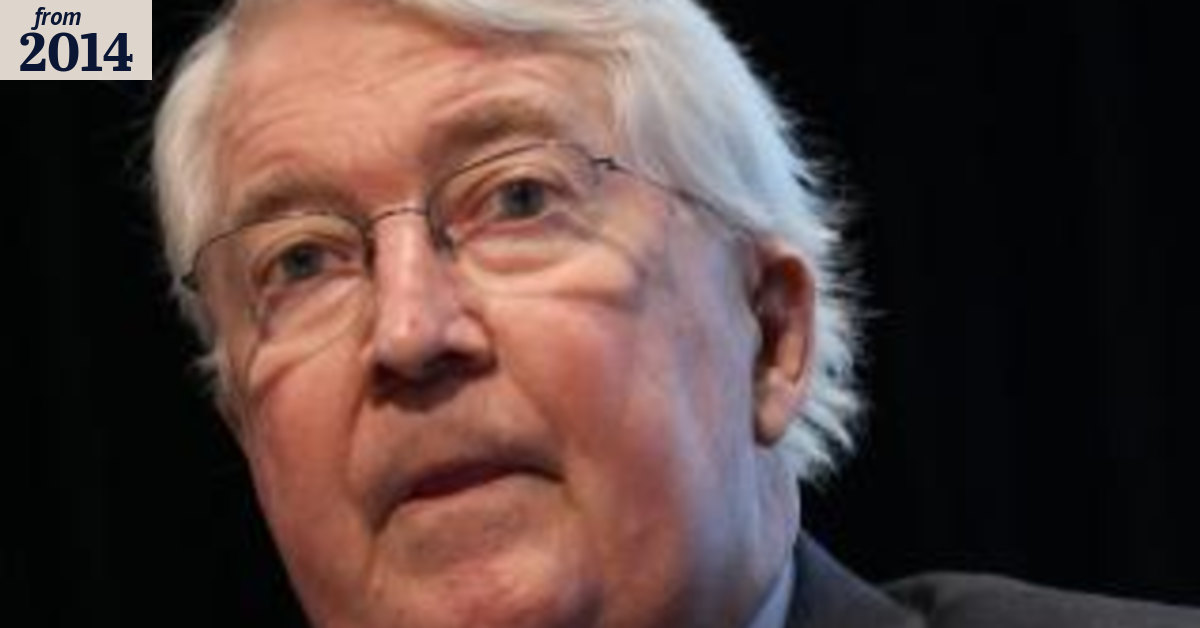
The claim is factually accurate. In February 2014, the Abbott government appointed Dick Warburton AO LVO, a businessman and self-professed climate sceptic, to lead the review of Australia's Renewable Energy Target (RET) scheme [1][2]. The review was jointly announced by Industry Minister Ian Macfarlane and Environment Minister Greg Hunt on 17 February 2014 [3].
Warburton has publicly stated his skeptical views on climate change. In media interviews at the time of his appointment, he acknowledged being a climate sceptic but stated he would keep an open mind during the review [4][5].
The Warburton review released its findings in August 2014, recommending that the Large-scale Renewable Energy Target (LRET) be either closed to new entrants or significantly modified [6][7].
Missing Context
The claim omits several important contextual factors:
1. Warburton's Business Credentials: Dick Warburton was not selected arbitrarily - he was a veteran businessman with extensive corporate experience, including as Chairman of manufacturing firm Tabcorp and former Reserve Bank board member [1][2]. His appointment was framed by the government as bringing business expertise to assess the economic impact of the RET.
2. Review Panel Composition: The review was conducted by a panel, not solely by Warburton. The panel was supported by a secretariat within the Department of the Prime Minister and Cabinet and included other members with diverse expertise [6].
3. Warburton's Defense of Process: Warburton publicly defended the review process, stating his personal views on climate change had no bearing on the panel's findings and that he approached the review with an "open mind" [4][5]. While critics disputed this, it is part of the record that should be acknowledged.
4. Previous RET Reviews: The RET had been reviewed multiple times previously. The Climate Change Authority (established under Labor) had already conducted reviews of the RET in 2012 and continued to provide analysis during this period [6]. The 2014 review was initiated by the new Coalition government after it took office in 2013.
5. Outcome of Recommendations: The Warburton review's most contentious recommendations (closing the LRET to new entrants) were ultimately not implemented in full. After extensive political debate and industry opposition, the government eventually settled on a less drastic reduction in the RET target (from 41,000 GWh to 33,000 GWh by 2020) rather than complete closure [8].
Source Credibility Assessment
The original source, RenewEconomy, is an Australia-focused website specializing in renewable energy news and climate policy analysis. Founded in 2012, it has become a leading source for clean energy news in Australia [9][10].
Assessment:
- RenewEconomy is clearly focused on promoting renewable energy and climate action, which creates an advocacy-oriented perspective
- The site describes itself as focusing on "clean energy news and analysis" [9]
- Media assessment sources describe it as "balanced and thoughtful" with "nuanced perspective" [10], though its subject matter focus inherently creates a pro-renewables bias
- The headline framing ("climate change denier") uses charged language that emphasizes the most controversial aspect
While the factual claim about Warburton's appointment is accurate, readers should be aware that RenewEconomy has a clear editorial stance in favor of renewable energy policy and against fossil fuel interests. The headline emphasizes the controversy rather than providing neutral framing.
Labor Comparison
Did Labor appoint people with predetermined views to reviews?
Governments of all political persuasions typically appoint review panel chairs whose views align with their policy priorities. This is standard practice in Australian politics:
Climate Change Authority: Established by the Gillard Labor government in 2011, the Authority itself was designed to provide independent advice on climate policy. Its board members were appointed by Labor and were generally supportive of climate action [6].
Standard Government Practice: As noted in the Australian Government Appointments Framework, ministerial appointments to boards and review panels typically reflect the government's policy direction [11]. While there are merit-based selection processes, governments naturally select individuals whose expertise and perspectives align with their priorities.
No Direct Equivalent Found: Labor did not conduct a major review of the RET during their period in government (2007-2013) because they created and supported the policy. They did, however, appoint business leaders and experts who supported renewable energy and climate action to various advisory roles.
Key Point: What made the Warburton appointment controversial was not that he had views (all appointees do), but that his views were perceived to be in direct opposition to the policy he was reviewing. However, the Coalition government had campaigned on reviewing the RET, and appointing someone skeptical of both climate science and renewable energy subsidies aligned with their policy platform.
Balanced Perspective
The Criticism:
Critics argued that appointing a known climate sceptic to review renewable energy policy was like "putting a fox in charge of the henhouse" [12]. The renewable energy industry expressed alarm at the appointment, with industry leaders describing the eventual report as representing the "worst case scenario" [13]. The Clean Energy Council and other advocates argued that Warburton's personal views created an inherent conflict with objectively assessing a policy designed to reduce emissions [1].
The Government's Position:
The Abbott government defended the appointment by emphasizing Warburton's extensive business and policy experience rather than his climate views [4]. From the government's perspective:
- The RET was designed to reduce emissions at least cost to consumers
- A businessman with financial expertise could objectively assess whether the policy was delivering value
- The review was about economic assessment, not climate science
- Warburton's skepticism about climate change didn't preclude him from analyzing the economics of the RET scheme
The Complexity:
The RET review occurred at a time of significant political polarization around climate policy in Australia. The Abbott government had been elected in 2013 on a platform that included abolishing the carbon price (which they did) and reviewing the RET. The appointment of Warburton signaled the government's intent to seriously examine the costs of the scheme, which was consistent with their election commitments.
Warburton himself defended his objectivity, telling ABC Radio: "I have been a person who looks at the facts and makes decisions on the facts, and that's what I've done in this review" [4]. Whether one accepts this defense or not, the panel did conduct a comprehensive review that acknowledged the RET had successfully promoted renewable generation (over 5,000 MW installed) [6].
Comparative Context:
This appointment reflects a broader pattern where governments select reviewers whose perspectives align with their policy direction. The controversy was heightened because:
- Climate change was (and remains) a highly polarized issue in Australian politics
- The RET was one of the few climate policies remaining after the carbon price repeal
- Warburton was unusually candid about his climate skepticism, making the appointment appear more brazen than typical government appointments
However, governments regularly appoint people with views aligned to their policy goals - Labor appointed climate advocates to climate advisory roles, just as the Coalition appointed a climate skeptic to review a climate policy they were skeptical of.
TRUE
8.0
out of 10
Final Score
8.0
OUT OF 10
📚 SOURCES & CITATIONS (12)
-
1
Dick Warburton says climate sceptic views did not influence report recommending slashing of renewable energy target
The climate sceptic and businessman chosen by the Abbott government to lead its review of the renewable energy target has denied his personal views have had any influence on the panel's report, which recommends that the scheme be dramatically cut back.
The Sydney Morning Herald -
2
Climate sceptic hired for renewables review denies bias
Thechronicle Com
-
3PDF
Renewable Energy Target Scheme Review
Mothersagainstturbines • PDF Document -
4

Warburton defends climate views
The chair of the Government's review into Australia's 20 per cent renewable energy target says he's not a climate change denier, and will keep an open mind during the review. Dick Warburton says he is sceptical about human induced global warming, but will approach this review like any other government inquiry.
ABC listen -
5

Climate sceptic had 'open mind' on renewable energy target review
Dick Warburton says his personal views sceptical of climate change had no bearing on his review of the renewable energy target scheme.
SBS News -
6
2014 Renewable Energy Target Review
Climatechangeauthority Gov
-
7

Aussie panel says stop RET for new large projects, kill small renewables support
(SeeNews) - Aug 28, 2014 - The panel reviewing Australia’s Renewable Energy Target (RET) is recommending that the support scheme for large-scale projects be closed to new entrants and is calling for the immediate scrapping or significant cuts to the small-scale renewables category.
Renewables Now -
8

Dick Warburton report recommends Tony Abbott slash renewable energy target
Tony Abbott has been given cover to break an election promise not to touch Australia’s renewable energy target...
Canberratimes Com -
9
RenewEconomy
Reneweconomy Com
-
10

Renew Economy - News Publisher Profile
Discover Renew Economy's top journalists and social feeds on PressContact! Curated by PR experts to help your PR campaign, updated in 2025.
News Publisher Profile -
11
Australian Government Appointments Framework
Apsc Gov
-
12

Coalition's renewable energy review an 'unprecedented scam', industry says
environment environment Coalition’s renewable energy review an ‘unprecedented scam’, industry says Review assumes fossil fuel investors won’t need to factor in any risk due to climate policies for decades The government's review of the renewable energy target assumes no risk to investments in coal-fired power stations for the next couple of decades. Photograph: Greg Wood/AFP/Getty Images Lenore Taylor, political editor Thursday 24 April 2014 12.39 EST 301 comments The renewable energy industry has labelled a controversial Abbott government review an “unprecedented scam” and a “stitch-up” after learning that it was conducting electricity industry modelling on the assumption there would be no risk or cost to investments in coal-fired power stations in the next few decades. The review of the renewable energy target – headed by veteran businessman and self-professed climate sceptic Dick Warburton – and its modellers from ACIL Allen consulting held a workshop with industry participants on Wednesday at which they revealed the modelling would assume investors in fossil fuel generation would not need to factor in any risk due to climate policies for decades – neither a carbon price, nor a requirement to invest in emission-reducing technologies, nor any cost from any other government policy or regulation. Many of the 50 participants said this assumption was entirely unrealistic. John Grimes, chief executive of the Australian Solar Council, said it made the whole review a farce. “This is an absolute stitch-up. They are predetermining the outcome of this modelling by the assumptions they are making … it is an unprecedented scam in policy-making and it needs to be called for what it is,” Grimes told Guardian Australia. “It is clear that the RET review report will protect the vested interests in the current electricity market.” Grimes said that any model that ignored international action on climate change and failed to consider a carbon price up to 2030 “lacks any credibility”. Ric Brazzale, managing director of Green Energy Trading, said it was “ridiculous to assume you can increase greenhouse emissions for decades with no kind of cost or risk at all”. “They are not going to come up with a fair outcome if they assume there is no carbon price and no kind of carbon constraint at all,” Brazzale said. It is understood the workshop was also told the review had not considered the government’s election promise to provide subsidies to put solar panels on another one million roofs because there was as yet no policy detail behind it. Dick Warburton, a veteran industrialist and current chairman of the Westfield Retail Trust, described his views on climate science in a 2011 interview on ABC. “Well I am a sceptic. I’ve never moved away from that. I’ve always believed sceptical,’’ he said. “But a sceptic is a different person than a denier. I say the science is not settled. I’m not saying it’s wrong. I’ve never said it’s wrong, but I don’t believe it’s settled.” He is joined on the review panel by the former executive director of the Australian Bureau of Agricultural and Resource Economics, Brian Fisher, director of Asciano Limited and the CSIRO, Shirley In't Veld and the managing director of the Australian Energy Market Operator, Matt Zema. The review is charged with looking at “the economic, environmental and social impacts of the RET scheme, in particular the impacts on electricity prices, energy markets, the renewable energy sector, the manufacturing sector and Australian households” and with assessing how it fits with the government’s aim of “reducing business costs”. It has asked for submissions on whether the RET should be “abolished, reduced or increased”. The target – introduced by the Howard government and expanded by the Rudd government – now requires that 41,000 gigawatt hours of energy be sourced from renewables by 2020. At the time it was enacted that represented 20% of the market, but due to falling electricity demand, it will now be well over 20% – which has prompted calls for the target date to be pushed out or the target reduced, including a plan privately floated by the environment minister, Greg Hunt, for it to become a 25% by 2025 target. But others, including the government’s top business adviser, Maurice Newman, want the RET scrapped altogether. Newman, the former chairman of the ABC and the ASX, has said persisting with government subsidies for renewable energy represented a “crime against the people” because higher energy costs hit poorer households the hardest and there was no longer any logical reason to have them. In setting up its own RET review, the government bypassed the Climate Change Authority – which it wants to abolish – but which is required by legislation to undertake regular reviews of the RET. Ta
Ecoradio
Rating Scale Methodology
1-3: FALSE
Factually incorrect or malicious fabrication.
4-6: PARTIAL
Some truth but context is missing or skewed.
7-9: MOSTLY TRUE
Minor technicalities or phrasing issues.
10: ACCURATE
Perfectly verified and contextually fair.
Methodology: Ratings are determined through cross-referencing official government records, independent fact-checking organizations, and primary source documents.