
The Claim
“Increased the eligibility age for the pension.”
Original Sources Provided
✅ FACTUAL VERIFICATION
TRUE - The Coalition government did propose and attempt to increase the pension eligibility age.
In the 2014-15 Federal Budget, the Abbott government announced plans to progressively increase the pension age from 67 to 70 over 10 years, from 2025 to 2035 [1][2]. This meant no one born before January 1, 1966 would be affected by the change [3]. The 2014-15 budget argued the increase was necessary due to an aging population increasing demand for the age pension, health and aged care services [1].
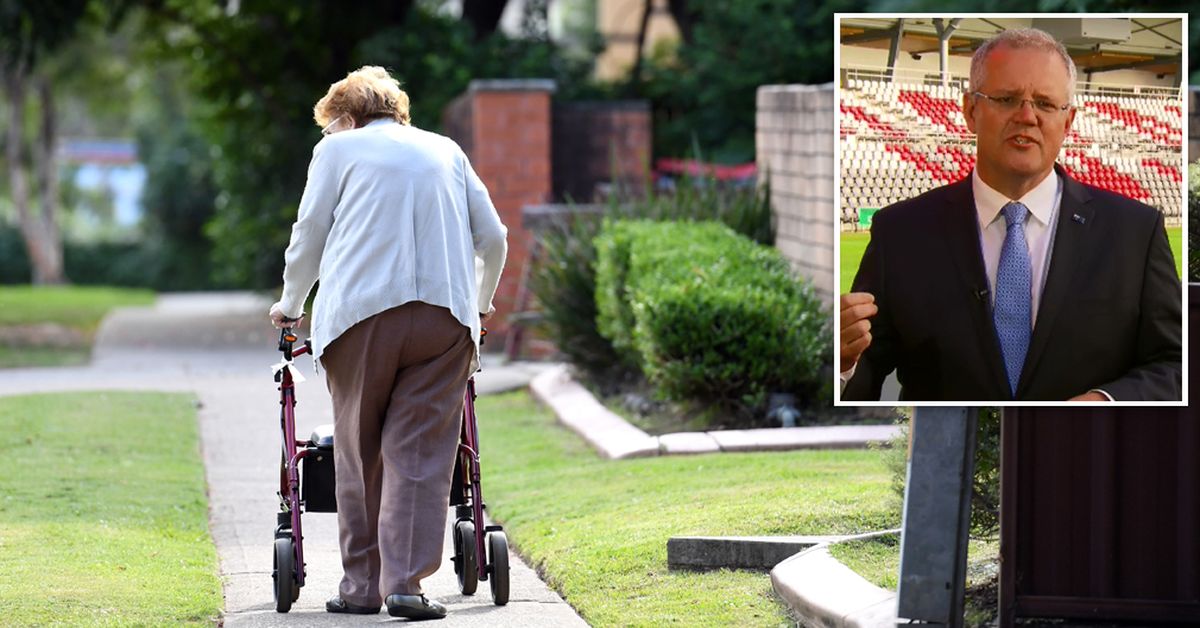
However, the Coalition later abandoned this policy. In 2018, Prime Minister Scott Morrison announced the pension age would remain at 67, saying "The pension age going to 70, gone" [4]. The current pension age reached 67 on July 1, 2023, as legislated by the previous Labor government [5].
Missing Context
Labor started the pension age increase first. The claim omits that the increase to 67 was actually Labor policy introduced in 2010 legislation [5][6]. Under legislation introduced by the Rudd/Gillard Labor government, the pension age began climbing from 65 in 2017 by six months every two years, reaching 67 by July 2023 [5][7].
International context was ignored. At the time of the 2014 proposal, many developed countries were increasing their retirement ages. Denmark, Iceland, Israel, the Netherlands, and Norway already had retirement ages of 67 [8]. The OECD average normal retirement age in 2024 was 64.7 years for men [8].
The 70-year proposal was never implemented. While the Coalition did announce the policy in 2014, it was abandoned in 2018 before taking effect [4]. The pension age remains at 67 today.
Source Credibility Assessment
The Guardian is a mainstream, internationally recognized news organization. The article cited is from April 2014, reporting on Abbott's pre-budget comments about potential pension changes. The Guardian has a center-left editorial stance but maintains professional journalistic standards. However, the article focuses on the Coalition's potential changes without mentioning that Labor had already legislated an increase to 67.
Labor Comparison
Did Labor do something similar?
Search conducted: "Labor government pension age increase 2010 legislation"
Finding: Yes - Labor actually started the pension age increases.
The Labor government (Rudd/Gillard) introduced legislation in 2010 to increase the pension age from 65 to 67 by 2023 [5][6]. This was passed as part of a package that also included pension increases [6]. The increase began in 2017 and was implemented progressively by six months every two years until reaching 67 in July 2023 [7].
Former Labor Minister Jenny Macklin confirmed: "Subject to legislation, we are proposing to progressively increase the age pension age over a much longer period than Labor did, from 67 to 70 years, over 10 years from 2025 to 2035" [3]. This confirms Labor had already increased it from 65 to 67.
Comparison:
Balanced Perspective
While the Coalition did propose increasing the pension age to 70, this needs to be understood in the broader context of pension policy evolution in Australia and internationally.
The full story: Both major parties have supported increasing the pension age in recent decades. Labor increased it from 65 to 67 in 2010 legislation [5][6]. The Coalition's 2014 proposal to go further to 70 was consistent with trends in other developed nations - Denmark, Iceland, Israel, the Netherlands and Norway were already at 67 [8]. The OECD average retirement age was approaching 65 [8].
Justification provided: The Abbott government argued the increase was necessary due to Australia's aging population and the increasing fiscal pressure on the age pension, health and aged care systems [1]. Longer life expectancies meant people were receiving pensions for more years than when the system was designed.
Why it was abandoned: The Morrison government dropped the 70-year proposal in 2018, citing fairness concerns and practical realities [4]. The policy had proven deeply unpopular and contributed to the Coalition's poor polling following the 2014 budget [2].
Key context: This is NOT unique to the Coalition. Both major parties have increased the pension age in the past 15 years. Labor's increase to 67 is now law and implemented, while the Coalition's proposed increase to 70 was announced but never implemented.
TRUE
6.0
out of 10
The claim is factually accurate - the Coalition did propose to increase the pension eligibility age. However, the claim omits crucial context: (1) the increase to 67 was actually Labor policy first, legislated in 2010 [5][6]; (2) the Coalition's 70-year proposal was never implemented and was abandoned in 2018 [4]; and (3) both parties have supported pension age increases, reflecting demographic and fiscal pressures affecting developed nations worldwide [8].
Final Score
6.0
OUT OF 10
TRUE
The claim is factually accurate - the Coalition did propose to increase the pension eligibility age. However, the claim omits crucial context: (1) the increase to 67 was actually Labor policy first, legislated in 2010 [5][6]; (2) the Coalition's 70-year proposal was never implemented and was abandoned in 2018 [4]; and (3) both parties have supported pension age increases, reflecting demographic and fiscal pressures affecting developed nations worldwide [8].
📚 SOURCES & CITATIONS (8)
-
1

profileservices.com.au
From 1 July 2023 the ‘retirement age’ increased to 67 years. In this article we delve into the reasons for this change and the consequences.
Profile Financial Services -
2

cepar.edu.au
The pension age won't climb to 70 after all. What was the original idea all about? CEPAR Senior Research Fellow Rafal Chomik explains.
Cepar Edu -
3

formerministers.dss.gov.au
Formerministers Dss Gov -
4
9news.com.au
Prime Minister Scott Morrison has confirmed the Coalition will reverse the decision to raise the national p...
9news Com -
5

theconversation.com
The pension age won’t climb to 70 after all. What was it all about?
The Conversation -
6

thesenior.com.au
Who expects a 69-year-old to work as a bricklayer?
Thesenior Com -
7
lighthouse.mq.edu.au
Lighthouse Mq Edu
-
8
oecd.org
Oecd
Rating Scale Methodology
1-3: FALSE
Factually incorrect or malicious fabrication.
4-6: PARTIAL
Some truth but context is missing or skewed.
7-9: MOSTLY TRUE
Minor technicalities or phrasing issues.
10: ACCURATE
Perfectly verified and contextually fair.
Methodology: Ratings are determined through cross-referencing official government records, independent fact-checking organizations, and primary source documents.