
The Claim
“Cut foreign aid, again. This time by $7.6 billion.”
Original Sources Provided
✅ FACTUAL VERIFICATION
The claim that the Coalition government cut foreign aid by $7.6 billion is factually accurate. The 2014-15 federal budget, delivered by Treasurer Joe Hockey on May 13, 2014, announced $7.6 billion in savings from the foreign aid budget over five years [1][2]. This represented the single largest savings measure in the budget [3].
The specific measures included:
- Capping foreign aid at $5 billion for 2014-15 and 2015-16 (a freeze rather than the previously projected increases) [1]
- Removing $2 billion from the projected foreign aid budget in 2017-18 by abandoning the commitment to reach 0.5% of GNI [1]
- From 2016-17 onward, aid would only grow in line with the Consumer Price Index (CPI) rather than with economic growth [4]
The "again" framing in the claim refers to the December 2014 Mid-Year Economic and Fiscal Outlook (MYEFO), which announced additional cuts of approximately $3.7 billion over four years, taking the aid budget below the levels inherited from the previous Labor government [5][6].
Missing Context
The claim omits several important contextual elements:
Economic Context: The cuts were announced as part of the government's "budget repair" agenda, responding to what the Coalition framed as a "budget emergency" with projected deficits [7]. The government argued that continued strong growth in aid spending was unsustainable while the Australian economy was growing below trend [6].
Nature of the "Cuts": The $7.6 billion figure primarily represented reductions in projected growth rather than immediate year-on-year cuts to actual spending. The aid budget remained at approximately $5 billion in nominal terms for 2014-15 and 2015-16, which was roughly level with the final Labor budget [6]. The "cuts" were largely the elimination of planned future increases that had been projected by the previous government.
Purpose of Aid: The budget papers stated the government would allocate aid "where it can make the most difference," and there was an increase to aid for Papua New Guinea specifically in return for hosting the Manus Island immigration processing centre [1].
Performance Benchmarking: The budget introduced performance benchmarks requiring aid recipients to demonstrate results and value for Australian money [1].
Source Credibility Assessment
The original source is ABC News, which is Australia's national public broadcaster and widely regarded as a credible, mainstream news source. The ABC has a statutory obligation to maintain independence and impartiality under the Australian Broadcasting Corporation Act 1983.
The article cited is a factual news report from May 14, 2014, reporting on the budget announcement and reactions from aid organizations including Oxfam and World Vision. It presents both the government's actions and criticism from aid groups, providing a balanced view of the controversy.
The ABC has been independently assessed as having relatively low bias compared to other Australian media outlets, though like all media, it has faced criticism from various political perspectives over time. For the purposes of this claim verification, the ABC News report is considered a reliable source.
Labor Comparison
Did Labor do something similar?
Search conducted: "Labor government foreign aid cuts Australia history comparison"
Finding: Yes - Labor also made significant reductions to foreign aid projections during its time in government.
According to ABC Fact Check's comprehensive analysis from November 2015 [6]:
Labor's 2012-13 budget: Deferred the 0.5% GNI target by one year to 2016-17, resulting in savings of $2.9 billion over four years [6]
Labor's 2013-14 budget: Further deferred the target to 2017-18, saving an additional $1.9 billion over four years [6]
Labor's August 2013 Pre-Election Economic Statement: Saved another $966 million over four years [6]
Labor's total "savings" from foreign aid projections while in government: approximately $5.8 billion [6]
Additionally, in January 2014 (before the May 2014 budget), the Abbott government had already announced $650 million in foreign aid cuts for the 2013-14 financial year [8].
Comparative Analysis
| Government | Action | Amount | Context |
|---|---|---|---|
| Labor (2012-2013) | Deferred aid targets | $5.8 billion total | Global Financial Crisis, budget surplus pursuit |
| Coalition (Jan 2014) | Immediate cuts | ~$650 million | Post-election budget consolidation |
| Coalition (May 2014) | 5-year aid savings | $7.6 billion | Budget repair agenda |
| Coalition (Dec 2014) | Additional MYEFO cuts | ~$3.7 billion | Further deficit reduction |
Both governments used foreign aid as a source of budget savings when facing fiscal pressures. The primary difference is one of scale - the Coalition's cuts were larger in absolute dollar terms, though the Labor government had already established the pattern of deferring aid commitments to meet budget objectives.
Balanced Perspective
The claim presents the foreign aid cuts as a negative action without acknowledging the broader fiscal context or the bipartisan nature of using aid projections for budget savings.
Legitimate Criticisms (supported by evidence):
- Aid groups argued the cuts broke bipartisan commitments to reach 0.5% of GNI [1][3]
- The cuts represented the largest-ever reduction to Australia's aid program at the time [9]
- Regional programs, particularly in Southeast Asia, faced 30% reductions [9]
- Australia would fall further from meeting the Millennium Development Goal target of 0.7% of GNI [1]
- The aid-to-GNI ratio would decline from 0.37% under Labor's final budget to approximately 0.22% and eventually to 0.17% by 2025-26 [6]
Government Justifications (as presented in official documents):
- The budget situation required difficult decisions to achieve sustainability [7]
- Economic growth was below trend, making continued aid expansion unsustainable [6]
- Aid would be better targeted to areas where it could make the most difference [1]
- Performance benchmarks would ensure better value for money [1]
- The government maintained core aid levels at approximately $5 billion annually [6]
Comparative Context:
The framing suggests this was a uniquely Coalition action, but the historical record shows both major Australian parties have treated foreign aid as a "fiscal adjustment variable" when budget pressures arise. Labor's $5.8 billion in deferred aid growth during its final years in office established the precedent that the Coalition then extended.
The key distinction is that Labor primarily deferred targets while maintaining projected growth trajectories, whereas the Coalition both froze nominal aid levels and later implemented actual year-on-year cuts below inherited baselines.
PARTIALLY TRUE
6.0
out of 10
The core factual claim is accurate: the Coalition government did announce $7.6 billion in foreign aid "cuts" (more accurately, reductions from projected spending) in the May 2014 budget [1][2]. The "again" framing is also technically accurate as there were additional cuts in December 2014 MYEFO [5].
However, the claim presents this as a uniquely negative Coalition action while omitting that:
- The previous Labor government had already made $5.8 billion in similar "savings" from aid projections
- Both parties have historically used foreign aid as a budget adjustment mechanism
- The $7.6 billion was primarily a reduction in projected growth rather than immediate cuts to actual spending
- The cuts occurred within a stated "budget repair" context following what the government characterized as a fiscal emergency
The framing implies this was an exceptional or uniquely harsh action when it was actually an extension of bipartisan fiscal practices, albeit at a larger scale.
Final Score
6.0
OUT OF 10
PARTIALLY TRUE
The core factual claim is accurate: the Coalition government did announce $7.6 billion in foreign aid "cuts" (more accurately, reductions from projected spending) in the May 2014 budget [1][2]. The "again" framing is also technically accurate as there were additional cuts in December 2014 MYEFO [5].
However, the claim presents this as a uniquely negative Coalition action while omitting that:
- The previous Labor government had already made $5.8 billion in similar "savings" from aid projections
- Both parties have historically used foreign aid as a budget adjustment mechanism
- The $7.6 billion was primarily a reduction in projected growth rather than immediate cuts to actual spending
- The cuts occurred within a stated "budget repair" context following what the government characterized as a fiscal emergency
The framing implies this was an exceptional or uniquely harsh action when it was actually an extension of bipartisan fiscal practices, albeit at a larger scale.
📚 SOURCES & CITATIONS (10)
-
1
Budget 2014: Aid groups vent anger over cuts to foreign aid spending
Aid groups say the Australian budget is a broken election promise to the world's poorest people.
Abc Net -
2
Federal Budget 2014: More than $7.5 billion cut from foreign aid
News Com
-
3
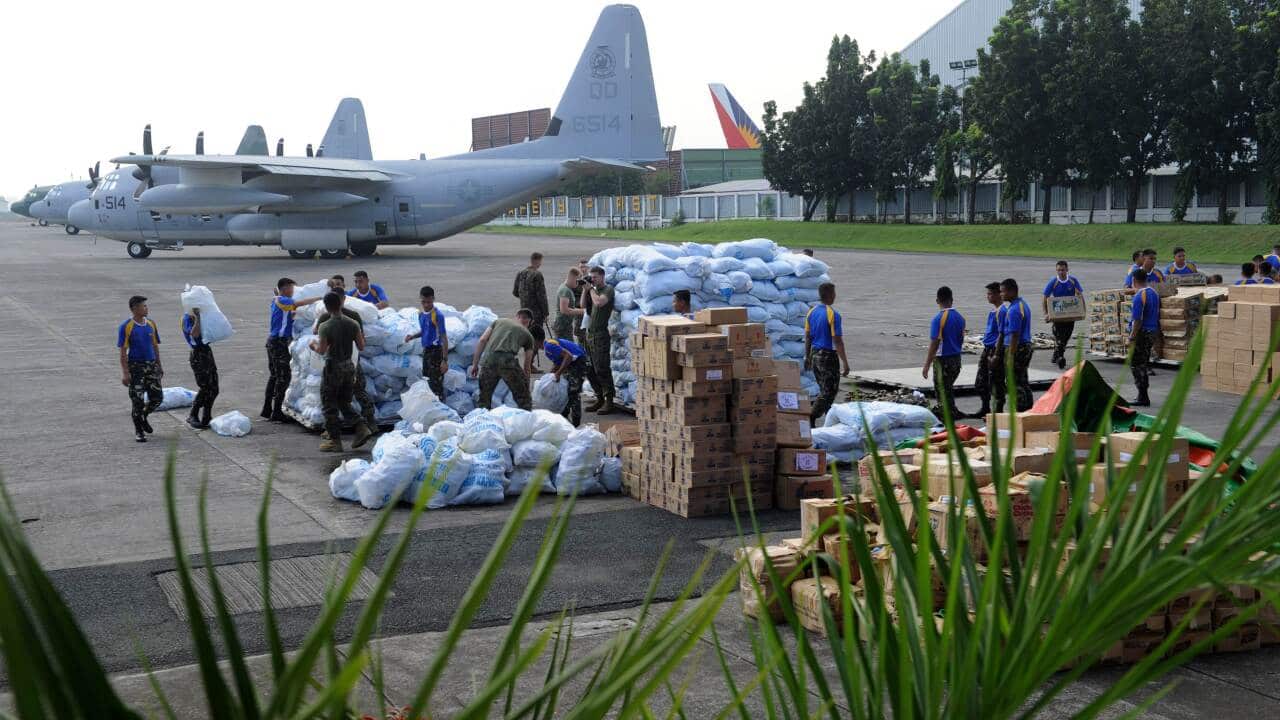
Charity groups 'gutted' by foreign aid cuts
Cuts to Australia's aid program were the biggest savings announced in the 2014 budget, with $7.6 billion to be trimmed over five years.
SBS News -
4PDF
Budget 2014-15, Budget Paper No. 2
Budget Gov • PDF Document -
5
MYEFO: Foreign aid slashed again, budget deficits to balloon in mid-year update
Treasurer Joe Hockey will slash foreign aid and reveal a massive blowout in this year's deficit when he hands down his mid-year budget update today.
Abc Net -
6
Fact check: Comparing Labor and the Coalition's records on foreign aid
Opposition foreign affairs spokeswoman Tanya Plibersek denies that Labor cut the aid budget when in government. "We actually doubled the aid budget when we were in government," she told the ABC Radio's AM program. "This Government has cut $11.3 billion, it's now about 22 cents in every $100 we spend, it's going down to 17 cents." How do Labor and the Coalition's records compare on foreign aid? ABC Fact Check investigates.
Abc Net -
7

2014 Australian federal budget - Wikipedia
Wikipedia -
8

Abbott Government Cuts $650 Million From Foreign Aid
The Abbott government has announced $650 million of cuts to Australia's foreign aid program. Details and reaction here.
AustralianPolitics.com -
9
Steadying foreign aid budget signals the government takes development seriously
Findanexpert Unimelb Edu
-
10
Claude Code
Claude Code is an agentic AI coding tool that understands your entire codebase. Edit files, run commands, debug issues, and ship faster—directly from your terminal, IDE, Slack or on the web.
AI coding agent for terminal & IDE | Claude
Rating Scale Methodology
1-3: FALSE
Factually incorrect or malicious fabrication.
4-6: PARTIAL
Some truth but context is missing or skewed.
7-9: MOSTLY TRUE
Minor technicalities or phrasing issues.
10: ACCURATE
Perfectly verified and contextually fair.
Methodology: Ratings are determined through cross-referencing official government records, independent fact-checking organizations, and primary source documents.