
The Claim
“Abolished the position of disability commissioner.”
Original Sources Provided
✅ FACTUAL VERIFICATION
The claim is TRUE - the Coalition government did abolish the position of Disability Discrimination Commissioner in 2014. Graeme Innes served as Australia's Disability Discrimination Commissioner from December 2005 until July 2014, when his term ended and the position was not renewed [1]. The position had existed since 1993 when it was established under the Disability Discrimination Act [2].
The decision to abolish the position was announced in the May 2014 Budget, with the budget papers noting the dismissal would "achieve efficiencies within the Human Rights Commission" [3]. The government cut $1.7 million from the Australian Human Rights Commission (AHRC) budget [4], and the disability discrimination role was absorbed into the Age Discrimination Commissioner's portfolio [5].
Notably, at the same time the government abolished this position, it created a new "Freedom Commissioner" role (held by Tim Wilson, a former Institute of Public Affairs fellow and personal friend of Attorney-General George Brandis), which cost the AHRC over $700,000 [6]. This created tension as the AHRC was simultaneously being asked to absorb budget cuts.
The government reversed this decision in April 2016, announcing it would reinstate the full-time Disability Discrimination Commissioner position, two years after abolishing it [7]. Alastair McEwin was appointed as the new Disability Discrimination Commissioner in July 2016 [8].
Missing Context
The claim omits several important contextual details:
1. Disability complaints were the largest category at the AHRC: At the time of abolition, disability-related complaints constituted approximately 37-39% of the AHRC's total caseload - the largest single category, nearly double the next highest category [9]. This made the abolition particularly contentious from a workload perspective.
2. The role was not completely eliminated: The disability discrimination functions were technically merged into the Age Discrimination Commissioner's portfolio, making it a part-time responsibility rather than a dedicated full-time position [10]. The government argued that commissioners often served dual roles - indeed, Graeme Innes himself had previously held dual roles as Disability Discrimination Commissioner and Race Discrimination Commissioner for two years [11].
3. Position was reinstated after 2 years: The government reversed the decision and reinstated the full-time commissioner in April 2016, before the federal election [12]. This two-year gap represents the actual duration the position was abolished.
4. Budget context: The abolition occurred as part of broader budget cuts to the AHRC following the government's "tough budget" narrative. The same budget introduced multiple other cuts including to disability services, with the government arguing fiscal consolidation was necessary [13].
5. NDIS rollout context: The abolition coincided with the beginning of the National Disability Insurance Scheme (NDIS) rollout, a major reform that advocates argued needed dedicated disability rights advocacy [14].
Source Credibility Assessment
The original sources provided are:
The Guardian - A mainstream international news organization with a center-left editorial stance. Generally considered reputable with high journalistic standards. The Guardian Australia provides factual reporting but has editorial positions critical of conservative governments.
Sydney Morning Herald (SMH) - A mainstream Australian metropolitan newspaper (Fairfax Media, now Nine). Generally considered a reputable, center-left news source with established fact-checking standards.
Both sources are mainstream media outlets with professional editorial standards. Neither is a partisan advocacy organization. However, both outlets have editorial stances that have historically been critical of Coalition governments, which readers should be aware of when evaluating framing.
Labor Comparison
Did Labor do something similar?
The disability discrimination commissioner position was originally created in 1993 under a Labor government (Prime Minister Paul Keating), as part of the Disability Discrimination Act 1992 [15]. Labor established the position as a full-time dedicated role.
During the Rudd/Gillard Labor governments (2007-2013), the position remained fully funded and staffed throughout their term. There is no evidence that Labor sought to abolish, downsize, or merge the disability discrimination commissioner role.
Labor's response and promise:
When the Coalition abolished the position in 2014, Labor strongly criticized the decision. In April 2016, Labor announced that if elected, they would appoint a full-time disability discrimination commissioner [16]. The Coalition preempted this by announcing their own reinstatement the same day [17].
Comparative assessment:
This appears to be an action unique to the Coalition government. Labor not only created the position but maintained it throughout their terms in government, and explicitly promised to restore it when campaigning against the Coalition's abolition.
Balanced Perspective
The government's position:
The Abbott government argued that:
- Budget consolidation required difficult decisions across government agencies
- Commissioners often served dual roles, and this was not unprecedented
- The disability discrimination functions would continue under the Age Discrimination Commissioner
- The AHRC needed to absorb funding cuts like other government bodies [18]
Critics' arguments:
Disability advocates and critics argued that:
- Disability discrimination was the AHRC's largest workload (37-39% of complaints), justifying a dedicated commissioner
- The decision coincided with the NDIS rollout, when disability advocacy was most needed
- Creating a new "Freedom Commissioner" while abolishing the Disability Commissioner sent the wrong priorities signal
- People with disabilities faced significant barriers that required dedicated advocacy [19]
The outcome:
After two years and significant political pressure, the government reversed the decision and reinstated the position in April 2016, appointing Alastair McEwin (who had extensive disability advocacy experience) in July 2016 [20].
Comparative context:
Unlike many other claims in this dataset, this action does not appear to have precedent across both major parties. Labor created the position in 1993 and maintained it; the Coalition abolished it uniquely. The decision was ultimately reversed due to political pressure and the recognition of its importance during the NDIS era.
TRUE
7.0
out of 10
The claim is factually accurate. The Coalition government did abolish the position of Disability Discrimination Commissioner in 2014, folding its responsibilities into the Age Discrimination Commissioner's portfolio as part of budget cuts to the AHRC. The position was unfilled for two years (July 2014 - July 2016) before being reinstated. Unlike many other Coalition actions, this does not appear to have Labor precedent - Labor created the position and maintained it throughout their governments.
Final Score
7.0
OUT OF 10
TRUE
The claim is factually accurate. The Coalition government did abolish the position of Disability Discrimination Commissioner in 2014, folding its responsibilities into the Age Discrimination Commissioner's portfolio as part of budget cuts to the AHRC. The position was unfilled for two years (July 2014 - July 2016) before being reinstated. Unlike many other Coalition actions, this does not appear to have Labor precedent - Labor created the position and maintained it throughout their governments.
📚 SOURCES & CITATIONS (14)
-
1

Graeme Innes - Wikipedia
Wikipedia -
2
Reflections - first 5 years of the Disability Discrimination Act
Humanrights Gov
-
3
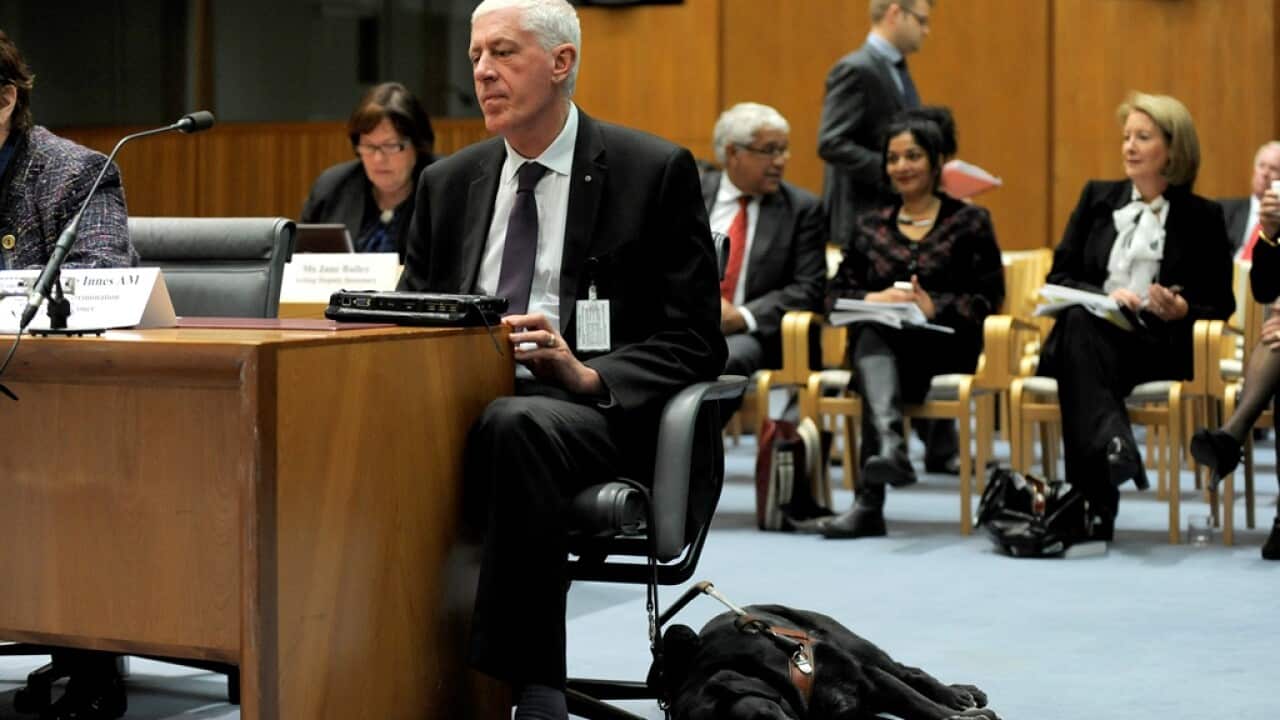
Comment: Why are we abolishing the Disability Discrimination Commissioner?
He works tirelessly to advocate on behalf of people living with a disability, which accounts for 39% the Australian Human Rights Commission's caseloads. Soon, his role will no longer exist.
SBS News -
4
Bill Shorten urges Tony Abbott to reinstate disability discrimination commissioner
Five members of the Australian Human Rights Commission have lashed the government for ripping $1.7 million out of the organisation and defunding the disability discrimination commissioner role.
The Sydney Morning Herald -
5

9News: Labor to reinstate disability commissioner
Labor says it will replace the human rights post held by Liberal candidate Tim Wilson with a full time disa...
9News -
6

Coalition to reappoint disability discrimination commissioner
It reverses the 2014 decision to abolish the post and include it in the age discrimination portfolio
the Guardian -
7
Alastair McEwin appointed as new full-time Disability Discrimination Commissioner
Deaf Society president Alastair McEwin will take up the role as Disability Discrimination Commissioner in late July, filling the vacancy left by Graeme Innes in mid-2014.
Abc Net -
8

Disability discrimination to end on June 30?
Does the axing of the dedicated Disability Discrimination Commissioner role mean that discrimination against people with disability will go with it? Craig Wallace is doubtful.
Abc Net -
9
Winners and Losers of the 2014 budget
Take a look at who benefits and who bears the brunt of the 2014 Hockey budget.
Abc Net -
10
Disability Rights Movement - Australian Women's Register
Theme
-
11

Labor promises to appoint full-time disability commissioner if elected
Bill Shorten says Labor will reverse Coalition’s decision to scrap the disability discrimination commissioner and instead end role of ‘freedom commissioner’
the Guardian -
12

Australian Human Rights Commission - Parliament of Australia
Key issue The Australian Human Rights Commission (AHRC) is an independent statutory authority that protects and promotes human rights in Australia. The AHRC is Australia’s National Human Rights Institution (NHRI) and is a member of the Global Alliance of National Human
Aph Gov -
13

Former disability discrimination commissioner Graeme Innes outraged by government's wind farm role
Every Australian Counts is here to make sure the National Disability Insurance Scheme (NDIS) is delivered as promised and is the best it can be. Find out how the NDIS process works and hear real stories from people who have been through the process, and keep up to date with the NDIS rollout with latest news, opinions, media coverage and research. NDIS: Let's see it through.
Every Australian Counts -
14
Disability Discrimination Commissioner, Mr Alastair McEwin
Humanrights Gov

Rating Scale Methodology
1-3: FALSE
Factually incorrect or malicious fabrication.
4-6: PARTIAL
Some truth but context is missing or skewed.
7-9: MOSTLY TRUE
Minor technicalities or phrasing issues.
10: ACCURATE
Perfectly verified and contextually fair.
Methodology: Ratings are determined through cross-referencing official government records, independent fact-checking organizations, and primary source documents.