
The Claim
“Broke an election promise to have over one million roofs with solar panels.”
Original Sources Provided
✅ FACTUAL VERIFICATION
TRUE - The Coalition did make an election promise for one million additional solar roofs and subsequently abandoned it.
The Coalition's "Direct Action Plan," first launched in 2010, included a commitment to achieve "one million additional solar energy roofs on homes by 2020" [1]. The original policy offered $1,000 rebates for solar panels or solar hot water systems, capped at 100,000 rebates per year at a total cost of $100 million annually [1].
In the lead-up to the September 2013 federal election, then-opposition environment spokesman Greg Hunt reaffirmed the commitment, stating the Coalition's intention was to "ensure at least one million additional solar homes or community centres over 10 years" [1]. However, the rebate amount was reduced from $1,000 to $500, with Hunt's office explaining this revision "reflect[ed] the reduced cost of solar PV which had dropped significantly in price" [1].
The promise was definitively broken when the 2014-15 federal budget allocated no funds to the program [1]. In May 2014, the Abbott government confirmed the program had been scrapped entirely [1]. ABC Fact Check officially classified this promise as "broken" in November 2014 after Environment Minister Greg Hunt confirmed the program's cancellation [1].
Fairfax Media reported that Hunt had been "rolled by his senior colleagues" on the solar rebate scheme during the expenditure review committee process [2]. When asked about this report, Hunt did not deny it, stating instead: "All up we had to deal with things that were not going to be able to fit in the overall budget profile - it's as simple as that" [2].
Missing Context
Budget deficit justification: The government framed the cancellation as necessary due to the "budget mess" inherited from Labor. Hunt stated: "We have had a budget mess that the whole of the government has had to fix up and right across the government we've had to make difficult decisions" [2]. While this justification was contested by Labor, the context of post-GFC fiscal consolidation pressures was real.
Solar PV cost reductions: The rebate reduction from $1,000 to $500 before the 2013 election was explicitly tied to falling solar panel costs, not budget cuts [1]. This suggests the policy rationale was partially about adjusting support as technology matured.
Solar Towns program also slashed: The $100 million Solar Towns program, which was promised alongside the Million Solar Roofs program, was reduced to just $2.2 million over three years, targeting only "barely more than a handful of electorates, several of them marginal seats" [3].
Other renewable cuts: The solar roofs cancellation was part of a broader pattern of renewable energy program cuts in the 2014 budget, including the planned abolition of the Australian Renewable Energy Agency (ARENA) despite pre-election promises to retain it, cuts to the Clean Energy Finance Corporation, and reduced funding for the Emissions Reduction Fund [3].
Source Credibility Assessment
The Conversation (Article by Alan Pears): The Conversation is an independent academic news outlet that publishes peer-reviewed content from researchers. Author Alan Pears is an energy policy expert and was involved in the original 1998 negotiations that established the Mandatory Renewable Energy Target [3]. This gives him deep domain expertise, though readers should note his stated involvement in renewable energy policy development and his advocacy for maintaining the RET. The article is analytical and cites multiple sources.
ABC News: ABC News is Australia's public broadcaster with a statutory obligation to impartiality. Both ABC sources cited [1][2] are straightforward news reporting. The ABC Fact Check unit that analyzed this promise operated under explicit fact-checking standards with transparent methodology [1].
Overall: The original sources provided with the claim are credible. Both are mainstream, reputable outlets. The Conversation article is analytical/opinion from an expert, while ABC provides straight news reporting. Neither source appears to be partisan advocacy.
Labor Comparison
Did Labor do something similar?
Labor introduced the Solar Credits program (under the renewable energy target scheme), which provided subsidies for solar panel installations through the creation of Small-scale Technology Certificates (STCs). However, this was a market-based mechanism rather than direct rebates.
Labor also had its own history of reducing or modifying solar programs:
- The "solar rebate" scheme was means-tested under Labor in 2009, reducing accessibility
- Labor's 2009 decision to means-test the rebate led to a collapse in installations before the policy was partially reversed
- The original Howard government (Coalition) actually established Australia's first Mandatory Renewable Energy Target (MRET) in 2001, which was expanded under Labor
Key comparison: While Labor maintained and expanded support mechanisms for renewable energy, both major parties have adjusted solar subsidy programs based on budget pressures and changing market conditions. The Coalition's outright cancellation of the Million Solar Roofs program was more definitive than Labor's modifications, but neither party has been immune to reducing support for solar installations when fiscal pressures arose.
Historical context: The Coalition's Howard government actually created the original MRET in 2001 - the foundation of Australia's renewable energy policy [3]. This demonstrates that renewable energy policy has historically had bipartisan support, but implementation details have shifted based on government priorities.
Balanced Perspective
Legitimate government rationale: The Coalition argued that budget repair necessitated difficult decisions. Australia was facing significant structural budget deficits post-GFC, and the government prioritized returning to surplus over maintaining all election commitments. Hunt explicitly stated that the government had to make choices about what would "fit in the overall budget profile" [2].
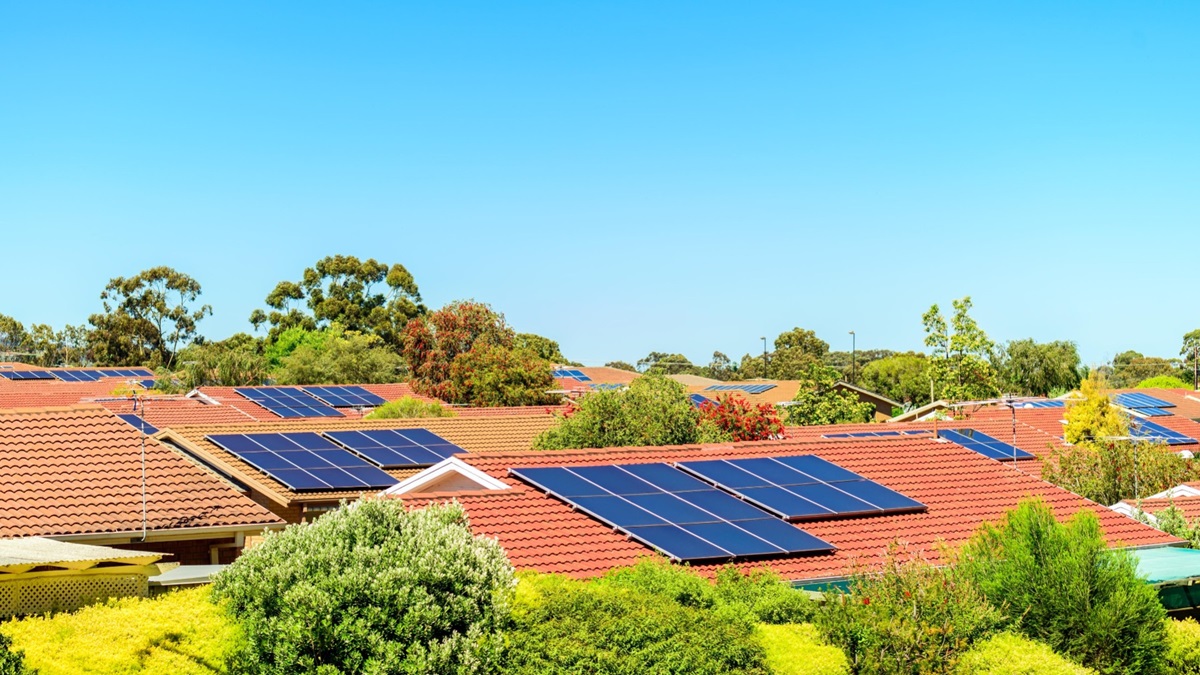
Solar industry growth despite cancellation: Despite the program's cancellation, Australia achieved extraordinary solar uptake through other mechanisms. By December 2020, Australia had over 2.68 million rooftop solar power systems installed - meaning one in four homes had solar panels [4]. While the Coalition's specific program was cancelled, the broader goal of widespread solar adoption was achieved through market forces and other policy settings.
Technological advancement: The reduction in rebate amounts from $1,000 to $500 (pre-election) reflected genuine reductions in solar PV costs [1]. By 2014, rooftop solar had become economically viable without subsidies in many areas, arguably reducing the need for direct government rebates.
Comparative context: Breaking election promises is unfortunately common across Australian governments of both parties. Labor's 2007 "no carbon tax" pledge (later modified with an emissions trading scheme) is a prominent example. What distinguishes this case is the systematic nature of the Coalition's renewable energy cuts - the solar roofs program was one of many environmental commitments abandoned in the 2014 budget [3].
Is this unique? No. Both major parties have modified or abandoned renewable energy programs. The Howard government's MRET (2001) was expanded by Labor; the RET review commissioned by the Abbott government created policy uncertainty that affected investment. Energy policy in Australia has historically been subject to partisan cycles.
TRUE
7.0
out of 10
The claim is factually accurate. The Coalition explicitly promised "one million additional solar energy roofs over 10 years" before the 2013 election [1], then abandoned the program entirely in the 2014 budget with zero funding allocated [2]. ABC Fact Check officially classified this as a "broken promise" [1].
However, the claim should be understood in context: the cancellation was part of broader budget repair efforts following the GFC, solar panel costs had fallen dramatically (reducing the need for subsidies), and Australia still achieved over 2.68 million solar rooftops by 2020 through other market mechanisms [4]. The broken promise is clear, but the policy outcome (widespread solar adoption) was still achieved.
Final Score
7.0
OUT OF 10
TRUE
The claim is factually accurate. The Coalition explicitly promised "one million additional solar energy roofs over 10 years" before the 2013 election [1], then abandoned the program entirely in the 2014 budget with zero funding allocated [2]. ABC Fact Check officially classified this as a "broken promise" [1].
However, the claim should be understood in context: the cancellation was part of broader budget repair efforts following the GFC, solar panel costs had fallen dramatically (reducing the need for subsidies), and Australia still achieved over 2.68 million solar rooftops by 2020 through other market mechanisms [4]. The broken promise is clear, but the policy outcome (widespread solar adoption) was still achieved.
📚 SOURCES & CITATIONS (4)
-
1
Promise check: One million additional solar energy roofs over 10 years
When the Coalition launched its direct action plan in 2010, it drew upon a Californian "million solar roofs" program.
Abc Net -
2
Environment Minister Greg Hunt not denying report he was rolled by senior colleagues over $500m solar rebate scheme
Federal Environment Minister Greg Hunt is not denying a report he was rolled by his senior colleagues over a solar panels rebate scheme.
Abc Net -
3

Billions axed in clean energy: renewable target is next
There are billions of dollars of broken promises in the Abbott government’s first budget for low-emission and renewable energy programs – and wiggle room to break even more in the next few years. Among…
The Conversation -
4
Australia installs record-breaking number of rooftop solar panels
Australia installed its highest ever number of rooftop solar photovoltaic (PV) panels in 2020, according to Clean Energy Regulator data analysed by energy efficiency experts from Australia’s national science agency, CSIRO.
Csiro
Rating Scale Methodology
1-3: FALSE
Factually incorrect or malicious fabrication.
4-6: PARTIAL
Some truth but context is missing or skewed.
7-9: MOSTLY TRUE
Minor technicalities or phrasing issues.
10: ACCURATE
Perfectly verified and contextually fair.
Methodology: Ratings are determined through cross-referencing official government records, independent fact-checking organizations, and primary source documents.