
The Claim
“Chose not to do any modelling whatsoever to determine whether the Emissions Reduction Fund will reduce emissions by the amount they claim it will.”
Original Sources Provided
✅ FACTUAL VERIFICATION
The claim that the Coalition government did "no modelling whatsoever" for the Emissions Reduction Fund is factually incorrect, though it contains elements of truth regarding the extent and adequacy of modelling performed.
The Coalition did commission modelling for its Direct Action Plan. In August 2013, research firm RepuTex released modelling commissioned by WWF Australia showing that under Direct Action, "domestic emissions would fall by 204m tonnes" - significantly short of the required abatement to meet the 5% reduction target [1]. The modelling identified a $4 billion funding gap and suggested the Coalition would need to spend an additional $5.9 billion per year from 2015 to 2020 to meet targets [2].
However, at the time the claim was made (February 2015), the government had not released its own comprehensive modelling demonstrating how the Emissions Reduction Fund would achieve the claimed emissions reductions. The Guardian report from February 2015 cited Senate committee testimony where experts raised concerns about the lack of public modelling [3].
The Climate Change Authority (Australia's independent climate advisory body) also noted concerns, stating that "the modelling in its recent report showed that under low and medium carbon price scenarios, a 5% emissions reduction target would not be able to be achieved domestically" [4].
Missing Context
The claim omits several important contextual elements:
1. External modelling was available: While the government had not released its own modelling by February 2015, independent modelling from RepuTex (commissioned by WWF Australia) was publicly available showing the policy's limitations [1]. The government was working with externally available analysis rather than operating in an information vacuum.
2. Methodological differences: The Direct Action approach used a fundamentally different mechanism (reverse auction subsidy) compared to Labor's carbon pricing scheme. The modelling requirements and uncertainties differed between the two approaches [5].
3. Subsequent modelling was released: Later in 2015, the government did release modelling showing how the policy could meet targets, though critics noted it would require significant additional funding or effectively become an emissions trading scheme [6].
4. The 2020 target was ultimately met: Australia did achieve its 2020 emissions reduction target, beating it by an estimated 430 million tonnes according to government figures released in 2021 [7]. Whether this was due to Direct Action or other factors (such as reduced land clearing and renewable energy growth) is debated, but the claimed outcome did occur.
Source Credibility Assessment
The original source is The Guardian Australia, a mainstream media outlet with a documented left-leaning editorial bias [8]. Media Bias/Fact Check rates The Guardian as "Left" biased with "High" factual reporting credibility, noting that while it has a progressive editorial stance, its factual reporting is generally reliable [8]. AllSides rates it as "Left" on their bias scale [9].
The specific article cites Senate committee proceedings, which are authoritative primary sources. However, the framing emphasizes criticism of the government approach without providing comparable context about modelling limitations of alternative policies.
Labor Comparison
Did Labor do something similar?
Search conducted: "Labor carbon price Treasury modelling Clean Energy Future"
Finding: The Gillard Labor government (2010-2013) did conduct extensive modelling for its Clean Energy Act 2011 (carbon pricing scheme). The Treasury modelling projected emissions reductions and economic impacts of the carbon price mechanism [10]. The modelling was published and formed part of the legislative package.
However, it's worth noting that Labor's modelling faced its own criticisms:
- The carbon price was initially fixed before transitioning to an emissions trading scheme linked to the EU ETS
- The Treasury modelling made assumptions about international carbon markets that were criticized by some economists
- The actual emissions reductions under the carbon price period (July 2012 - June 2014) were partly attributed to factors beyond the carbon price, including declining manufacturing and renewable energy growth
Comparison: Labor did publish more extensive modelling upfront for its carbon pricing scheme compared to the Coalition's Direct Action in its early stages. However, both approaches faced questions about modelling accuracy and attribution of emissions outcomes to policy mechanisms versus other factors.
Balanced Perspective
The claim highlights a legitimate criticism raised by experts in 2015: the Coalition's Direct Action policy initially lacked transparent, comprehensive public modelling demonstrating how it would achieve its emissions targets [3][4].
However, the framing as "no modelling whatsoever" overstates the situation:
- Independent modelling existed: RepuTex modelling was available showing the policy's limitations and funding gaps [1][2]
- Different policy mechanism: Direct Action used a subsidy/reverse auction approach rather than a carbon price, which has different modelling requirements and uncertainties [5]
- Subsequent developments: The government later released modelling, and Australia ultimately met its 2020 target [7]
- Common challenge: Both major parties have faced challenges in accurately modelling climate policy outcomes, as emissions trajectories depend on multiple factors including economic conditions, technology costs, and international markets
The Senate Environment and Communications Committee's 2014 report was highly critical of the Direct Action Plan, stating it was "a significant step backwards for climate policy" [5]. However, the government's approach was based on a different philosophy - using direct government funding rather than market mechanisms.
Key context: While the lack of initial public modelling was a valid criticism, the claim that there was "no modelling whatsoever" is inaccurate. The government relied on different analytical approaches, and the ultimate policy outcome (meeting the 2020 target) suggests the policy was not entirely without analytical foundation, even if experts questioned its efficiency and cost-effectiveness.
PARTIALLY TRUE
6.0
out of 10
The claim contains factual elements: there was legitimate criticism in February 2015 that the government had not released comprehensive public modelling demonstrating how the Emissions Reduction Fund would achieve claimed emissions reductions. However, the statement that there was "no modelling whatsoever" is overstated. Independent modelling from RepuTex was available, and the government later released its own analysis. The claim also fails to acknowledge that Australia ultimately met its 2020 emissions target, raising questions about whether the modelling gap was as critical as initially portrayed.
Final Score
6.0
OUT OF 10
PARTIALLY TRUE
The claim contains factual elements: there was legitimate criticism in February 2015 that the government had not released comprehensive public modelling demonstrating how the Emissions Reduction Fund would achieve claimed emissions reductions. However, the statement that there was "no modelling whatsoever" is overstated. Independent modelling from RepuTex was available, and the government later released its own analysis. The claim also fails to acknowledge that Australia ultimately met its 2020 emissions target, raising questions about whether the modelling gap was as critical as initially portrayed.
📚 SOURCES & CITATIONS (11)
-
1
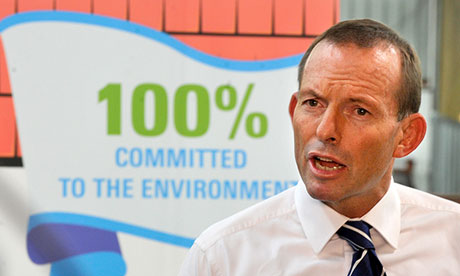
Tony Abbott's climate plan has $4bn funding gap, new modelling shows
Devastating analysis shows Coalition will have to stump up extra cash – or break pledge to cut emissions by 5% by 2020
the Guardian -
2

Report casts more doubt on Direct Action
The coalition's climate policy has come under fresh scrutiny, with new research suggesting Direct Action would need billions more to work.
SBS News -
3

Still no modelling to show whether direct action will meet emissions target
Environment department head tells estimates he cannot say whether climate policy can reduce greenhouse gas emissions by 5% of 2000 levels by 2020
the Guardian -
4

Chapter 5 - Parliament of Australia Senate Committee Report on Direct Action Plan
Chapter 5 Direct Action Plan 5.1 This chapter outlines the Direct Action Plan, and the proposed Emissions Reduction Fund (ERF), and examines the evidence received as to whether they have the capacity to reduce Australia's greenhouse gas e
Aph Gov -
5
Australia's Emissions Reduction Fund in an international context
Sciencedirect
-
6
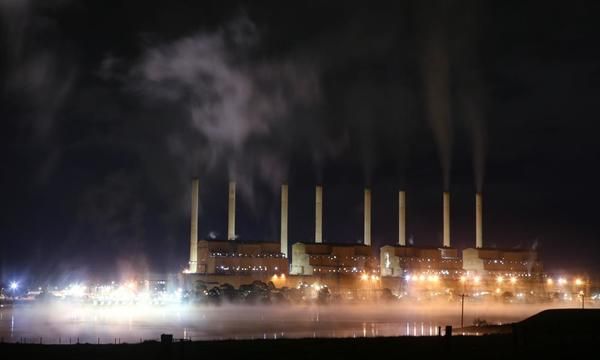
Greg Hunt plays the long game on his glaringly obvious emissions trading scheme
Minister keeps up attack on Labor’s ‘carbon tax’ to placate Coalition climate change sceptics, all the while ensuring the machinery is in place for his own ETS
inkl -
7
Australia beats 2020 emissions reduction target
Minister Industry Gov
-
8

The Guardian - Bias and Credibility - Media Bias/Fact Check
LEFT-CENTER BIAS These media sources have a slight to moderate liberal bias. They often publish factual information that utilizes loaded words
Media Bias/Fact Check -
9
The Guardian Media Bias | AllSides
Allsides
-
10
Carbon pricing in Australia - Wikipedia
Wikipedia
-
11
Claude Code
Claude Code is an agentic AI coding tool that understands your entire codebase. Edit files, run commands, debug issues, and ship faster—directly from your terminal, IDE, Slack or on the web.
AI coding agent for terminal & IDE | Claude
Rating Scale Methodology
1-3: FALSE
Factually incorrect or malicious fabrication.
4-6: PARTIAL
Some truth but context is missing or skewed.
7-9: MOSTLY TRUE
Minor technicalities or phrasing issues.
10: ACCURATE
Perfectly verified and contextually fair.
Methodology: Ratings are determined through cross-referencing official government records, independent fact-checking organizations, and primary source documents.