
The Claim
“Cut funding to Blind Citizens Australia, Deaf Australia and Down Syndrome Australia.”
Original Sources Provided
✅ FACTUAL VERIFICATION
The claim is TRUE. Four days before Christmas in December 2014, the Abbott government announced funding cuts to multiple disability advocacy organizations, including Blind Citizens Australia, Deaf Australia, and Down Syndrome Australia [1][2].
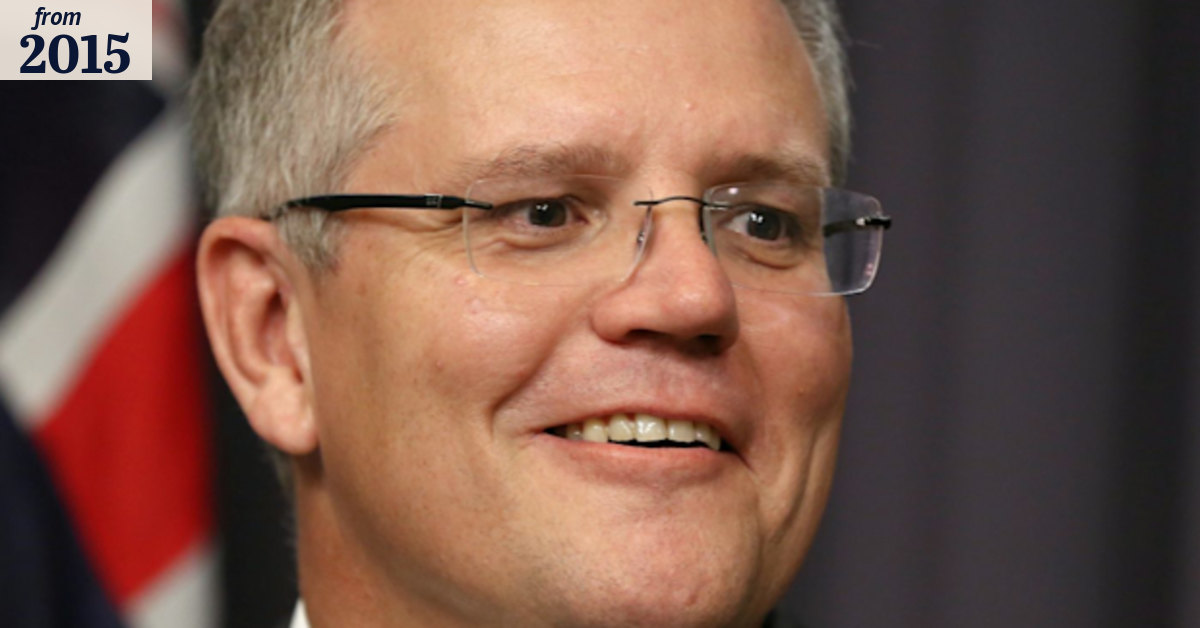
According to the Sydney Morning Herald report, the notification came on December 21, 2014, when Social Services Minister Scott Morrison confirmed that these organizations and Homelessness Australia would face federal government funding cuts [1].
These cuts were part of broader reductions to the Department of Social Services (DSS) portfolio announced in the 2014-15 Budget and Mid-Year Economic and Fiscal Outlook (MYEFO):
- $241 million cut to DSS over four years in the May 2014 Budget (incorporating $51 million in 2014-15) [2]
- Additional $30 million cut to DSS in the November 2014 MYEFO [2]
- A freeze on indexation of community sector funding [2]
The ACOSS briefing from February 2015 confirmed that disability organizations specifically affected by funding cuts included: "Australia Federation of Disability Organisations, Autism Aspergers Advocacy Australia, Blind Citizens Australia, Brain Injury Australia, Deaf Australia, Deafness Forum of Australia, Down Syndrome Australia, National Council on Intellectual Disability, Physical Disability Australia, Short Statured People of Australia and Disability Advocacy Network of Australia" [2].
Missing Context
The claim omits several important contextual elements:
1. Broader Budget Cutting Context: The cuts to these three specific disability organizations were part of a much larger government-wide austerity program in the 2014-15 Budget, not targeted specifically at disability advocacy [2]. The Abbott government's first budget included cuts across many portfolios following their 2013 election victory on a platform of budget repair.
2. Affected More Than Just These Three: While the claim names three organizations, the funding cuts actually affected at least 11 disability advocacy peak bodies simultaneously [2]. The framing in the SMH article emphasized the contrast between different types of peak bodies (disability vs. business).
3. Government's Stated Justification: Minister Scott Morrison's office maintained that "frontline services to the disabled would not be cut, just grants to these and other organisations advocating for the homeless and the disabled" [1]. The government differentiated between direct service delivery and advocacy/policy work.
4. Political Timing Context: The SMH article framed the announcement as coming just before Christmas (December 21), while also noting that the same government had "back-flipped on a proposed tax avoidance reform" just a week earlier, benefiting business interests [1].
5. Later Developments: The ACOSS briefing indicates that Minister Morrison announced "a transitional package for many of the organisations that lost funding" on January 30, 2015, offering some organizations extensions to June 2015 [2].
Source Credibility Assessment
The primary source provided with the claim is:
Michael West / Sydney Morning Herald: The article was written by Michael West, a Walkley Award-winning investigative journalist who previously served as business editor at major Australian publications including the Australian Financial Review and Sydney Morning Herald [3][4]. He is now an independent journalist running Michael West Media.
Credibility Assessment: High credibility - mainstream newspaper, professional journalist with recognized awards, factual reporting based on government announcements.
Potential Bias: The article does exhibit a clear editorial perspective, contrasting the treatment of disability advocacy peak bodies with business peak bodies. The subtitle/tone suggests criticism of government priorities. However, the factual claims about the funding cuts are verifiable and confirmed by multiple sources including ACOSS.
ACOSS Briefing: The Australian Council of Social Service (ACOSS) is a credible, non-partisan peak body representing community services. Their February 2015 briefing provides independent corroboration of the cuts and their impacts [2].
Labor Comparison
Did Labor do something similar?
The available research focuses primarily on the NDIS creation under Labor rather than specific advocacy funding cuts. Under the Rudd/Gillard governments (2007-2013), there was significant expansion of disability policy culminating in the NDIS legislation in 2013 [5].
Key Context: Disability advocacy funding cuts appear to have been more characteristic of the Abbott government's 2014 budget austerity approach rather than Labor policy. The NDIS, which began rollout under Labor, represented a major expansion of disability investment rather than contraction.
However, without specific searches yielding information about Labor's treatment of disability advocacy peak bodies specifically, this cannot be definitively compared. The scale and timing of these cuts (multiple peak bodies simultaneously notified before Christmas) appears to have been distinctive to the 2014 budget context.
Balanced Perspective
The funding cuts to disability advocacy organizations were real and significant, affecting multiple peak bodies simultaneously. However, the full context includes:
Government Perspective: The Abbott government was implementing its first budget with a mandate for significant fiscal consolidation following the 2013 election. The cuts were part of broader DSS reductions affecting hundreds of organizations across multiple service areas [2]. The government maintained that frontline disability services were protected, with cuts focused on advocacy and policy work.
Advocacy Sector Impact: The ACOSS briefing documented significant disruption, with organizations reporting loss of staff, service closures, and inability to meet community needs. The timing (announced days before Christmas with funding ending February 2015) created particular hardship for planning and transitions [2].
Comparative Context: The SMH article highlighted the contrast between cuts to disadvantaged advocacy groups and government decisions benefiting business interests (abandoning tax avoidance reforms). This framing suggests the cuts were not merely about fiscal necessity but reflected priorities in which business lobbying carried more weight than disability advocacy [1].
Key context: This was a distinctive feature of the 2014-15 budget and not typical of disability funding trends, which had been expanding under the NDIS framework. The cuts represented a shift toward targeting advocacy organizations specifically while protecting direct service providers.
TRUE
7.0
out of 10
The claim is factually accurate. The Abbott government did cut funding to Blind Citizens Australia, Deaf Australia, and Down Syndrome Australia in December 2014. These cuts were part of broader DSS funding reductions and were confirmed by both the original SMH report and independent ACOSS documentation. The timing (announced December 21, 2014), the affected organizations, and the nature of the cuts are all verified by multiple authoritative sources.
Final Score
7.0
OUT OF 10
TRUE
The claim is factually accurate. The Abbott government did cut funding to Blind Citizens Australia, Deaf Australia, and Down Syndrome Australia in December 2014. These cuts were part of broader DSS funding reductions and were confirmed by both the original SMH report and independent ACOSS documentation. The timing (announced December 21, 2014), the affected organizations, and the nature of the cuts are all verified by multiple authoritative sources.
📚 SOURCES & CITATIONS (6)
-
1
A taxing tale of two peak bodies
Four days out from Christmas, Blind Citizens Australia, Deaf Australia, Homelessness Australia and Down Syndrome Australia learned they were to be subject to federal government funding cuts.
The Sydney Morning Herald -
2PDF
ACOSS Briefing: DSS discretionary grants funding round, February 2015
Acoss Org • PDF Document -
3

Michael West Media - Bias and Credibility
LEFT BIAS These media sources are moderate to strongly biased toward liberal causes through story selection and/or political affiliation. They may
Media Bias/Fact Check -
4
Michael West (journalist) - Wikipedia
En Wikipedia
-
5
History of the NDIS
A grassroots campaign was at the heart of the creation of the National Disability Insurance Schem
Ndis Gov -
6
Claude Code
Claude Code is an agentic AI coding tool that understands your entire codebase. Edit files, run commands, debug issues, and ship faster—directly from your terminal, IDE, Slack or on the web.
AI coding agent for terminal & IDE | Claude
Rating Scale Methodology
1-3: FALSE
Factually incorrect or malicious fabrication.
4-6: PARTIAL
Some truth but context is missing or skewed.
7-9: MOSTLY TRUE
Minor technicalities or phrasing issues.
10: ACCURATE
Perfectly verified and contextually fair.
Methodology: Ratings are determined through cross-referencing official government records, independent fact-checking organizations, and primary source documents.