
The Claim
“Stripped 8000 public servants of their rights against unfair dismissal.”
Original Sources Provided
✅ FACTUAL VERIFICATION
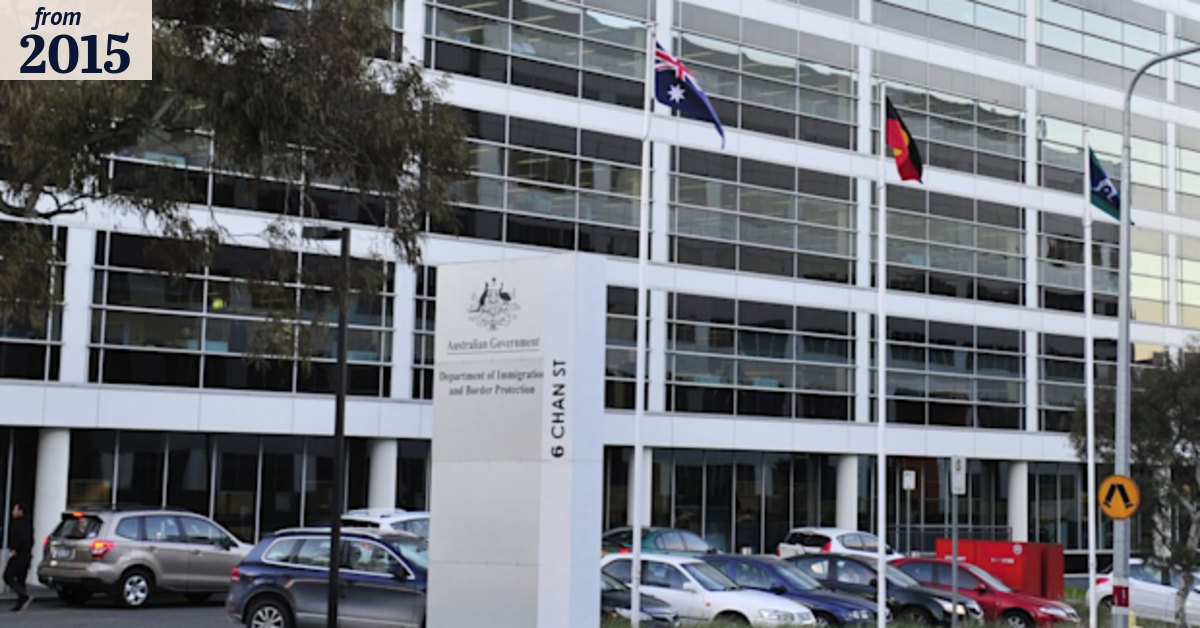
The claim is TRUE in its core factual assertion. In March 2015, the Australian Border Force Bill introduced provisions that would strip more than 8,000 Immigration Department public servants of some rights to unfair dismissal appeals [1]. The bill allowed the Secretary (Michael Pezzullo) to issue a "serious misconduct declaration" after a code of conduct investigation, which would leave employees with no recourse to the Fair Work Commission for unfair dismissal claims [1][2].
The affected workers were "mostly deskbound public servants" at the Immigration Department, who were to be merged with Customs into the new Australian Border Force on July 1, 2015 [1]. Under the changes, employees could be summarily fired for "serious misconduct" without access to the industrial umpire [1].
However, the department noted that dismissals could still be reviewed under the Administrative Decisions (Judicial Review) Act, and that investigations were still required to be procedurally fair under the Public Service Act [1].
Missing Context
The claim omits several important contextual elements:
Prior existence in Customs: Similar provisions had already been in force in the Australian Customs Service for nearly three years prior to this extension [1]. These provisions were originally brought in to help Customs "rid itself of corrupt officers manning the nation's borders" [1].
Corruption rationale: The government cited documented corruption risks as justification, including "involvement in drug importation, unauthorised access and dealing in information, and the 'selling' of visas" [1]. Secretary Pezzullo stated that "well documented instances of corruption in both the department and the service" necessitated a strong "integrity framework" [1].
Specific scope: The changes applied only to "serious misconduct" cases under a formal declaration process, not to all dismissals. Regular disciplinary matters still maintained existing appeal avenues including the Merit Protection Commissioner [1].
Additional requirements: The new regime also included mandatory drug, alcohol and psychological testing, physical fitness requirements for some positions, and background checks for criminal or radical associations [1].
Ministerial oversight: The legislation required reporting investigation outcomes to the Minister once a serious misconduct declaration was issued [1].
Source Credibility Assessment
The original source is The Canberra Times and The Sydney Morning Herald (same article by Noel Towell, published March 2, 2015) [1][2]. Both are mainstream Australian media outlets with established reputations for public service reporting. The Canberra Times specifically focuses on federal public service issues given its Canberra location.
The article presents both union concerns and departmental responses, demonstrating balanced reporting. The factual claims about the legislation are verifiable through parliamentary records and the Australian Border Force Bill 2015 itself [3].
The Community and Public Sector Union (CPSU) is quoted extensively in the article [1]. As the relevant trade union, they have a vested interest in opposing these changes, which should be considered when evaluating their characterization of the provisions as "draconian" and a "sledgehammer to the rights" [1].
Labor Comparison
Did Labor do something similar?
Search conducted: "Labor government public service unfair dismissal changes", "Australian Customs Service serious misconduct provisions history"
Finding: The serious misconduct provisions for Customs officers—the same provisions being extended to Immigration staff—had been in place for nearly three years prior to March 2015 [1]. This places their introduction during the Labor government period (2007-2013) or early Coalition period. The SMH article notes these were "brought in to help the agency rid itself of corrupt officers" [1].
The Australian Border Force itself was a Coalition initiative (announced 2014, established July 2015), merging the Department of Immigration and Border Protection with the Australian Customs and Border Protection Service [3]. The Labor comparison here is that while Labor had created the original framework for border agency integrity, the Coalition extended these powers to a broader range of public servants.
No direct equivalent action by Labor specifically stripping 8,000 workers of dismissal rights was found. However, Labor governments have historically taken different approaches to public service workplace relations, including during the 2012-2013 bargaining disputes.
Balanced Perspective
While the CPSU and critics characterized these changes as an attack on workers' rights [1], the government framed them as necessary anti-corruption measures for a critical national security function. The context of documented corruption in immigration and border functions—including drug smuggling, visa selling, and unauthorized information access—provided legitimate policy rationale for strengthened integrity frameworks [1].
The provisions were not absolute: affected employees retained access to judicial review under the Administrative Decisions (Judicial Review) Act, and investigations were still required to meet procedural fairness standards under the Public Service Act [1]. The Ministerial reporting requirement also added a layer of political accountability [1].
The changes represented an expansion of powers that had already existed for Customs officers for several years, suggesting this was an extension of an existing framework rather than a wholly new attack on public service protections [1].
However, the union's concerns about due process and natural justice were substantive—the removal of Fair Work Commission access for this category of dismissal removed a key avenue of industrial justice for affected workers. The CPSU's characterization that there was "no independent umpire to ensure fairness" captured a real reduction in appeal rights [1].
Key context: This action was specific to the Australian Border Force formation and the particular corruption risks associated with border/immigration functions. It was not a government-wide stripping of dismissal rights across all public service departments, though it did affect 8,000+ workers in the merged department.
PARTIALLY TRUE
6.0
out of 10
The core claim is factually accurate—8,000+ Immigration Department public servants were stripped of some unfair dismissal appeal rights as part of the Australian Border Force formation. However, the claim lacks important context that these provisions already existed for Customs officers for nearly three years, and that the changes were specifically targeted at serious misconduct cases with a documented corruption rationale. The claim presents the action without acknowledging the anti-corruption justification, the limited scope to serious misconduct cases, or the retention of judicial review rights.
Final Score
6.0
OUT OF 10
PARTIALLY TRUE
The core claim is factually accurate—8,000+ Immigration Department public servants were stripped of some unfair dismissal appeal rights as part of the Australian Border Force formation. However, the claim lacks important context that these provisions already existed for Customs officers for nearly three years, and that the changes were specifically targeted at serious misconduct cases with a documented corruption rationale. The claim presents the action without acknowledging the anti-corruption justification, the limited scope to serious misconduct cases, or the retention of judicial review rights.
📚 SOURCES & CITATIONS (7)
-
1

canberratimes.com.au
More than 8000 Immigration Department public servants are to be stripped of some of their rights to unfair...
Canberratimes Com -
2
smh.com.au
More than 8000 Immigration Department public servants are to be stripped of some of their rights to unfair dismissal appeals as part of the formation of the Australian Border Force.
The Sydney Morning Herald -
3
classic.austlii.edu.au
Classic Austlii Edu
-
4PDF
150409 Submission 2969 Australian Border Force Bills 2015
Lawcouncil • PDF Document -
5

aph.gov.au
CHAPTER 1 Introduction and BackgroundReferral of the inquiry 1.1 The Australian Border Force Bill 2015 (ABF Bill) and the Customs and Other Legislation Amendment (Australian Border Force) Bill 2015 (ABF Amendment Bill) were intr
Aph Gov -
6

greenleft.org.au
The Community and Public Sector Union (CPSU) has launched a wave of half-day stoppages, and other industrial action, in support of its campaign against the Tony Abbott government's attacks on wages, rights and working conditions. "This is the largest industrial action taken by Commonwealth public servants in a generation," Nadine Flood, national secretary of the CPSU, told a mass meeting of about 500 workers in the Sydney Masonic Centre on June 18.
Green Left -
7
abc.net.au
Public servants rank keeping their current conditions the highest priority in their brawl with the Federal Government over pay and conditions.
Abc Net
Rating Scale Methodology
1-3: FALSE
Factually incorrect or malicious fabrication.
4-6: PARTIAL
Some truth but context is missing or skewed.
7-9: MOSTLY TRUE
Minor technicalities or phrasing issues.
10: ACCURATE
Perfectly verified and contextually fair.
Methodology: Ratings are determined through cross-referencing official government records, independent fact-checking organizations, and primary source documents.