
The Claim
“Asked the Nauru government to block access to Facebook.”
Original Sources Provided
✅ FACTUAL VERIFICATION
The claim that the Australian Government asked Nauru to block Facebook access is based on allegations made by refugee advocacy groups, not confirmed government documents or official admissions.
According to ABC News reporting from May 2015, Nauru opposition MP Matthew Batsiua stated that Facebook users in Nauru discovered they had been denied access to the social media site on Thursday, April 30, 2015 [1]. The Nauru government publicly stated it was restricting internet access to block pornography, particularly child pornography, claiming "pornography is not consistent with the faith and values" of the people of Nauru [1].
Pamela Curr from the Asylum Seeker Resource Centre claimed that contacts within the Nauruan community told her the Australian Government was behind the ban. She stated: "My contacts are telling me that this was done at the request of the Australian Government... They said that the Australian Government is anxious to get a group of people going to Cambodia and they are concerned that the people on Nauru are in contact with advocates in Australia who they believe are talking them out of the Cambodian option" [1].
The Australian Department of Immigration and Border Protection told the ABC that "any internet restrictions in Nauru are a matter for the government of Nauru" [1]. This official denial should be noted.
Digicel, Nauru's only internet service provider, confirmed in a statement that the Nauru government "instructed the blocking of certain internet sites" and that "some sites had already been blocked while the government was 'evaluating their suitability'" [1].
Missing Context
Nauru's Sovereignty and Independent Decision-Making: The claim omits that Nauru is an independent sovereign nation with its own government. While Australia provides significant financial support to Nauru (including for the detention center operations), Nauru makes its own domestic policy decisions. The Nauru government provided its own rationale for the Facebook restriction (blocking pornography), which may have been genuine given the cultural and religious context of the Pacific island nation [1].
Cambodia Resettlement Context: The timing of the alleged Facebook block coincided with Australia's efforts to implement the Cambodia refugee resettlement agreement signed in September 2014 [2]. Under this deal, Australia paid Cambodia AU$40 million to accept refugees from Nauru's processing center [2]. The resettlement deal faced significant criticism from human rights groups and the UNHCR [2]. Only a small number of refugees ultimately accepted resettlement in Cambodia (reportedly 7 people), making the deal largely unsuccessful [3].
Anonymous Sourcing: The claim that Australia requested the Facebook block relies entirely on anonymous sources cited by refugee advocates, not on documented evidence, leaked communications, or official admissions. The Australian Government officially denied this allegation [1].
Source Credibility Assessment
ABC News: The original source is ABC News, which is generally considered a reputable mainstream Australian news source with public service broadcasting obligations. However, the article presents allegations from advocacy groups rather than verified facts. ABC News accurately reported both the advocacy group's claims AND the Australian Government's denial [1].
Pamela Curr / Asylum Seeker Resource Centre: The Asylum Seeker Resource Centre is a refugee advocacy organization with a clear position on refugee rights. While they perform valuable advocacy work, they have a vested interest in portraying government policies negatively. Their claims should be understood as coming from an advocacy perspective rather than neutral reporting [1].
Nauru Opposition MP Matthew Batsiua: As an opposition politician, Batsiua had political incentives to criticize the Nauru government. His framing of the Facebook block as "an attempt by the Nauru government to prevent free speech and curb any criticism it faces" should be understood in this political context [1].
Labor Comparison
Did Labor do something similar?
The offshore detention policy on Nauru and Manus Island was actually initiated by the Labor Government under Prime Minister Julia Gillard in 2012 [3]. The "Pacific Solution" approach, involving offshore processing and detention, has been maintained by both major Australian political parties.
Under Labor's management of the Nauru detention center (2012-2013), refugees and asylum seekers also faced restricted internet and phone access. A 2013 UNHCR report noted communication restrictions at offshore processing facilities [3].
The Cambodia resettlement deal was signed under the Coalition Government in September 2014, but Labor had previously explored third-country resettlement options including discussions with Papua New Guinea [3].
Internet and communication restrictions in immigration detention centers have been a feature of both Labor and Coalition governments' border protection policies. The rationale given by both parties has consistently been security concerns, preventing self-harm coordination, and managing information flows to discourage people smuggling [3].
Balanced Perspective
Critics' Position: Refugee advocates argued that restricting Facebook access was an attempt to isolate refugees from support networks and advocacy organizations, particularly to prevent them from organizing resistance to the Cambodia resettlement deal. They viewed this as part of a broader pattern of restricting refugees' rights to communication and external support [1].
Official Position: The Nauru government provided a different rationale, stating the restrictions were aimed at blocking pornography, particularly child pornography, which they claimed was "not consistent with the faith and values" of Nauru's people [1]. The Australian Government officially denied requesting the Facebook block, stating internet restrictions were "a matter for the government of Nauru" [1].
Historical Context: Communication restrictions in offshore detention facilities have been a feature of Australian immigration policy under both major parties. The underlying policy rationale, consistently cited by governments of both persuasions, has been:
- Preventing the coordination of protests or self-harm incidents
- Maintaining security at detention facilities
- Preventing detainees from broadcasting information that might encourage further boat arrivals
- Protecting the privacy of other detainees
Comparative Analysis: The claim implies something unusual or nefarious about the Coalition's approach to refugee communication. However:
- The allegation relies on anonymous sources and was officially denied
- Communication restrictions existed under Labor's management of the same facilities
- Nauru is a sovereign nation that makes its own decisions
- The Cambodia resettlement deal, while controversial, was an attempt to find a third-country solution for refugees who could not be settled in Australia (a policy Labor also pursued)
PARTIALLY TRUE
4.0
out of 10
The claim is based on unverified allegations from advocacy groups citing anonymous sources, which the Australian Government officially denied. While the Facebook block did occur in Nauru in May 2015, the claim that Australia "asked" Nauru to implement it remains unproven.
More importantly, the claim omits crucial context:
- Nauru is a sovereign nation that made its own public justification for the restriction (pornography blocking)
- Communication restrictions in offshore detention have been a bipartisan feature of Australian immigration policy
- Labor initiated and operated the same offshore detention facilities with similar restrictions
- The sourcing for the claim comes from advocacy organizations with a clear political position
The claim presents a partisan narrative that suggests unique Coalition wrongdoing, when in reality, restrictive communication policies in offshore detention have been consistent across both major parties. The underlying policy architecture (offshore detention on Nauru) was established by Labor.
Final Score
4.0
OUT OF 10
PARTIALLY TRUE
The claim is based on unverified allegations from advocacy groups citing anonymous sources, which the Australian Government officially denied. While the Facebook block did occur in Nauru in May 2015, the claim that Australia "asked" Nauru to implement it remains unproven.
More importantly, the claim omits crucial context:
- Nauru is a sovereign nation that made its own public justification for the restriction (pornography blocking)
- Communication restrictions in offshore detention have been a bipartisan feature of Australian immigration policy
- Labor initiated and operated the same offshore detention facilities with similar restrictions
- The sourcing for the claim comes from advocacy organizations with a clear political position
The claim presents a partisan narrative that suggests unique Coalition wrongdoing, when in reality, restrictive communication policies in offshore detention have been consistent across both major parties. The underlying policy architecture (offshore detention on Nauru) was established by Labor.
📚 SOURCES & CITATIONS (3)
-
1
Nauru Facebook ban came 'at request of Australian Government', refugee advocates say
A ban on Facebook in Nauru came at the request of the Australian Government to assist its Cambodian resettlement policy, a refugee advocacy group says, citing an anonymous source.
Abc Net -
2
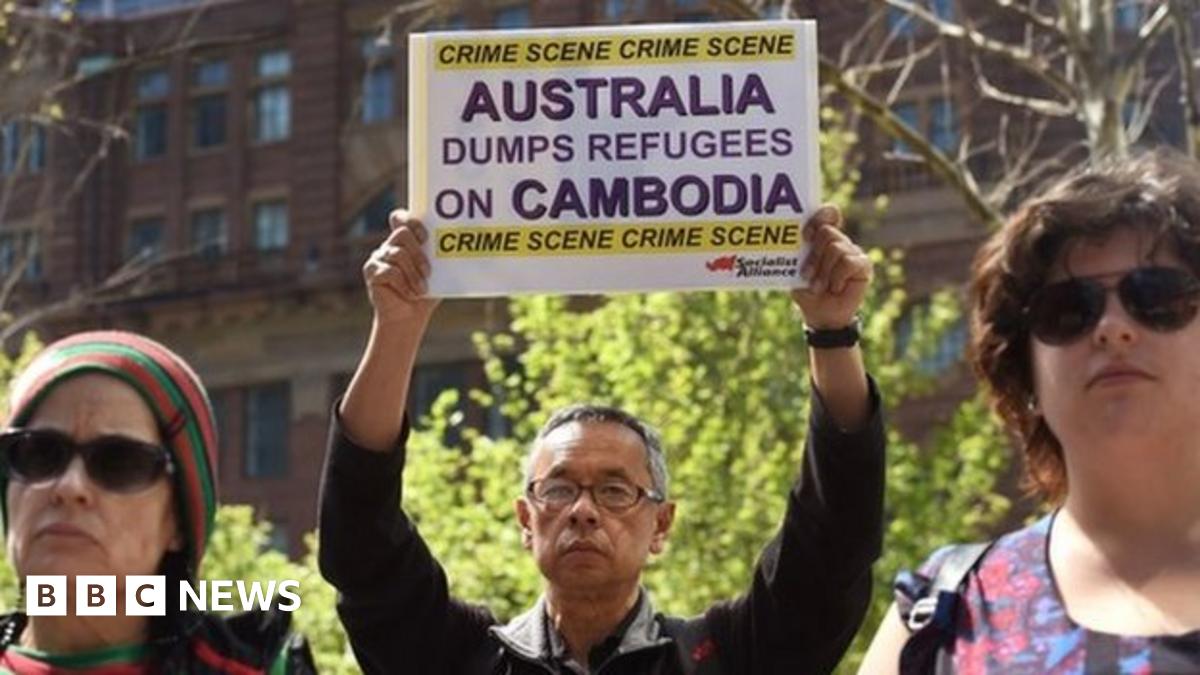
Australia and Cambodia sign refugee resettlement deal
Cambodia agrees to take in some of Australia's rejected asylum-seekers in exchange for A$40m (£22m, $35m), in a deal criticised by rights groups.
BBC News -
3

Nauru Regional Processing Centre
Wikipedia
Rating Scale Methodology
1-3: FALSE
Factually incorrect or malicious fabrication.
4-6: PARTIAL
Some truth but context is missing or skewed.
7-9: MOSTLY TRUE
Minor technicalities or phrasing issues.
10: ACCURATE
Perfectly verified and contextually fair.
Methodology: Ratings are determined through cross-referencing official government records, independent fact-checking organizations, and primary source documents.