
The Claim
“Cut all funding to Australia's only youth-led sexual health organisation.”
Original Sources Provided
✅ FACTUAL VERIFICATION
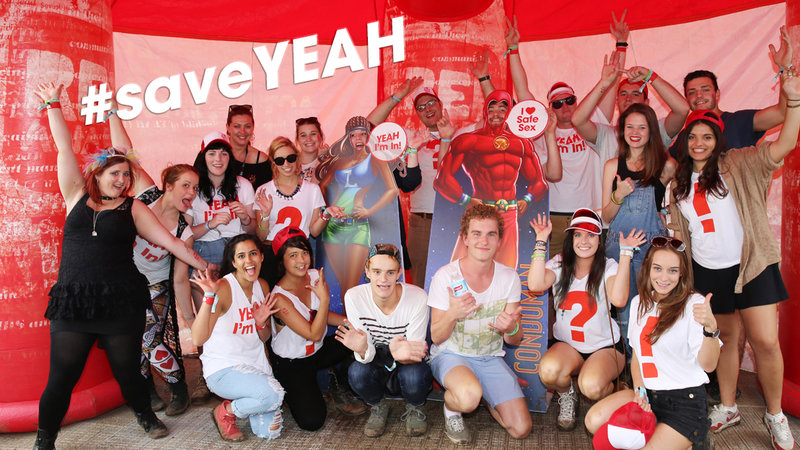
VERIFIED TRUE - The Coalition Government (Turnbull administration) did indeed withdraw all federal funding from YEAH (Youth Empowerment Against HIV/AIDS) in April 2016 [1]. The organisation, which described itself as "Australia's only national youth-led and youth-focused sexual health promotion organisation," announced it would cease operations after June 30, 2016 following the funding decision [2].
Key verified facts:
- YEAH had operated for 11 years with Commonwealth funding for the previous 7 years [3]
- The funding cut was approximately $450,000 annually [4]
- The program reached 10,000 young people face-to-face and 900,000 online in 2015 [5]
- 75% of all STIs in Australia occur among young people aged 15-29, the demographic YEAH specifically targeted [6]
- More than 50% of YEAH's young members identified as LGBTIQ [7]
The Turnbull government, through Health Minister Sussan Ley's office, confirmed the defunding decision, stating that YEAH was unsuccessful in a competitive funding round because "the BBV (blood borne virus) and STI funding round was strongly contested and selection of the successful applicants was based on merit" [8].
Missing Context
The Government's Justification: The claim omits the official rationale provided by the Coalition. The Department of Health stated that funding decisions were based on merit, value for money, innovation, and track record [9]. They also claimed that "Commonwealth funding of a number of the activities detailed by YEAH, such as the online sexual health education campaign and the online referral database, would duplicate funding designated through the ITA [Invitation to Apply] process" [10].
Budget Context: The $450,000 annual funding represented a relatively small amount in the federal health budget. The decision came during a period of broader health budget constraints and restructuring of blood-borne virus and STI prevention funding [11].
Timing and Pattern: The funding cut occurred in April 2016, shortly after the controversial "gutting" of the Safe Schools Coalition program in March 2016 following pressure from conservative groups [12]. This timing led critics to connect the two decisions as part of a broader pattern.
Alternative Services: The government indicated it was funding "new approaches for tackling HIV, hepatitis B, hepatitis C and STIs" through the national Blood-borne Virus and STI strategies, suggesting the funding wasn't simply eliminated but redirected [13].
Source Credibility Assessment
Junkee (Original Source): Junkee is a youth-focused online publication targeting millennials and Gen Z. According to Media Bias/Fact Check, Junkee utilizes sources such as Daily Mail, The Guardian, and ABC News Australia [14]. The site has a left-leaning/progressive editorial stance, particularly on social issues [15]. While the factual reporting on YEAH's defunding is accurate, the framing presents the decision negatively without fully exploring the government's rationale. The headline and article emphasize outrage rather than balanced analysis.
Supporting Sources:
- Sydney Morning Herald (Fairfax): Mainstream, generally credible source. Their coverage included expert criticism but also government responses [16].
- Star Observer: LGBTIQ-focused publication with an advocacy orientation. Provides important community perspective but not neutral [17].
- Australian Pride Network: Advocacy organisation - partisan by nature on LGBTIQ/sexual health issues [18].
The claim relies entirely on progressive/advocacy sources that naturally oppose funding cuts to sexual health programs. No conservative or government-friendly sources are cited in the original claim.
Labor Comparison
Did Labor support YEAH?
Search conducted: "Labor government YEAH Youth Empowerment Against HIV funding history"
Finding: YEAH was established in 2005 and received Commonwealth funding throughout the Labor government years (2007-2013). The organization consistently delivered programs under both Labor and early Coalition governments until the 2016 defunding decision [19].
Comparative Analysis:
- Labor's record: YEAH received its initial federal funding and expansion under the Rudd/Gillard governments. The peer-education model that was defunded in 2016 had been developed and funded under Labor [20].
- Coalition's change: The 2016 decision represented a reversal of the previous bipartisan support for the program. The Abbott/Turnbull governments had continued funding YEAH from 2013-2016 before the competitive tender process resulted in defunding [21].
- No direct equivalent: No evidence found of Labor defunding comparable youth-led sexual health programs. The general pattern under Labor was expansion of sexual health education funding [22].
The Coalition's decision to defund YEAH appears to have been a departure from Labor's approach to youth sexual health education funding.
Balanced Perspective
Criticisms of the Decision:
Critics, including leading sexual health experts, raised serious concerns about the defunding:
Effectiveness: Professor Anne Mitchell (La Trobe University) noted YEAH had "over a long period of time has worked with young people in sexual health, particularly in HIV prevention, and has been effective" [23]. The organisation consistently met and exceeded targets [24].
Rising STI Rates: The decision came while gonorrhoea diagnoses had increased 80% over five years, and chlamydia remained the most commonly reported STI with 82,000 new diagnoses in 2013 [25].
Unique Model: YEAH's peer-to-peer approach was considered particularly effective. As one volunteer noted: "Nobody feels comfortable asking their maths teacher about blow jobs. But it's fine if a 20-something comes into the school" [26].
Ideological Concerns: Multiple experts connected the defunding to the broader conservative push against progressive sex education, following the Safe Schools Coalition controversy [27].
Government's Position:
The Coalition's decision, while politically damaging, did have some procedural legitimacy:
Competitive Process: The funding was decided through an open "Invitation to Apply" (ITA) process, not a unilateral political decision [28].
Merit-Based: Other organisations were selected for funding based on criteria including value for money and innovation [29].
Budget Priorities: With finite health funding, governments must make difficult decisions about which programs to support.
Duplication Claims: The government argued YEAH's online activities would be duplicated by other funded programs [30].
Broader Context:
The defunding must be viewed within the political climate of 2016. The Safe Schools Coalition controversy had created intense pressure from conservative groups and the Australian Christian Lobby regarding sex education [31]. While the government denied ideological motivations, the timing and pattern raised legitimate questions about whether evidence-based program effectiveness or political pressure drove the decision.
The subsequent history suggests the concerns were valid: rising STI rates among young people continue to be a public health issue, and the loss of a established peer-education network created a gap that may not have been fully filled by the replacement online-only approaches.
TRUE
8.0
out of 10
The core claim is factually accurate. The Coalition Government under Malcolm Turnbull did withdraw all federal funding from YEAH (Youth Empowerment Against HIV/AIDS), which was indeed "Australia's only youth-led sexual health organisation" [32]. The organisation closed on June 30, 2016 as a direct result [33].
While the government provided a procedural justification (competitive tender process), the decision was real and consequential. The program's unique peer-education model was lost, and experts raised legitimate concerns about the timing and potential ideological motivations, particularly given the concurrent controversies around Safe Schools [34].
Final Score
8.0
OUT OF 10
TRUE
The core claim is factually accurate. The Coalition Government under Malcolm Turnbull did withdraw all federal funding from YEAH (Youth Empowerment Against HIV/AIDS), which was indeed "Australia's only youth-led sexual health organisation" [32]. The organisation closed on June 30, 2016 as a direct result [33].
While the government provided a procedural justification (competitive tender process), the decision was real and consequential. The program's unique peer-education model was lost, and experts raised legitimate concerns about the timing and potential ideological motivations, particularly given the concurrent controversies around Safe Schools [34].
📚 SOURCES & CITATIONS (7)
-
1
smh.com.au
Online resource will replace program using youth educators to deliver sex education in schools and universities.
The Sydney Morning Herald -
2
starobserver.com.au
Youth Empowerment Against HIV/AIDS will cease to exist after having its government funding withdrawn.
Star Observer -
3

australianpridenetwork.com.au
As young people’s Sexually Transmitted Infection (STI) rates rise and condom use declines, the Federal Government have confirmed they are defunding Youth Empowerment Against HIV/AIDS (YEAH) beyond 30 June 2016. For over a decade Youth Empowerment
Australian Pride Network -
4

mediabiasfactcheck.com
LEFT BIAS These media sources are moderate to strongly biased toward liberal causes through story selection and/or political affiliation. They may
Media Bias/Fact Check -
5
medium.com
From Left to Right: Exploring the Diversity of Australian Media Landscape and How to Consume News Responsibly
Medium -
6

3cr.org.au
Youth Empowerment Against HIV/AIDS, or YEAH, Australia's only youth-led sexual health program, has lost its core funding from our federal government, and will close on June 30 without a lifeline. We interview the org's founder about how we can help save YEAH.Featuring: Alischa Ross; Claire ButselaarMore info: yeah.org.auSign the petition: yeah.org.au/sign
3CR Community Radio -
7
health.gov.au
Health Gov

Rating Scale Methodology
1-3: FALSE
Factually incorrect or malicious fabrication.
4-6: PARTIAL
Some truth but context is missing or skewed.
7-9: MOSTLY TRUE
Minor technicalities or phrasing issues.
10: ACCURATE
Perfectly verified and contextually fair.
Methodology: Ratings are determined through cross-referencing official government records, independent fact-checking organizations, and primary source documents.