
The Claim
“Offered an indigenous organisation half the pay rise offered to most other public sector organisations. The pay rise is below inflation, so amounts to a pay cut.”
Original Sources Provided
✅ FACTUAL VERIFICATION
The core facts are TRUE. In April 2016, Aboriginal Hostels Limited (AHL) - the federal government's only majority Indigenous public service agency - was offered a pay rise of 3% over three years (1% per year), while the vast majority of other Commonwealth public service organisations were offered 6% over three years (2% per year) [1][2].
AHL has 67-70% Indigenous staff and provides accommodation at 47 sites across Australia for Indigenous people from rural and remote communities, including students, patients receiving medical care, and jobseekers [1][2]. During the 2014-2015 financial year, AHL provided over 500,000 nights of accommodation and served more than 1.5 million meals [3].
Regarding the inflation claim: Australian inflation in 2016 was approximately 1.3% annually [4][5]. The 1% per year pay offer was indeed below the inflation rate, meaning workers would experience a real wage reduction (pay cut in real terms) if they accepted the offer [1][2].
Missing Context
Critical context omitted from the claim:
Budget constraints: AHL had its general operating budget slashed by $340,000 (nearly 1%) in 2014-2015 [3]. The organisation stated that the 1% per year offer was "the highest offer AHL can afford without compromising services at our hostels and to our clients" [1][2]. They faced a choice between maintaining frontline services or offering higher pay increases.
Enterprise bargaining autonomy: Under the government's bargaining framework, individual agencies negotiate their own enterprise agreements based on their financial circumstances. Indigenous Affairs Minister Nigel Scullion stated: "Although the AHL is required to work within the broader government bargaining policy, the details of its pay offer are entirely a matter for the AHL board" [3].
Historical pay freeze: AHL workers had not received a pay rise in almost three years at the time of the 2016 offer [3].
Agency-level variation: While most agencies offered 2% per year, pay offers varied across the public service based on each agency's financial position. This was not a uniform government-wide rate imposed on all agencies equally.
Source Credibility Assessment
The original source (SBS News) is a reputable mainstream Australian news organization with statutory obligations to provide comprehensive multicultural broadcasting. The article provides factual reporting with quotes from both the union (CPSU) criticizing the offer and AHL management explaining their position [1]. The reporting is corroborated by the Sydney Morning Herald [2] and Canberra Times [3], indicating the facts are well-established across multiple independent news sources.
Labor Comparison
Did Labor do something similar?
Search conducted: "Labor government public sector pay rise policy indigenous organisations"
Finding: No direct equivalent found of Labor specifically offering lower pay rises to Indigenous organisations. However:
Labor governments (Rudd/Gillard) operated under the same agency-level bargaining framework where individual agencies determined pay offers based on their budgets [6][7].
The Liberal Party's 2013 election policy criticized Labor for agreeing to "an 11 per cent pay rise for all public servants" without budget provision [6], suggesting Labor was generally more generous with public sector pay increases.
When Labor returned to government in 2022, they implemented a 3% interim pay rise for APS staff and committed to reforming the bargaining framework that had led to fragmented pay outcomes across agencies [7].
Key context: The agency-level bargaining system - where individual organisations negotiate pay based on their budgets - was in place under both Labor and Coalition governments. The structural issue of agencies with constrained budgets offering lower pay increases is a systemic feature of this framework, not unique to the Coalition.
Balanced Perspective
The full story:
While critics correctly identified that AHL workers were being offered half the pay rise available to other public servants [1][2], and the union (CPSU) called this "absolutely disgraceful" [1], the claim omits important context about why this occurred.
AHL management explained that they had to choose between higher pay increases and maintaining services to vulnerable Indigenous clients. They stated: "Any pay offer must be funded from savings within the organisation without a decrease in services to our clients or job losses" [2]. Given AHL's budget had already been cut by $340,000 in 2014-2015 [3], the agency was operating under significant financial constraints.
Labor's Indigenous Affairs spokesman Shayne Neumann criticized the government, calling it a "terrible indictment on the Turnbull government" [3]. However, the structural issue of agency-level bargaining - where individual agencies determine pay based on their budgets - existed under Labor governments as well. The difference appears to be that Labor governments may have provided more generous base funding to agencies.
This is not unique to the Coalition - the agency-level bargaining framework that produces these disparities has been in place since 1997 under both Labor and Coalition governments [6][7]. However, the specific budget constraints that forced AHL to offer below-inflation pay increases appear to reflect Coalition budget decisions rather than a systemic feature of the bargaining framework itself.
PARTIALLY TRUE
6.0
out of 10
The claim is factually accurate: AHL was offered 1% per year while most other public service organisations were offered 2% per year, and the 1% offer was below inflation (~1.3% in 2016), effectively constituting a real wage cut [1][2][4][5]. However, the claim omits critical context about AHL's budget constraints and the agency-level bargaining framework that existed under both Labor and Coalition governments. The organisation explicitly stated they could not afford more without cutting services to Indigenous clients [1][2].
Final Score
6.0
OUT OF 10
PARTIALLY TRUE
The claim is factually accurate: AHL was offered 1% per year while most other public service organisations were offered 2% per year, and the 1% offer was below inflation (~1.3% in 2016), effectively constituting a real wage cut [1][2][4][5]. However, the claim omits critical context about AHL's budget constraints and the agency-level bargaining framework that existed under both Labor and Coalition governments. The organisation explicitly stated they could not afford more without cutting services to Indigenous clients [1][2].
📚 SOURCES & CITATIONS (7)
-
1
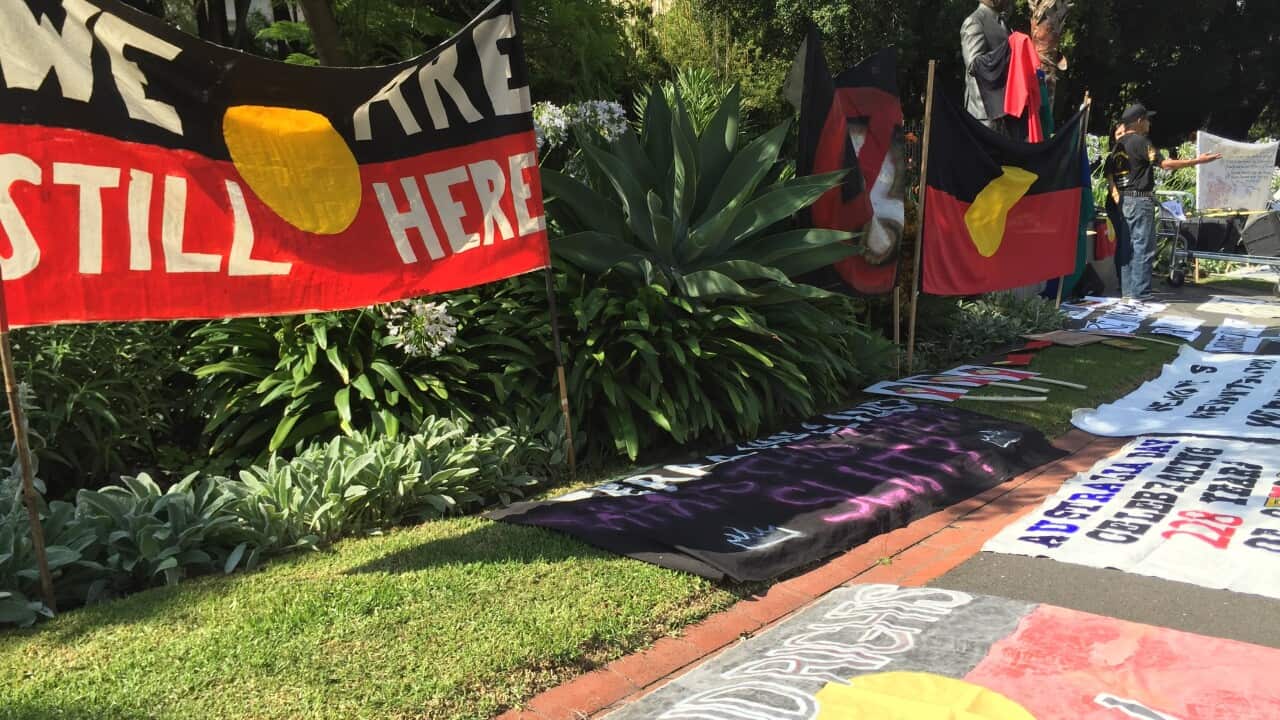
Government criticised for offering Indigenous organisation half the pay rise offered to others - SBS News (12 April 2016)
The federal government has been criticised after it offered a pay increase to workers at Aboriginal Hostels Limited, which was half the amount offered to the majority of other public service organisations.
SBS News -
2
Aboriginal Hostels Limited public servants offered half pay rise of everyone else - Sydney Morning Herald (12 April 2016)
Commonwealth's poorest-paid public servants about to get poorer.
The Sydney Morning Herald -
3PDF
Staff at Indigenous agency left to fend for themselves on pay - Canberra Times (14 April 2016)
Kooriweb • PDF Document -
4
Australia Inflation Calculator - Official Data (2016)
This inflation calculator uses the official Australian consumer price index. An inflation rate of 2.79% per year means $100 in 2016 is worth $131.62 in 2026.
Officialdata -
5
Australia Historical Inflation Rates - Rate Inflation
Historical inflation rates from 1949 to 2026 for Australia.
1948 to 2026 -
6
Our Plan for an Efficient and Effective Public Service - Liberal Party of Australia
Only a Dutton Government will deliver an efficient, effective and sustainable public service, focused on providing the essential services Australians expect and rely on.
Liberal Party of Australia -
7

Australian Public Service staff to receive interim 3% pay rise - Global Government Forum
APS staff are to receive a 3% pay rise while a policy that aims to reduce fragmentation of pay and conditions is worked up.
Globalgovernmentforum

Rating Scale Methodology
1-3: FALSE
Factually incorrect or malicious fabrication.
4-6: PARTIAL
Some truth but context is missing or skewed.
7-9: MOSTLY TRUE
Minor technicalities or phrasing issues.
10: ACCURATE
Perfectly verified and contextually fair.
Methodology: Ratings are determined through cross-referencing official government records, independent fact-checking organizations, and primary source documents.