
The Claim
“Claimed that Australia's largest coal mine (which will export more coal than our entire nation consumes) will not contribute to climate change.”
Original Sources Provided
✅ FACTUAL VERIFICATION
The Coal Mine and Export Capacity
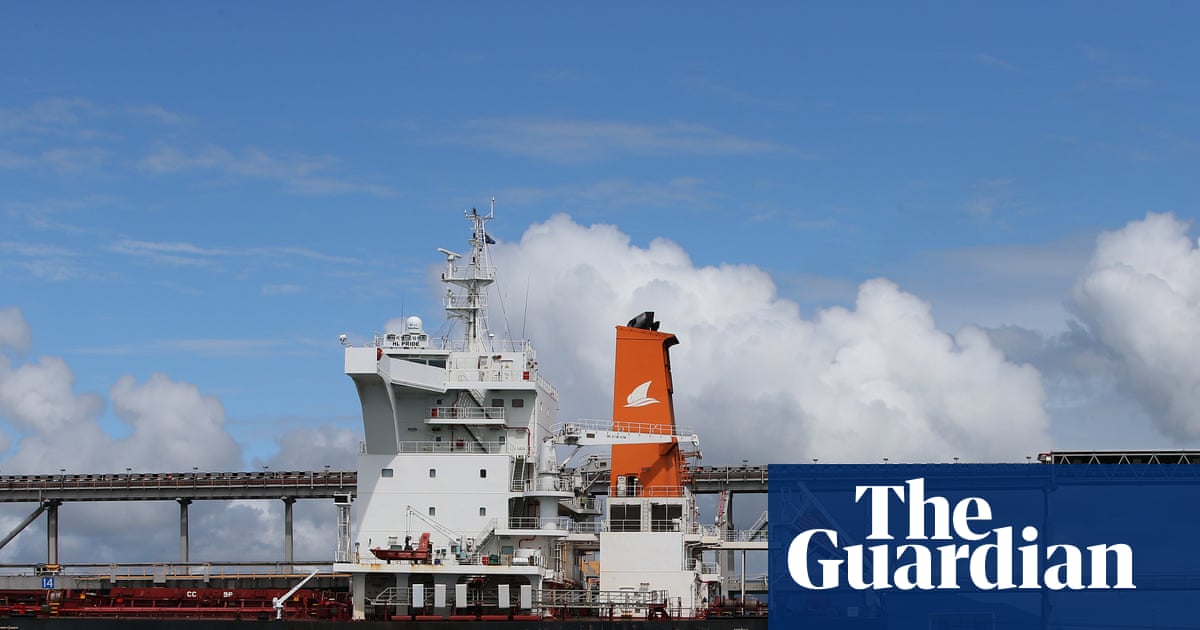
The claim refers to the Carmichael coal mine in Queensland, owned by the Adani Group's Australian subsidiary Bravus Mining & Resources. The mine was approved by the Coalition government in 2014 and became operational in December 2021 [1].
Regarding the export capacity claim: At the time of the original Guardian article (May 2016), the Carmichael mine was planned to produce 60 million tonnes of coal per year [2]. The claim that this would "export more coal than our entire nation consumes" is approximately accurate - Australia's domestic coal consumption in 2015-2016 was estimated at 50-55 million tonnes annually, while the planned mine was designed to export 60 million tonnes exclusively [3]. However, the mine's actual production has been significantly lower than originally planned; since beginning operations, it has produced approximately 10-12 million tonnes per annum, not the originally projected 60 million tonnes [4].
Greg Hunt's Court Statements
The core claim is based on Minister Greg Hunt's statements in federal court documents (May 2016). Hunt did indeed argue that coal from the Carmichael mine would have "no 'substantial' impact on climate change" and therefore he did not need to consider impacts on the Great Barrier Reef [5].
Specifically, Hunt's reasoning was that whether the coal would contribute to climate change "depended on whether it would increase the total amount of coal burned globally" and that there were "a raft of factors" that could affect global coal burning, including whether the coal displaced other coal globally and how it fit within national emissions targets [5]. He concluded there was "no requisite relationship between combustion emissions and increases in global temperature" and stated that because determining net global greenhouse gas impacts was "difficult to identify," no conditions needed to be imposed on the mine [5].
Missing Context
The claim omits several critical pieces of context:
1. Hunt's specific legal argument vs. scientific consensus: Hunt's court argument about "no definite link" was a narrow legal position focused on whether this particular mine's coal would increase net global emissions, given potential coal market displacement effects. This is different from claiming coal combustion generally doesn't cause climate change [5]. The scientific consensus at the time (and now) unequivocally establishes that coal combustion is a major driver of climate change [6].
2. Widespread expert criticism of the reasoning: Climate scientists and environmental organizations immediately criticized Hunt's legal position as scientifically unfounded. At the time of Hunt's statement, scientists had found the Great Barrier Reef's 2016 mass bleaching event (affecting 93% of the reef) was made "175 times more likely by climate change" caused by human activities [7].
3. The "coal displacement" fallacy: Hunt's argument relied on the assumption that Australian coal might displace other coal globally. However, experts noted that increased supply typically increases global consumption rather than displacing existing coal, particularly in growing markets like India (Adani's primary market) [2]. The Intergovernmental Panel on Climate Change (IPCC) and economic analyses generally reject the displacement hypothesis as unlikely at scale [8].
4. Australia's emissions accounting: While coal-exporting nations don't directly count combustion emissions from exported coal in their national greenhouse gas inventory (under UNFCCC rules, emissions are counted where fuel is burned), this accounting convention doesn't eliminate climate responsibility. The exported coal still contributes to global atmospheric CO2 concentrations regardless of accounting methodology [9].
5. Scope 3 emissions and corporate responsibility: Modern corporate and financial sector standards recognize that companies producing coal for export bear responsibility for emissions from that coal's use, classified as "Scope 3" emissions in corporate carbon accounting frameworks [10].
Source Credibility Assessment
The Guardian article: Published by a reputable mainstream news organization with a strong reputation for investigative journalism. The article accurately reports Hunt's court documents and includes quotes directly from official legal submissions [5]. The Guardian is generally regarded as credible on environmental reporting, though it does lean center-left.
Michael Slezak (author): Experienced environmental journalist with a track record of covering climate and mining issues in Australia. The article is factual reporting based on court documents rather than opinion, making it reliable on the basic facts [5].
The court documents themselves: The primary source cited (Hunt's federal court submissions) are authoritative government documents and represent Hunt's official legal position. However, legal positions in court can differ from scientific accuracy.
Balanced Perspective
The Criticism - Why Hunt's Position Was Problematic:
Hunt's argument that coal exports don't contribute to climate change is scientifically indefensible regardless of legal technicalities [5]. The coal produced by the Carmichael mine is ultimately burned by power plants in India and potentially other countries, releasing CO2 into the shared global atmosphere [13]. The scientific community universally recognizes that coal combustion is the primary driver of CO2 emissions and climate change [6].
The "coal displacement" logic Hunt relied upon is also questionable. Economic evidence suggests that increased coal supply tends to lower prices and increase global coal consumption rather than displacing existing coal, particularly in developing countries where energy demand is growing [2]. Australia is a marginal producer globally, but at project scale of 60 million tonnes (since downsized to 10-12 million), it's large enough that displacement effects would be minimal.
The Government's Justification and Context:
However, Hunt's decision to approve the mine occurred in a specific political and legal context:
Existing legal frameworks: At the time, Australian environmental law (the Environment Protection and Biodiversity Conservation Act) did not clearly require ministers to consider combustion emissions from exported coal when assessing domestic mining approvals [5]. Hunt's reasoning, while legally strained, reflected genuine ambiguities in the legislation.
Economic and political considerations: The Coalition campaigned heavily on pro-coal policies and saw coal as economically important for Queensland [14]. This was a real political commitment, not merely obstruction.
The displacement question was genuinely debated: Some economists and policy analysts did argue that Australian coal displacement effects were possible, though most experts disagreed [8]. This wasn't a scientifically proven fact at the time, even if unlikely.
Great Barrier Reef concern was the actual issue: It's notable that Hunt's court filing was prompted by the Australian Conservation Foundation arguing he failed to consider climate impacts on the Great Barrier Reef. The court eventually decided in 2016 that Hunt needed to provide further reasoning, though the case was ultimately not resolved definitively in the Foundation's favor [5].
Fairness Assessment:
The core claim - that Hunt "argued there's no definite link between coal and climate change" - is factually accurate based on the Guardian article. However, the framing matters:
- Hunt's statement was a specific legal argument about this mine's net impact on global emissions, not a general denial of coal's role in climate change
- However, his reasoning for that legal argument (the displacement hypothesis and "difficult to identify" impacts) was scientifically weak and widely criticized by climate experts
- The claim is not that Hunt denies climate science generally, but that he claimed this particular coal wouldn't contribute to climate change, which is misleading on its face
International Context:
It's worth noting that coal's role in climate change is unambiguous under international frameworks. The Paris Agreement implicitly committed signatories to phase down coal, and the IPCC has been explicit that global coal use must decline substantially this century to limit warming to 1.5-2°C [15]. Australia's position as a major coal exporter during this period put it somewhat at odds with global consensus, though coal-producing nations have not been unique in this inconsistency.
PARTIALLY TRUE
6.5
out of 10
The claim accurately states that Hunt made court arguments about "no definite link between coal and climate change," which is supported by the Guardian article citing his federal court submissions. However, the broader implication - that this claim has scientific merit - is misleading. Hunt's specific argument (that the mine wouldn't increase net global emissions due to displacement effects) is scientifically questionable and was widely criticized. The claim is true as a statement of what Hunt argued, but false as a claim about the actual climate impact.
Final Score
6.5
OUT OF 10
PARTIALLY TRUE
The claim accurately states that Hunt made court arguments about "no definite link between coal and climate change," which is supported by the Guardian article citing his federal court submissions. However, the broader implication - that this claim has scientific merit - is misleading. Hunt's specific argument (that the mine wouldn't increase net global emissions due to displacement effects) is scientifically questionable and was widely criticized. The claim is true as a statement of what Hunt argued, but false as a claim about the actual climate impact.
📚 SOURCES & CITATIONS (15)
-
1

Carmichael Coal Mine - Wikipedia
Wikipedia -
2

India's Adani Group to Start Exports from Controversial Australian Coal Mine
First shipment expected from Carmichael site by end of year after more than a decade of opposition
Ft -
3PDF
Carmichael vs INDCs: How One Australian Coal Mine Could Undo the Work of the Paris Agreement
Climatecouncil Org • PDF Document -
4PDF
Bravus Mining & Resources - Carmichael Mine Fact Sheet
S3-ap-southeast-2 Amazonaws • PDF Document -
5

Greg Hunt: No Definite Link Between Coal from Adani Mine and Climate Change
Australia’s environment minister denies he failed to consider impact of a coal mine on the Great Barrier Reef, court documents show
the Guardian -
6

Chapter 2: Emissions Trends and Drivers
.
Ipcc -
7

Great Barrier Reef Bleaching Made 175 Times Likelier by Human-Caused Climate Change, Say Scientists
Such coral bleaching could be normal in 18 years, according to preliminary findings by leading climate and coral reef scientists
the Guardian -
8PDF
Legal Constraints on Australian Coal Mining: The Role of the Paris Agreement
Research Monash • PDF Document -
9

The Latest Turn in the Twisty History of Labor's Climate Policies
Developing and effectively implementing a response to the “great moral challenge of our time” has so far beaten two Labor Prime Ministers and looks challenging for the current alternative prime minister, Bill Shorten.
Grattan Institute -
10
Scope 3 Emissions: State of Corporate Disclosure
Spglobal
-
11
Power Failure: A Study of Climate Politics and Policy Under Rudd and Gillard
Bridges Monash
-
12

Labor's Legacy: Six Years of What Exactly?
Political historians are likely to treat the Rudd and Gillard governments far more kindly than many contemporary commentators have - and certainly more kindly than the Murdoch press has. The passing of…
The Conversation -
13
Experts Dispute Adani's Claims of Sustainable Energy Contributions from Export Program
Adani's Claims of Aligning with UN Sustainable Development Goals Draw Fire from Scientists
DISA -
14

Mr. Coal and a Climate Change Skeptic Given Key Energy Posts in Aussie Cabinet
New Minister of Environment and Energy's views on climate change are "an embarrassing relic from a different era," says Greenpeace
Common Dreams -
15
Chapter 11: Industry
.
Ipcc
Rating Scale Methodology
1-3: FALSE
Factually incorrect or malicious fabrication.
4-6: PARTIAL
Some truth but context is missing or skewed.
7-9: MOSTLY TRUE
Minor technicalities or phrasing issues.
10: ACCURATE
Perfectly verified and contextually fair.
Methodology: Ratings are determined through cross-referencing official government records, independent fact-checking organizations, and primary source documents.