
The Claim
“Chose not to add HIV prevention medication PrEP to the Pharmaceutical Benefits Scheme, which would have brought down the cost from $1000 per month to $30 per month.”
Original Sources Provided
✅ FACTUAL VERIFICATION
The core factual elements of this claim are accurate regarding the 2016 decision:
The PBAC rejection in August 2016:
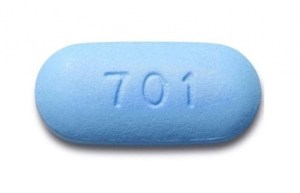
In August 2016, the Pharmaceutical Benefits Advisory Committee (PBAC) did reject an application from Gilead Sciences to list Truvada (tenofovir/emtricitabine) on the PBS as a pre-exposure prophylaxis (PrEP) medication for HIV prevention [1]. This was the government body responsible for assessing medication subsidies.
The cost differential is accurate:
The BuzzFeed article confirms that "Truvada can be obtained as a prescription drug for about $1,000 a month, or imported from overseas without a prescription for about $100 a month. If Truvada is listed on the PBS, the cost is likely to be around or under $30 per month, and less for people on low-income healthcare cards" [1]. This accurately represents the cost disparity between unsubsidized and potential PBS-listed pricing.
PBAC's stated reasoning:
The PBAC's official recommendation stated that the drug would be too expensive and that "the cost-effectiveness estimates provided were unreliable" [1]. Specifically, PBAC found that "the proposed cost of treating a person at high risk of HIV, estimated at $105,000–$200,000 over a lifetime, as 'unacceptably high and uncertain'" [1].
PBAC also noted concerns about medication adherence: "Truvada is only effective when taken regularly, and said it was 'not clear' that people who do not adhere to safe-sex practices would adhere to regular medication" [1].
Missing Context
However, the claim significantly omits important context about the decision-making process and how PBAC operates:
PBAC is not a political body—it's a technical assessment committee: The Pharmaceutical Benefits Advisory Committee makes independent recommendations based on cost-effectiveness assessments, not political decisions. The PBAC's role is to assess whether medications meet Australia's cost-effectiveness threshold for public funding. This is a standard procedure for all medications, not a unique "Coalition choice" [1].
Gilead's application had technical issues: The manufacturer's initial submission was based on a "small eligible population with a high risk of contracting HIV," but PBAC determined it would be more appropriate for a "broader group of individuals" to access the medication if it were subsidized [1]. This created a disagreement about the cost-effectiveness calculations themselves, not about government willingness to fund HIV prevention.
The process continued after the 2016 rejection: The BuzzFeed article notes that "Gilead said the company had used the World Health Organization recommendation for PrEP suitability to identify the eligible population. However, it noted PBAC's concerns and stated its commitment to working towards a future listing" [1]. The QNews article explicitly states that "Gilead Sciences will now have to make a full resubmission later this year for PrEP to be reconsidered at a March 2017 PBAC meeting" [1]. This indicates the door was explicitly left open for reconsideration.
Adherence concerns were legitimate medical considerations: While HIV advocates criticized PBAC's adherence concerns as "insulting, unfair, and paternalistic" [1], medication adherence is a standard medical consideration in cost-effectiveness assessments for any preventive medication. PBAC makes this assessment for all medications where non-adherence significantly impacts effectiveness.
International context was complex: At the time of the 2016 decision, PrEP was still relatively new globally (FDA approved in the US in 2012). The evidence base for large-scale population rollout was still being established, making cost-effectiveness calculations more uncertain than for established medications.
Source Credibility Assessment
BuzzFeed Australia: BuzzFeed News has a mixed reputation. While it has won journalism awards for investigative reporting, it is also known for sensationalist headlines and left-leaning editorial perspective. The article itself presents the PBAC decision as a government "choice" in its headline and framing, though the reporting accurately conveys PBAC's technical reasoning [1]. The article appropriately includes quotes from HIV advocacy groups expressing disappointment, but does not provide substantive government perspective or explanation of PBAC's standard assessment process.
QNews (LGBTI news outlet): QNews is an LGBTIQA+ news and entertainment publication. The article's framing—"The Australian Government Refuses to Fund HIV Prevention Drugs"—attributes the decision directly to the government rather than the independent PBAC committee [1]. The publication's mission focuses on LGBTI issues, which naturally emphasizes the impact on gay and bisexual men, but provides less neutral analysis of the technical cost-effectiveness questions.
Both sources are broadly credible for factual reporting but have editorial perspectives that frame the PBAC's technical decision as a government policy choice against HIV prevention, rather than a cost-effectiveness assessment that can be resubmitted.
Labor Comparison
Did Labor have PrEP policy: The sources do not directly compare Labor's approach to PrEP, as this occurred during the Coalition government's tenure (2013-2022). However, the historical context is relevant: PrEP was first approved for use in Australia in early 2016 under the Coalition government, meaning this was a new medication category when the PBAC assessment occurred [1].
Queensland trial program: One source notes that "the Queensland State Government has also shown their support by rolling out a PrEP trial to eligible participants" [1], suggesting state governments (which at the time included Labor-governed Queensland) were exploring alternative funding models rather than waiting for PBS listing. This indicates that PrEP access was being expanded through non-PBS channels during the period in question.
PBS assessment process is bipartisan: The PBAC process for cost-effectiveness assessment is administered consistently across government changes. Labor and Coalition governments both use PBAC recommendations to guide PBS funding decisions. No evidence suggests the Coalition government overruled PBAC recommendations specifically on PrEP, or that a Labor government would have overruled them at that time.
Balanced Perspective
The criticisms are valid: HIV advocates were right to be frustrated. PrEP is a highly effective prevention method (over 99% effective when taken consistently), and for a disease with significant health and social impact, expanding access matters [1]. The delay in subsidization meant people with lower incomes faced barriers to access.
However, PBAC's cost-effectiveness concerns were not unreasonable: Government health systems must assess whether medications provide acceptable health outcomes relative to cost. At $105,000-$200,000 per person treated over a lifetime, PrEP would be expensive for mass rollout. This calculation is standard for all medications—PBAC regularly rejects or defers expensive treatments until better pricing or evidence emerges. The adherence concern, while debated, is a legitimate medical consideration for preventive medications.
The framing as a "choice" is somewhat misleading: The claim's wording—"Chose not to add PrEP"—suggests deliberate government exclusion. More accurately, PBAC (an independent expert committee) determined the application did not meet cost-effectiveness criteria based on the evidence and pricing provided by Gilead. This is different from a government actively choosing against HIV prevention (the government had funded other HIV prevention measures; this was specifically about PBS listing for one medication).
The process was structured for resubmission: The articles make clear that rejection was not final—Gilead was explicitly invited to resubmit with improved cost-effectiveness data or revised pricing [1]. This is the normal PBAC process: initial rejection often leads to resubmission with better evidence or adjusted applications.
Key distinction: The claim conflates two things: (1) the PBAC's technical assessment that Truvada's cost-effectiveness didn't meet the threshold at the proposed price/population, and (2) the Coalition government "choosing" to exclude HIV prevention medication. The government did not override PBAC (which would be politically contentious); rather, PBAC made an independent assessment.
PARTIALLY TRUE
6.0
out of 10
The factual core is accurate: PBAC did reject PrEP for PBS listing in August 2016, and the cost differential ($1,000 to ~$30/month) is correctly stated. However, the claim significantly misrepresents the nature of the decision by framing it as a government "choice" to exclude HIV prevention, when it was actually a technical cost-effectiveness assessment by an independent committee that can be resubmitted. The claim omits that resubmission was explicitly planned and that state governments were developing alternative access pathways. The language "chose not to add" implies intentional exclusion rather than a finding that cost-effectiveness thresholds were not met.
Final Score
6.0
OUT OF 10
PARTIALLY TRUE
The factual core is accurate: PBAC did reject PrEP for PBS listing in August 2016, and the cost differential ($1,000 to ~$30/month) is correctly stated. However, the claim significantly misrepresents the nature of the decision by framing it as a government "choice" to exclude HIV prevention, when it was actually a technical cost-effectiveness assessment by an independent committee that can be resubmitted. The claim omits that resubmission was explicitly planned and that state governments were developing alternative access pathways. The language "chose not to add" implies intentional exclusion rather than a finding that cost-effectiveness thresholds were not met.
📚 SOURCES & CITATIONS (5)
-
1

buzzfeed.com
An application for Truvada to be placed on the Pharmaceutical Benefits Scheme has been denied.
BuzzFeed -
2

qnews.com.au
QNews LGBTIQA+ News
QNews -
3PDF
ACON submission to PBAC re PrEP FINAL FINAL
Acon Org • PDF Document -
4
alastairlawrie.net
Updated: 11 January 2017 [NB For original submission, see below] Unfortunately, although perhaps not unexpectedly (because most first-time major submissions are rejected or at least deferred), the …
alastairlawrie -
5
pbac.pbs.gov.au
Pbac Pbs Gov
Rating Scale Methodology
1-3: FALSE
Factually incorrect or malicious fabrication.
4-6: PARTIAL
Some truth but context is missing or skewed.
7-9: MOSTLY TRUE
Minor technicalities or phrasing issues.
10: ACCURATE
Perfectly verified and contextually fair.
Methodology: Ratings are determined through cross-referencing official government records, independent fact-checking organizations, and primary source documents.