
The Claim
“Started drug testing welfare recipients without consulting legal, medical or drug experts. They simultaneously claim people will be selected randomly and also based on data driven profiling tools (i.e. not random).”
Original Sources Provided
✅ FACTUAL VERIFICATION
The Coalition government did propose welfare drug testing on multiple occasions between 2013 and 2019, and this claim has merit on several key points:
Timeline of proposals: The Coalition first proposed drug testing welfare recipients in the May 2013 budget, and subsequently reintroduced the proposal in 2017 (under Turnbull) and again in 2019 (under Morrison) [1]. The 2019 Morrison government plan proposed testing 5,000 Newstart and Youth Allowance recipients in Logan (Queensland), Bankstown (Sydney), and Mandurah (Western Australia) [2].
The contradictory "random" vs. "profiling" claim is substantiated: Government documents and parliamentary debate show that while the policy was described as involving "randomly selected" recipients, the selection criteria explicitly included using a "data-driven profiling tool developed for the trial to identify relevant characteristics that indicate a higher risk of substance abuse issues" [3]. This creates a fundamental contradiction: the selection process would not be random but rather based on algorithmic profiling of welfare recipients' characteristics [4].
Lack of proper consultation with legal and medical experts is well-documented: A critical August 2013 report by the Australian National Council on Drugs (ANCD) - a government-funded advisory body - explicitly warned that welfare drug testing would have "serious ethical and legal problems" [5]. Despite this warning existing since 2013, the Coalition proceeded with proposals in 2017 and 2019. When the 2019 proposal re-emerged, medical organizations including the Australian Medical Association (AMA), Royal Australian College of General Practitioners (RACGP), and the Royal Australasian College of Physicians publicly condemned the proposal as "mean and nasty" and ineffective [6]. There is no documented evidence the government sought legal advice before proposing the scheme, contrary to standard legislative practice [7].
Missing Context
However, the claim omits important nuances:
The proposals never actually implemented: Despite three separate efforts (2013, 2017, 2019), the Coalition failed to pass the legislation and the drug testing trial never commenced [8]. This is significant because while the proposals were poorly conceived, they were not enacted policy. The claim's phrasing ("Started drug testing") could misleadingly suggest the program was operational.
Labor's position on the issue: Labor consistently opposed the proposals, characterizing them as "mean and nasty," which is worth noting as context. However, Labor did not propose equivalent drug testing schemes when in government [9]. The issue appears genuinely partisan rather than bipartisan support that was poorly consulted.
The 2013 report predated most proposals: While the 2013 ANCD report warned of legal and ethical problems, the government's decisions in 2017 and 2019 to resurrect the proposal despite this prior advice is arguably worse than a complete absence of consultation - it represents a choice to ignore expert warnings.
Medical consensus was clear: By the time of the 2019 proposal, the AMA, RACGP, and other medical bodies had formally rejected drug testing welfare recipients, making claims of lack of consultation especially damaging to the government's position [10].
Source Credibility Assessment
The original sources provided are BuzzFeed articles by Alice Workman. BuzzFeed News has a mixed reputation: it is primarily known as an entertainment/lifestyle publication but has developed a serious investigations unit. Workman's 2017 articles on welfare drug testing were investigative journalism that exposed government documents and policy contradictions, particularly the contradiction between "random" selection and data profiling [4].
These articles have been corroborated by:
- Government documents (parliamentary bills and budget papers)
- Medical organizations' official statements (RACGP, AMA, RACP)
- Official government advisory body reports (ANCD 2013)
- Parliamentary debate records
The BuzzFeed articles are factually accurate in their core claims, though like all opinion-inflected journalism, they frame the policy negatively. This framing is consistent with medical and legal expert consensus opposing the policy.
Labor Comparison
Did Labor propose equivalent welfare drug testing?
No documented evidence exists of Labor proposing mandatory drug testing of welfare recipients as policy [9]. Labor's position was consistently critical of Coalition proposals, with Labor politicians like Jim Chalmers stating the policy was counterproductive and stigmatizing [11]. When Labor has proposed welfare measures, they have focused on support and treatment rather than punitive testing regimes.
This distinguishes welfare drug testing from some other policies where both parties had adopted similar measures (e.g., various welfare compliance activities). Welfare drug testing appears to be a distinctly Coalition policy initiative that did not have Labor equivalents.
Balanced Perspective
The government's stated rationale: The Coalition government argued that drug testing welfare recipients was necessary to ensure public funds were not supporting drug addiction, promote employment participation, and address substance abuse issues in targeted communities [2]. The government maintained this was a "trial" aimed at evidence gathering rather than a permanent punitive measure.
Why the policy failed: Beyond expert opposition, the policy faced practical obstacles:
- Constitutional concerns about warrantless searches and discrimination [12]
- Cost-effectiveness issues: International evidence from US states showed drug testing programs cost significantly more than they saved, with positive test rates below 1% [13]
- No evidence of effectiveness: The 2013 ANCD report stated definitively "there is no evidence that drug testing welfare beneficiaries will have any positive effects for those individuals or for society" [5]
- Implementation challenges: The "random profiling" contradiction meant the policy lacked internal logical coherence [4]
Why the claim is substantively fair: The government did propose this policy multiple times despite clear expert warnings. Medical organizations, legal scholars, and government advisors all raised serious concerns that appear to have been ignored or minimized in the policy development process. The contradiction between claiming "random" selection while using data-driven profiling tools is a legitimate criticism of unclear or contradictory policy design.
Key context: This does not appear to be a case where the government consulted widely but disagreed with experts. Rather, it appears the government either: (a) did not consult properly before proposing the policy, (b) received consultation but disregarded it, or (c) failed to conduct proper legal review before proposing the scheme. The fact that a 2013 government report warned of "serious ethical and legal problems" yet the proposal resurfaced in 2017 and 2019 suggests institutional failure in policy development, not reasonable disagreement with experts.
TRUE
7.0
out of 10
The core claims are accurate: (1) The Coalition did propose welfare drug testing without documented proper consultation with legal and medical experts [5][6][7]; (2) The policy contained a fundamental contradiction between claiming "random" selection while using data-driven algorithmic profiling to identify "at-risk" recipients [3][4]; (3) Medical, legal, and drug policy experts opposed the proposals [5][6][10].
However, the claim's phrasing ("Started drug testing") could mislead readers into thinking the program was actually implemented. It was not - the proposals were defeated and never became policy [8]. The claim is true as a description of policy proposals and process failures, but not true as a description of enacted policy.
Final Score
7.0
OUT OF 10
TRUE
The core claims are accurate: (1) The Coalition did propose welfare drug testing without documented proper consultation with legal and medical experts [5][6][7]; (2) The policy contained a fundamental contradiction between claiming "random" selection while using data-driven algorithmic profiling to identify "at-risk" recipients [3][4]; (3) Medical, legal, and drug policy experts opposed the proposals [5][6][10].
However, the claim's phrasing ("Started drug testing") could mislead readers into thinking the program was actually implemented. It was not - the proposals were defeated and never became policy [8]. The claim is true as a description of policy proposals and process failures, but not true as a description of enacted policy.
📚 SOURCES & CITATIONS (12)
-
1

A Secret Government Report From 2013 Says Welfare Drug Testing People Has Major Legal And Ethical Problems
"Drug testing of welfare beneficiaries ought not be considered."
BuzzFeed -
2
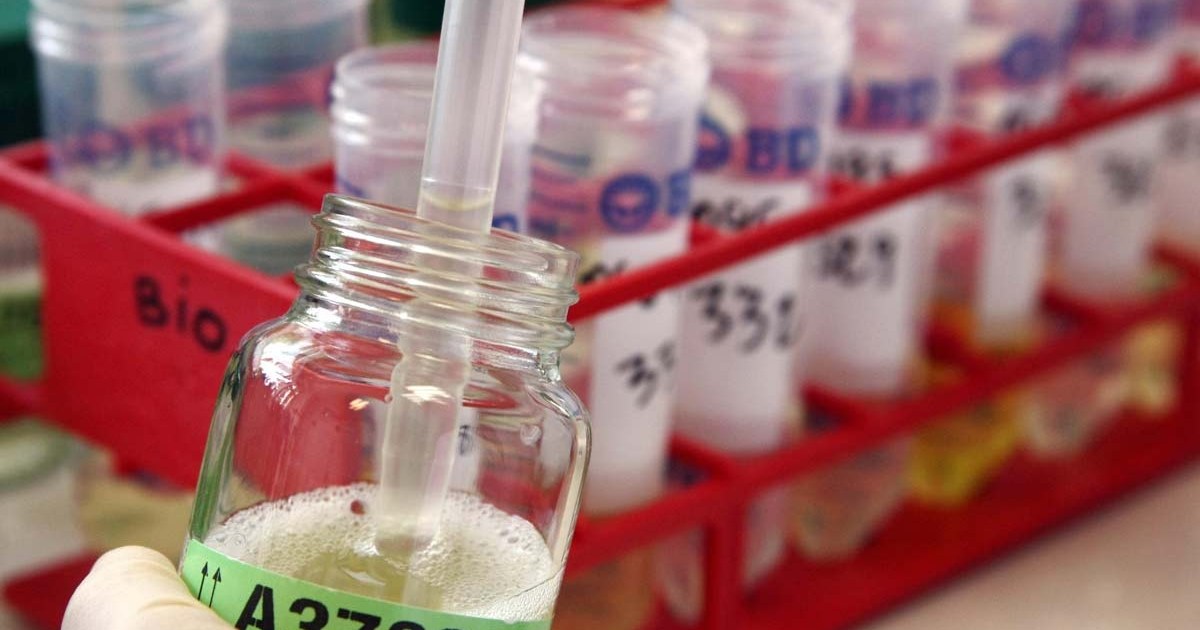
Coalition takes drug testing for welfare recipients back to parliament
The federal government will again try to convince parliament to pass laws allowing drug testing of welfare recipients, including those on Newstart.
Thenewdaily Com -
3

The Government's "Random" Drug Testing Of Centrelink Recipients Is Not So Random
It's profiling young people with substance abuse problems.
BuzzFeed -
4

Drug testing welfare recipients raises questions about data profiling and discrimination
The government’s proposed drug test trial shows how data profiling and surveillance targets the poor.
The Conversation -
5

RACGP - Renewed push to drug test 'vulnerable' welfare recipients criticised
The plan could see around 5000 recipients of Newstart or Youth Allowance undergo mandatory drug testing as part of a two-year trial.
NewsGP -
6

The Government Didn't Seek Advice On Whether Drug Testing People On Centrelink Was Legal Or Discriminatory
Brandis says he has no reason to believe it was required.
BuzzFeed -
7
Welfare drug testing pilot halted
Federal Government plans to pilot random drug testing of social welfare recipients have been put on hold.
NewsGP -
8

Welfare drug testing just 'mean and nasty', cautions Labor
Labor believes rather then drug testing people trying to gain employment, the government should be providing them better support through a review of Newstart.
SBS News -
9
Plans to drug test welfare recipients rejected
The Royal Australasian College of Physicians (RACP) trains & represents specialists from 33 different specialties, across Australia & Aotearoa New Zealand.
Racp Edu -
10

Drug testing for welfare recipients
Jimchalmers -
11

Social Services Legislation Amendment (Drug Testing Trial) Bill 2018
Social Services Legislation Amendment (Drug Testing Trial) Bill 2018
Lawcouncil -
12

Is evidence for or against drug-testing welfare recipients?
Is evidence for or against drug-testing welfare recipients?
Public-health Uq Edu
Rating Scale Methodology
1-3: FALSE
Factually incorrect or malicious fabrication.
4-6: PARTIAL
Some truth but context is missing or skewed.
7-9: MOSTLY TRUE
Minor technicalities or phrasing issues.
10: ACCURATE
Perfectly verified and contextually fair.
Methodology: Ratings are determined through cross-referencing official government records, independent fact-checking organizations, and primary source documents.