
The Claim
“Tried to allow the Clean Energy Finance Corporation to invest in coal.”
Original Sources Provided
✅ FACTUAL VERIFICATION
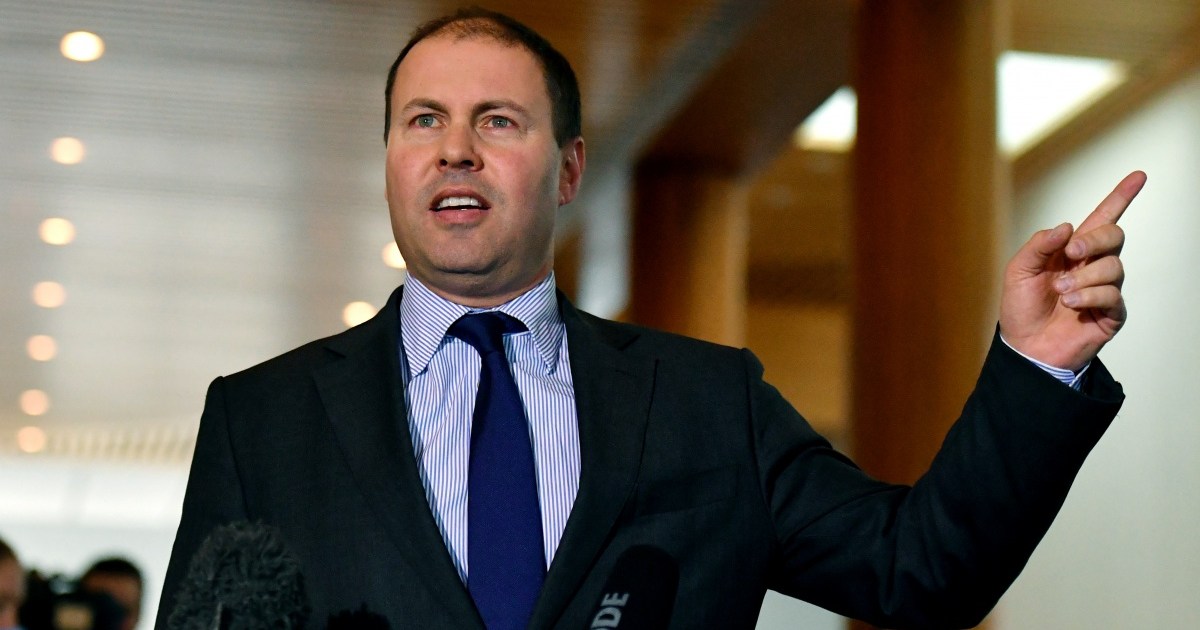
The claim is factually accurate regarding what the Coalition attempted to do. On May 29-30, 2017, Energy Minister Josh Frydenberg announced that the Turnbull government would introduce legislation to expand the CEFC's mandate to include carbon capture and storage (CCS) technology [1][2].
Key facts verified:
The announcement: Frydenberg stated "Today we right that wrong" in announcing the policy change, explicitly indicating the government's intent to remove restrictions on CEFC investment in CCS [2].
The original restriction: The CEFC had been prohibited from investing in carbon capture and storage (as well as nuclear) under the original legislation passed under Labor's government, in a deal struck between Labor and the Greens [1][2]. This was a deliberate legislative restriction embedded in the CEFC Act 2012.
The rationale: The government framed this as making the CEFC "technology neutral" [2]. Frydenberg cited carbon capture and storage's potential to "reduce emissions by up to 90 per cent" and noted there were "17 successful carbon capture and storage projects rolled out throughout the world and two demonstration projects in Australia" [2].
The scope: Critically, the proposal was specifically about carbon capture and storage technology, NOT direct coal investment. CCS can be applied to coal-fired power plants, but also to cement plants, the mining industry, plastics manufacturing, and fertilizer production [2]. Experts noted that while CCS could theoretically be retrofitted to coal plants, it could also finance standalone industrial applications [2].
Missing Context
The claim's framing of "invest in coal" is misleading. The government's actual proposal was to allow CEFC investment in carbon capture and storage technology, which has multiple applications beyond coal [2]. Dr Colin Scholes, a University of Melbourne CCS expert, clarified: "It's not just coal. A whole lot of other industries produce carbon. Things like cement plants, the mining industry, plastics, fertilizer" [2].
Critical missing context:
The technology's applications: CCS could be used for coal power plants but also for industrial emissions across many sectors. The CEFC would finance the technology broadly, not specifically coal plants [2].
Expert skepticism on viability: Former CEFC chief executive Oliver Yates told Parliament that CCS "did not represent a sensible investment" [2]. The Climate and Energy College's Dylan McConnell stated "The cost is just too expensive" and "You'd use the entire Clean Energy Finance Corporation to build a single plant" [2]. This suggests the policy was largely symbolic since CEFC's commercial imperative meant CCS would struggle to attract funding anyway [2].
International context: Even coal-friendly governments were skeptical. Trump's 2017 budget proposed cutting CCS research funding by 85 percent [2], undercutting the government's argument about the technology's viability.
Greens' original intent: The Greens had insisted on the CCS/nuclear prohibition as a condition of passing the CEFC legislation under Labor [1]. This was a deliberate policy design choice to ensure the $10 billion fund focused exclusively on renewable and clean energy, not fossil fuel technologies.
The "coal loophole" reality: While the policy could technically enable coal plant CCS investment, CEFC's commercial lending requirements meant it would be highly unlikely to actually fund coal projects in practice [2].
Source Credibility Assessment
AFR (Australian Financial Review): Mainstream quality financial news publication. Phillip Coorey is the political editor. The reporting is factual and straightforward, directly quoting government announcements [1].
The New Daily: Left-leaning publication but mainstream news outlet. The reporting includes government quotes, expert commentary from multiple perspectives (Greens, conservation groups, industry), and legitimate criticism. The headline framing ("clean coal") is somewhat editorialized, but the article's substance is balanced with quotes from experts skeptical of the technology's viability [2].
Both sources accurately report what was announced. Neither source provides evidence of whether the legislation actually passed or was implemented. The framing of "coal investment" in The New Daily headline is somewhat sensationalized—the actual policy was CCS technology investment with potential application to coal, not direct coal company subsidies.
Labor Comparison
Did Labor do something similar?
Labor actually did the opposite. Labor established the CEFC in 2012 and deliberately excluded CCS and nuclear from its mandate as a condition for passing the legislation with Greens support [1][2]. This was a deliberate policy choice to ensure the $10 billion fund was reserved for renewable and clean energy only [2].
The claim that Coalition "tried to allow" CEFC coal investment is accurate, but it represents an attempt to reverse Labor's policy design, not replicate it. Labor protected CEFC's clean energy focus; the Coalition tried to expand it to include CCS/coal-adjacent technology.
Comparative context: This represents a genuine difference between the parties' approaches to clean energy financing—Labor restricted CEFC to renewables; Coalition sought to expand it to include carbon capture technology. This is a legitimate policy disagreement about technology neutrality versus renewable-specific focus.
Balanced Perspective
The government's justification:
The Coalition framed this as "technology neutrality" and emphasized that CCS is proven technology that could reduce emissions [2]. Frydenberg argued it was necessary to "help us meet our Paris targets" and positioned it as a pragmatic climate solution [2]. The Minerals Council of Australia argued CCS "must be part of the future here and internationally if we are to maintain affordable energy" [2].
There is a legitimate argument that carbon capture technology could contribute to emissions reduction in industrial processes and potentially retrofit existing coal infrastructure, offering a transition pathway rather than immediate closure [2].
The criticisms and concerns:
Environmental groups were sharply critical. The Australian Conservation Foundation stated "there is no such thing as clean coal" and said "Ordering CEFC to invest in coal technology is like telling the health department to invest in tobacco" [2]. Adam Bandt (Greens) called it rent-seeking by the coal industry [2]. Critics likened it to "smoking to reduce cancer" [2].
The technical reality:
Expert commentary reveals the policy was likely more symbolic than practical. Former CEFC CEO Oliver Yates stated CCS "did not represent a sensible investment," and independent experts noted the technology was "just too expensive" and would consume the entire CEFC budget for a single plant [2]. This suggests while the Coalition tried to remove the legislative restriction, commercial realities would have made actual coal-CCS investment unlikely anyway [2].
Key context: This attempt to expand CEFC's mandate represents a genuine philosophical disagreement between parties—Coalition advocating technology neutrality versus Labor/Greens restricting to proven renewables. Both positions have merit: the Coalition argument about industrial CCS applications is reasonable, but critics' concerns about using renewable finance mechanisms for coal-adjacent technology are also legitimate.
TRUE
7.0
out of 10
The Coalition government did attempt to allow CEFC to invest in carbon capture and storage technology in May 2017. Energy Minister Josh Frydenberg announced legislation would be introduced to remove the restriction that Labor had placed on CEFC's mandate [1][2]. While the claim's framing of "invest in coal" is slightly imprecise (the actual policy targeted CCS technology with multiple applications), the core claim is accurate—the government did propose to expand CEFC's authority to include investment in carbon capture and storage, which could be applied to coal power plants [1][2].
The claim is accurate but omits critical context: (1) this was specifically about CCS technology, not direct coal investment, (2) experts questioned whether CEFC would actually fund coal projects due to commercial constraints, and (3) Labor's original CEFC design explicitly excluded CCS as a deliberate policy choice [1][2].
Final Score
7.0
OUT OF 10
TRUE
The Coalition government did attempt to allow CEFC to invest in carbon capture and storage technology in May 2017. Energy Minister Josh Frydenberg announced legislation would be introduced to remove the restriction that Labor had placed on CEFC's mandate [1][2]. While the claim's framing of "invest in coal" is slightly imprecise (the actual policy targeted CCS technology with multiple applications), the core claim is accurate—the government did propose to expand CEFC's authority to include investment in carbon capture and storage, which could be applied to coal power plants [1][2].
The claim is accurate but omits critical context: (1) this was specifically about CCS technology, not direct coal investment, (2) experts questioned whether CEFC would actually fund coal projects due to commercial constraints, and (3) Labor's original CEFC design explicitly excluded CCS as a deliberate policy choice [1][2].
📚 SOURCES & CITATIONS (2)
-
1
CEFC to be used for coal: Josh Frydenberg
The Turnbull government is introducing legislation to enable the Clean Energy Finance Corporation to invest in carbon capture and storage technology.
Australian Financial Review -
2
Government backs 'green bank' funds for 'clean coal'
The Turnbull government has paved the way for public financing of so-called 'clean coal' technology, a move likened to "smoking to reduce cancer".
Thenewdaily Com
Rating Scale Methodology
1-3: FALSE
Factually incorrect or malicious fabrication.
4-6: PARTIAL
Some truth but context is missing or skewed.
7-9: MOSTLY TRUE
Minor technicalities or phrasing issues.
10: ACCURATE
Perfectly verified and contextually fair.
Methodology: Ratings are determined through cross-referencing official government records, independent fact-checking organizations, and primary source documents.