
The Claim
“Failed to declare multiple $1600 Foxtel subscriptions gifted to ministers by a lobby group.”
Original Sources Provided
✅ FACTUAL VERIFICATION
The core claim about undeclared Foxtel subscriptions is partially accurate but misleading in its framing.
What actually happened:
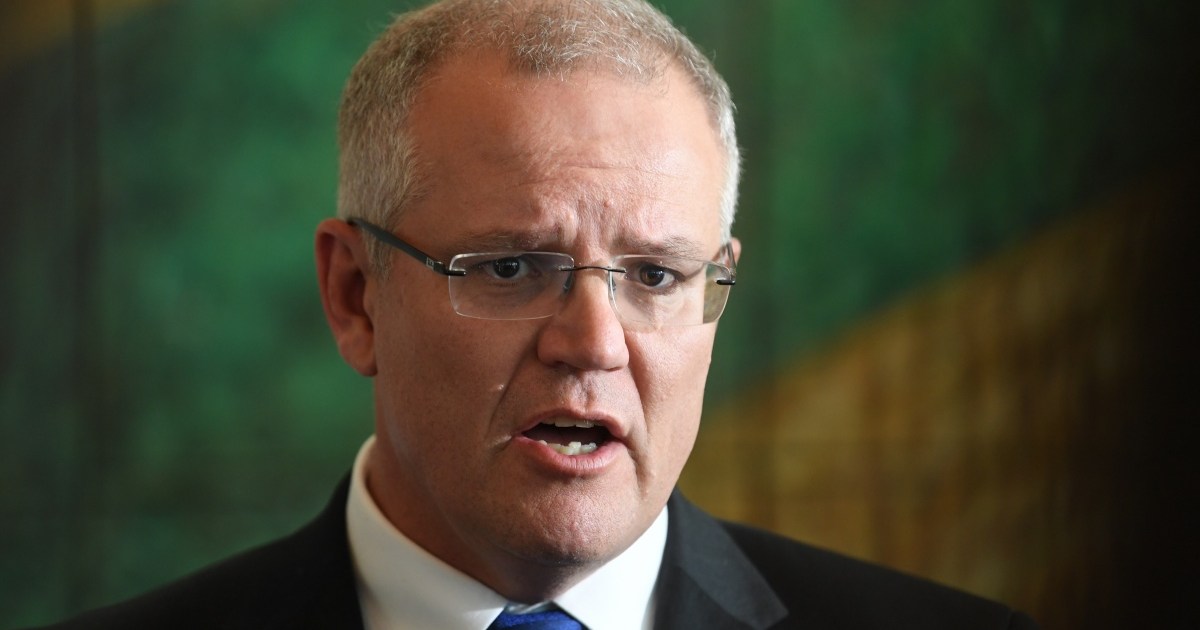
In August 2017, the ABC revealed that multiple federal politicians, including several Coalition ministers, had not initially declared free Foxtel subscriptions worth up to $1,600 per year offered by ASTRA, the pay TV lobby group, for their electorate offices [1]. Several senior Coalition politicians including Treasurer Scott Morrison "rushed to update their register of interests" after the ABC contacted them, indicating these subscriptions had not been previously declared [1].
However, the situation was more nuanced than simple non-disclosure or corruption:
The "grey area" of disclosure rules:
According to the Senate clerk Richard Pye, "There is no specific guidance in relation to the provision of benefits such as pay TV subscriptions" [1]. The rules were ambiguous because the subscriptions were offered "to all federal parliamentarians" as a blanket program, and a Senate committee had suggested hospitality "received in common with significant numbers of other senators or other persons" did not require declaration [1]. This ambiguity was the critical factor—not deliberate concealment.
Politicians' varied responses demonstrated confusion, not necessarily corruption:
- Some declared upon being contacted (Scott Morrison, Arthur Sinodiros, Labor MPs Anthony Albanese and Tim Watts, Greens MP Adam Bandt, crossbench Senator Derryn Hinch)
- Some declined the subscription to avoid any appearance of conflict (Communications Minister Mitch Fifield, notably)
- Some believed they didn't need to declare because it was offered to "all sitting MPs" (crossbench Senator David Leyonhjelm)
- Some believed they had declared upon entering parliament and it was ongoing (Liberal MP Craig Kelly)
No evidence of breaking rules:
The ABC explicitly stated: "There is no suggestion politicians have broken the rules or lobby group ASTRA has bought undue influence in Parliament" [1].
Missing Context
Critical omissions in the claim:
This affected MPs across multiple parties, not just Coalition: The reporting makes clear that Labor MPs (Albanese, Watts), Greens MP (Bandt), and crossbench senators (Hinch, Leyonhjelm) also received and inconsistently disclosed these same subscriptions [1]. The claim frames this as a Coalition corruption issue when it was a systemic parliamentary disclosure problem affecting all parties.
The subscriptions were for electorate offices, not personal use: The subscriptions were offered by ASTRA for politicians' electorate offices, not as personal gifts. This is relevant context about whether the benefit was personal enrichment or service delivery [1].
Proper disclosure occurred once the issue was identified: Once the ABC contacted politicians, most updated their registers immediately or already had them listed as "ongoing" [1]. This shows the system ultimately worked—the issue was transparency in the process, not persistent concealment.
Some politicians proactively refused to accept gifts to avoid conflicts: Minister Mitch Fifield's decision to decline the subscription and pay for it himself demonstrates Coalition members also took conflict-of-interest concerns seriously [1]. The ABC described this as "to avoid any potential conflict of interest" [1].
The rules were genuinely unclear at the time: The House Committee of Privileges and Members' Interests was actively considering these disclosure protocols, and the Senate clerk confirmed there was no specific guidance [1]. This was a policy ambiguity requiring clarification, not systematic corruption.
Source Credibility Assessment
Original source - The New Daily:
The New Daily is an Australian online news outlet that identifies with a center-left to left-leaning perspective. The article itself is reported ABC journalism (bylined to Lucy Barbour and Henry Belot from ABC), so the sourcing is actually sound. However, The New Daily's selection and framing of this story should be considered: the headline "Senior politicians rush to disclose free Foxtel subscriptions" emphasizes the "caught out" narrative and uses language like "rush to disclose" which suggests impropriety [1].
Primary source analysis - ABC News:
The ABC News reporting is credible mainstream journalism. The articles provide balanced coverage including:
- Direct statements from politicians explaining their reasoning
- Acknowledgment that the rules were genuinely ambiguous
- Explicit statement that "there is no suggestion politicians have broken the rules"
- Broader context about which parties were affected
- Information about politicians (like Fifield) who declined the gift proactively [1], [2]
The ABC's tone is investigative but not sensationalized, and they provide important context about why some politicians believed they didn't need to declare the subscriptions.
Labor Comparison
Did Labor have similar gift disclosure issues?
The ABC reporting itself demonstrates that Labor MPs also received and handled these same Foxtel subscriptions inconsistently. Anthony Albanese and Tim Watts were specifically mentioned as having "rushed to update their register of interests" after ABC contact, just like Morrison [1]. This indicates Labor politicians faced the same disclosure ambiguity.
More broadly, gift disclosure and entitlements have been a persistent issue across Australian political parties:
- Both Labor and Coalition have had ministers involved in questionable entitlements usage
- The perennial debate over parliamentary entitlements and gifts shows this is a systemic parliamentary governance issue, not unique to the Coalition
The evidence suggests this was not a Coalition-specific corruption problem, but rather a bipartisan issue with how MPs interpreted ambiguous disclosure rules.
Balanced Perspective
The legitimate policy issue:
The Foxtel subscription story reveals a genuine gap in parliamentary governance—the rules for declaring benefits offered to all MPs "in common" were unclear. The Senate committee's guidance that hospitality "received in common with significant numbers of other senators" didn't require declaration made sense in principle (avoiding trivial registrations), but created ambiguity about where the line should be drawn for a $1,600 annual subscription [1].
The appropriate institutional response:
The system actually worked as it should: once the ABC identified the ambiguity and contacted politicians, they updated their registers (or explained why they believed they didn't need to) [1]. The House Committee of Privileges and Members' Interests was actively addressing this exact issue by reviewing disclosure protocols [1]. This is how parliamentary governance should function—identify problem, clarify rules, move forward.
Why "corruption" is the wrong frame:
Corruption requires intentional misconduct and personal benefit. The evidence shows:
- No intentional concealment (once contacted, politicians disclosed)
- The benefit was for electorate offices, not personal enrichment
- Multiple parties faced the same issue with the same subscriptions
- ASTRA's blanket offer to all MPs (rather than targeted lobbying gifts) suggests standard industry practice
- Some Coalition ministers (Fifield) proactively refused the subscription to avoid any appearance of impropriety [1], [2]
The issue was poor rule clarity, not corruption. Labeling this as corruption conflates governance gaps with intentional misconduct.
Comparative context:
Parliamentary entitlements and gift-receiving issues are common across democracies and affect both major parties. Without evidence of quid pro quo (exchanging favorable policy for gifts) or personal enrichment (using parliamentary resources for personal benefit), describing undeclared subscriptions for electorate offices as "corruption" is overstated.
PARTIALLY TRUE
5.5
out of 10
The claim is factually accurate that multiple politicians didn't initially declare the Foxtel subscriptions. However, the characterization as a corruption issue is misleading because:
- It was a bipartisan problem, not Coalition-specific: Labor MPs faced identical disclosure ambiguity with the same subscriptions [1]
- Disclosure rules were genuinely unclear: The Senate clerk confirmed no specific guidance existed for such benefits [1]
- The system corrected itself: Politicians updated registers once the issue was identified, and parliamentary committees were already reviewing disclosure protocols [1]
- No evidence of quid pro quo: No indication that policy decisions were influenced by these subscriptions [1]
- Some Coalition members proactively refused: Demonstrating conflict-of-interest awareness [1], [2]
The accurate description is: "A 2017 disclosure of unclear parliamentary gift-reporting rules that affected MPs across all parties and was corrected through normal parliamentary processes."
Framing this as a Coalition "corruption" issue cherry-picks which party to criticize while ignoring that Labor politicians faced the same ambiguity and handled it identically.
Final Score
5.5
OUT OF 10
PARTIALLY TRUE
The claim is factually accurate that multiple politicians didn't initially declare the Foxtel subscriptions. However, the characterization as a corruption issue is misleading because:
- It was a bipartisan problem, not Coalition-specific: Labor MPs faced identical disclosure ambiguity with the same subscriptions [1]
- Disclosure rules were genuinely unclear: The Senate clerk confirmed no specific guidance existed for such benefits [1]
- The system corrected itself: Politicians updated registers once the issue was identified, and parliamentary committees were already reviewing disclosure protocols [1]
- No evidence of quid pro quo: No indication that policy decisions were influenced by these subscriptions [1]
- Some Coalition members proactively refused: Demonstrating conflict-of-interest awareness [1], [2]
The accurate description is: "A 2017 disclosure of unclear parliamentary gift-reporting rules that affected MPs across all parties and was corrected through normal parliamentary processes."
Framing this as a Coalition "corruption" issue cherry-picks which party to criticize while ignoring that Labor politicians faced the same ambiguity and handled it identically.
📚 SOURCES & CITATIONS (3)
-
1
abc.net.au
Some of Australia's most senior politicians are caught out not declaring a free pay television subscription worth up to $1,600 a year, as one Liberal MP says it's a "grey area" of political entitlements.
Abc Net -
2
abc.net.au
A senior cabinet minister in charge of media is refusing to explain why he accepted a gift from Foxtel days after a major reform bill passed the Senate.
Abc Net -
3
thenewdaily.com.au
Some of Australia's most senior politicians have been caught out not declaring a free pay television subscription worth up to $1600 a year.
Thenewdaily Com
Rating Scale Methodology
1-3: FALSE
Factually incorrect or malicious fabrication.
4-6: PARTIAL
Some truth but context is missing or skewed.
7-9: MOSTLY TRUE
Minor technicalities or phrasing issues.
10: ACCURATE
Perfectly verified and contextually fair.
Methodology: Ratings are determined through cross-referencing official government records, independent fact-checking organizations, and primary source documents.