
The Claim
“Doubled the amount spent on external consultants, after cutting public sector staff.”
Original Sources Provided
✅ FACTUAL VERIFICATION
The core claim that consultant spending doubled in the Department of Prime Minister and Cabinet is verified by the original SMH source [1]. According to the 2017-18 annual report covered by SMH, the department recorded consultant spending of $3.29 million in 2016-17, which jumped to $7.05 million in 2017-18 - more than doubling the expenditure [1].
The article further specifies that this increase comprised $4.3 million in new consultancies and $2.74 million in existing consultancies carried over from previous year [1]. The number of consultancy contracts also increased from 104 to 125 contracts (20% increase) [1].
However, the claim's framing requires important clarification regarding the definition change noted in reporting. The Department clarified that their 2017-18 annual report included consultancies worth less than $10,000 that were not required to be listed on AusTender and were not included in previous annual reports [1]. This definitional change in reporting means the comparison between years is not entirely apples-to-apples, though the significant increase is still evident even accounting for this.
The article references an earlier auditor general's report finding that consultant spending had doubled at the same time the government moved to cut 15,000 public service jobs [1], providing the broader context for the claim.
Missing Context
The claim presents correlation without establishing causation. While consultant spending did increase during a period when public service staffing was being reduced, several important contextual factors are not addressed:
Reporting Methodology Change: The 2017-18 figures included consultancies under $10,000 not previously reported, making direct year-on-year comparison problematic [1].
Departmental Role and Taskforces: The Department of Prime Minister and Cabinet provided explanation that "Due to the variability of the department's role to support government priorities, including taskforces, consultant expenditure is not readily comparable year-on-year" [1]. The article notes that specific projects driving the increase were not identified by the department spokeswoman [1].
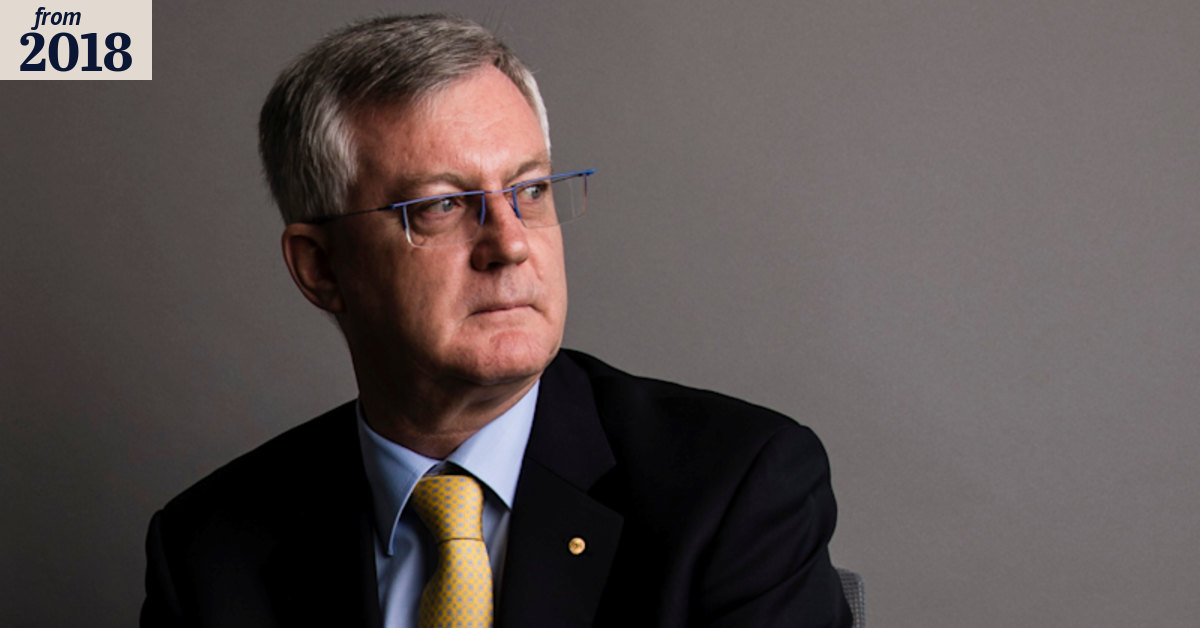
Security Review Context: The spending increase coincided with an external security review following the embarrassing cabinet files debacle where two locked filing cabinets containing sensitive documents were sold to an ex-government furniture store [1]. Dr. Martin Parkinson, the Secretary, stated this incident "had the most significant impact" on the department's 2017-18 year [1], suggesting the consultant spending may have included security-related review costs.
APS Review: The spending also coincided with an independent review of the Australian Public Service, which required temporary external expertise [1].
Legitimate Use Cases: Dr. Parkinson acknowledged consultant use was appropriate for specialist work where departments lacked in-house capability and for "robustness testing" to check that departments were on track [1]. He expressed concern only about consultants being used for "core business" work that should be done by permanent staff [1].
No Comparison to Labor Approach: The claim does not indicate whether Labor government also relied on consultants during public service reductions, or how their spending compared.
Source Credibility Assessment
The original source, Sally Whyte's article in The Sydney Morning Herald (October 7, 2018), is from a mainstream, reputable news organization with a track record of serious political and policy journalism [1]. SMH is part of Fairfax Media and maintains editorial standards typical of Australian broadsheet newspapers. The article cites official government sources (Department of PM&C annual report and quotes from Secretary Martin Parkinson) and references an auditor general's report.
The article quotes directly from the Department of Prime Minister and Cabinet's official annual report and includes the department's own explanation for the increase [1]. Dr. Martin Parkinson's comments are attributed directly and provide both the department's justification and his acknowledged concerns about consultant use [1].
The source is not notably partisan - it presents both the factual increase and the department's explanation for it. The article appears balanced in presenting the concerning spending increase alongside legitimate contextual factors.
Balanced Perspective
The Facts:
- The Department of Prime Minister and Cabinet consultant spending did increase significantly from $3.29M to $7.05M (114% increase) [1]
- This occurred during a period when the government was reducing public service headcount [1]
- The increase was driven by specific circumstances: security review following a major security breach, independent APS review, and ongoing taskforce work [1]
Legitimate Context:
The government's use of external consultants during this period was not necessarily improper. Dr. Parkinson explicitly acknowledged that external expertise was necessary for specialist capability gaps and robustness testing [1]. The cabinet files security breach was a genuine operational crisis requiring rapid external expertise. The government commissioned an independent APS review that would legitimately require specialized consultant input.
The Concern:
Dr. Parkinson did raise valid concerns about departments relying on consultants for "core business" work that should be done by permanent staff [1]. However, there is no evidence in this article that the PM&C consultant spending was for core functions rather than genuinely specialized, temporary work.
Missing Information:
- Specific breakdown of what the consultant spending was for (security review, APS review, or other taskforces)
- Whether this level of consultant spending was typical for departments undergoing major reviews
- Whether Labor government faced similar consultant spending patterns during comparable circumstances
- Whether the spending represented good value or excessive reliance on consultants
PARTIALLY TRUE
6.0
out of 10
The factual claim that consultant spending doubled in the Department of Prime Minister and Cabinet is accurate [1]. However, the framing implies improper spending or excessive consultant reliance in response to staff cuts, when the actual situation appears more complex. The spending increase coincided with specific extraordinary circumstances (security crisis, major APS review) rather than being a simple policy choice to cut permanent staff and replace with consultants. The reporting methodology change also means the year-on-year comparison is not entirely valid [1].
The claim is factually accurate on the dollar figure but misleading regarding causation and context.
Final Score
6.0
OUT OF 10
PARTIALLY TRUE
The factual claim that consultant spending doubled in the Department of Prime Minister and Cabinet is accurate [1]. However, the framing implies improper spending or excessive consultant reliance in response to staff cuts, when the actual situation appears more complex. The spending increase coincided with specific extraordinary circumstances (security crisis, major APS review) rather than being a simple policy choice to cut permanent staff and replace with consultants. The reporting methodology change also means the year-on-year comparison is not entirely valid [1].
The claim is factually accurate on the dollar figure but misleading regarding causation and context.
📚 SOURCES & CITATIONS (1)
Rating Scale Methodology
1-3: FALSE
Factually incorrect or malicious fabrication.
4-6: PARTIAL
Some truth but context is missing or skewed.
7-9: MOSTLY TRUE
Minor technicalities or phrasing issues.
10: ACCURATE
Perfectly verified and contextually fair.
Methodology: Ratings are determined through cross-referencing official government records, independent fact-checking organizations, and primary source documents.