
The Claim
“Granted ministers to power to use the military to quell domestic protests and industrial action, including shoot-to-kill powers when infrastructure is at risk (such as an environmental protest threatening a coal generator).”
Original Sources Provided
✅ FACTUAL VERIFICATION
The claim is essentially PARTIALLY TRUE with significant qualification. The Coalition government did introduce legislation in 2018 that broadened military call-out powers, and these powers did technically extend beyond terrorism to broader "domestic violence" scenarios. However, the framing in the claim is misleading in critical ways.
What Actually Happened
The Coalition introduced the Defence Amendment (Call Out of the Australian Defence Force) Bill 2018 in June 2018, which revised Part IIIAAA of the Defence Act 1903 [1]. The legislation did lower the threshold for deploying the Australian Defence Force (ADF) domestically [1].
Key actual provisions:
Changed threshold: Previously, military could only be called upon when state/territory authorities had "exhausted all other options." The new bill allowed call-out when ADF could "enhance" the ability of state police [1].
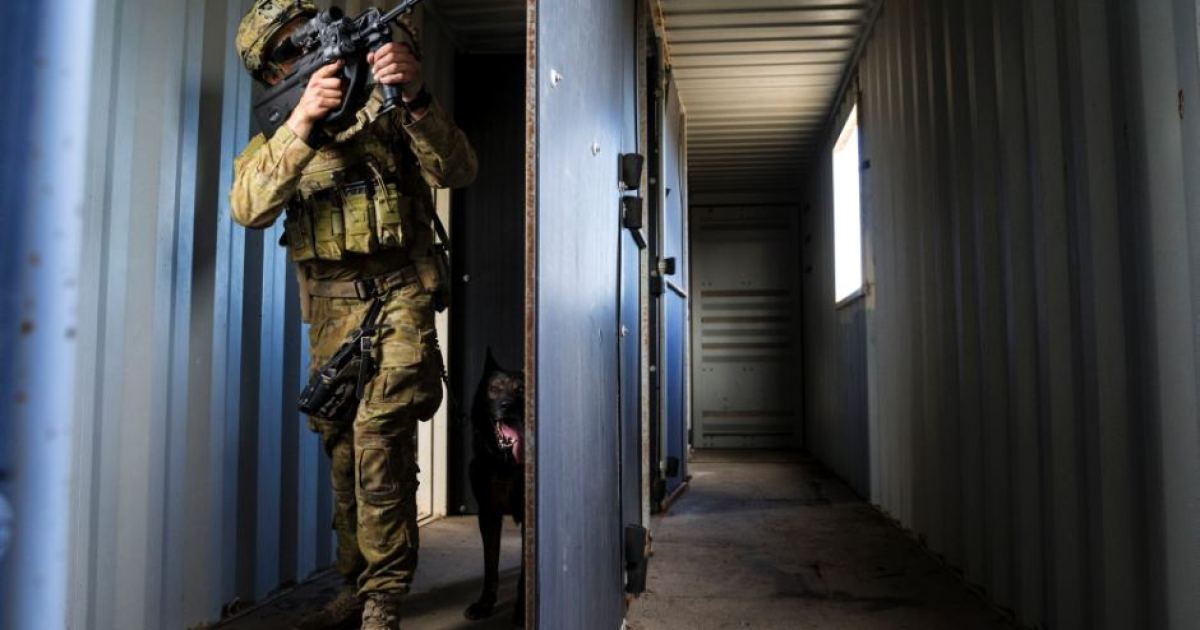
Shoot-to-kill provision exists, BUT with strict limitations: The legislation did provide ADF members with "limited shoot-to-kill powers" [1]. However, these were constrained to situations involving "protection of life," "action against aircraft or vessel," and "protection of declared infrastructure" [1]. The law explicitly required the use of force to be "reasonable and necessary" [1].
"Domestic violence" definition was constitutional, not new: The term "domestic violence" comes from Section 119 of the Australian Constitution, which refers to protection against "invasion and rebellion" [1]. This was not a Coalition invention—it's constitutional language about maintaining domestic order [1].
Environmental protests as application: Civil Liberties Australia CEO Bill Rowlings did express concern that troops could be called to protect "declared infrastructure" like coal-fired power stations during environmental protests [1]. However, this was a hypothetical concern about the bill's potential use, not a stated government intention [1].
What the Claim Overstates
"Granted ministers to power": This suggests unilateral ministerial authority. In reality, three ministers could act individually (Prime Minister, Attorney-General, Defence Minister) or the Governor-General could approve call-outs [1]. This is parliamentary oversight, not unfettered ministerial power.
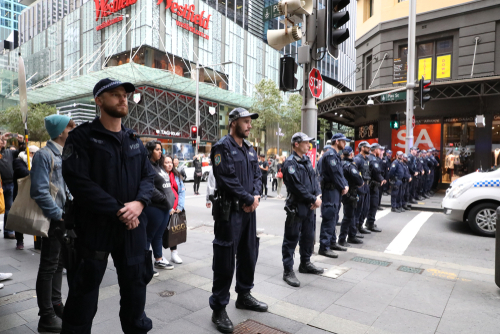
"Quell domestic protests and industrial action": The legislation was explicitly framed around terrorism and serious domestic violence, not general protest suppression [2]. Attorney-General Christian Porter stated that calling out troops for an "actual riot" would be "almost inconceivable" and "pretty fanciful" [2].
The specific environmental protest + coal generator scenario: This was a hypothetical concern raised by civil liberties advocates, not a stated government policy intention [1].
Missing Context
1. The Sydney Olympics Precedent
The original call-out powers were first introduced by the Labor government in 1999-2000 ahead of the Sydney Olympics [3]. Civil liberties groups said at the time it was "an unnecessary over-reach that would fundamentally change the role of the military," but Labor supported the original power all-in, meaning there was no effective opposition [3]. The 2018 amendments were modifications to a framework Labor had already established.
2. The Lindt Café Siege Context
The 2018 amendments were directly prompted by the December 2014 Lindt Café siege in Sydney, where gunman Man Haron Monis held 18 people hostage, resulting in 2 deaths [2]. Police were criticized for handling of the siege and an apparent reluctance to call in special forces [2]. The government believed earlier call-out powers could have prevented this tragedy [2].
Critically: The NSW Government could have already requested ADF assistance under the existing law [3]. The question was whether easier/faster mechanisms were needed for similar future incidents.
3. Legal Oversight Remained
Despite broad language, the legislation maintained substantial constraints [1]:
- ADF personnel remained under military command, not civilian police command [1]
- State police remained in control of operations (ADF could only carry out tasks "as far as reasonably practical") [1]
- The Governor-General could reject call-out orders [1]
- Parliamentary scrutiny remained available [1]
4. "Shoot-to-kill" Terminology is Misleading
The legislation used the term "limited shoot-to-kill powers," but this is standard military terminology for use of lethal force in self-defense or protection of life, not summary execution powers [1]. Police and military have equivalent lethal force authorization under Australian law for specific circumstances [1].
5. Scope of "Domestic Violence" under Constitution
The expansion to "domestic violence" was not novel—this is constitutional language [1]. Section 119 of the Constitution limits Commonwealth power to protection against "invasion and rebellion" (domestic violence in constitutional terms) [3]. The key question was threshold: how readily could this power be invoked?
Source Credibility Assessment
Original sources include:
Sydney Criminal Lawyers® blog [1]: This is a law firm blog run by journalist Paul Gregoire. While Gregoire won the 2021 NSW Council for Civil Liberties Award, the blog has a strong civil liberties/libertarian perspective that emphasizes worst-case interpretations of security legislation [1]. The analysis is legally competent but frames issues from a strong civil liberties viewpoint.
The New Daily [2]: This is a left-leaning/Labor-aligned news outlet. The article references Attorney-General Porter's statements and Defense Minister Payne's comments but emphasizes concerning aspects of the legislation [2].
ABC News opinion piece by Michael Bradley [3]: This is clearly labeled opinion by a managing partner at law firm Marque Lawyers. Bradley raises legitimate constitutional concerns about military-domestic policing separation, but this is opinion analysis, not straight reporting [3].
Assessment: All three sources have demonstrated left-of-center political leanings and focus heavily on worst-case scenarios and civil liberties concerns. The legal analysis is generally sound, but the sources do not discuss government justifications comprehensively or provide balanced risk assessment.
Labor Comparison
Did Labor support similar powers?
Yes, crucially: Labor introduced the original military call-out powers in 1999-2000 for the Sydney Olympics [3]. Lawyer Michael Bradley explicitly notes: "The existing call-out law in the Defence Act was created in a rush ahead of the Sydney Olympics, and it was controversial then. Lawyers and civil liberties groups said at the time it was an unnecessary over-reach that would fundamentally change the role of the military. However, Labor supported it all-in, meaning there was no effective opposition" [3].
This is critical: The Coalition did not invent the concept of military call-out powers for domestic use—Labor did. The Coalition modified and expanded powers that Labor had already established and that were already controversial.
Other Labor precedents:
- Labor's Howard-era support for military involvement in asylum seeker operations was cited as an earlier blur of military-domestic boundaries [3]
- No evidence that Labor subsequently tried to repeal the original call-out powers when in opposition (2013-2022 under Coalition government)
Balanced Perspective
The Government's Case (Rarely Mentioned in Sources)
The Coalition argued that:
Speed matters in terrorism response: Modern terrorist attacks (knife attacks, vehicle ramming, lone actors) can be over in minutes, requiring immediate response [3]. The Lindt Café siege lasted 16 hours; modern attacks may not allow time for states to formally request military aid and navigate bureaucratic processes [2].
Constitutional foundation exists: Section 119 already provides Commonwealth power to respond to "domestic violence" (constitutional terminology for internal disorder) [3]. The amendment clarified when this power could be exercised, not whether it could exist [3].
Actual use remains constrained: Even with the amendments, Attorney-General Porter said calling out troops for an "actual riot" would be "almost inconceivable" [2]. The powers are for terrorism and extreme emergencies, not routine protest suppression [2].
State authorities remain in control: Despite federal call-out authority, state police retain operational control and soldiers cannot exceed tasks requested by state authorities [1].
The Civil Liberties Concerns (Valid)
The critique is also legitimate:
The threshold genuinely lowered: Moving from "exhausted all options" to "could enhance capability" is a significant change [1]. Having tanks available obviously "enhances" police capability [3].
Precedent creates danger: Once military-domestic policing boundaries blur, future governments could expand usage. The authors cite Turkey and Hungary as cautionary examples of democracies where such measures were later abused [1].
Infrastructure protection is vague: Declaring infrastructure and deploying troops to protect it from protesters creates opportunities for abuse, particularly around politically sensitive targets (coal plants, ports) [1].
Democratic principle at stake: The fundamental separation between military and domestic policing is a key democratic principle [3]. Once abandoned, it's difficult to restore [3].
Who Was Right?
This is ultimately a values dispute, not a factual one.
If you prioritize emergency response speed and national security: The government's arguments for easier call-out are reasonable. Modern terrorism is fast and distributed.
If you prioritize constitutional constraints and civil liberties precedent: The civil liberties concerns are legitimate. Blurring military-domestic policing lines is historically dangerous.
The honest assessment: Both sides have defensible positions. The legislation did genuinely broaden military call-out powers beyond the original terrorism-specific framing, and it did extend to "domestic violence" broadly defined. However, it was not a proposal to deploy military for routine protest suppression, nor was it unique—Labor had already established military call-out powers.
The claim that this could be used for environmental protests threatening coal generators is technically possible under the legislation's language but operationally and politically unlikely unless a government deliberately chose to invoke it.
PARTIALLY TRUE
6.0
out of 10
— The claim accurately describes the legislation's technical scope but misleads through omission and framing.
What's true:
- The Coalition did introduce legislation broadening military call-out powers [1]
- These powers technically extend beyond terrorism to broader "domestic violence" [1]
- Environmental protests targeting infrastructure could theoretically be covered [1]
- Lethal force authorization was included [1]
What's misleading or omitted:
- Powers are constrained by constitutional definition, ministerial oversight, and Governor-General approval [1]
- This was an expansion of powers Labor originally created in 1999-2000 [3]
- Government explicitly stated troops for routine riots would be "inconceivable" [2]
- The legislation was prompted by a specific tragedy (Lindt siege) where existing powers might have helped [2]
- Civil liberties concerns are legitimate but represent a values dispute, not evidence of intended abuse
Final Score
6.0
OUT OF 10
PARTIALLY TRUE
— The claim accurately describes the legislation's technical scope but misleads through omission and framing.
What's true:
- The Coalition did introduce legislation broadening military call-out powers [1]
- These powers technically extend beyond terrorism to broader "domestic violence" [1]
- Environmental protests targeting infrastructure could theoretically be covered [1]
- Lethal force authorization was included [1]
What's misleading or omitted:
- Powers are constrained by constitutional definition, ministerial oversight, and Governor-General approval [1]
- This was an expansion of powers Labor originally created in 1999-2000 [3]
- Government explicitly stated troops for routine riots would be "inconceivable" [2]
- The legislation was prompted by a specific tragedy (Lindt siege) where existing powers might have helped [2]
- Civil liberties concerns are legitimate but represent a values dispute, not evidence of intended abuse
📚 SOURCES & CITATIONS (3)
-
1
sydneycriminallawyers.com.au
The government has introduced legislation to make it easier for the Australian Defence Force to be called out to not only deal with terrorism but a whole range of civilian incidents.
Sydney Criminal Lawyers -
2
thenewdaily.com.au
It will soon be easier for state and territory governments to call in the miliary to help respond to domestic terrorist attacks in new call-out laws
Thenewdaily Com -
3
mobile.abc.net.au
If the thought of calling out troops on our streets to quell disturbances is inconceivable, why does Peter Dutton need the power to do so? Michael Bradley writes that there are precedents, and they're not pretty.
Mobile Abc Net
Rating Scale Methodology
1-3: FALSE
Factually incorrect or malicious fabrication.
4-6: PARTIAL
Some truth but context is missing or skewed.
7-9: MOSTLY TRUE
Minor technicalities or phrasing issues.
10: ACCURATE
Perfectly verified and contextually fair.
Methodology: Ratings are determined through cross-referencing official government records, independent fact-checking organizations, and primary source documents.