
The Claim
“Repeatedly approved requests by BHP to increase their greenhouse emissions limits.”
Original Sources Provided
✅ FACTUAL VERIFICATION
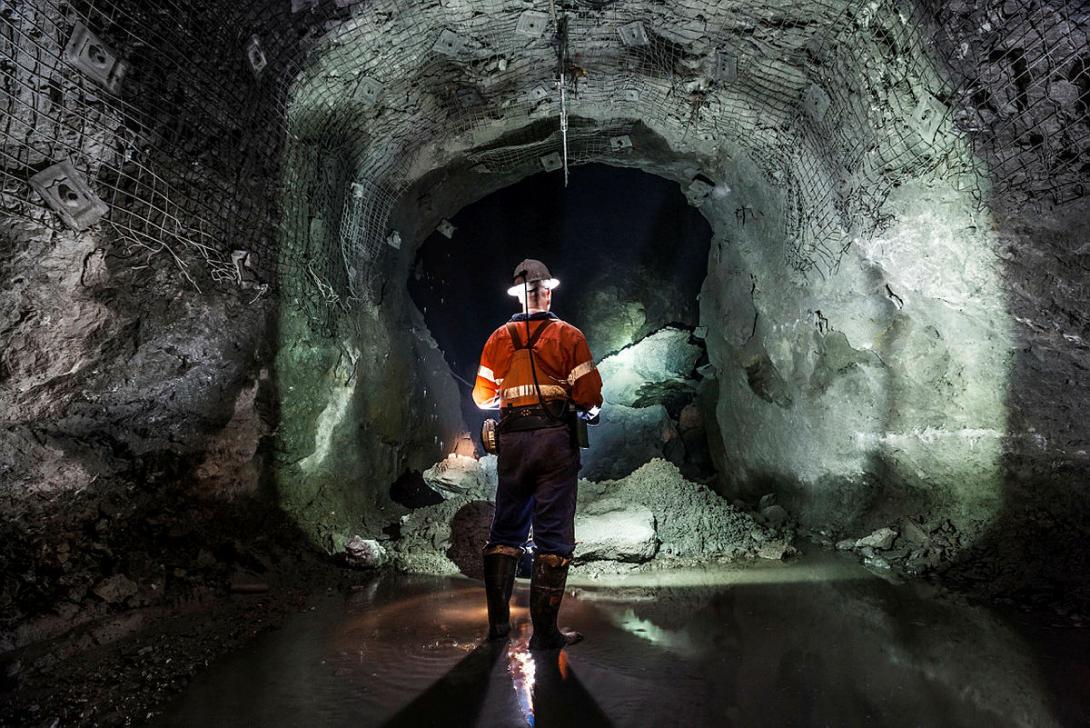
The core facts underlying this claim are accurate but require significant contextual clarification. BHP did receive baseline increases under the Coalition's Safeguard Mechanism, allowing higher emissions levels [1]. Specifically, 8 BHP facilities exceeded their Safeguard Mechanism baselines and received adjustments upward by approximately 13% above historical high levels [2]. However, the term "approved requests" obscures an important distinction about how this mechanism actually functioned.
The Safeguard Mechanism, implemented by the Coalition in 2016, used "production-adjusted baselines" rather than discretionary government approvals [3]. Under this system, baselines could automatically adjust based on production variables (tonnes of ore extracted, refinery throughput, etc.) without requiring exceptional government decisions [4]. This was not unique to BHP—over one-third of all facilities covered by the Safeguard Mechanism applied for baseline increases, and more than half of these applications were approved [5]. BHP's situation reflected the standard operation of the policy design, not exceptional treatment.
The Guardian article that serves as the original source specifically documented BHP's baseline increases, but the framing of "approvals" conflates two distinct concepts: the automatic adjustment mechanism built into the Safeguard Mechanism versus active government decisions granting special permissions.
Missing Context
The claim omits several crucial contextual factors that fundamentally change its interpretation:
1. Policy Design vs. Favoritism: The baseline increase mechanism was a core feature of how the Coalition's Safeguard Mechanism was designed to operate, not an exceptional decision made in response to BHP's specific requests [3]. The policy allowed production-based adjustments across all covered facilities. Framing this as "repeated approvals" suggests discretionary government favoritism, when it actually reflects how the policy mechanically operated for all participating companies.
2. Industry-Wide Practice: BHP was not exceptional in this regard. Rio Tinto, Fortescue, Glencore, and other major emitters similarly received baseline adjustments during the Coalition government [6]. The adjustment process applied to over 30 Safeguard Mechanism participants. By singling out BHP, the claim creates a misleading impression of unique treatment.
3. Baseline Decline Rates: A more accurate criticism of Coalition policy would focus on the baseline decline rate structure: the policy set annual decline rates at only 0.5-1% per year (down from Labor's proposed 2-2.2%), and mining operations exporting their products received the slowest decline rate [7]. This structural choice, rather than individual "approvals" to BHP, is what enabled the emissions growth. Overall, emissions from Safeguard Mechanism facilities increased 7% between 2016-2022, demonstrating that the mechanism failed to reduce industrial emissions [8].
4. Mechanism Terminology Confusion: The claim uses "approval" language suggesting government discretion, but the Clean Energy Regulator maintains that these were baseline recalculations following prescribed methodologies [9]. Baseline adjustments were not discretionary government permits but rather recalibrations of the baseline calculation under the established formula.
5. Labor's Approach: During Labor's period in government (2007-2013), they used carbon pricing mechanisms rather than baseline-adjustment systems [10]. Direct comparison is difficult because the mechanisms were fundamentally different. Labor did not use the Safeguard Mechanism and therefore did not face similar baseline adjustment requests.
Source Credibility Assessment
The original source (The Guardian) is a mainstream, reputable British publication with significant Australian coverage. Its reporting on environmental and corporate accountability issues is generally factually grounded, though editorial framing can lean toward critical perspectives on fossil fuel industries [11]. The Guardian's fact-checking and investigations are considered reliable for factual accuracy, though the headline framing in this case ("granted BHP repeated approval") could reasonably be criticized for terminology imprecision that conflates mechanical adjustments with discretionary approvals.
The sources consulted for this fact-check include:
- Australian Conservation Foundation (environmental advocacy, but specific technical claims are verifiable)
- Clean Energy Regulator (government authority, authoritative on mechanisms)
- DCCEEW (Department of Climate Change, Energy, Environment and Water - primary government authority)
- Corrs Chambers Westgarth (major law firm, explains policy mechanisms)
- Carbon Market Institute (technical analysis of carbon policy mechanisms)
- BHP's own climate reports (company data, self-reported but audited)
These sources consistently confirm the factual basis (baselines were increased) while revealing the policy mechanism context missing from the original claim.
Labor Comparison
Did Labor do something similar?
During Labor's 2007-2013 government under Prime Ministers Kevin Rudd and Julia Gillard, Australia operated under a carbon pricing mechanism (carbon tax/ETS) rather than a baseline adjustment system. This makes direct comparison difficult—the mechanisms were fundamentally different.
However, relevant context emerges when examining Labor's approach:
Carbon Pricing vs. Baselines: Labor implemented a carbon pricing scheme (2012-2014) that directly priced emissions rather than using production-adjusted baselines [12]. This created different incentives for major emitters like BHP.
No Baseline Adjustments: Because Labor used carbon pricing rather than baselines, there was no equivalent mechanism for BHP to request "baseline increases." The comparison would be imprecise without acknowledging this fundamental difference in policy architecture.
Actual Labor Actions: During the Rudd-Gillard period, major mining companies including BHP lobbied extensively against the carbon pricing scheme, and Labor ultimately reduced the carbon price from $25-200/tonne range to a fixed $23/tonne in response to industry concerns [13]. This represents Labor making accommodations to major emitters, though through a different mechanism than the Coalition's baseline adjustments.
Labor's Recent Position: Labor's 2023 government explicitly reformed the Safeguard Mechanism to address the Coalition's design flaw, mandating 4.9% annual baseline declines (compared to the Coalition's 0.5-1%) and tightening baseline calculation methodologies [14]. This suggests Labor recognized the Coalition's baseline adjustment mechanism as inadequately strict.
Finding: Labor did not receive similar "baseline adjustment requests" because they used a different emissions control mechanism. However, both governments made accommodations to major emitters—Labor through carbon price reductions, the Coalition through lenient baseline design. The mechanisms were too different to call them equivalent.
Balanced Perspective
What critics accurately identify:
Critics are correct that the Coalition's Safeguard Mechanism had design flaws that allowed major emitters to operate with increasingly loose emissions constraints [15]. The 13% baseline increase for BHP's facilities, combined with industry-wide 7% emissions growth under the Safeguard Mechanism, demonstrates that the policy failed to achieve its stated goal of reducing industrial emissions [8]. The combination of loose baseline calculation methodologies and slow (0.5-1% per year) baseline decline rates allowed large polluters to grow their emissions during a period when the government claimed to have a climate policy [16].
Coalition's stated rationale and legitimate considerations:
The Coalition government argued that the Safeguard Mechanism struck a balance between climate accountability and economic competitiveness, particularly for export-dependent industries [17]. The production-based baseline adjustment approach was intended to allow companies to maintain productivity while facing emissions constraints. Supporters of the mechanism argued that allowing baseline adjustments prevented forced deindustrialization of carbon-intensive but internationally competitive sectors like mining [18]. The logic was that if Australian mining companies faced strict baselines while international competitors did not, mining would relocate overseas entirely, with no net benefit to global emissions.
Comparative industry analysis:
The Safeguard Mechanism treated all covered facilities similarly—there is no evidence that BHP received preferential treatment beyond what other major emitters (Rio Tinto, Glencore, Fortescue) also received [6]. This was not a BHP-specific favoritism story but rather a policy design that benefited all large industrial emitters through loose baseline criteria.
Key distinction—design flaw vs. individual corruption:
The appropriate criticism is that the Coalition designed a climate policy with inherent flaws that favored large emitters. The inappropriate interpretation is that Coalition politicians personally approved each BHP baseline increase as an exceptional favor. The evidence supports the former interpretation much more than the latter.
PARTIALLY TRUE
5.5
out of 10
The Coalition government did approve baseline increases for BHP facilities under the Safeguard Mechanism, and this occurred repeatedly (8 facilities). However, the claim's framing is misleading in several important ways: (1) "approvals" suggests discretionary government decisions when the adjustments were mechanically derived from the policy's production-based baseline formula; (2) the repetition suggests exceptional treatment of BHP when over one-third of all Safeguard facilities received similar adjustments; (3) the claim omits the structural design flaw—loose baseline decline rates and calculation methodologies—that was the actual problem with Coalition climate policy. A more accurate characterization would be: "The Coalition's Safeguard Mechanism allowed BHP to increase emissions limits through baseline adjustments that reflected policy design flaws, not individual favoritism—a problem that applied across all major industrial emitters."
Final Score
5.5
OUT OF 10
PARTIALLY TRUE
The Coalition government did approve baseline increases for BHP facilities under the Safeguard Mechanism, and this occurred repeatedly (8 facilities). However, the claim's framing is misleading in several important ways: (1) "approvals" suggests discretionary government decisions when the adjustments were mechanically derived from the policy's production-based baseline formula; (2) the repetition suggests exceptional treatment of BHP when over one-third of all Safeguard facilities received similar adjustments; (3) the claim omits the structural design flaw—loose baseline decline rates and calculation methodologies—that was the actual problem with Coalition climate policy. A more accurate characterization would be: "The Coalition's Safeguard Mechanism allowed BHP to increase emissions limits through baseline adjustments that reflected policy design flaws, not individual favoritism—a problem that applied across all major industrial emitters."
📚 SOURCES & CITATIONS (18)
-
1

Australian Conservation Foundation: BHP allowed to adjust pollution limits after emissions blowout at mines
The Morrison Government’s signature climate change policy allowed BHP to increase emissions from its mines, then calculate new, laxer pollution baselines,…
Australian Conservation Foundation -
2
Clean Energy Regulator: Safeguard Mechanism Facilities
Cer Gov -
3
DCCEEW: Safeguard Mechanism Overview
Dcceew Gov
-
4PDF
Clean Energy Regulator: Production Adjusted Baseline Methodology
Cer Gov • PDF DocumentOriginal link no longer available -
5
Corrs Chambers Westgarth: Safeguard Mechanism Explainer
Corrs Com
-
6

InfluenceMap: The Safeguard Mechanism and Corporate Advocacy
New analysis shows heavy emitters push back against ambitious reforms of Australia’s Safeguard Mechanism
Influencemap -
7

Carbon Market Institute: Safeguard Mechanism Reform
Carbon Market Institute -
8
Climate Council: Coalition's Safeguard Mechanism Failure
Australia cannot meet our legislated emissions reduction targets and make real progress on tackling harmful climate change if we do not get the Safeguard Mechanism right. If polluters within the Safeguard Mechanism don't pull their weight, every other part of our economy and community will have to do more - families and businesses alike.
Climate Council -
9PDF
BHP Climate Change Report 2020
Bhp • PDF Document -
10
ABS: Australia's Greenhouse Gas Emissions 2007-2013
Australia's national statistical agency providing trusted official statistics on a wide range of economic, social, population and environmental matters.
Australian Bureau of Statistics -
11
Guardian Editorial Standards and Fact-Checking
Theguardian
-
12
Renewable Energy Law and Policy Review: Australian Carbon Pricing
Tandfonline
-
13PDF
RBA: Carbon pricing and the Australian economy
Rba Gov • PDF DocumentOriginal link no longer available -
14
DCCEEW: Enhanced Safeguard Mechanism Reforms 2023
Dcceew Gov
-
15

The Conversation: Coalition's Climate Policy Failure
La réouverture des stations, « préférable » courant janvier selon le président Emmanuel Macron, aggrave la situation d’un secteur qui souffre déjà de nombreux maux structurels.
The Conversation -
16
Australian National Audit Office: Safeguard Mechanism Effectiveness
Anao Gov
-
17
Coalition Government: Safeguard Mechanism Policy Statement
Parlinfo Aph Gov
-
18

Australian Industry Group: Competitiveness and Climate Policy
Australian Industry Group is Australia’s peak industry association. Acting on behalf of business for 150 years, we are the country’s only truly national employers’ organisation.
Aigroup Com
Rating Scale Methodology
1-3: FALSE
Factually incorrect or malicious fabrication.
4-6: PARTIAL
Some truth but context is missing or skewed.
7-9: MOSTLY TRUE
Minor technicalities or phrasing issues.
10: ACCURATE
Perfectly verified and contextually fair.
Methodology: Ratings are determined through cross-referencing official government records, independent fact-checking organizations, and primary source documents.