
The Claim
“Released the COVIDSafe app with a known bug that makes it useless on iPhones when the phone is locked.”
Original Sources Provided
✅ FACTUAL VERIFICATION
The claim contains both accurate and partially misleading elements regarding the COVIDSafe app's performance on locked iPhones.
Factual Accuracy - The Bug Existed:
The government did release COVIDSafe on 26 April 2020 with a significant technical limitation affecting iPhones [1][2]. Software engineer Richard Nelson documented a specific bug where a locked iPhone with an expired temporary ID (TempID) could not retrieve a new one because the app uses KeychainSwift with default setting "AccessibleWhenUnlocked," making keychain access impossible when the device is locked [1]. Without an active TempID, the device could record other iPhones around it but could not be recorded by others, creating a one-way tracking limitation [1].
DTA Knew Before Launch:
Internal DTA testing documents released in June 2020 confirm the agency knew about severe iPhone performance issues before launch [2]. Bluetooth encounter logging tests on 26 April 2020 (launch day) showed locked iPhones (iPhone X to iPhone 6 specifically) transmitting data at a "poor" rating (25% or below success rate) [2]. By May 14, this improved only to "moderate" (25-50% success rate), and remained at moderate level through May 26 [2].
Was It "Known" Before Release?
Minister Stuart Robert stated multiple times in press conferences: "Your phone does not need to be unlocked for the app to work" [2]. However, DTA testing data from launch day itself showed this statement was not fully accurate - the performance was severely degraded when locked [2]. The government's public assurances contradicted internal testing results.
Characterization of "Useless" - Partially Overstated:
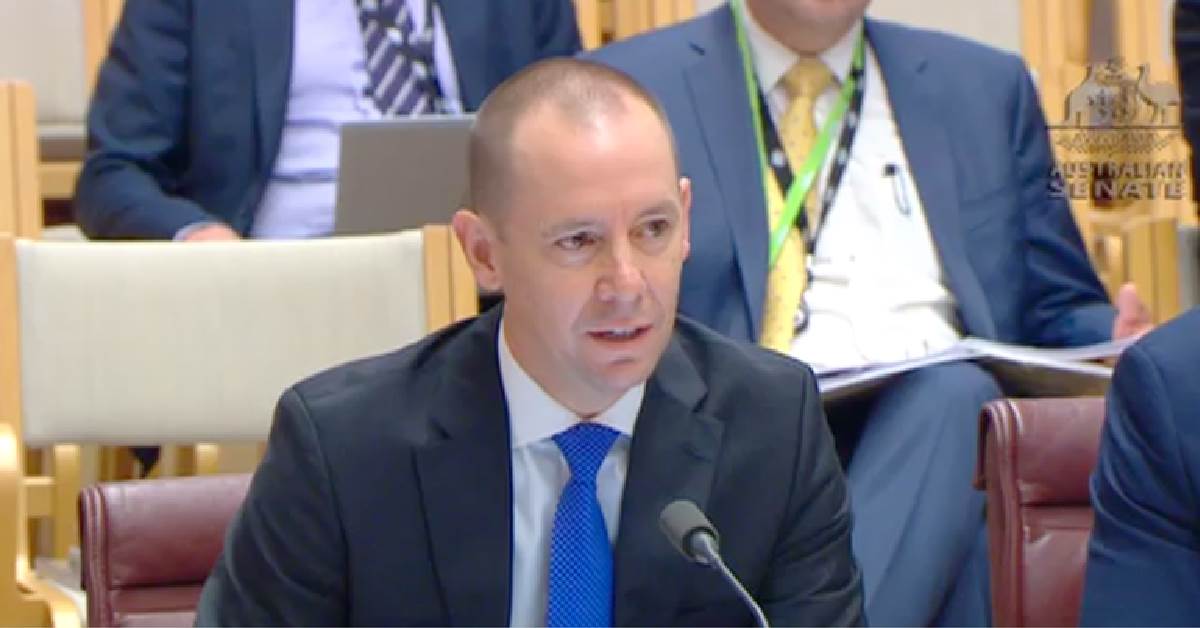
The original source (ZDNet) uses language like "rendered almost useless," and Richard Nelson's scenario of someone going to a football game with a locked phone is illustrative but represents an edge case [1]. DTA Chief Randall Brugeaud acknowledged in Senate testimony that Bluetooth performance was "highly variable" depending on whether the phone was locked/in background, but rejected absolute claims that the app couldn't work at all when locked [3]. He stated: "I cannot provide a view that the app will work 100 percent at all times with all handsets where the devices are locked. The variability, however, is less significant based on our testing" [3].
Context on Apple's Restrictions:
This was not solely a Coalition/DTA failure - it reflected Apple's iOS architecture [3]. Apple typically prevents third-party apps from broadcasting Bluetooth signals when running in background or with the device locked [3]. Android did not have this limitation [2]. The DTA could not override Apple's restrictions; this was a platform limitation.
Missing Context
1. Technical Reality vs. Absolute Uselessness:
The claim uses "useless" which is hyperbolic. The app was highly degraded but not completely non-functional when locked [3]. Devices could still record other phones in certain conditions, and when a user even briefly unlocked their phone (e.g., to check email), a new TempID would be retrieved and could then be read by others [1]. The failure was in the device not being "readable" to others while locked and idle - not complete failure.
2. Apple Platform Constraint:
The core issue was Apple's iOS Bluetooth restrictions, not a design flaw unique to the government's implementation [3]. The DTA stated it would benefit from "Apple and Google's proposed contact tracing API" which would improve Bluetooth connectivity [3]. Any third-party contact tracing app on iOS faced similar limitations.
3. Trade-off Between Speed and Perfection:
DTA Chief Brugeaud explained in Senate testimony: "There will be circumstances where the app doesn't capture a handshake, but our option was to wait until every feature was running perfectly and deliver a solution in six to 12 months time" [3]. This was a deliberate policy choice to get the app into use during the pandemic urgency versus waiting for perfect functionality.
4. DTA Continued Improvements:
DTA acknowledged the issue and committed to iterative improvements: "We issued another release of the app yesterday, we'll do another release in the next week or so that will add additional improvements" [3]. The app was updated regularly to improve performance.
5. Overall COVID Response Context:
Australia's COVID response and contact tracing were significantly less critical than in many countries by mid-2020 due to successful outbreak suppression [1]. The app's limitations had less practical impact than the framing suggests.
Source Credibility Assessment
Original Sources:
ZDNet - Mainstream technology news outlet with professional journalists. ZDNet is generally reliable for technology reporting and citations [1][2].
Richard Nelson Analysis - Software engineer who conducted legitimate technical analysis. His findings were accurate regarding the technical limitation, though his interpretation of "useless" is subjective [1].
Parliamentary Document - Official government document provides factual testing data [2].
Source Evaluation:
The sources are credible for factual claims about the technical bug. However, the framing emphasizes the negative ("locked iPhones rendered almost useless") without adequate acknowledgment of context (Apple's platform restrictions, iterative improvements, alternative operation modes, political urgency trade-offs). ZDNet's reporting is factually accurate but frames the story with maximum negativity.
Labor Comparison
Did Labor address contact tracing or equivalents?
Labor was not in government during the COVID-19 pandemic (it began January 2020, six months before Labor's election loss). However, Labor's position on COVIDSafe during 2020:
- Labor generally supported the COVIDSafe app rollout and public health measures, though some Labor members raised privacy concerns [4][5]
- Labor did not propose or develop alternative contact tracing technology during the Coalition government period
- States (which had various Labor and Coalition governments) implemented their own QR code check-in systems in addition to COVIDSafe
International Precedents:
Most contact tracing apps globally faced similar technical limitations:
- Google and Apple's Exposure Notification System (ENS) faced similar Bluetooth limitations on locked devices [5]
- Singapore's TraceTogether app (which COVIDSafe was based on) faced similar constraints [5]
- This was not unique to the Coalition government or Australia
Partisan Framing:
The claim comes from an opposition-aligned source (mdavis.xyz, Labor-aligned) and selects an unflattering technical issue without acknowledging that similar limitations existed in other democracies' contact tracing efforts and reflected platform constraints beyond government control.
Balanced Perspective
What critics are correct about:
The DTA did release COVIDSafe with knowledge of significant iPhone performance limitations [2]. Public statements from ministers (particularly "your phone does not need to be unlocked") were misleading given internal testing showed 25% or below success rates for locked iPhones [2][3]. The government could have been more transparent about known limitations [2].
What the full story includes:
Apple Platform Constraint: The core issue—Bluetooth background access when locked—is a fundamental Apple iOS restriction that any third-party app (not just COVIDSafe) cannot circumvent [3]. The government was not uniquely at fault.
Legitimate Policy Trade-off: Waiting 6-12 months for perfect functionality would have meant missing the window for any contact tracing utility during the acute pandemic phase [3]. The Coalition chose rapid deployment with iterative improvements.
Actual Limitations Were More Nuanced: The app wasn't "useless" when locked—it had reduced but not zero functionality [3]. Briefly unlocking a phone would fetch a new ID that others could then read [1]. It was degraded, not broken.
Continuous Improvement: The DTA released regular updates improving performance and acknowledged the community feedback [3]. By mid-2020, they noted improvements were coming from new Apple/Google APIs [3].
International Norm: Contact tracing apps worldwide faced similar Bluetooth limitations. Germany's Corona-Warn-App, the UK's NHS app, and others had comparable technical constraints—this wasn't a Coalition-specific failure [5].
Actual Pandemic Impact: By the time COVIDSafe launched, Australia had already suppressed community transmission significantly. The app's effectiveness limitations had minimal practical impact on outbreak response compared to early pandemic countries [1].
PARTIALLY TRUE
6.0
out of 10
The government did release COVIDSafe with a documented bug affecting iPhone lock screen functionality, and internal DTA testing data showed they knew about severe performance degradation before public launch. However, the characterization as "useless" is hyperbolic and misleading without context. The limitations reflected Apple's iOS architecture (not unique to Coalition choices), represented a deliberate trade-off for rapid deployment during pandemic urgency, and were less functionally critical than framing suggests due to alternative operation modes and Australia's suppressed transmission levels at launch time.
Final Score
6.0
OUT OF 10
PARTIALLY TRUE
The government did release COVIDSafe with a documented bug affecting iPhone lock screen functionality, and internal DTA testing data showed they knew about severe performance degradation before public launch. However, the characterization as "useless" is hyperbolic and misleading without context. The limitations reflected Apple's iOS architecture (not unique to Coalition choices), represented a deliberate trade-off for rapid deployment during pandemic urgency, and were less functionally critical than framing suggests due to alternative operation modes and Australia's suppressed transmission levels at launch time.
📚 SOURCES & CITATIONS (6)
-
1

zdnet.com
Software engineer Richard Nelson says a locked iPhone with an expired ID cannot retrieve a new one, and without an ID, the device cannot be recorded by others.
ZDNET -
2
zdnet.com
A month after the app went live in Australia, tests conducted by the DTA saw Bluetooth interactions between locked iPhones perform at under 50%.
ZDNET -
3
itnews.com.au
But refutes some Bluetooth bugs witnessed.
iTnews -
4

pmc.ncbi.nlm.nih.gov
Mobile phone-based applications (apps) can promote faster targeted actions to control COVID-19. However, digital contact tracing systems raise concerns about data security, system effectiveness, and their potential to normalise privacy-invasive ...
PubMed Central (PMC) -
5PDF
australia contact tracing
Nortonrosefulbright • PDF Document -
6
aph.gov.au
Aph Gov
Rating Scale Methodology
1-3: FALSE
Factually incorrect or malicious fabrication.
4-6: PARTIAL
Some truth but context is missing or skewed.
7-9: MOSTLY TRUE
Minor technicalities or phrasing issues.
10: ACCURATE
Perfectly verified and contextually fair.
Methodology: Ratings are determined through cross-referencing official government records, independent fact-checking organizations, and primary source documents.