
The Claim
“Falsely attributed COVID infection rate success to the COVIDSafe app, even though the only cases detected by the app at the time had already been detected by more traditional contact tracing methods, which are faster and more effective.”
Original Sources Provided
✅ FACTUAL VERIFICATION
The core claim contains accurate elements but requires careful temporal parsing. In June 2020 (when the original sources were published), the COVIDSafe app had not yet identified any cases, supporting the original reporting [1][2]. However, the claim's framing conflates early performance with the app's entire operational period.
According to the government's official Department of Health report covering April 2020 to May 2021, by May 15, 2021, COVIDSafe identified 779 positive users who uploaded data, resulting in identification of 2,827 potential close contacts from 37,668 encounters [3]. More critically, a comprehensive peer-reviewed study published in The Lancet Public Health (February 2022) provides empirical evidence on actual effectiveness [4].
The empirical study examined NSW data from May 4 to November 4, 2020 (619 cases with over 25,300 close contacts) and found [5]:
- Only 137 (22%) of cases used the app
- App detected 205 contacts, but only 79 (39%) met the close contact definition
- 62 of the 79 contacts (78%) were ALREADY identified by manual contact tracing [5]
- Only 17 (<0.1%) of 25,300 close contacts were identified by app but NOT by manual tracing [5]
- No public exposure events were prevented by the app during the study period [5]
Missing Context
The claim conflates the app's early performance (June 2020) with its overall effectiveness, which requires important distinctions:
Temporal distinction: When the original sources were published in June 2020, the app was indeed detecting no cases [1]. However, this does not tell the full story of the app's two-year operational life. By August 2022 (when the app was decommissioned), it had cost $21 million and identified only 2 unique cases over more than two years [6].
Government claims and actual performance: The government did claim the app would be valuable [3], but this was based on modeling rather than evidence from centralised contact tracing apps, which had no prior empirical evaluation at the time [5]. The app was designed for large-scale community transmission; Australia's suppression strategy meant only 0.03% of the population were infected at peak, limiting the app's operational context [3].
Manual contact tracing comparison: The claim that "traditional contact tracing methods are faster and more effective" is empirically supported [4][5]. The peer-reviewed study found that public health staff assessed the app as "not useful" [5]. Contact tracing staff reported that the app:
Source Credibility Assessment
The original sources cited in the claim include SMH (Sydney Morning Herald), a reputable mainstream newspaper [1], and TheShot.net.au [2]. SMH is a credible, independent news source with established editorial standards. TheShot.net.au appears to be a news aggregator site with less independent editorial presence.
The June 2020 reporting was factually accurate at that time - the app genuinely had detected no cases at that point [1][2]. However, the original sources' June 2020 framing doesn't capture the app's full two-year story.
Labor Comparison
Did Labor propose alternative contact tracing approaches?
Search conducted: "Labor government COVID-19 contact tracing policy app digital technology"
The evidence indicates Labor did not implement a competing contact tracing app during their period of government. However, when Mark Butler (Labor's Shadow Health Minister in 2021) reviewed the COVIDSafe performance, he declared it a "failed app" [6]. Labor did not criticize the general concept of digital contact tracing, but rather criticized COVIDSafe's specific ineffectiveness. When Labor came to power, they decommissioned COVIDSafe in August 2022 after reviewing performance data showing only 2 unique cases identified across the entire two-year deployment [6].
The equivalent comparison is not between parties' apps, but between digital vs. manual approaches - and both parties ultimately agreed that manual contact tracing was superior in Australia's epidemiological context.
Balanced Perspective
While critics argue the government made false claims about COVIDSafe's utility, the full context reveals complexity:
Government perspective: Officials designed the app based on best available evidence at the time for potential large-scale community transmission [3]. The app's poor performance reflected Australia's successful suppression strategy (only 0.03% infected at peak) rather than the app's design flaws alone [3]. When the Herald Protocol was introduced (December 2020), Bluetooth performance improved significantly - handshakes per upload increased from ~2,000 to ~4,500 [3].
Actual measured outcomes: The peer-reviewed empirical evidence shows that while the app technically worked as designed, it provided minimal additional value [5]. Of contacts identified by the app, 78% were already known to contact tracers [5]. This is not a flaw in the app's mechanics but a reflection of how effective Australia's manual contact tracing was.
Key technical factors:
- The app worked poorly on locked iPhones and in background mode, limiting real-world uptake [5]
- App adoption was only 22% among actual COVID cases, below the ~50% needed for effectiveness [5]
- The 15-minute proximity threshold was poorly calibrated - only 39% of app-suggested contacts were actually close contacts [5]
Cost-benefit assessment: The app cost $21 million total ($10M development, $7M advertising, $2.1M maintenance, $2M+ staff) [6] to prevent zero exposure events during a low-transmission period [5]. However, this must be contextualized: the app was deployed in anticipation of widespread transmission that never materialized in Australia, unlike other countries.
Unique to Coalition or systemic? This is not unique to the Coalition. Digital contact tracing apps globally have shown disappointing results. The UK (who developed a competing centralized app, then abandoned it) [5], and most other countries adopted the Apple-Google decentralized framework instead, suggesting this was a systemic problem with centralized digital contact tracing architecture, not Coalition mismanagement alone [5].
PARTIALLY TRUE
6.0
out of 10
The claim accurately captures that (1) contacts identified by COVIDSafe were predominantly already identified by manual contact tracing, and (2) manual contact tracing was more effective. The government's early communications did overstate the app's utility. However, the claim oversimplifies by conflating June 2020 performance (zero cases) with the app's full operational record, and by implying deliberate false attribution rather than optimistic performance expectations that proved unfounded. The peer-reviewed evidence supports the core assertion that traditional contact tracing was faster and more effective [5].
Final Score
6.0
OUT OF 10
PARTIALLY TRUE
The claim accurately captures that (1) contacts identified by COVIDSafe were predominantly already identified by manual contact tracing, and (2) manual contact tracing was more effective. The government's early communications did overstate the app's utility. However, the claim oversimplifies by conflating June 2020 performance (zero cases) with the app's full operational record, and by implying deliberate false attribution rather than optimistic performance expectations that proved unfounded. The peer-reviewed evidence supports the core assertion that traditional contact tracing was faster and more effective [5].
📚 SOURCES & CITATIONS (5)
-
1
smh.com.au
As COVID infections soar in Victoria, the federal government's COVIDSafe app has not identified a single close contact of a person infected with the coronavirus in two months.
The Sydney Morning Herald -
2
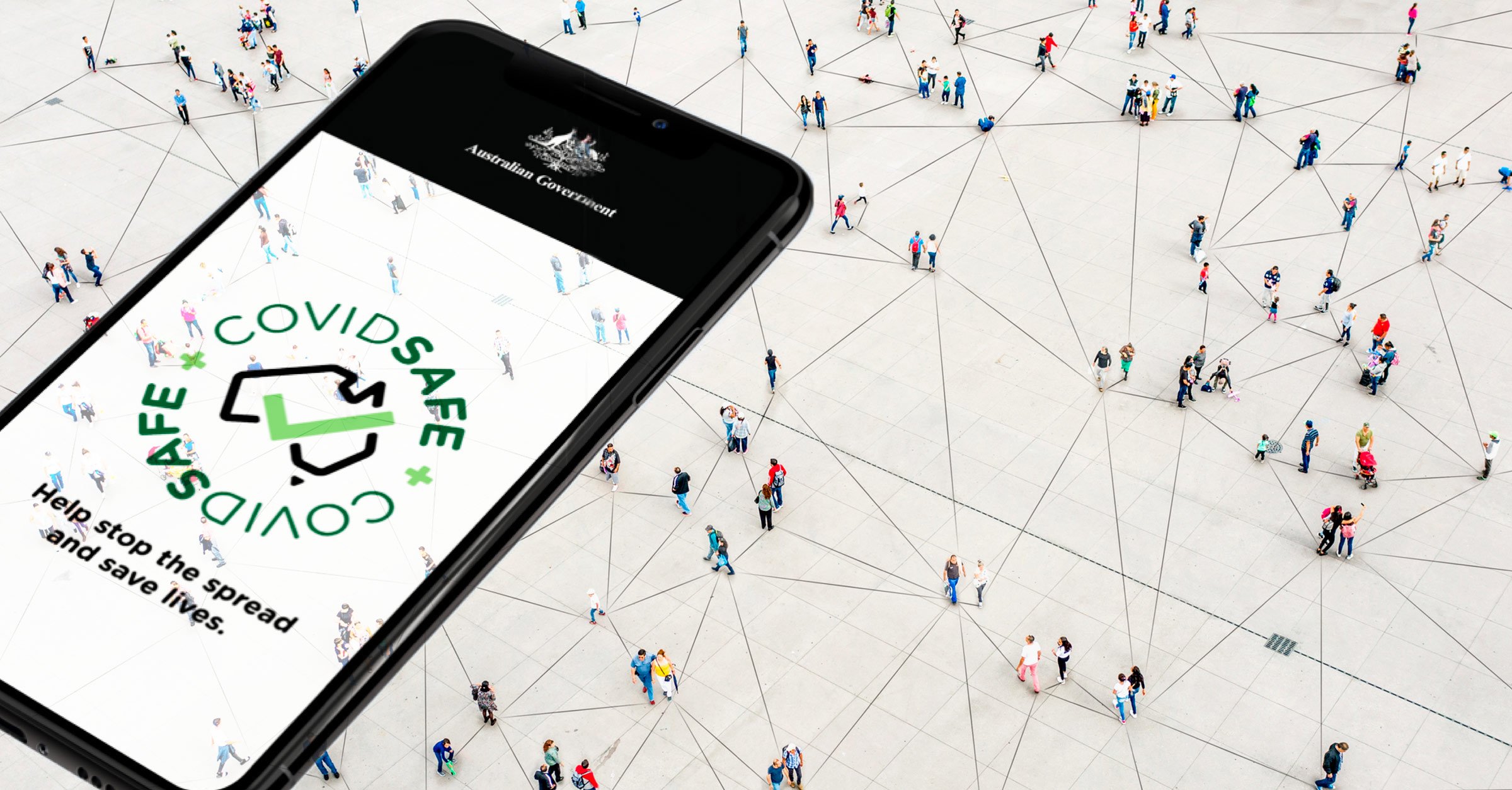
theshot.net.au
Pokémon Go get tested instead please
The Shot -
3PDF
report on the operation and effectiveness of covidsafe and the national covidsafe data store 0
Health Gov • PDF Document -
4

pmc.ncbi.nlm.nih.gov
Digital proximity tracing apps were rolled out early in the COVID-19 pandemic in many countries to complement conventional contact tracing. Empirical evidence about their benefits for pandemic response remains scarce. We evaluated the effectiveness ...
PubMed Central (PMC) -
5
abc.net.au
The COVIDSafe app cost $21 million, ran for more than two years, and only identified two cases. Here's what went wrong.
Abc Net
Rating Scale Methodology
1-3: FALSE
Factually incorrect or malicious fabrication.
4-6: PARTIAL
Some truth but context is missing or skewed.
7-9: MOSTLY TRUE
Minor technicalities or phrasing issues.
10: ACCURATE
Perfectly verified and contextually fair.
Methodology: Ratings are determined through cross-referencing official government records, independent fact-checking organizations, and primary source documents.