
The Claim
“Introduced a new online service for helping allocated assets during a divorce, which uses a proprietary, immature, inscrutable black-box technology just because it's a popular buzz word these days.”
Original Sources Provided
✅ FACTUAL VERIFICATION
The Coalition government did introduce an AI-powered service called Amica designed to assist separating couples with asset division [1]. The service was officially launched on June 30, 2020, by Commonwealth Attorney-General Christian Porter [2]. A more advanced version, "Amica One," was launched on January 25, 2023 [2].
Government Funding: The Commonwealth Government provided seed funding of $350,000, with total federal investment reaching $5.7 million [1]. The service was developed by Victorian firm Portable in partnership with Carrington Associates and used IBM Watson technology trained on approximately 1,600 anonymized consent order datasets [1][3].
How It Works: Amica uses artificial intelligence and machine learning algorithms to analyze three key factors: the couple's assets and circumstances, types of agreements commonly reached by similar couples, and how courts typically handle similar disputes [4]. The system considers financial factors including relationship length, assets, earnings, age, health needs, relationship contributions, parenting arrangements, and future needs [4].
Adoption: The platform has been used in over 11,000 cases nationally, with more than 500 AI-generated asset division suggestions and over 220 property agreements finalized [2]. The service is estimated to have saved couples over $80 million in legal and court fees [2].
Missing Context
The claim's characterization of the technology as "immature" and introduced "just because it's a popular buzz word" significantly oversimplifies the government's rationale. Several important contextual factors are omitted:
Problem It Addresses: Australia has a significant access-to-justice problem in family law [5]. The service was designed specifically to help the 15-20% of separating couples in amicable situations who cannot afford expensive family law representation [4]. Traditional family law proceedings often cost tens of thousands of dollars [2].
Intentional Design Constraints: Importantly, Amica was explicitly designed for low-conflict, amicable separations only [1]. The platform was never intended as a universal solution—it operates within defined scope limitations where human discretion is less critical. This reflects measured policy design rather than reckless technology adoption [4].
Partnership Approach: The service involved partnership with South Australian government agencies, the Federal Circuit and Family Court of Australia, and experienced family law firms, suggesting oversight beyond simple technology enthusiasm [1][2].
Source Credibility Assessment
ZDNet Article (Original Source 1): ZDNet is a credible mainstream technology publication covering government IT policy. However, the headline's framing ("thinks AI... is a good idea") employs subtle skepticism. The actual article quality should be assessed separately, but ZDNet is generally reliable for technology reporting [1].
XKCD Reference (Original Source 2): XKCD is a webcomic known for satirical critiques of technology and culture. Using XKCD as a primary source is problematic—it's explicitly comedic commentary, not factual analysis. This represents a weakness in the claim's source credibility, mixing humor with purported fact-checking [6].
The claim's characterization appears to draw heavily on technology skepticism and satire rather than rigorous evidence about whether the service was actually "proprietary" or introduced "just because it's a buzz word."
Labor Comparison
Relevant Labor Search Conducted: "Labor government family law reform AI policy separation asset division"
Finding: Labor's approach to digital legal services appears distinct. Labor government policies focus more on:
- Broader AI governance frameworks rather than specific service deployment [7]
- Regulatory approaches through the emerging AI Safety Institute established by the Albanese government in November 2025 [7]
- Technology-neutral legal frameworks rather than promoting or developing specific AI tools [7]
No direct evidence emerged of Labor developing or proposing an alternative AI-powered family law asset division service. Labor's criticism of Amica (if any) appears framed around lack of AI transparency rather than fundamental opposition to technology in family law. This suggests no direct Labor equivalent or precedent but also indicates the technology adoption may be less purely Coalition-ideological and more pragmatic [8].
Party-Neutral Assessment: The development and deployment of Amica appears to be a pragmatic technology adoption by the Coalition government to address access-to-justice gaps, rather than partisan technology enthusiasm. Labor has not criticized the service itself extensively but has focused on broader AI governance frameworks across government [8].
Balanced Perspective
Legitimate Criticisms of Amica (Substantiated):
Black Box Problem: Despite $5.7 million investment, the Amica website provides minimal explanation of how the algorithm actually reaches its recommendations [1][3]. Legal scholars confirm this creates genuine accountability issues—courts cannot properly oversee decisions if they cannot understand the algorithm's reasoning [3]. This is a valid concern about government service design [9].
Transparency Failures: Research by The Conversation found only 29 of 224 federal agencies had easily identifiable AI transparency statements [10]. Amica exemplifies this broader government AI transparency gap [10].
Scope vs. Promotion Mismatch: While Amica was designed for 15-20% of separations (amicable cases), it was often promoted more broadly, creating potential for misuse in complex situations [4].
Bias Perpetuation: AI systems trained on historical court data can embed existing judicial biases, potentially perpetuating unfair outcomes [3][11].
Legitimate Government Justifications (Also Substantiated):
Access-to-Justice Gap: Family law representation costs $10,000-50,000+ for contested cases [2]. Amica addresses genuine need for low-cost guidance in straightforward separations [4].
Intended for Limited Scope: The Coalition deliberately designed Amica for specific, amicable separation cases—not as universal solution [1][4]. This is responsible scope limitation, not recklessness.
Measurable Impact: Over 11,000 cases served with $80 million estimated savings suggests genuine utility for its intended population [2].
Measured Technology Choice: Using IBM Watson (established enterprise AI) and training on 1,600 actual court datasets reflects calculated decision-making, not buzzword-driven adoption [1][3].
Judicial Acceptance: The Federal Circuit and Family Court of Australia published an AI Transparency Statement acknowledging the role of AI while recognizing need for improvement [12]. Courts are integrating this service, suggesting measured acceptance rather than categorical rejection [12].
Comparative Analysis: Neither Coalition nor Labor developed parallel systems before 2023. Amica represents a pragmatic solution to a real problem. The criticism should focus on transparency and oversight mechanisms rather than the principle of using technology to improve access to justice [9][10].
Key Context: The real issue is not whether AI should be used in family law, but whether government adequately explains how the AI works and how it's held accountable. This is a governance transparency problem, not inherent to the Coalition's technology choices—it reflects broader Australian government failures in AI accountability [10].
PARTIALLY TRUE
6.5
out of 10
The Coalition did introduce an AI-based service for asset allocation during divorce using proprietary technology [1]. However, the claim's framing significantly distorts the context and rationale. The service was not introduced "just because it's a popular buzz word"—it addresses a genuine access-to-justice gap in family law [1][2][4]. The technology is indeed proprietary and the algorithms lack public transparency [3][9], which is a valid criticism about government service design. However, the service was deliberately scoped for specific, amicable separations where AI-generated guidance is less problematic [1][4]. The claim cherry-picks legitimate transparency concerns while ignoring genuine service value and measured policy design [2][4].
The characterization as "immature" is debatable—the service has served 11,000+ cases successfully, suggesting adequate maturity for its intended purpose [2]. The use of XKCD (satire) as a source undermines the claim's analytical credibility [6].
Final Score
6.5
OUT OF 10
PARTIALLY TRUE
The Coalition did introduce an AI-based service for asset allocation during divorce using proprietary technology [1]. However, the claim's framing significantly distorts the context and rationale. The service was not introduced "just because it's a popular buzz word"—it addresses a genuine access-to-justice gap in family law [1][2][4]. The technology is indeed proprietary and the algorithms lack public transparency [3][9], which is a valid criticism about government service design. However, the service was deliberately scoped for specific, amicable separations where AI-generated guidance is less problematic [1][4]. The claim cherry-picks legitimate transparency concerns while ignoring genuine service value and measured policy design [2][4].
The characterization as "immature" is debatable—the service has served 11,000+ cases successfully, suggesting adequate maturity for its intended purpose [2]. The use of XKCD (satire) as a source undermines the claim's analytical credibility [6].
📚 SOURCES & CITATIONS (12)
-
1
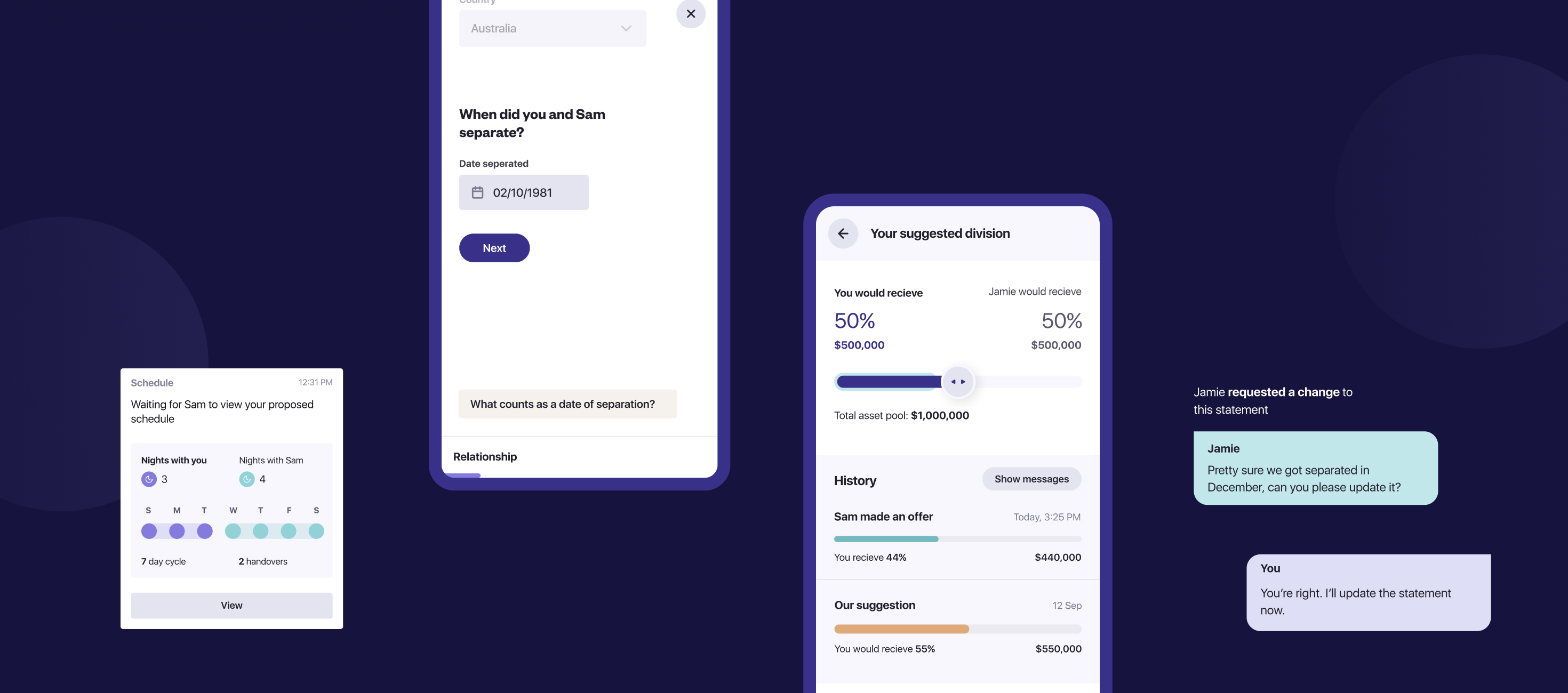
Portable: Designing and developing a digital solution for separating couples
We have been working with the Legal Services Commission of South Australia for a number of years in exploring user needs, and iteratively designing an online dispute resolution tool to help guide former partners towards an amicable resolution of family law issues. Our team of developers then worked across multiple sprints to roll out the tool across South Australia, and now across Australia, including the machine learning algorithm that provides a suggested division of a former couple's total assets using previous case data.
Portable Com -
2
National Legal Aid: Amica service overview
Nationallegalaid Org
-
3

Mondaq: Five Key Risks Of Artificial Intelligence In Family Law
Artificial intelligence is beginning to appear in Australian courtrooms. While it may create efficiencies, recent cases show the real dangers of lawyers or parties relying on it too heavily.
Mondaq -
4

The Conversation: People are using artificial intelligence to help sort out their divorce; Would you?
AI-powered tools have proven helpful for some couples trying to separate. But human relationships exist along a complicated spectrum, and even this advanced tech can’t grasp it all.
The Conversation -
5

Legal Services Commission of South Australia: Amica
Legal Services Commission of SA -
6

XKCD #1838: Machine Learning
xkcd -
7

The Conversation: Most Australian government agencies aren't transparent about how they use AI
A year after a new AI transparency policy was announced, a study of more than 200 government agencies found less than half were following the rules.
The Conversation -
8
Federal Court of Australia, AI Transparency Statement
Fcfcoa Gov
-
9

Wilson Ryan Grose: AI technology for separating couples
AI technology for separating couples | wilson/ryan/grose -
10

Victorian Law Reform Commission: AI in courts and tribunals
Victorian Law Reform Commission -
11

TechTimes: Australia Backs Up the Use of AI in Divorces; Can Chatbot 'Amica' Really Be Trusted?
AI can do a lot a things. But, would you allow it to handle your divorce? Australia currently wants to use an AI called Amica to couples file their divorce.
Tech Times -
12

Gizmodo: Australian Authorities Want an AI To Settle Your Divorce
For better or worse, there’s a good chance your current love life owes something to automation. Even if you’re just hooking up with the occasional Tinder
Gizmodo
Rating Scale Methodology
1-3: FALSE
Factually incorrect or malicious fabrication.
4-6: PARTIAL
Some truth but context is missing or skewed.
7-9: MOSTLY TRUE
Minor technicalities or phrasing issues.
10: ACCURATE
Perfectly verified and contextually fair.
Methodology: Ratings are determined through cross-referencing official government records, independent fact-checking organizations, and primary source documents.